AFTER THE BOOK DEAL – Guest Post by Jonathan Auxier

Banner 1

AFTER THE BOOK DEAL – Guest Post by Jonathan Auxier

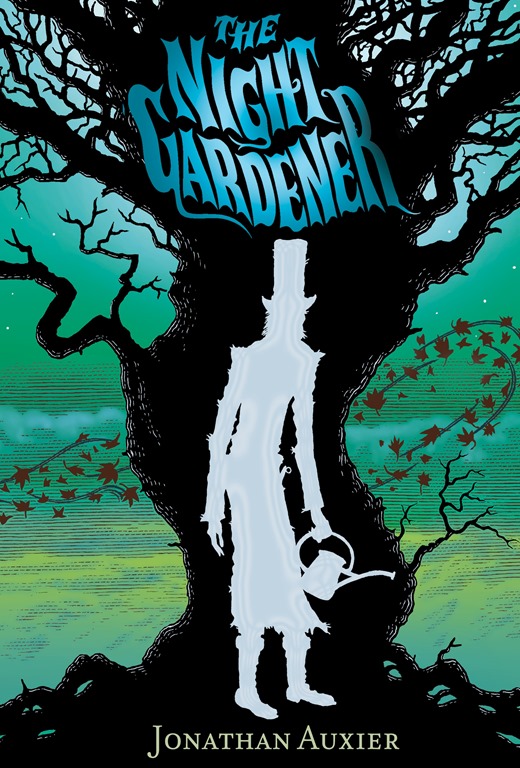
The Internet is full of great advice about how to sell a book, but what about after the sale? When my first book came out, I found it was surprisingly hard to find answers to some basic questions. Like most authors, I learned most of the answers through trial and error. And so in anticipation of the launch of my new novel, The Night Gardener, I’ve decided to write down everything I learned so I don’t make the same mistakes twice!

AFTER THE BOOK DEAL is a month-long blog series detailing the twenty things I wish someone had told me before entering the exciting world of children’s publishing. Each weekday from now until MAY 20, I will be posting an article on a different blog.

Jonthan Auxier Headshot - web square

Can You Hear Me Now?: Skype Visits

Today I wanted to talk a little bit about one valuable tool way to connect with readers: Skype visits! Below are a few things I’ve picked up from numerous Skype visits …

Get a “Studio”

This is actually one of my biggest challenges right now. If you plan on doing a lot of Skype visits, you will save a lot of time by having a set space with lights and an appropriate background—that way you don’t have to fiddle around framing the shot beforehand. Unfortunately, since having baby #2, my office has been relocated to our unfinished basement. It’s actually a good place for me to work, but it has a definite “dungeon” vibe. One of my goals after The Night Gardener comes out is to spend a little time putting up some lights, so at least the dungeon looks cheerful!
NightGardener Cover

Use Skype as an Incentive

The first thing I like do with Skype visits is use them as a way to incentivize teachers and librarians. I usually do not charge for visits, but I do require that the entire class has read my book. This has value for two reasons. First, it motivates teachers to actually read my book aloud—assuring greater exposure and (I’m hoping) a bigger fan base for subsequent books. Second, it’s much easier to answer direct/specific questions from students—video is a pretty stilted medium, and it goes better if the kids already feel like they know me through my work.

Encourage Preparation

While kids can be awesomely creative, they are not always fast on their feet. Many times a kid will start asking a question only to forget what they were saying halfway through. In order to cut down on this, I ask teachers to work with kids to develop questions before hand an write them on cards (which they can consult). This has the added bonus on cutting down on repeated questions.

Develop “Bonus Material”

I try to think of my Skype visits like the “deluxe blu-ray” experience for my book. I try to include behind-the-scenes stories to share with kids so that they feel special. For example, when talking Peter Nimble, I read the scene from Treasure Island that first inspired me to write a blind character. I also read aloud a short chapter from Peter Nimble that my editor made me cut out because it was too gruesome—kids love it!
MsM

Make Each Visit Unique

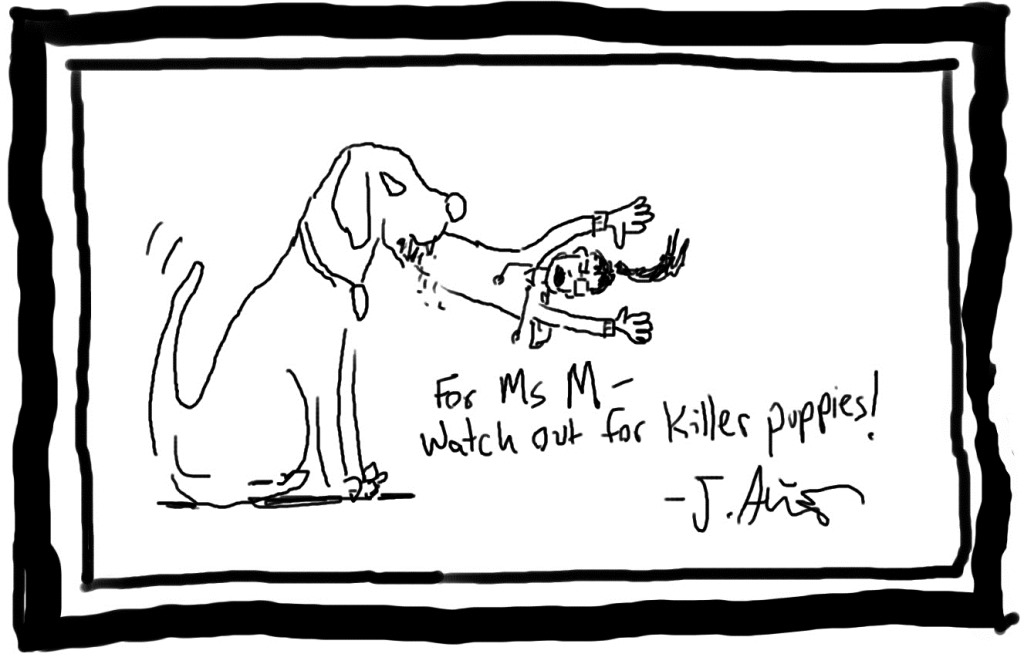
I try to also do something that is unique to that specific class. Often this involves drawing a silly digital portrait of the teacher. Of course, there is such a thing as taking this idea too far. A few weeks ago, I wanted to make a really memorable Skype visit for an awesome, supportive teacher. I ended up playing a “game” with kids where I let them all pick a different ingredient from my fridge to mix into a bowl. Then at the end, I promised to eat it. I’m not going to say I actually puked … but I came pretty darn close! (You can read all about it here.)

That’s it for AFTER THE BOOK DEAL! Tomorrow we’ll be talking about how to craft an effective school program! In the meantime, you can catch up on previous posts (listed below), and please-oh-please!

AFTER THE BOOK DEAL – Stops So Far

WEEK ONE: Before Your Book Comes Out
4/21 – Finding Your Tribe: entering the publishing community

4/22 – Do I Really Need a Headshot?: crafting your public persona

4/23 – I Hate Networking: surviving social media

4/24 – A Night at the Movies: the ins and outs of book trailers

4/25 –  Giveaways! … are they worth it?

WEEK TWO: Your Book Launch
4/28 – Can I have Your Autograph?: 5 things to do before your first signing

4/29 –  Cinderella at the Ball: planning a successful book launch

5/1 – Being Heard in the Crowd: conferences and festivals

5/2 – The Loneliest Writer in the World: surviving no-show events

WEEK THREE: The Business of Being an Author
5/5 – Handling Reviews … the Good and the Bad!

5/6 – Back to the Grindstone: writing your next book

5/7 – The Root of All Evil: some thoughts on money

5/8 – The Green-Eyed Monster: some thoughts on professional jealousy

WEEK FOUR: Ongoing Promotion

5/12 – Death by 1000 Cuts: Keeping busywork at bay

***

JONATHAN AUXIER writes strange stories for strange children. His new novel, The Night Gardener, hits bookstores on May 20—why not come to his book launch party? You can visit him online at www.TheScop.com where he blogs about children’s books old and new.

Teen Reading Declining & Racial Reading Gaps Continue

Home

Common Sense Media has compiled several studies about reading and their results show a decline in teens reading for pleasure over time. 

  • About a third of 13-year-olds and almost half of 17-year olds reported that they read for pleasure less than twice a year.
  • Reading scores have improved since the 1970s, except for older teens where 17-year-old measures remain about the same.
  • Perhaps the most distressing finding is that the reading gaps between different races in the US have been unchanged in the last 20 years. 
    • 46% of white children are proficient readers
    • 20% of Hispanic children are proficient readers
    • 18% of African-American children are proficient readers

You can read coverage of this report on several sites, though I can’t seem to find the full report online.

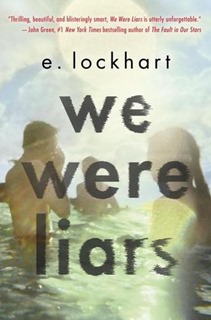
Review: We Were Liars by E. Lockhart

we were liars

We Were Liars by E. Lockhart

Cady has been spending her summers on the family’s private island for her entire life.  She and her two cousins Johnny and Mirren were joined by Gat, a boy who became almost a cousin but also so much more for Cady.  The foursome call themselves The Liars, and during the summers were inseparable but barely contacted one another during the rest of the year.  But then one summer it all changed and now Cady can’t remember what happened.  She was found bedraggled and wet on the beach of the island, alone.  Now she suffers from amnesia and migraines, spending days in bed in severe pain.  But she is determined to find out what happened, even if the other three refuse to contact her any more, so she returns to the island.

Lockhart has created a mystery and thriller that is written like modern poetry.  She plays with construction in her novel, dancing between verse and prose masterfully.  This disjointed approach to construction also speaks to the way the entire novel is deconstructed and put back together again.  The book moves in time, flashing forward and backward, yet is never confusing.  Still, readers will be caught in this sparkling web, unable to piece together the mystery until Lockhart is ready for the reveal.  And she does it with great style and technique.

With such a character-driven book, the depiction of the characters is of paramount importance.  Lockhart excels in all of her books in creating characters who are real people, human and flawed.  She does the same here, creating in Cady a very complicated character that readers have to put together as a puzzle until it clicks together in the end.  The other supporting characters are equally well rendered.  Even the parental figures who seem stereotypical at first reveal surprising depth as the story continues.

Superbly crafted and brilliantly written, this book is one of the best of the year.  Get your hands on it now!  Appropriate for ages 15-18.

Reviewed from digital galley received from Delacorte Press and Edelweiss.

Royal Society Young People’s Book Prize 2014 Shortlist

The UK’s Royal Society will be awarding a prize to the book for young people that best communicates science.  The age range is for under 14-year-olds.  Here are the six books on the shortlist:

Big Book of Stars and Planets Eye Benders: The Science of Seeing & Believing 

Big Book of Stars and Planets by Emily Bone

Eye Benders: the science of seeing and believing by Clive Gifford & Anil Seth

How Animals Live (How it Works) Lift the Flap Questions & Answers about your Body (Usborne Lift-the-Flap-Books)

How Animals Live by Christiane Dorion

Lift the Flap Questions & Answers About Your Body by Katie Daynes

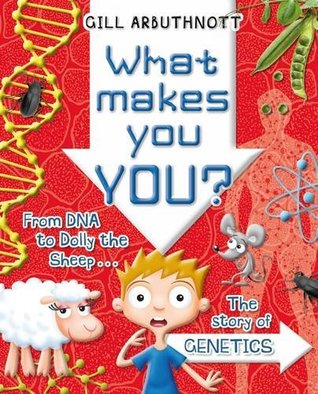
We've Got Your Number What Makes You You?

We’ve Got Your Number by Mukul Patel

What Makes You You? by Gill Arbuthnot

This Week’s Tweets, Pins and Tumbls

Here are the links I shared on my Twitter, Pinterest, and Tumblr accounts this week that I think are pretty cool:

Embedded image permalink

CHILDREN’S LIT

12 Irrefutable, Amazing Reasons We Need More Diversity In Books http://buff.ly/1nYx74W #kidlit

Children’s Books. Still an All-White World? | School Library Journal http://buff.ly/1mvy4lI #kidlit

Our kids’ grey matter is neither pink nor blue – when will book publishers realise this? – The Independent http://buff.ly/1mvA6Cm #kidlit

Pioneers in Pigtails: Remembering the First Heroines Who Made Us Mighty| Megan Jean Sovern | http://buff.ly/1myuuCU #kidlit

EBOOKS

Take Your Bookshelf Anywhere: BitLit Gives Readers an eBook Version of a Book They Already Own | BetaKit http://buff.ly/1s2uA7t #ebooks

TEEN READS

Disabled Characters in YA Literature | School Library Journal http://buff.ly/SF7uta #yalit

‘The Fault in Our Stars’ Author John Green on Fandom and His Favorite YA Romances – The Wire http://buff.ly/1qfApma #yalit

What’s Old is New: Recent YA Books with Allusions to Classic Lit | SLJ Spotlight | School Library Journal http://buff.ly/1mvAVv0 #yalit

YA LGBTQ Novels Where the Focus Isn’t Coming Out – Small Avalanches http://buff.ly/1nT5PwD #LGBTQ #yalit

roald dahl

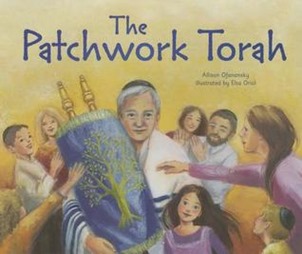
Review: The Patchwork Torah by Allison Ofanansky

patchwork torah

The Patchwork Torah by Allison Ofanansky, illustrated by Elsa Oriol

David’s grandfather was a scribe.   He had been asked by the rabbi to write a new Torah for their synagogue because the old one was fading.  David watched his grandfather work for a year on the new Torah and then store it away, explaining that a Torah is not something to be thrown out.  Years later, as David was learning to be a scribe from his grandfather, a couple came to them bringing a Torah that they had hidden from the Nazis.  It was badly water damaged and his grandfather tucked that Torah away too in the hopes of working on it someday.  David grew up to be a scribe and inherited his grandfather’s cabinet with the two scrolls inside.  One day, the rabbi called and told him that there had been a fire in the synagogue and the Torah was damaged.  That scroll too was put away.  Finally, Katrina hit New Orleans and a Torah was rescued but damaged too.  David suddenly had an idea and worked for months to take the four scrolls and patch them together into one complete Torah that would be unlike any other.

Ofanansky builds this story slowly and steadily.  Each Torah comes into the book with a full story and history.  Each is unique and ruined in some way, but worthy of being rescued and reused.  It is the ultimate in recycling.  The book also pays homage to the long history of scribes who care for and create Torah, showing the dedication that it takes to learn the art and skill. 

The art by Oriol has a quiet nature too.  The paintings are suffused in yellow light and warmth.  Even the days of the tragedies that happen to the people and the Torah are light-filled and hope filled. 

A quiet and powerful story about renewal and reuse, this book speaks across religions to the importance of hard work and resilience.  Appropriate for ages 6-9.

Reviewed from library copy.

Review: The 26-Story Treehouse by Andy Griffiths

26 story treehouse

The 26-Story Treehouse by Andy Griffiths, illustrated by Terry Denton

This sequel to The 13-Story Treehouse tells the story of each of the main characters and how they all met.  Most of it’s even true!  But it’s not that straight forward either because emergencies keep happening, like the sharks in the treehouse’s shark pool eating Terry’s underpants and getting very sick.  Thank goodness that Jill can come over and try to have them feeling snappy again soon.  Then of course no story is complete without a villain and Captain Woodenhead, the evil pirate makes a great one.  Set aside your disbelief heading in, because this rollicking and very funny book will have you believing in plenty of nonsense by the end!

After the first book, I knew there would be more adventures of Terry and Andy, but I hadn’t expected double the number of floors on the treehouse!  This book is more of the merry adventures of Terry, Andy and Jill.  The flying cats return and many other favorites from the first book make an appearance, but this is a fresh story too, perfect for fans to get even more of the humor and silliness of the series. 

Looking for a new series for Wimpy Kid fans, this one has illustrations that break up the text, a similar amount of funniness, and plenty of gross outs too.  Appropriate for ages 8-12.

Reviewed from copy received from Feiwel & Friends.

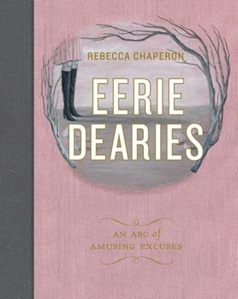
Review: Eerie Dearies by Rebecca Chaperon

eerie dearies

Eerie Dearies: 26 Ways to Miss School by Rebecca Chaperon

Don’t expect your sunshiny ABC book here!  Instead you get to enter a creepy world where each letter of the alphabet is paired with a way to miss school.  Just to make sure you know what you are getting into, the book begins with A is for Astral Projection paired with a picture of a girl floating off the page.  The images are haunted and dark, yet with a quirky sense of humor as well.  The book goes on with the alphabet with C is for Contagious, K is for Kidnapping, and M is for Mononucleosis.  It all ends with Z is for Zombie Apocalypse. 

This book certainly is not for everyone.  But for those kids who enjoy a shiver along with their ABCs, this is a perfect picture book.  I was one of those strange kids myself and would have adored this picture book as a child.  The art is creepy, showing children without heads and clearly hearkening back to Edward Gorey and gothic horror.  Yet there is no blood on any of the pages, so it’s not graphic in any way.

This book will work well around Halloween, but thanks to its sense of humor will please haunted children throughout the year.  Appropriate for ages 6 and up.

Reviewed from library copy.

Review: Abuelo by Arthur Dorros

abuelo

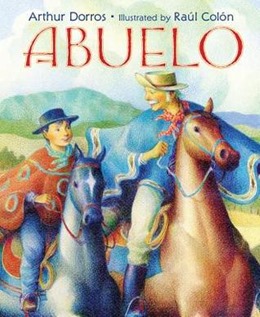
Abuelo by Arthur Dorros, illustrated by Raul Colon

A boy and his grandfather spend time together riding horses and camping.  They have adventures outdoors losing the trail and even facing a mountain lion.  His grandfather taught him to stand strong like a tree.  Then one day the boy moved with his family to the city, leaving his grandfather behind.  The city was very different.  The stars were hard to see, but they were the same stars.  The boy learned to use what his grandfather taught him in the countryside.  He even stood up to a bully on the first day of school, standing strong as a tree.

Told in graceful free verse, this book reads quickly rather like a brisk horseback ride.  Completely controlled and peppered with Spanish, the book evokes the freedom of the countryside and also the lessons of strength being taught across generations. 

Colon’s illustrations evoke the differences between the country and the city.  The open freedom of the countryside is contrasted against the constraints of the city, yet the sky ranges wide above both and there is freedom when riding your bike just as when riding your horse. 

Free verse mingles with the freedom of the range in this multi-generational title, a perfect masculine accompaniment to Dorros’ Abuela.  Appropriate for ages 4-6.

Reviewed from copy received from HarperCollins.