27 Magic Words by Sharelle Byars Moranville

27-magic-words-by-sharelle-byars-moranville

27 Magic Words by Sharelle Byars Moranville (InfoSoup)

Kobi knows that her parents are still alive. When they sailed off on a two month adventure five years ago and didn’t return, Kobi was still able to see them when she used the magic word “Avanti!” It is one of 27 words that her writer mother gave her when she was little and told her were magical. Kobi and her older sister lived with their grandmother in Paris but now are heading to Des Moines, Iowa to go to school for a few months and live with their Uncle Wim. As Kobi tries to adapt to her new environment, she finds herself telling lies defensively as her classmates ask her questions. As the lies begin to catch up with Kobi, she is forced to realize that she has been lying to herself as well.

Moranville has written a book that is a blissful read. She uses small moments to speak to larger issues, captures details that bring the world she has created fully alive. There is Norman who wears clothes to blend in and not be noticed. There is Kobi’s older sister who is struggling with OCD. The entire family fills the pages with art, gardens, food and color. It is a beautifully built world.

The writing throughout the novel is exceptional. There are paragraphs that are completely exquisite. This one appears on page 108 and is about a woman struggling with Alzheimer’s:

Ms. Hancock was like a beautiful picture that had been rained on, then driven over by a car, then left under a pile of leaves to be nibbled by squirrels, and the only beautiful bit left was a tiny patch of incredible blue in one corner.

A strong novel that blends grief, lies, loss and the potential for real magic. Appropriate for ages 9-12.

Reviewed from library copy.

This Week’s Tweets, Pins & Tumbls

Here are some cool links I shared on my Twitter, Pinterest, and Tumblr accounts these last couple of weeks:

Mary GrandPré:

CHILDREN’S BOOKS

8 Click-Bait Headlines For Children’s and Teen Books

The Best Children’s Books of 2016 – Brain Pickings –

The Best Children’s Books of 2016 from The Wall Street Journal –

The Best Jewish Children’s Books of 2016

The French Kid’s Lit Author Who Inspired Maurice Sendak & Shel Silverstein

I told J K Rowling she’d never make any money from Harry Potter

‘I write about 350 jokes per book. I throw away about a third of them’: Jeff ‘Wimpy Kid’ Kinney

Irish Times – Our favourite children’s and YA books of 2016

Many American Adults Don’t Read, But That Doesn’t Mean Kids Can’t Learn To Love Books

Netflix’s Dark New Adaptation Will Be ‘Super Faithful To The Books’

Penguin and CBC Launch Award Honoring Anna Dewdney

Talking with children’s book author Jon Klassen

These ‘90s Children’s Books Will Make You Seriously Nostalgic: How Many of These Did You Read?

I am climbing the wall so cool XD:

LIBRARIES

Libraries for gathering, not just books

Library closures ‘will double unless immediate action is taken’

The Library of Congress Is Putting Its Map Collection on the Map

US libraries report spike in Islamophobic hate speech since election

*:

TEEN LIT

13 YA authors on writing in the age of Trump

Can This American Disrupt Japan’s $392M Young Adult Novel Industry?

Paul and Antoinette by Kerascoët

paul-and-antoinette-by-kerascoet

Paul and Antoinette by Kerascoët (InfoSoup)

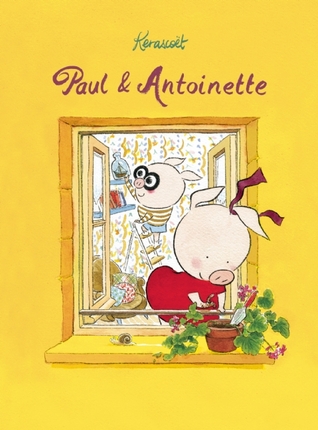
Paul and Antoinette may be brother and sister, but they don’t enjoy doing the same things. Sometimes that works out perfectly, like after breakfast when Paul neatens up and Antoinette licks the knives and plates clean as she clears the table. Antoinette wants to spend the day outside in the mud but Paul has other plans, like working on his model ship. When Antoinette sees her chance, she drags him outside with her, even though she knows that Paul doesn’t like the outdoors that much. The two play just as differently outside with Paul picking flowers for Japanese flower arranging and Antoinette licking snails. When they return home, Paul has to clean up and Antoinette is covered in mud. At the very end of the day though, Antoinette makes the type of mess that even Paul can enjoy.

Kerascoët is from France and is a well-known and award-winning illustrator. This picture book has a distinct European vibe that is completely charming. The two siblings demonstrate that being different from one another works when you accept that you won’t be changing each other. While they don’t always get along, the two respect one another and play together for most of the day. This isn’t about sibling rivalry at all; it’s about sharing, loving and accepting one another.

Kerascoët’s art is warm and delightful. There is a sense of humor throughout as the two pigs show just how clean one can stay outside and just how dirty you can get in the same trip. The moment where Antoinette licks the snail is wonderful and squidgy, vividly depicted on the page. When she plays with a cobweb beard that she puts on her brother, it is wonderfully sticky and itchy.

A book sure to create laughter, gasps and delight. Appropriate for ages 3-5.

Reviewed from library copy.

Radiant Child by Javaka Steptoe

radiant-child-by-javaka-steptoe

Radiant Child: The Story of Young Artist Jean-Michel Basquiat by Javaka Steptoe (InfoSoup)

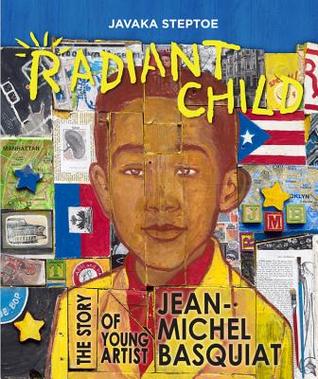
Coretta Scott King Award winner, Steptoe has created a visual feast of a book about the remarkable artist, Jean-Michel Basquiat. The book shows Basquiat as a child who drew all day long, refusing to sleep until his art is complete. He wakes in the middle of the night, drawing things from his dreams onto paper. His Puerto Rican mother teaches him to see art all around him. They visit museums, the theater, read poetry and Basquiat learns about art and artists. Eventually, his mother’s mind breaks and she can no longer live at home. He visits her when he can and shows her his artwork. As a teenager, he lives with friends and spray paints art around the city. He mixes collage and paint, his art moving from the street and into galleries, fulfilling his dream of becoming a famous artist.

Young readers are not shown the dark part of the Basquiat’s life. That is revealed in the author note at the end of the book where Basquiat’s death at age 27 from his drug addiction is explained. The picture book focuses on the inspiration for his art, his dreams of fame and how he used his diverse urban landscape as inspiration for his art and his life.

Steptoe’s art pays homage to Basquiat. Done on boards where the seams are rough and form an organic pattern, the art is a mix of painting and collage. As he explains in a note about motifs, there are certain items that repeat in Basquiat’s art that readers can see echoed in the art in the book as well. The art is stunning, detailed and worth lingering over.

A luminously beautiful book about a passionate and gifted artist, this picture book shines. Appropriate for ages 7-10.

Reviewed from library copy.


Gary by Leila Rudge

gary-by-leila-rudge

Gary by Leila Rudge (InfoSoup)

Gary was a racing pigeon, but he wasn’t like the rest of the pigeons. On race day, instead of setting off with the others, he stayed behind and organized his scrapbook. Because Gary couldn’t fly. When the others returned, Gary listened to their stories and recorded everything in his scrapbook. But one night, Gary and his map tumbled into the race basket and he didn’t awaken until they were far from home and in the city. Gary was scared and worried that he’d never find his way home, but then he opened his scrapbook and discovered he wasn’t quite as lost as he had thought. Soon Gary had worked out a route home and arrived there via bus. This time he was the one with the stories and a new way for all of the pigeons to get around.

This picture book is pure joy. Gary is a wonderful misfit pigeon, missing exactly the key attribute that makes him a racing pigeon. Still, Gary embraces his differences and makes himself part of the team by recording their adventures. At the same time, he is always separate from the others. This picture book about resilience and self-esteem will speak to anyone who as felt different from the rest.

Rudge’s illustrations add to the appeal. She makes sure that Gary stands out from the other pigeons who are suited up in racing red. Gary meanwhile wears his winter cap and has keeps his head cocked in an inquiring way the entire time. Gary’s use of tape and his scrapbook is also lovingly detailed.

A charmer of a book about self-esteem and embracing your individuality pigeon style. Appropriate for ages 3-5.

Reviewed from library copy.


I Am Not a Number by Jenny Kay Dupuis

i-am-not-a-number-by-jenny-kay-dupuis

I Am Not a Number by Jenny Kay Dupuis and Kathy Kacer, illustrated by Gillian Newland (InfoSoup)

Based on the true story of the author’s grandmother, this picture book captures the experience of First Nations people in Canada being sent to boarding schools. Under threat of fines and jail time, First Nation parents were forced to give their children up to the government. When Irene is taken to her new home, she tries to never forget her real home, her parents and their way of life. Irene is called only by a number at the school and told to scrub the brown off of her skin. Her hair is cut off. She is punished when she speaks her native language by a nun burning her hands. Irene is eventually allowed to return home for the summer, where she continues to have nightmares of her time at school. Finally, her parents decide to hide the children rather than sending them back.

This is not a picture book for preschoolers, rather it is ideal for elementary-aged children closer in age to 8-year-old Irene in the story. The horrific treatment of First Nation children is shown with real clarity. The use of Irene’s own voice to tell the story makes it personal and much more painful. While there is a lot of text on the pages, the book reads well and the text is straightforward and necessary to explain the loss of culture and the darkness of the boarding schools.

The illustrations by Newland are almost like painted photographs. They show the family losing their children, the stern nuns, and the punishment scene is carefully captured afterwards in terms of pain and emotion rather than depicting the punishment itself. There is a feeling of constraint and loss in the images of the boarding school and then freedom when the children return home.

A powerful look at Canadian history and First Nation children, this book would work well paired with When I Was Eight by Christy Jordan-Fenton. Appropriate for ages 7-10.

Reviewed from library copy.


Freedom Over Me by Ashley Bryan

freedom-over-me-by-ashley-bryan

Freedom Over Me: Eleven Slaves, Their Lives and Dreams Brought to Life by Ashley Bryan (InfoSoup)

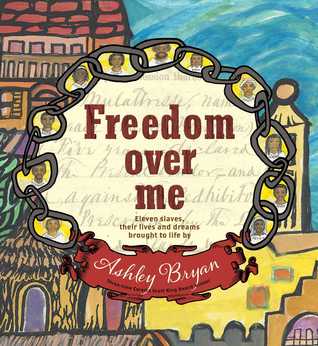
Based on actual slave auction and plantation estate information, this is a picture book that truly captures the world of enslaved people in the United States. The household has lost its master, who ran the plantation with its eleven slaves. His wife is about to return to England and the slaves will be sold with the rest of the property. The book opens with a poem of the wife and then into the voices of the eleven slaves, each one filled with a refusal to be seen only as a price tag or property, each one celebrating their skills and their lives.

Bryan’s poetry sings on the page, defiant and strong. He writes of the losses of slavery, of families broken up and never seeing one another again, of brutality on the plantation and the auction block, of being taken from Africa and freedom, and of the hardships of life as a slave. Bryan also notes though for each person that there are things that make them far more than any category could put them in, more valuable than their skills, more vital than their age and sex. This is a powerful testament against the inhumanity of slavery done by putting a face to eleven slaves that are impossible to turn away from.

Bryan’s art focuses on the faces of the slaves. He does one portrait almost as a flyer for the auction with their face and price, name and age. Then the page turns and you see their dreams on the page, captured in the same thick paint but no longer framed with words of slavery and now bright with colors and action.

Powerful and unique, this picture book takes on slavery in the most passionate and personalized way possible. Appropriate for ages 7-10.

Reviewed from copy received from Atheneum.

Little Penguins by Cynthia Rylant

little-penguins-by-cynthia-rylant

Little Penguins by Cynthia Rylant, illustrated by Christian Robinson (InfoSoup)

Five little penguin siblings head out into the snow on the first day of winter. There are many snowflakes in the air while they put on mittens, scarves and boots. The snow is very deep by the time they get dressed and outside. They play in the snow and then head back inside where they pull off their winter gear, put their pajamas on, have warm cookies and sippy cups. That night, they are warm in bed but one of them is still looking out the window at winter arriving.

Newbery Award winner, Cynthia Rylant has written this book with exactly the right amount of text for toddlers and young preschoolers. There is a lovely loose rhythm to the words, an excitement of new falling snow that is generated on the page. The rush to get ready, the enjoyment of their time playing outside and the warmth of returning inside to coziness is all nicely captured. Children who love snow themselves will recognize their days in these little penguins.

Robinson’s illustrations make this book very special. His bold colors, strong shapes and use of space create a lot of drama on the page. The way that each little penguin has their own color adds an element that parents and teachers can use to talk about the book. There is also the chance to count to five again and again. The huge flakes of snow are a delight to the eye, creating a feeling of joy and wonder on each page.

A toddler-friendly picture book, this is a cheery book celebrating the coming winter. Appropriate for ages 2-4.

Reviewed from copy received from Schwartz & Wade.


A Series of Unfortunate Events – Netflix Style

What looks to be a gorgeously stylized version of the popular series, this premieres on January 13, 2017 on Netflix:


What do you think?