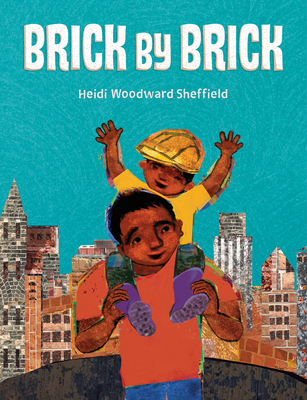
Brick by Brick by Heidi Sheffield

Brick by Brick by Heidi Sheffield

Brick by Brick by Heidi Sheffield (9780525517306)

Papi is strong, because he works hard all day long as a bricklayer. He builds walls, spreading the mortar, tapping the brick in place, and scraping the drips. He climbs high on scaffolds. Luis doesn’t mind heights either, climbing to the top of the jungle gym. They have a dream of a their own house, but it’s a “someday” dream. Father and child have the same lunches of empanada and horchata. Then both head back to work and school. At night, Papi returns home, hot and tired. On Saturday, Papi has a surprise. After a long drive, they pull up to a brick house, their new always home!

Told in simple language just right for smaller children, this book speaks to the hard work, resilience and patience it takes to create a home. Sheffield cleverly uses repetition in her text and mirrors the experience of father and son throughout their day.

The design of the book is exceptional. She has created the illustrations from photographs, collage and digital painting. She also notes that Luis and his father are formed from photographs of bricks, strong and resolute. The warm color palette is brightened with blue skies. The city skyline is formed from bricks as well as words like “dream” and “build.”

Strong and vibrant. Appropriate for ages 3-5.

Reviewed from e-galley provided by Nancy Paulsen Books.
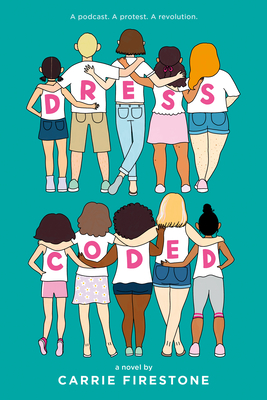
Dress Coded by Carrie Firestone

Dress Coded by Carrie Firestone

Dress Coded by Carrie Firestone (9781984816436)

Molly is beyond tired of the dress coding that is happening at her middle school. It’s a dress code that unfairly targets only the girls and then only some of the girls. Molly isn’t the most developed girl in her class, so she often isn’t dress coded though she’s wearing the same outfit as a friend who is. So Molly starts a podcast about the dress code at her school and how inequitable it is. She interviews girls about their experiences, catching the notice of even high school girls who want to share their own middle school stories. Molly also tries to get the attention of the school board, but their petition and requests go nowhere. Soon Molly is leading a significant rebellion at the school, finding her own voice, standing in her power, and not apologizing for what she wears.

It is hard to believe that this is a debut middle-grade novel. Firestone, the author of several young adult novels, really captures what it is to be a middle school girl. The pressures of that age are magnified in this book through the horrible dress code, but are also firmly universal, dealing with body image, periods, friendships, and complicated family relationships. Firestone’s writing is fiery and offers a call to action, positively showing what can happen when you stand up.

The characters of this book are wonderfully drawn with each friend and girl having their own personalities. They each stand out with a unique voice as well, something that is difficult with this large a cast of characters. Molly herself is marvelous, a mix of courage and middle school doubts and fears. The book contains gay characters, who reveal themselves with no trauma and lots of hope, just right.

A dynamo of a middle-grade read that will inspire girls to become activists for their own rights. Appropriate for ages 9-12.

Reviewed from ARC provided by Putnam.

Nesting by Henry Cole

Nesting by Henry Cole

Nesting by Henry Cole (9780062885920)

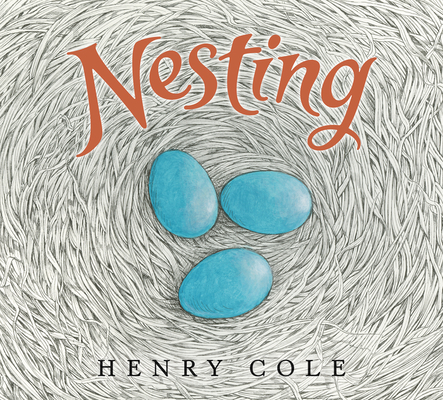
Through simple text and exquisite line drawings, the tale of a family of robins is told. Beginning in early spring, two robins meet and then build a nest together in the crook of a tree limb. As the tree is in full bloom, bright blue eggs appear, the only color in the book. Soon there are four eggs which readers get to see hatch into chicks over the course of a few panels. The hungry chicks must then be fed, the parents hurrying across the page. Storms must also be weathered and predators forced away from the nest. Then it’s the chicks turn to be brave as they leave the nest. Getting larger, the robins prepare to head to their winter months together.

Cole’s text is simple but shares a lot of information along the way. He makes sure to explain things in ways that feel entirely natural as part of the overall story arc. The Author’s Note at the end has more information. The illustrations are simply lovely done in fine pen lines that look even more detailed that reality. The sense of depth that Cole evokes is exceptional as is the way he captures the robins in action so naturally. Readers will notice the apple tree as it moves from bare branches to spring bloom to full fruiting, another way to explore the seasonal changes.

Expect this one to have award buzz, it’s exceptional. Appropriate for ages 2-4.

Reviewed from library copy.


News to Wake Your Brain Cells – July 17

CHILDREN’S BOOKS

19 children’s books featuring boys of color – She Knows

100 books to inspire your kids in 2020 – Parents

150 children’s books celebrating black boys – Colours of Us

An adventure in time: 60 Mighty Girl historical fiction novels for tweens and teens – A Mighty Girl

Anti-discrimination reading list for children and young people – SOS Children’s Villages

Anti-racism books and resources for families and children – UNLV

Graphic novels for armchair campers – SLJ

How J. K. Rowling became Voldemort – The Atlantic

No reading, no peace: the power of Black stories out loud – NPR

Obituary: Joanna Cole – Publishers Weekly

Pop! Goes the Reader’s 40 most anticipated middle grade novels: July-December 2020 – Pop! Goes the Reader

Scholastic & Marvel to release graphic novel based on Black Panther’s Shuri – Essence

LIBRARIES

Coronavirus impact: a new survey by Italian publishers sees ‘abandonment of reading’ – Publishing Perspectives

Madison’s library board submits plan for staff cuts, hours reductions, temporary closures – WKOW

The New York Public Library reopens today! Here’s what you need to know – TimeOut

On being black in librarianship – I Love Libraries

People visited public libraries more than a billion times in one year – IMLS

San Francisco Public Library to reopen with contact-free ‘SFPL To Go’ service next month – SFist

Why Free Library workers are calling for their director to resign – Billy Penn

YA LIT

20 fantastic YA LGBTQ+ books – The Nerd Daily

One Little Bag by Henry Cole

One Little Bag: An Amazing Journey by Henry Cole (9781338359978)

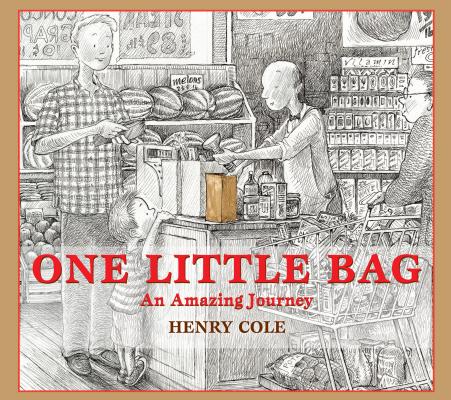
This wordless picture book follows the journey of one paper bag from its beginnings as a tall tree in the forest through the hands of a family. The tree is cut down, hauled away, ground up and made into paper which then is formed into a brown paper bag. Put into a box, the bag is given to a family at a grocery store. They take it home, draw a heart on the bag, and use it for school lunches. The bag is used lots of different ways after that as the boy grows up, taking it with him to college. There he meets a girl and they draw two hearts on the bag. It’s even there when he proposes to her. When they have a baby, the bag is part of the mobile over the crib, and a third heart is added. When grandpa, the bag’s first owner visits, a fourth heart is added by his grandson. The bag becomes worn and taped, but serves one last purpose that brings the entire story full circle.

Cole beautifully shows how small acts of reusing something can become tradition in a family. The book never seems like a lecture, always just showing and demonstrating how reuse is possible and its great potential as well. The paper bag in the story if remarkably resilient for so much use by generations, but I think we all have items in our families that survive despite being used by everyone, to be handed to the next generation.

Told in images only, the book is filled with fine-line drawings that shine with light. The paper bag is the only color on the page, it’s brown color becoming all the more warm and glowing and the red hearts popping with color.

A truly great wordless picture book. Appropriate for ages 2-4.

Reviewed from e-galley provided by Scholastic.

Desert Girl, Monsoon Boy by Tara Dairman

Desert Girl, Monsoon Boy by Tara Dairman

Desert Girl, Monsoon Boy by Tara Dairman, illustrated Archana Sreenivasan (9780525518068)

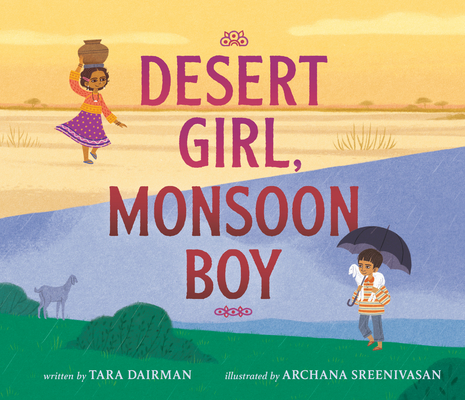
In India, two families must respond to the weather they are experiencing. One nomadic family, lives in the desert and must move in search of water. The other family, who live in a village, are experiencing a monsoon and the flooding it brings. Both families are multi-generational, both have children learning things, helping out and packing up. One family deals with blowing sand and sandstorms while the other has leaking roofs and puddles on the floor. Soon both start traveling in search of safety, one on camels and the other in a boat. Together, they reach the same mountain where they both find safety as well as each other.

In her author’s note, Dairman speaks about the Rabari people who inspired her families in the picture book. She captures their changing lifestyle from purely nomadic life to moving into villages. She also shows how weather can be threatening for both lifestyles. The writing is simple and just right for the smallest of children. Throughout the book, there are opposites in the two lifestyles, but there are some things that are quite similar.

The illustrations in this picture book are based on the illustrator’s personal experience in visiting a Rabari settlement. The detailed textiles fill the pages with color and pattern. Meanwhile the contrast of the warm golds of the desert and the cool blues of the monsoon work particularly well as they cross the pages. It’s a very effective way to view the two ways of life.

A glimpse of India’s nomadic people allows us all to see how weather impacts lives. Appropriate for ages 2-4.

Reviewed from e-galley provided by G. P. Putnam’s Sons.

LA Times Book Prize Winners

The winners of the 40th annual Los Angeles Times Book Prizes were announced on July 13th on Twitter. Usually the prizes are announced at the Los Angeles Times Festival of Books which has been postponed until October. The prizes are primarily for adult titles with one exception, the award for Young Adult Literature.

This year that prize goes to:

When the Ground Is Hard by Malla Nunn

The One and Only Bob by Katherine Applegate

The One and Only Bob by Katherine Applegate

The One and Only Bob by Katherine Applegate (9780062991317)

Once again join the three friends Ivan, Ruby and Bob from The One and Only Ivan. Bob now lives with humans rather than in the gorilla enclosure in the mall with Ivan. He’s a dog who doesn’t want to be owned, though he does appreciate the soft blanket, regular food and even an occasional cuddle. He resents the clicker used to train him and still refuses to get into any vehicle after being thrown from a moving truck with his littermates as a tiny puppy. As a large hurricane approaches, Bob is visiting the zoo where Ivan and Ruby now live, separated by a wall. The storm hits the zoo directly, generating a tornado that has Bob airborne. As he deals with the aftermath and next wave of the storm, Bob discovers new wells of courage, his continued connection to his lifelong friends, and relocates a family he thought he’d never see again.

Told in Bob’s voice, this book is like snuggling with your favorite dog. The chapters are brief and inviting, sometimes only a few sentences long. They show the mind and life of a dog who may not easily trust people but loves so deeply when he trusts another creature. Applegate clearly adores dogs and really captures the way they might think in this story filled with scents, sounds and Bob’s own unique perspective on life.

While this book does follow the first book about Ivan, it would be possible to also read this one first. I can’t imagine that anyone reading it won’t insist immediately on knowing more about Ruby, Ivan and Bob.

Warm and funny with a remarkable canine hero. Appropriate for ages 7-11.

Reviewed from e-galley provided by HarperCollins.

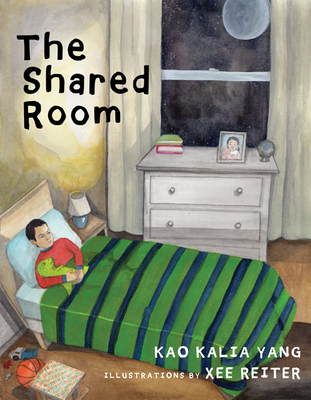
The Shared Room by Kao Kalia Yang

The Shared Room by Kao Kalia Yang, illustrated by Xee Reiter (9781517907945)

This picture book tackles what happens when a family loses a child. Set months after the death, the family is living in dim rooms with no fire lit. Shadows fill the rooms. There is a picture on the wall of their fourth child, who died by walking into water and drowning when she couldn’t swim. Her room is empty with her items still in place. Her parents visit the room every day and regularly watch a video of the little girl singing. The oldest boy was ten and shared a room with his brother. Then one day, his mother asked if he would like to move into his sister’s room. He agreed, then the emotions hit him and for the first time he is able to cry with the loss and the fact that she was never going to return. That night, he slept in his new room. A snowstorm blew in and the family lit the fire and gathered together in its warmth.

Yang’s prose is filled with poetic moments throughout this heartfelt story. Even introducing winter in St. Paul, Minnesota is done with imagery that opens this book with gray clouds and cracked ice. Yang’s depiction of a family in mourning is done with a delicacy and little drama. The sorrow soaks the pages, the shadows fill them, these moments are dramatic and terrible enough. The emotions ache in the prose, offering a Hmong family’s response to a tragedy.

Reiter’s paintings fill the pages with silence and shadow. She uses white space beautifully, positioning the family as a huddle at times and other times embracing the full page. She plays with shadows and light, using them to show the sorrow. The image of the older brother finally weeping is heart wrenching and very effective.

A quiet book of sorrow and loss. Appropriate for ages 4-6.

Reviewed from copy provided by University of Minnesota Press.