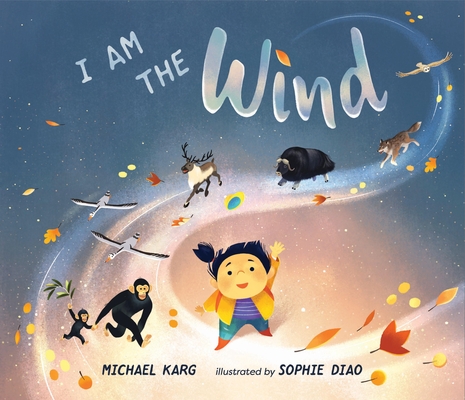
I Am the Wind by Michael Karg, illustrated by Sophie Diao (9781624149221)
On a cold and damp autumn day, a little girl joins in the windy day. The wind can breathe frost and bring fog. It can be soft as a shadow or scale the highest peaks in the north. The wind can run like the wolves or hug and settle in with the musk ox as night. The wind joins in the beauty of the northern lights and whistles around rocks on a snow leopard ledge. The wind can create storms in the rainforests, give pestrels a lift on their long journey, and whisper in cloud forests. Then it returns to an autumn playground, listening for the call to rise up once more.
Told in poetic language, this picture book celebrates the way that the wind touches all parts our world. It speaks to the power of the wind to help birds on their migrations and to create weather patterns. That power is contrasted nicely by the quieter sorts of wind and breezes in the book, examples of the wind at its gentlest too. The writing is strong and reads aloud nicely. The different animals highlighted in the book are interesting choices, making turning pages very enjoyable.
The illustrations carry readers across the globe, showing various animals and creatures in each habitat. The wind is depicted as swirls of color, almost dreamy at times and other times whooshing appropriately across the page.
Perfect for reading on a blustery day in any season. Appropriate for ages 2-4.
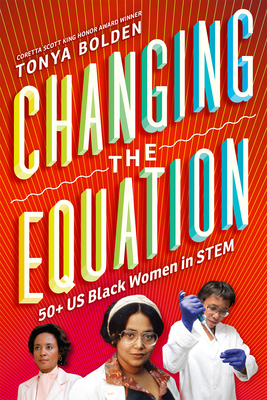
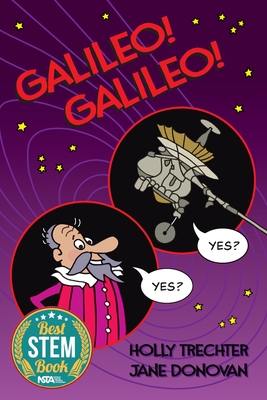
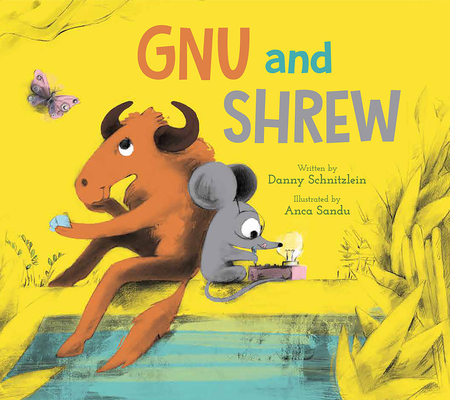
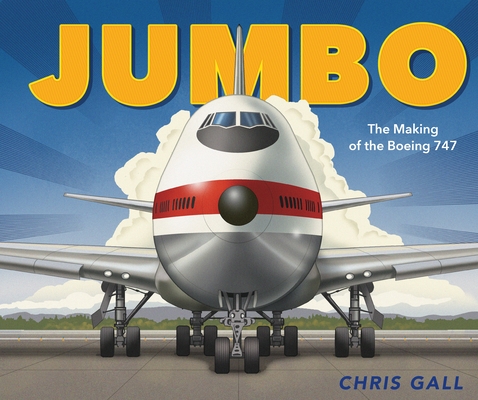
The National Science Teaching Association (NSTA) has announced the winners of their Best STEM Books of the year. They define the best as books that “help by celebrating convergent and divergent thinking, analysis and creativity, persistence, and the sheer joy of figuring things out.” Here are the winning titles:
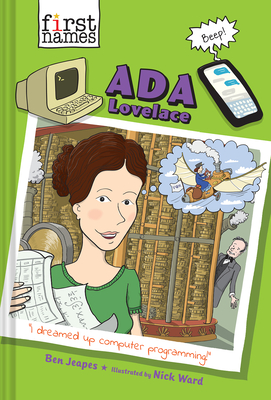
Ada Lovelace by Ben Jeapes, illustrated by Nick Ward
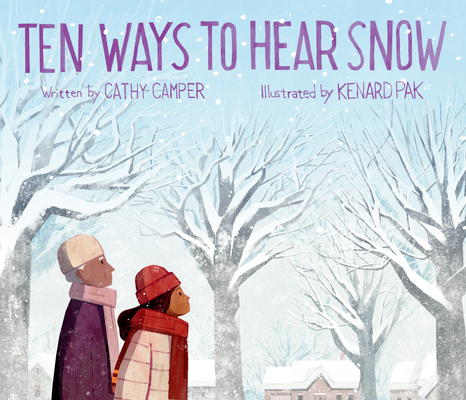
When Lina woke up in the morning, snow had fallen and the street was quiet and hushed. Despite the snow, Lina headed out to visit her grandmother. She loved helping her grandmother cook and today was grape leaf day, when they would make warak enab. As Lina walked to her grandma’s, she heard all sorts of noises. There was her neighbor scraping her shovel on the sidewalk. There was the crunch of her own boots in the snow. A blue jay knocked a soft ploompf of snow down from a branch, a quiet sound. People swept off their cars, others scritched past on skis. Mittens patted newly-built snowmen. Lina reached her Sitti’s apartment and the two worked together filling grape leaves with lamb and rice. Lina could hear the snow melting off her mittens and coat. Her grandmother showed her the tenth way to hear snow, one you had to slow down to notice.
This picture book is beautifully cozy and warm despite being mostly set in the outdoors on a snowy day. The sense of discovery as Lina hears the snow in various ways is great fun. The marriage of a weather event and the use of one specific sense adds to the fun and the curiosity as Lina walks to see her grandmother. The Lebanese family and food is front and center here too, warming the beginning and end of the book with a glow.
Pak’s art moves from the cozy home setting out into the cold and then back into a different warm home. His characters are diverse with their neighborhood filled with people of different races. The outdoor light, filled with blues and whites, contrasts with the yellows, reds and golds of the interior settings. It’s a celebration of the beauty and sounds of winter.
This book encourages us all to slow down and listen. Appropriate for ages 3-5.
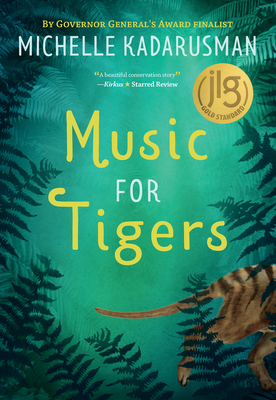
A musician in a family of conservationists and scientists, Louisa finds herself sent away from her home in Canada for the summer to spend time in Australia with her mother’s family. In the remote Tasmanian rainforest, the family has a camp run by her Uncle Ruff. She has brought along her violin, determined to spend time practicing so that she can successfully compete, something her nerves when she plays publicly haven’t allowed her to do. A local resort owner’s son quickly becomes friends with Louisa, who is one of the first teens not to mock his autism and his quirky behaviors. Louisa also learns more about the camp, which is actually a sanctuary created by her great-grandmother to protect the Tasmanian tigers, thought to be extinct. At least one of these large dog-like marsupials may still live on Convict Rock, an island nearby. With a mining operation soon to destroy the sanctuary and the island, they have to work quickly to save this last tiger. By reading her great-grandmother’s journals, Louisa realizes she may be the key to its survival.
This book transports readers into the Tasmanian rainforest. Written with a focus that keeps its length nicely manageable, the novel doesn’t ever feel rushed. Instead it is a journey personally for Louisa through her own fears of performing to a desire to save a creature from true extinction. Her steadily building connection to the Australian wildlife and environment allows readers to explore it as well, falling just as hard as Louisa has for its unique habitat.
This is an environmentalist book that takes a different path. It doesn’t lecture at all, instead allowing immersion within a singular place to really speak to its importance, the vitality of threatened species, and the need to take action. All of the characters are well drawn and complete, filled with multiple dimensions that make them interesting to spend time with in this beautifully described natural wonder.
Amazing writing, vivid characters and lost species come together into a marvelous read. Appropriate for ages 10-13.
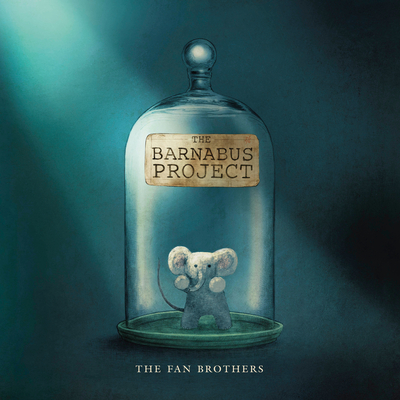
Barnabus is a tiny creature who is half elephant and half mouse. He lives in the secret lab under Perfect Pets. The lab was where they made perfect pets, but they also had a section where they housed the creatures they made who were not quite perfect. That’s where Barnabus lived, in the Failed Projects section along with all the other imperfect pets. When the Green Suits came in and marked their glass housings with “FAIL,” Barnabus and the others found out they were being recycled. Barnabus was determined to escape, though the others thought it was impossible. He longed to see the world outside the lab. When Barnabus got himself free, he freed all of the other failed creatures. Together they made their way through the ducts. When they discovered one creature at the center of the lab who was still trapped, it was time to decide whether to save themselves or risk it all.
This is the first time that all three Fan brothers have worked on a book together. If they make things this great as a team, they should keep on working with one another. This book reads like a Pixar cartoon, full of heart and adventure and one tiny hero. Readers will fall hard for Barnabus, the unlikely mix of a mouse and elephant who is marvelously defiant and brave despite his small size. The story is particularly well done. It deals with deep issues such as what perfection is and what makes someone a “fail.” The story arc is strong and interesting with plenty of action and humor.
The art is phenomenal. It is colorful and full of small details that are fascinating to pore over. The differences between Barnabus and the “Perfect Pets” who are fuzzier and more colorful versions of himself are minute and everyone would want Barnabus on their side. The various creatures in the lab are interesting, some lovable, others squirmy, and some both.
A great picture book with a small hero sure to shatter your expectations. Appropriate for ages 4-6.
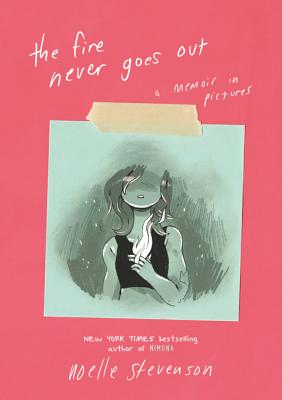
This deeply personal graphic memoir tells the author’s story of being a creative person in our modern world. Spanning from 2011 to 2019, the book explores her life as a young adult. Starting with her time in art school with its loneliness and her growing meltdowns and self harm, the book explore the darker side of her personality. Her inner flame of creativity and passion battles the hole that she sees as gaping right at her middle. Still, that darkness is offset by wonderfully mundane happy moments such as apple picking in the fall and watching TV with people she enjoys. As the years progress, that strain of darkness and depression vs. creativity and wild energy continues. Stevenson shares her huge accomplishments too such as publishing her first graphic novel to great acclaim and winning national awards for it and running a highly successful series for Netflix. Still, those never quiet the negative thoughts. After finally crashing to her lowest point, Stevenson emerges like a phoenix, a woman in love, getting married and carrying her fire with her still.
There is so much sheer honesty and vulnerability on these pages that it is breathtaking. The mix of Stevenson’s writing with her illustrations, many created at the time she is talking about, makes for a dynamic read where her skill as both writer and artist is evident on every page. Perhaps most telling is how her huge successes did not diminish her negative internal experience, instead perhaps accelerating the crash. Her honesty about self harm and struggles with mental illness is amazing.
Stevenson carefully stays away from generalizing her experience, instead keeping her memoir very personal and about her own journey through creativity and the way it can burn and destroy as well as build. Because of this, readers can see themselves in her, relate to her feelings and see a way forward that does not involve a complete loss of self or creativity. It’s a book of hope, for creative queer people in particular.
Strong, personal and empowering, this is a memoir is a courageous look at mental illness. Appropriate for ages 16-19.
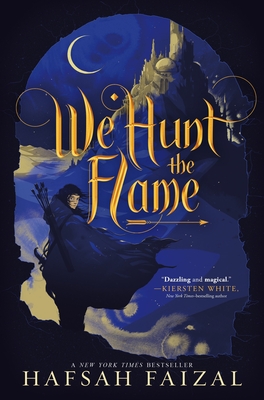
The winners of the inaugural Ignyte Awards were announced in October. These awards “celebrate the vibrancy and diversity of the current and future landscape of science fiction, fantasy and horror by recognizing incredible feats in storytelling and outstanding efforts toward inclusivity of the genre.” The books appear to be 2019 titles. The awards are given in several categories. Here are the winners and finalists in the YA and middle grade categories:
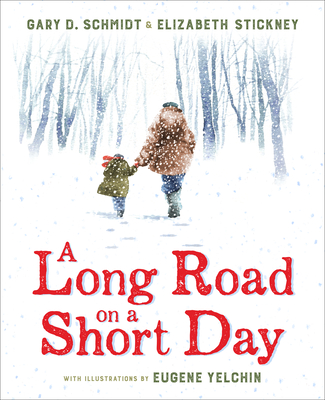
One January morning, Samuel’s mother mentioned that she wished they had a cow. His father smiled, took his best knife, and invited Samuel to come along to find a cow for his mother. So the two headed out into the cold and snow. At the Snow’s place, they traded the knife for two tin lanterns. Samuel got to play with their dog a bit too. At the Perry’s house they traded the lanterns for a book of poetry. Samuel got to visit some kittens in the barn and got a doughnut too. They traded the book to Widow Mitchell for a pitcher, then the pitcher for a sheep when Dr. Fulton went by. At the general store, the sheep was traded for a pocket watch after Samuel struggled to get it into the pen. He was glad they weren’t keeping the sheep! The pocket watch was traded for a pony and cart. With the storm brewing and night coming on, they almost stopped, but decided to keep trying for a cow. Soon Samuel was picking out a cow in trade for the pony and cart, and he got to choose something else besides!
Schmidt fills this simple story of trading with neighbors with so many small details that the entire small community is populated with characters. Each has a reason for needing to make the trade and often a treat for Samuel along the way. While the road is long and cold, it is also filled with a merry sense of community and shared responsibility. When Samuel makes the hard choice to not keep the little pony and cart, he is rewarded with more than a stubborn sheep for his sacrifice.
Yelchin’s illustrations are done in full-color in this chapter book. They show Samuel meeting each animal along his travels, each animal (except the sheep) one that he longs to keep with him. The illustrations have a marvelous old-fashioned, country quality to them.
A great wintry chapter book with lots of animals and a series of marvelous smart trades. Appropriate for ages 6-9.




 Waking Brain Cells