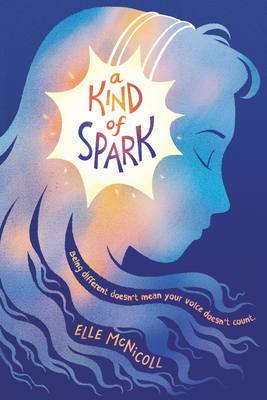
A Kind of Spark by Elle McNicoll

Cover image for A Kind of Spark.

A Kind of Spark by Elle McNicoll (9780593374252)

Addie is neurodivergent just like her older sister. She has had good luck with teachers at school until she gets Ms. Murphy, who clearly doesn’t appreciate having Addie in her class. Meanwhile, Addie’s previous best friend has found someone else to be friends with, a girl that bullies Addie constantly. The new girl in class though clearly wants to be Addie’s friend and is also willing to stand up and defend her. As Addie navigates friendship and school, she learns of her village’s history of witch trials and the women who were killed. She is determined to have a memorial created for the women who were killed, many of whom were likely different from the norm, just like Addie and her sister.

Written by a neurodivergent author, this middle grade novel won the Peter Blue Book Award for Best Story of the Year. It is clear to see why. This portrayal of being autistic is filled with compassion and empathy, but also doesn’t apologize for being different instead pointing out how important different perspectives and voices are. Written in the first person from Addie’s point of view, readers get to understand how it feels to need to control autistic behaviors and the toll it takes.

Addie explains directly how it feels to be autistic, how it is to have to suppress stimulation behaviors, and what having a meltdown feels like to the person having one. This book offers everyone a way to see underneath autistic presentation to the person underneath who has so much to say and contribute. This is done simply by allowing us inside Addie to deeply understand her as a human.

A compelling look inside autism and activism. Appropriate for ages 9-12.

Reviewed from e-galley provided by Crown Books for Young Readers.

Looking for a Jumbie by Tracey Baptiste

Cover image for Looking for a Jumbie.

Looking for a Jumbie by Tracey Baptiste, illustrated by Amber Ren (9780062970817)

When night comes, Naya doesn’t want to go to bed, she wants to find a jumbie. A jumbie is a creature from Caribbean tales rather like fairies or trolls. After being tucked into bed, Naya heads outside to find a jumbie. A voice in the woods asks her what a jumbie looks like, so Naya explains that a Douen has a big mouth and backward feet. The creature who had asked her the question looks a lot like a douen, but the two continue on together in search of jumbies. The next creature Naya meets looks like a lagahoo with thick fur, sharp teeth and chains. The three then venture on, meeting a fiery soucouyant, the goat-like huge Papa Bois, and the watery snakelike Mama D’Leau. All of them bring Naya back home, but what will her mother think?

This playful picture book has the structure and rhythm of traditional and beloved stories which will make it familiar to many children. The Caribbean creatures described will be new to many readers as will the idea of a jumbie in general. Readers will love the jaunt across the fields, woods and rivers to discover a variety of jumbies who are tricksters but also kind to Naya.

Ren’s illustrations take the bright tropical colors and pair that with the dark of night to create illustrations that stand out. The creatures themselves are a wide range of colors and types, each so different from the others that they are surprising and delightful when the pages turn.

Adventure into the land of Caribbean stories with this picture book. Appropriate for ages 3-5.

Reviewed from e-galley provided by Balzer + Bray.

News to Wake Your Brain Cells – October 22

CHILDREN’S BOOKS

Beloved author Gary Paulsen has died aged 82 – Pan Macmillan

Documentary chronicles diversity in children’s literature – SLJ

From middle grade novel to Netflix: a conversation with Adam Gidwitz about A Tale Dark & Grimm – 100 Scope Notes

Grover’s iconic Sesame Street children’s book turns 50 – NPR

Jerry Pinkney, the beloved award-winning children’s book illustrator, has died at 81 – NPR

Picture books for children – reviews – The Guardian

Southlake school leader tells teachers to balance Holocaust books with ‘opposing’ views – NBC News

Your favorite children’s books – The New York Times

LIBRARIES

Texas’s book censorship hysteria: an interview with Ashley Hope Pérez – OIF Blog

YA LIT

Netflix’s To All the Boys gets spin-off show with original star returning – DigitalSpy

Realms of Ruin – a project from six YA authors to create an NFT-based writing project has been cancelled – Bad Writing Takes on Twitter

Maybe… by Chris Haughton

Cover image for Maybe…

Maybe… by Chris Haughton (9781536220247)

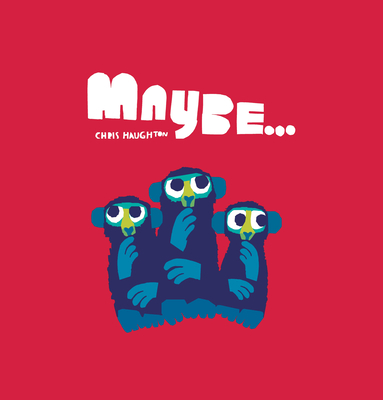
When the older monkey leaves, they warn the three little monkeys to NOT go down to the mango tree because there are tigers down there. But the little monkeys can’t stop thinking about how much they love mangos. Maybe… they could just head down and look. They see no tigers and a mango close enough to reach. They keep a close look out and quickly grab the mango. Yum! But what happens when they decide to have more mangoes and stop being careful? Tigers!

Haughton’s picture book about naughty and curious monkeys is a great read aloud. The text is made up solely of the monkeys’ dialogue with one another, so make sure you have at least four monkey voices at hand! With simple text, Haughton creates a book full of building tension that also offers a wild chase scene that will have readers merrily gasping along with the monkeys, before a final twist.

As always, Haughton’s illustrations are bold and bright. The deep blue monkeys stand out against the red backgrounds. Their simple and funny faces shine with their emotions as they pursue delicious mangos. The book expands its colors to mango yellow, rich oranges and purple/pink trees.

Gasps, giggles and glee accompany the monkeys on their adventure. Appropriate for ages 2-4.

Reviewed from e-galley provided by Candlewick.

Garlic and the Vampire by Bree Paulsen

Cover image for Garlic and the Vampire.

Garlic and the Vampire by Bree Paulsen (9780062995094)

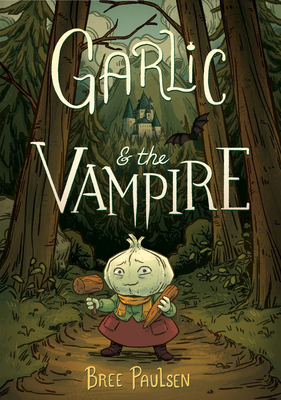
Garlic works at the farm market with the other living vegetables brought to life by the witch. Garlic tends to stressed and anxious, and is even more so when she accidentally sleeps in again on market day. The next day, the witch encourages Garlic to try using some magic to get her garlic to grow, encouraging Garlic to look beyond helping her in the garden too. But Garlic doesn’t want adventures at all, she’s much happier staying on the farm. So when a vampire moves into the abandoned castle nearby, it seems that Garlic is exactly the right one to send to get rid of him. After all, vampires can’t abide garlic.

This debut graphic novel for children is a look at anxiety and stress, all in one garlicky wrapper. With one bully on the farm to contend with, Garlic can’t seem to see the kindness of the others around her, instead getting fretful, sleeping too much, and doubting her own abilities. When she is sent on her mission, she finds her footing and eventually takes care of it in her own special way, making the ending satisfying on multiple levels.

The art style is unique and is something that will draw readers into the story. It has a great vintage feel to it from the classic vampire to the vegetables themselves. The humanoid veggies are marvelous characters, their emotions clear on both their faces and in their body language. The book plays characters that one might be afraid of against their tropes, showing dimensions to them in inventive ways both in the storyline and in the images.

A cozy graphic novel full of witches and vampires. Appropriate for ages 9-12.

Reviewed from e-galley provided by Quill Tree Books.

May Your Life be Deliciosa by Michael Genhart

Cover image for May Your Life Be Deliciosa.

May Your Life be Deliciosa by Michael Genhart, illustrated by Loris Lora (9781951836221)

Rosie’s family gathers every Christmas Eve to make tamales with her Abuela. She and her sister soak and clean the corn husks, her cousins chop onions and garlic, her aunt roasts the chiles, her mother prepares the masa dough, and her Abuela cooks the meat filling. The recipe with its secret seasonings isn’t written down anywhere, but her grandmother shares it with everyone in the family. Every year her grandmother shares a story about making the tamales. It wishes everyone that they are flexible, secure, proud, satisfied, loved and supported by family. Now the time has come to make dozens and dozens of tamales together with no recipe, just using your senses. Soon they get to practice patience as good smells fill the house. Finally it is time to eat!

Told with a deep sense of family and generational wisdom, this picture book celebrates time spent around the holidays together. Centered around the grandmother, this book gives her space to share not only her recipe but also her insights into what is important in life. The stories are shared as she creates the first tamale, tying them closely to what she is making with the protective layer, the olive at the heart, the corn, and more. It’s no surprise when you reach the Author’s Note that this is based on his own experiences in his Abuela’s kitchen growing up.

Lora’s illustrations show a multi-generational family and are inspired by her own Mexican family. Using bright yellows, warm oranges, and rich browns, she creates scenes where you can almost smell the spices. The stories are done in a mix of color and black and white, framing them as their own special time.

Full of love, food and warmth. Appropriate for ages 3-5.

Reviewed from e-galley provided by Abrams.

Me (Moth) by Amber McBride

Cover image for Me (Moth).

Me (Moth) by Amber McBride (9781250780362)

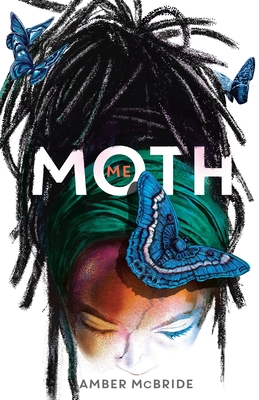
Moth’s family were all killed in a car accident that left her face scarred. Now she lives with her aunt, who barely acknowledges her presence. She goes to school where is also ignored. Moth used to be a dancer, movement was her way of expressing herself, but she can’t dance anymore. When Sani, a new boy, starts at her school, Moth is immediately drawn to him. Sani too is grappling with his own depression. He lives with his mother whose new boyfriend beats him. So when Moth’s aunt leaves her without even saying goodbye, Sani and Moth set off on a road trip together, heading across the country to Sani’s father’s home with the Diné people. The trip brings them closer together and they both discover the connections that were there all along.

It’s hard to believe this is a debut novel, since it is done with such skill and confidence. Written in verse, so much is left implied and unsaid, unrevealed until McBride is ready for us to understand and the characters are ready to see it too. Combining Hoodoo Black traditions with Navajo/Diné, the book is filled with a deep sense of spirituality and connectivity to ancestors and those who have passed on.

The writing is exceptional, filled with moments that are breathtakingly and achingly gorgeous and others that are difficult and dark. The book is filled with wonder despite the difficulties both characters face. It’s a love story, of two people coming together through their families’ traditions, the way they are initially drawn to one another, and then a slow-building deeper connection they create together.

A book like a moth that will metamorphose right in front of you. Appropriate for ages 13-18.

Reviewed from e-galley provided by Feiwel and Friends.

Before I Grew Up by John Miller

Cover image for Before I Grew Up.

Before I Grew Up by John Miller, illustrated by Giuliano Cucco (9781592703616)

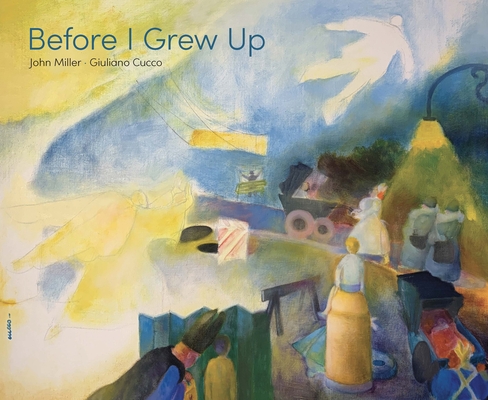
This surreal picture book takes the paintings of the late Giuliano Cucco and uses them to tell the story of his childhood. Cucco’s journey to becoming an artist is shown in his creativity as a child. From games he played with his mother to imagining paper boats he made floating away. His father was a scientist who studied light and preferred to spend time alone. Cucco spent time in his mother’s garden, dreaming and imagining as he lay surrounded by flowers. Sent to the city to live with his aunt and uncle, the book becomes more surreal and wild with a moon rising out of a box, swinging priests, and doves saved from the dinner plate. Returning to the country, he reconnected with the land and water of his childhood, creating paintings of ocean, violins, and the landscape.

This tribute of a picture book is one that celebrates the creativity of childhood and how allowing unfettered time and space allow that creativity to carry into adulthood. Miller uses his words as a minimal framework to offer a glimpse of the artist’s life and also to share his work. It is those paintings that truly tell the story, sharing emotions through the art. From darker moments to those filled with inspiration and light. The art is whimsical at times, literal at others.

A lovely surreal look at an artist, creativity and childhood. Appropriate for ages 4-6.

Reviewed from copy provided by Enchanted Lion.

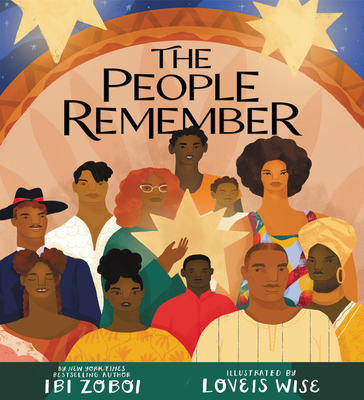
The People Remember by Ibi Zoboi

Cover image for The People Remember.

The People Remember by Ibi Zoboi, illustrated by Loveis Wise (9780062915641)

This nonfiction picture book explores African American history by connecting it to the seven principles of Kwanzaa. The book starts with Africa during a time of war when people disappeared or were sold. The history continues as they are taken into slavery, landing in places like South Carolina, Hispaniola and Brazil. Some escaped while those who could not escape found a common language and unity. People today remember the days of slavery, seeing that they have self-determination to change the nation. When slavery ended, the Great Migration came along with music on the streets and in churches, showing their collective work and responsibility. The history continues with examples of places that Black people created themselves and Black people who were successful, showing the principle of cooperative economics. Purpose came with voting rights, marches for civil rights, and the grief and hate of lynching. Creativity is shown again and again with music, dance, writing and more. The book ends with faith, a commitment not to forget and to carry forward with hope for change.

This Zoboi’s picture book debut. Her writing is exceptional, an ode to African Americans and their collective impact on the world. Using the Kwanzaa principles to guide the structure of the book works well, as the book naturally forms into seven sections. Zoboi uses a repeating structure of the various African tribes who were taken to America as slaves. In these sections and throughout, there is a call to Black pride, to seeing oneself as survivors and removing any shame from the narrative. Zoboi works to clearly draw the connection between history and today, showing the continuum that reaches backward and forward.

Wise’s illustrations are filled with lush colors, depicting connections between modern times and history. Their art is flat and graphic, almost poster like in its powerful simplicity. Each one could be framed and used to call out a movement or moment in history.

Powerful, unflinching and important. Appropriate for ages 6-9.

Reviewed from e-galley provided by Balzer + Bray.