Benny and Penny in How to Say Goodbye by Geoffrey Hayes

benny-and-penny-in-how-to-say-goodbye-by-geoffrey-hayes

Benny and Penny in How to Say Goodbye by Geoffrey Hayes (InfoSoup)

Benny and Penny return in another graphic novel perfect for new readers. In this story, the two mouse siblings start the story by jumping in piles of leaves. Penny worries that Benny will hurt the leaves, but Benny explains that the leaves are already dead. Then Penny discovers a dead salamander in the yard. Penny wants to bury the salamander but Benny gets angry and tries to stop her over and over again. As Penny moves ahead with burying the salamander with the help of another friend, Benny listens in and then starts feeling sad rather than angry about the little dead creature.

Hayes speaks to the experience of death for young children in a gentle and understanding way. He captures the movement from anger at loss to grief in a way that is organic and natural, allowing Benny the ability to feel his emotions and contrasting those with the way his sister is reacting. Both reactions are supported by the book, allowing children to think about their own emotions.

Hayes sets the book in autumn, showing seasonal aspects throughout the story. There are fallen leaves, bare trees, and a sense of change throughout the book. As always, Hayes beautifully illustrates his graphic novels, allowing them to be an ideal bridge between picture book and chapter book.

A lovely look at a child’s first experience with death, this graphic novel is gentle and filled with kind understanding. Appropriate for ages 5-7.

Reviewed from copy received from TOON Books.
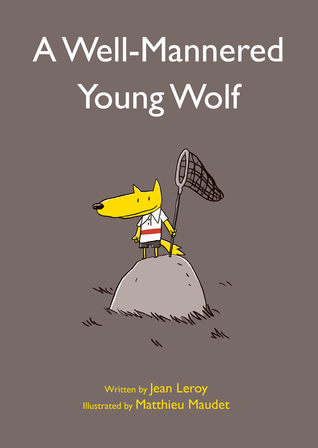
 

A Well-Mannered Young Wolf by Jean Leroy

a-well-mannered-young-wolf-by-jean-leroy

A Well-Mannered Young Wolf by Jean Leroy, illustrated by Matthieu Maudet (InfoSoup)

A young wolf who has been taught good manners by his parents heads into the wolf to hunt alone for the first time. One of the most important rules is that he must honor the final wishes of his prey. When he nets a rabbit, the rabbit requests that the young wolf read him a story. So the wolf heads home to find his favorite book but when he returns to the woods, the rabbit has left. Next, the wolf captures a chicken who requests music. After the wolf returns with an instrument, the chicken is gone too. The wolf then captures a little boy, who asks for a drawing. The wolf almost doesn’t agree, but the little boy has said please. When the wolf returns, the boy is still there waiting! And the boy loves the picture so much that he wants to show his friends. In a twist ending that is both satisfying and wonderfully dark, the wolf finally succeeds in his hunt.

Leroy sets a brisk pace in this picture book where much of the dialogue is done in speech bubbles and the text is kept to a minimum. The book dashes along on the hunt with the wolf, to and fro from his house and back to his disappearing prey. As the book gains momentum thanks to the repeating pattern, Leroy breaks it and moves ahead with the story at just the right time. It’s a wild and wolfish look at manners that everyone will enjoy.

Maudet’s illustrations convey the frustration of the young wolf very clearly. The wolf uses the book to capture the chicken and then leaves the instrument smashed on the ground in frustration. The limited color palette is filled with orange and red, played against gray and brown.

The book is completely wonderful, satisfying and the twist ending will leave children surprised and asking to hear it again. Appropriate for ages 4-6.

Reviewed from copy received from Eerdmans Books for Young Readers.


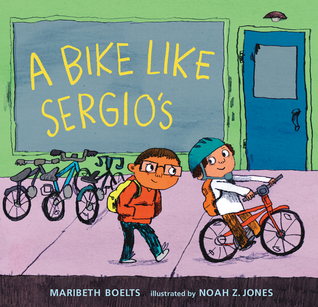
A Bike Like Sergio’s by Maribeth Boelts

a-bike-like-sergios-by-maribeth-boelts

A Bike Like Sergio’s by Maribeth Boelts, illustrated by Noah Z. Jones (InfoSoup)

Ruben would love to have a bike like his friend Sergio has. Even though his birthday is coming, Ruben knows that he doesn’t get presents like bicycles. His family is large and there’s not enough money even for all of the groceries they need some weeks. One day when he is at the store for his mother, a lady in front of him drops a dollar bill. Ruben picks it up and puts it in his pocket, but when he looks at it later he discovers it’s actually a one-hundred dollar bill! That’s enough for him to get the bike he’s always wanted. Now Sergio has a dilemma, does he give the money to his family for groceries? Does he give it back to the woman? Or does he buy the bike of his dreams?

Boelts has created a story that is much more than a lesson in morals. This story is about ethical choices yes, but also about economic disparity and families living on the edge. It is a story told with real subtlety and offering an understanding of what would drive a child who is good at heart to steal what they thought was a dollar. It’s a book about the stories we tell ourselves to make our decisions “right” and the way that doing the right thing may not always be easy or clear.

The illustrations by Jones are modern and rather quirky. They fill the page with the vividness of the urban setting. The love and caring of Ruben’s family are also celebrated in the illustrations.

Subtle and smart, this book about decisions and doing the right thing asks all the right questions. Appropriate for ages 5-7.

Reviewed from library copy.

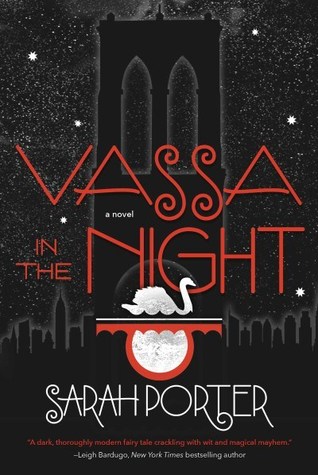
Vassa in the Night by Sarah Porter

vassa-in-the-night-by-sarah-porter

Vassa in the Night by Sarah Porter (InfoSoup)

When the nights in Brooklyn seem to be getting longer and longer, lasting almost entire days, Vassa finds herself looking forward to school just not to be home any longer. Part of it is her stepmother and stepsisters and part is pure boredom. It doesn’t help that Erg, the wooden doll that Vassa’s mother gave her before she died, is stealing things from her stepsisters which are then blamed on Vassa. So when one of her stepsisters basically dares Vassa to head to the dangerous local convenience store, Vassa accepts the challenge. She heads to Babs Yagg’s store, the one that dances on chicken legs and that you have to sing down. She makes sure that Erg is with her, as always, and knows that she is in for an unusual experience. What Vassa doesn’t realize is that she is headed straight into her dangerous destiny and will discover an entire magical world that she never knew existed: one with bleeding swans, a dark motorcyclist, severed hands, and beheaded teens.

Inspired by the Russian folktale, Vassilissa the Beautiful, this novel for teens embraces all of the strange and bizarre in that story and takes it even further. Baba Yaga’s home on chicken feet becomes an amazing convenience store filled with some treats that are tempting and others that seem odd and still others that nauseate. The modern Babs Yagg is still very much a witch, and one that toys with her prey in haunting and excruciating ways. There are impossible tasks, the need for plenty of bravery, and real loss and death threatened at every turn.

This is a mesmerizing book, one that is filled with gorgeous writing that stays out of its own way and then rises beautifully to create new moods. Throughout the book the story turns briefly away and into other perspectives like those of the swans themselves or of the attorneys who are after Babs. The language changes and weaves new patterns, creating completely different worlds and experiences and then gently carrying the reader back to the main story. It’s a powerful magic all its own.

Beautifully written, this twist on a folktale is bizarre, wild and extraordinary. Appropriate for ages 14-17.

Reviewed from e-galley received from Edelweiss and Tor Teen.


Natalie Babbitt Has Died

Tuck Everlasting Tuck Everlasting

Natalie Babbitt, author of the incredible Tuck Everlasting, has died of lung cancer. She died on October 31 at the age of 84. Tuck Everlasting celebrated its 40th anniversary last year.

From the Publisher’s Weekly obituary:

In a statement, Samuel F. Babbitt shared this reflection: “Natalie was a remarkable woman. While more than fulfilling her roles as wife and mother, she sharply observed her fellow humans, shaping stories that helped her and her readers grapple with both the trivial and fundamental trials of life. Words were precious things to her, and she chose them, shaped their facets, and set them on the page like a master jeweler.”

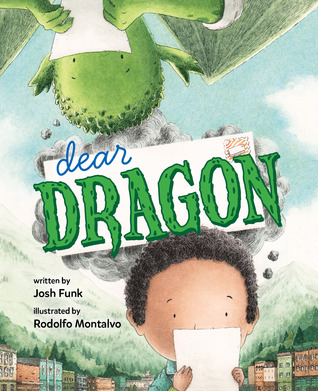
Dear Dragon by Josh Funk

dear-dragon-by-josh-funk

Dear Dragon by Josh Funk, illustrated by Rodolfo Montalvo (InfoSoup)

At two different schools, two boys are assigned to be penpals with one another. Their letters have to be written in rhyme. The boys start by talking about the assignment and school and then quickly move on to what they enjoy doing and their families. What the boys don’t know though is that George is a human and Blaise is a dragon. As each boy misinterprets the clues that the other is giving them about how different they are, a picnic approaches where the penpals are going to meet. What happens when the class of humans and the class of dragons finally meet one another? Success!

Funk cleverly uses fantasy to speak about how we see differences between one another. His use of dragons and the intelligent way that he hides the truth while all the while revealing it too makes for a fun book to share. This would be a great book to offer to children who are starting their own penpal assignments and also offers an opportunity for any child to see how things can be misunderstood even when they are stated clearly. It also speaks to our ability to think that people are just like us and the ability to see beyond physical differences and to the person (or dragon) inside.

The illustrations are playful and bright. They capture the ways that the two boys are meaning their messages. So one image is the way that the writer intended the message to be read and the other is thought bubbles for how the message is being interpreted by the reader. There is plenty of action and drama imagined about simple messages and then in reverse there are dramatic scenes that are completely misunderstood and downplayed.

Funny and clever, this picture book demonstrates that humans can see beyond green scales to the pal underneath. Appropriate for ages 4-6.

Reviewed from ARC received from Viking Books for Young Readers.

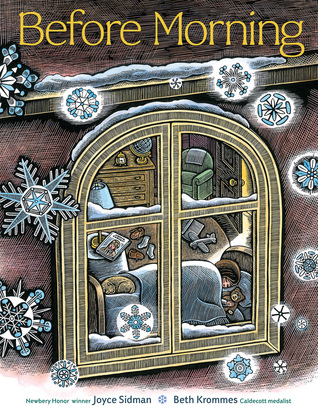
Before Morning by Joyce Sidman

before-morning-by-joyce-sidman

Before Morning by Joyce Sidman, illustrated by Beth Krommes (InfoSoup)

Days are busy, filled with activity. One child whose parent is heading off to pilot a plane in the early morning put her wishes into words in the form on an invocation. She asks for snow to come, to change the face of the city and the pace of their life. She wishes for a slowness and as the book continues readers will see the snow start to fall, the parent leave for the airport, then the airport start to fill with waiting passengers who are not going anywhere. Then the parent catches a snowplow ride back home where the family spends a day together in the snow sledding.

Sidman’s invocation is simple and heartfelt. She voices it with the clarity of a ringing bell and real honesty. She plays her quiet voice against the hustle and busyness of an urban setting, allowing the snow and the wonder of it to slow the entire book down to the pace of the invocation itself. It’s a beautiful effect, strengthened by the illustrations and the beauty of the words themselves.

I was thrilled to see another pairing of Sidman and Krommes. Krommes creates scratchboard illustrations that have the organic feel of block prints. They are rich with details and fill the pages with subtle colors and dancing snow. The art has an inherent warmth to it, inviting snuggling under covers together.

Another great achievement for this author and illustrator pair, this is a great winter story that focuses on family and time spent together. Appropriate for ages 3-5.

Reviewed from library copy.


The Secret Horses of Briar Hill by Megan Shepherd

the-secret-horses-of-briar-hill-by-megan-shepherd

The Secret Horses of Briar Hill by Megan Shepherd (InfoSoup)

Emmaline lives at a hospital that used to be a grand house. The gardens still exist, but they are overgrown and in shambles. When Emmaline looks into the mirrors in the hospital, she sees winged horses living in the world in the reflection. Then one day when she climbs into a walled garden on the grounds, she discovers a wounded winged horse named Foxfire who is unable to fly and seems to have entered Emmaline’s world. On the sundial, Emmaline discovers a letter from the Horse Lord that gives her a quest to surround Foxfire with all of the colors from the rainbow to protect her from a dark horse who is hunting her. But where is Emmaline going to find bright colors in her world of World War II gray?

Shepherd has crafted a novel for young readers that offers a glimpse into another world where mirrors are filled with wild winged horses. It is a world with a kind Horse Lord who needs a child’s help and also one filled with the hoof and wing beats of a huge Black Horse. Beautifully, she allows readers to wonder if Emmaline is entirely imagining the horses, and keeps that question up until the end and beyond. Yet readers who believe will adore this book filled with mirror magic and dreams.

The “still waters” that Emmaline fights are tuberculosis. Shepherd makes sure that readers know that this can kill when Emmaline loses her closest friend at the hospital. Emmaline’s own tragic past is also revealed late in the book. Though Emmaline is fighting for her life, she is also filled with determination to save the horses and fight back against darkness. As the still waters rise in her, so does the full moon which is the deadline of when she must find all of the colors.

Beautifully written, this novel takes readers to World War II England and the battles fought on the homefront. Appropriate for ages 9-12.

Reviewed from e-galley received from Edelweiss and Delacorte Books for Young Readers.

A Morning with Grandpa by Sylvia Liu

a-morning-with-grandpa-by-sylvia-liu

A Morning with Grandpa by Sylvia Liu, illustrated by Christina Forshay (InfoSoup)

Mei Mei’s grandfather, Gong Gong, is in the garden doing his tai chi forms. He sways his arms and explains that the form is called “White Crane Spreading Its Wings.” He also tells Mei Mei that tai chi is a martial art which makes Mei Mei start doing karate chops. Gong Gong continues to show Mei Mei about tai chi and its slow and smooth motions. Mei Mei does each motion with her own style. Then it is time for Mei Mei to teach Gong Gong about yoga. With stretching movements like Downward Dog and the Mermaid, Gong Gong is soon learning new poses of his own.

This book won Lee & Lows New Voices Award. It is a lovely look at the relationship of grandparent and grandchild through shared experiences and trying new things together. The incorporation of Tai Chi and Yoga is also done very well and there is a section in the back of the book that offers more information on the poses and forms demonstrated in the story. The way that Mei Mei is able to both learn from her grandfather and then teach him what she knows is a noteworthy element to the story, demonstrating that children can both be students and teachers.

The art by Forshay is bright and refreshing. She captures the various forms and poses with ease, showing the balance required for both Tai Chi and Yoga. She also demonstrates the energy of Mei Mei and the deep affection that the two of them have for one another. It is a book filled with movement and motion.

A joyful look at grandparents and grandchildren and the dynamic of learning from one another, this picture book is superb. Appropriate for ages 4-6.

Reviewed from library copy.