This Weeks Tweets, Pins & Tumbls

Here are some cool links I shared on my Twitter, Pinterest, and Tumblr accounts this week:

Halloween chapter books for early readers:

CHILDREN’S BOOKS

Decolonizing Nostalgia: When Historical Fiction Betrays Readers of Color — The Horn Book

How Audiobooks Can Help Kids Who Struggle with Reading

Unearthing the true story behind former British spy and treasured children’s author Arthur Ransome

We interviewed and about their latest creative collaboration!

Willy Wonka Movie in the Works at Warner Bros.

LIBRARIES

City To Expand Library Facilities In Public Housing Developments

 :

TEEN LIT

The 30 Best Young Adult Books of All Time

HarperCollins to Publish a New Pittacus Lore Series

Irish Book Awards Shortlist

The Irish Examiner has the shortlist for the 2016 Irish Book Awards. The awards span 14 categories. Here are the ones related to literature for youth:

SPECSAVERS CHILDREN’S BOOK OF THE YEAR – JUNIOR

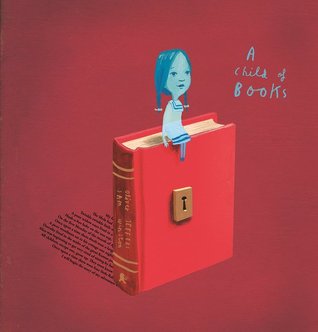
A Child of Books Goodnight Everyone

A Child of Books – Sam Winston and Oliver Jeffers

Goodnight Everyone – Chris Haughton


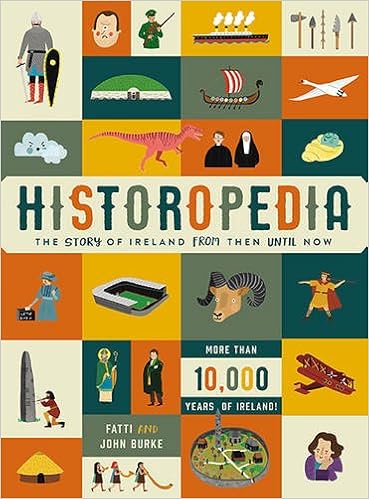
Historopedia – Fatti and John Burke

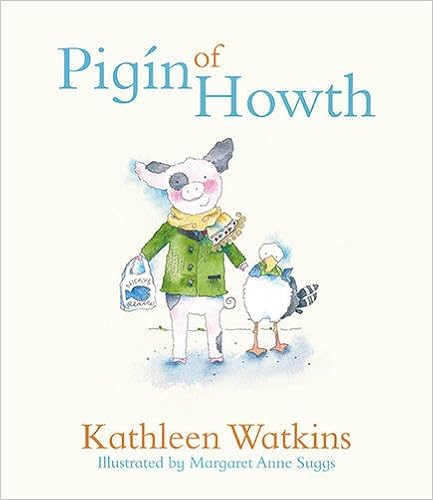
Pigín of Howth – Kathleen Watkins, illustrated by Margaret Anne Suggs

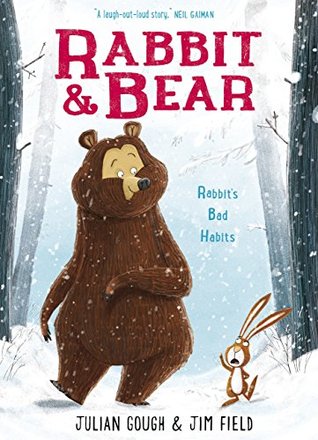
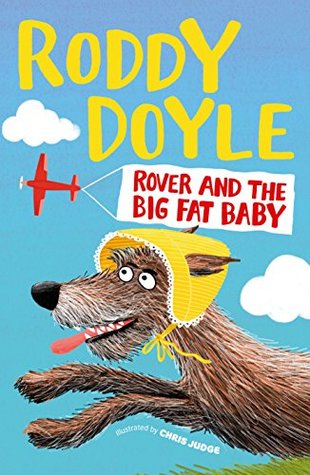
Rabbit and Bear: 1: Rabbit's Bad Habits Rover and the Big Fat Baby (Giggler 4)

Rabbit and Bear: Rabbit’s Bad Habits – Julian Gough & Jim Field

Rover and the Big Fat Baby – Roddy Doyle, illustrated by Chris Judge


SPECSAVERS CHILDREN’S BOOK OF THE YEAR – SENIOR

Knights of the Borrowed Dark The Book of Shadows - Nine Lives Trilogy 2

Knights of the Borrowed Dark – Dave Rudden

The Book of Shadows – E.R. Murray

The Making of Mollie Needlework

The Making of Mollie – Anna Carey

Needlework – Deirdre Sullivan

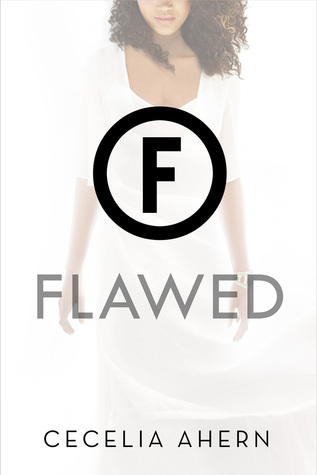
Nothing Tastes As Good Flawed (Flawed, #1)

Nothing Tastes As Good – Claire Hennessy

Flawed – Cecelia Ahern


Six Dots by Jen Bryant

six-dots-by-jen-bryant

Six Dots: A Story of Young Louis Braille by Jen Bryant, illustrated by Boris Kulikov (InfoSoup)

Louis Braille lost his sight at age five from an accident and a resulting infection. His family helped him learn to cope, making him a cane that he could use to explore a little farther from home each day. His brothers taught him to whistle and his sisters made him letters out of straw. He could play dominoes, knew trees by touch, flowers by their smell and could listen to books being read aloud. But there were no books for blind children like him. Even when he got into a school for the blind in Paris he had to work very hard and become one of the best students to be able to access their books. When Louis achieved that though, he found that the books were done in large raised wax letters so thick books were actually quite short. Then there was news that a French army captain had created a way to send secret messages that was read by touch. Louis worked to make the system readable by the blind, creating his own alphabet system as a teenager!

Bryant writes in first person from Braille’s point of view. She explains how Louis lost his sight with just enough detail to make it understandable how tragic it was but doesn’t overly linger there. When Louis’ sight is gone, the text changes to become filled with noises and other senses than sight. Bryant moves the story forward using Braille’s desire to read for himself, that drives both the story and Braille’s own life. As each opportunity proves to be disappointing, Braille does not give up hope, instead developing throughout his life a tenacity to find a solution.

Kulikov’s illustrations play light against dark. When Braille loses his sight, the pages go black with shadowy furniture forms only. Color is gone entirely. The reader is not left there, but moves back into the world of color unless the story is speaking about Braille’s blindness specifically, so when Braille finally gets to try reading the wax lettering, the page goes dark again, also showing his disappointment in the solution.

Intelligently designed and depicted, this is a warm and inspiring look at the life and achievements of Louis Braille. Appropriate for ages 6-9.

Reviewed from copy received from Knopf Books for Young Readers.


2016 Governor General’s Award Winners

The winners of the Governor General’s Awards have been announced. Two of the Canadian award’s winners are for young people’s literature:

YOUNG PEOPLE’S LITERATURE – TEXT

Calvin

Calvin by Martine Leavitt

YOUNG PEOPLE’S LITERATURE – ILLUSTRATED BOOKS

Tokyo Digs a Garden

Tokyo Digs a Garden by Jon-Erik Lappano and Kellen Hatanaka


The Singing Bones by Shaun Tan

the-singing-bones-by-shaun-tan

The Singing Bones by Shaun Tan (InfoSoup)

I’m not really sure how to best review this work. It has a brilliant foreword by Neil Gaiman, who says, “Shaun Tan makes me want to hold these tales close, to rub them with my fingers, to feel the cracks and the creases and the edges of them.” The introduction by fairy-tale expert Jack Zipes states, “…Tan has transformed the Grimms’ tales into miraculous artworks that will move and speak for themselves.” I can only echo this sentiment, because the sculptures that Tan has created bring the Brothers Grimm stories into reality, make the solid and strange in a way that reading them doesn’t.

The sculptures are brilliant, showing aspects of familiar stories that bring new meaning to the tales but also revealing new and less familiar stories to readers and inviting them to indulge in more darkness and wonder. Turning the pages in this book is like a journey filled with gasps of disbelief and realization. New images are revealed on each page and so are the intimate hearts of the tales.

A stunning and brilliant series of sculptures with glimpses into the tales they represent. This book shows older children that the darkness of Grimm tales will still call to them. Appropriate for ages 9-13.

Reviewed from ARC received from Arthur A. Levine Books.


2016 Teens’ Top Ten

YALSA has announced the Teens’ Top Ten for 2016. Nominees are currently being taken through December 31st for the 2017 Teens’ Top Ten list. Teens aged 12-18 can nominate their picks here.

Here are the 2016 Teens’ Top Ten:

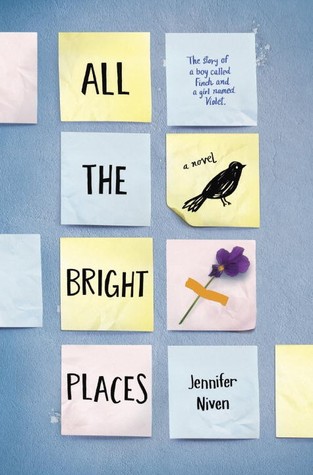
Alive All the Bright Places

Alive by Chandler Baker

All the Bright Places by Jennifer Niven

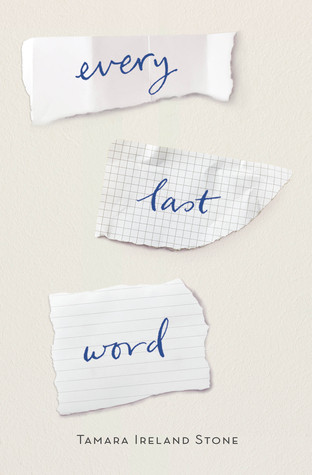
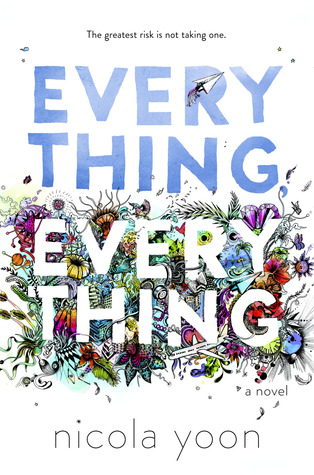
Every Last Word Everything, Everything

Every Last Word by Tamara Ireland Stone

Everything, Everything by Nicola Yoon

The Game of Love and Death Illuminae (The Illuminae Files, #1)

The Game of Love and Death by Martha Brockenbrough

Illuminae by Amie Kaufman and Jay Kristoff

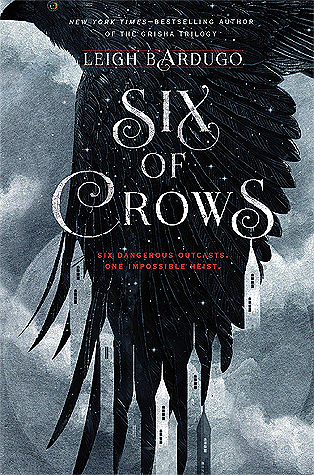
The Novice (Summoner, #1) Six of Crows (Six of Crows, #1)

The Novice: Summoner: Book One by Taran Matharu

Six of Crows by Leigh Bardugo

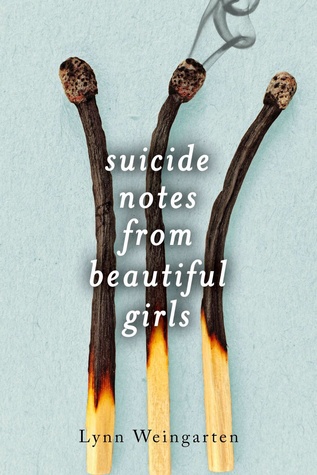
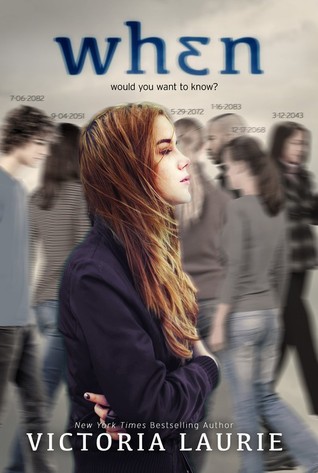
Suicide Notes from Beautiful Girls When

Suicide Notes from Beautiful Girls by Lynn Weingarten

When by Victoria Laurie


There is also a video:

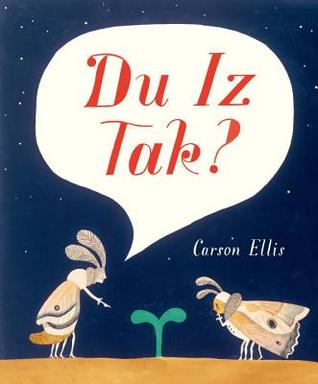
Du Iz Tak? by Carson Ellis

du-iz-tak-by-carson-ellis

Du Iz Tak? by Carson Ellis (InfoSoup)

This inventive picture book takes a close-up look at a garden filled with insects. There is the caterpillar who enters his chrysalis, beetles and a ladybug who notice a sprout growing. They go to Icky, who lives in a log nearby and who has a ladder they can use. The sprout continues to grow and grow. At night other insects and bugs come out. Soon a fort is built in the growing plant but then, disaster! A spider comes and webs the entire plant. As nature continues to take its course, more insects arrive to see the plant flower. Slowly the plant tips over and the fort falls. Seeds drift to the ground. Fall arrives and the butterfly emerges from her cocoon. In spring, new sprouts appear.

The summary above does not capture what is truly amazing about this book. It is the language play, the word choices and the way that at first it seems like a foreign language but by the end of the book you are “speaking” and understanding bug. The language has phrases that are recognizable, allows for decoding of the language and then repeats in a way that allows readers to better understand. It’s very cleverly done and a book unlike any other I’ve experienced.

Ellis’ illustrations add to the otherworldly appeal of this book. Many of the insects are recognizable and still they are strange and wild. The illustrations beautifully focus on the same log and plant throughout, with seasons changing, the plant growing, and the insects coming and going. It is rather like an organic theatrical set and stage.

I have a deep affection for this zany picture book. Children who enjoy word play will love this and may find themselves speaking the bug language for awhile. Appropriate for ages 3-6.

Reviewed from copy received from Candlewick Press.


Some Writer! by Melissa Sweet

some-writer-by-melissa-sweet

Some Writer!: The Story of E. B. White by Melissa Sweet (InfoSoup)

The life of E. B. White, author of several beloved children’s books, is shown here in a children’s biography from a two-time Caldecott Honor winner. White’s upbringing as a child with his summers spent on a lake in Maine shows the impact of childhood experiences. He won several writing awards as a teenager, knowing exactly what he wanted to do. His work for The New Yorker and other publications as a column author and poet is shown as well as Sweet spends much of the book on the author’s adult life. The strong connection he had with water, nature and Maine shines on the page just as it does in his work. Issues with Stuart Little being accepted in libraries and other moments of note are wonderfully portrayed in original wording of letters. A writer who lived away from the fame he was garnering, White continued to do farm work, sail his boats, and enjoy the simple life he adored.

Sweet has written a simply incredible biography. Her writing flows with that of White. Hers has a frankness and an honesty that is particularly important in biography. Sweet intersperses White’s writing throughout the book, sometimes in clippings from magazines or newspapers and other times clearly typed using a typewriter to get the right feel. Unlike many children’s biographies, Sweet depicts White’s childhood and then moves on to his work and his adult life. While his childhood informs his work, it is not the sole focus of the biography, which honors young readers will plenty of information on his full life.

Sweet’s illustrations are equally amazing. She uses physical items on the page, weathered wood, screws, rope, typewriter keys, and leaves. She incorporates photographs and then her own art as well, creating a world of found objects, drawn Wilburs and Templetons, photos and actual documents that is rich and wondrous. It is like opening a drawer and discovering a treasure trove, a book you want to curl up with and read just as you did those beloved childhood books.

In short, this is a masterpiece. A book with just the right tone, style and organic nature. Terrific! Appropriate for ages 8-12.

Reviewed from library copy.


Finding Wonders by Jeannine Atkins

finding-wonders-by-jeannine-atkins

Finding Wonders: Three Girls Who Changed Science by Jeannine Atkins (InfoSoup)

This compelling verse novel tells the story of three girls who grew up to be women who made their own personal mark on science. There is Maria Merian, a girl born in 1647 who loved nature. Through careful observation, she discovered the metamorphosis of butterflies. Her artistic talents also helped document the life cycles of insects. Born in 1799, Mary Anning helped her father collect stone curiosities in England. When she saw a huge creature in the rocks, she discovered the first of the many fossils and dinosaurs she would uncover during her life. Born in 1818, Maria Mitchell grew up helping her mapmaker father in Nantucket. Exploring the night sky together, she spent years looking through her father’s telescope before discovering a new comet. All of these women battled societal expectations and familial pressures to become the scientists they were.

Atkins uses verse to directly tell the stories of these girls, the way they were raised and how they grew to become scientists. Readers unfamiliar with them will be amazed that they were able to reach such prominence in the time periods they lived and that their fathers were the ones who allowed them the freedom to learn and explore. These women demonstrate that through tenacity and determination one can become exactly who they were meant to be, despite almost everyone disapproving. The tales are inspiring and insightful.

Atkins has chosen three women whose stories work particularly well together. There are commonalities between them even though they span more than a century and involve different types of scientific endeavors.  The strong focus on faith in all of the stories shows the way that scientists even today must reconcile their religious beliefs with scientific truths. Faith is handled with a frank sincerity here, an important part of family and life, but also something that can be personal to an individual.

Beautifully written, these brief glimpses of amazing women in science will introduce new sources of inspiration to young readers. Appropriate for ages 9-12.

Reviewed from copy received from Atheneum Books for Young Readers.