The Secret of Nightingale Wood by Lucy Strange

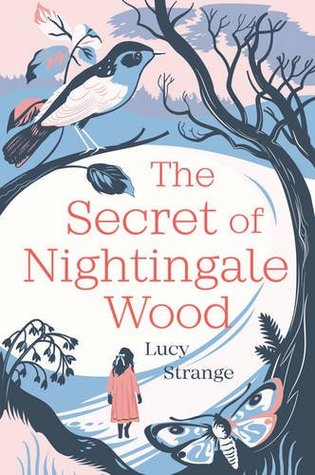
The Secret of Nightingale Wood by Lucy Strange

The Secret of Nightingale Wood by Lucy Strange (9781338157475)

This British debut is a riveting look at mental illness after the First World War. Henry and her family have moved to Hope House, but Henry’s mother isn’t herself and soon is prescribed absolute bed rest, medicated to keep her asleep most of the time and her door is locked so Henry can’t see her. Henry is left in the rented house with her new baby sister and their nanny who also cares for Henry’s mother. Her father has left to work out of the country. Meanwhile, Henry is drawn to the woods on the property and there she meets a woman who lives on her own in a rundown caravan. She also starts to see and speak to the ghost of her dead brother. As Henry works to figure out what is happening to her mother and how she can reach her, doctors begin to threaten to take her mother to an asylum and hint at the kinds of treatments they might do. Henry soon becomes the only one able to rescue them all.

Strange writes with an eye for detail and a flair for metaphors that create a deep and lush mood throughout this novel. Her writing invites us all to explore darkness, the drama of woods at night and to make friends with those haunting us. The historical setting in Britain is particularly well drawn. The invasive treatments for depression are hinted at, just enough for young readers to understand the threat but not enough for them to be truly frightened.

Henry is a grand heroine. She finds herself far out of her depth in this novel and yet navigates dealing with adults with grace and a certain style. She understands more than the adults in the novel give her credit for and in the end she figures out how best to fix the problems herself, with some help from her grownup friends.

This British import will be enjoyed by fans of classics who will enjoy the historical setting and call for one girl to be the hero. Appropriate for ages 9-12.

Reviewed from ARC provided by Scholastic.
 

3 Picture Books Celebrating Diversity

Days with Dad by Nari Hong

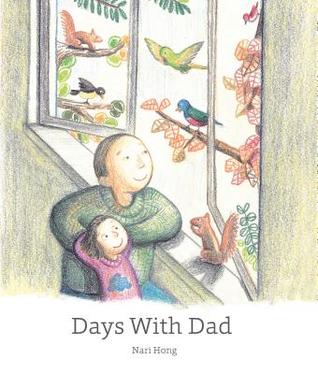
Days with Dad by Nari Hong (9781592702336)

Narrated by a little girl, this picture book looks at growing up with a father in a wheelchair. The girl’s father often apologizes for activities he can’t participate in. But the little girl always responds by saying that she prefers other similar activities that they can do together. Her father can’t go ice skating, but they can fish together through the ice. He can’t swim in the sea, but he can build sandcastles with her. He can’t ride bikes, but they can look at the flowers in the park together. Throughout the book, the tone is positive and joyful, showing that life is about what people can do together and the time spent with those you love. Described on the jacket as semi-autobiographical, this book has been listed on IBBY’s 2017 Outstanding Books for Young People with Disabilities. This book’s illustrations add to the lightness of the story with their playful feel. Appropriate for ages 3-5. (Review copy provided by Enchanted Lion.)

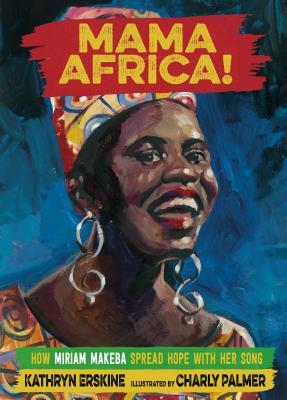
Mama Africa by Kathryn Erskine

Mama Africa by Kathryn Erskine, illustrated by Charly Palmer (9780374303013)

A picture book about the incredible South African singer, Miriam Makeba, who became the voice of fighting against apartheid. Called Mama Africa, she sang to expose the injustice happening around her at a time when it was dangerous to do so. Eventually, she lived in exile in the United States yet never stopped speaking and singing about her home. She spoke before the United Nations to appeal for help. Finally able to return home after apartheid ended, she continued to fight for justice the rest of her life. Erskine lived in South Africa during apartheid and draws from that knowledge in her book. Throughout, there is a celebration of the impact of song and the importance of giving voice to those living under injustice. The art by Palmer is rich and vivid. He offers portraits of people as well as landscapes that capture the fight for freedom. Appropriate for ages 6-9. (Review copy provided by Farrar Straus & Giroux.)

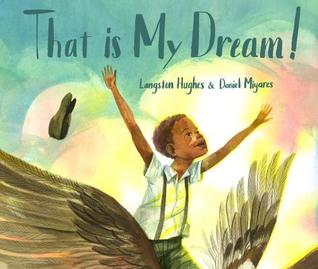
That Is My Dream By Langston Hughes

That Is My Dream! By Langston Hughes, illustrated by Daniel Miyares (9780399550171)

Miyares turns the poem “Dream Variation” by Langston Hughes into a picture book that shows a segregated town in the 1950s. There are separate drinking fountains for white and black people and the races are separate when they relax as well. Then the book changes with a feeling of whirling and release into a book that shows equality, shared time together and the hope of a day spent in harmony. The book is infused with hope, showing how possibilities of freedom and equality can be realized eventually. The book doesn’t move to the present, instead staying in the 1950s and showing what no segregation would have looked like back then. The illustrations by Miyares are beautiful, filled with deep colors and diversity. A very special book that pairs important poetry with a renewed vision. Appropriate for ages 4-7. (Review copy provided by Schwartz & Wade.)

If My Moon Was Your Sun by Andreas Steinhofel

If My Moon Was Your Sun by Andreas Steinhofel

If My Moon Was Your Sun by Andreas Steinhofel, illustrated by Nele Palmtag (9780874860795)

This German children’s book looks at one day when Max decides to take his grandfather out of the nursing home where he lives. Max packs sensibly for his adventure, makes his way to the nursing home, and even knows the code to let them leave without setting off an alarm. Another resident from the nursing home joins them on their bus trip out to the countryside to Blossom Valley, the place where Max’s grandfather had proposed to his grandmother. The three of them spend the afternoon there in the tall grass of the meadow, dancing sometimes, laughing others and just being together. When Max’s grandfather starts to forget what is happening, Max hugs him tight and his memory comes back again. Eventually the police and caregivers and Max’s mother find them, but not until they have had a lovely day in a very special place.

Translated from the original German, this book’s writing is exceptional. I started out highlighting all of the lovely poetic moments and found myself drawn to page after page of text. Steinhofel speaks to the way that longing fills your entire body, too big for just your heart to contain it. He writes of a grandfather who hums, the noise lifting from his body. He writes of the moon, always there during the day but sometimes not able to be seen. Then he beautifully ties that image to the relationship of a grandfather with dementia and the grandson he loves.

There is nothing held back in the writing. It is completely heartfelt and emotional. Each moment they spend together is special and filled with a momentous feeling. The illustrations have a childlike quality to them at times. They burst from the page, showing the moon above, the bright sunniness of the meadow, the green of the grass and the trees. There is a leaping, dancing movement to them that is particularly suited to the subject.

A book that lingers with you, fills you up and that you want to hold onto. Appropriate for ages 7-10.

Reviewed from digital galley received from Edelweiss and Plough Publishing.

3 Hopeful Picture Books

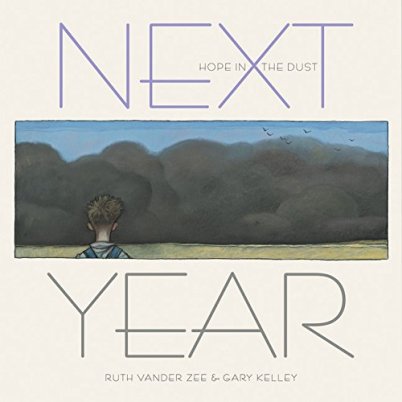
Next Year by Ruth Vander Zee

Next Year by Ruth Vander Zee and Gary Kelley (9781568462820)

A gripping look at the Dust Bowl from the point of view of a child growing up in the 1930s, this picture book combines strong imagery with a poetic prose. The book takes no time in becoming dramatic, showing a dust cloud coming towards the boy: “Like midnight in the middle of the day, without moon and stars.” When he reaches home after crawling for two miles because he can’t stand in the dust and the wind, he discovers his parents despairing and desperate. While they may have been hopeful at one time, the boy knows that he has to help and learns about alternative ways to farm. As the days pass, the rain returns but it’s too late for his parents’ hope to return. Powerful and fascinating, this picture book look at the Dust Bowl is exceptional. (Reviewed from library copy.)

StolenWords_Jacket.indd

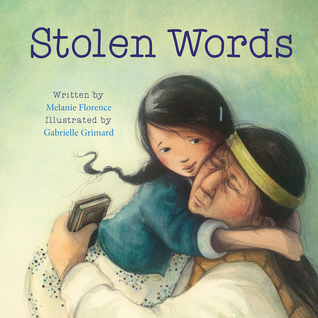
Stolen Words by Melanie Florence, illustrated by Gabrielle Grimard (9781772600377)

A little girl asks her grandfather how to say grandfather in Cree. Her grandfather pauses for a long moment and then explains that he lost his words a long time ago. He then explains to his granddaughter about being taken away from home and put into a boarding school. He wasn’t allowed to speak Cree there at all, only English. The next day, the little girl comes out of school with a book, an introduction to Cree for them to learn together. The author of this picture book is half Cree and never got to speak with her own grandfather about his language and his history. The book is filled with beautiful language, capturing the harshness of the boarding schools and the love of close family as contrasts of cold and warm, hard and soft. Grimard’s illustrations also show the contrasts through images, turning black and white for memories rather than the soft colors used in the modern parts of the book. An introduction to the importance of language, families and identity that is appropriate for small children. (Reviewed from library copy.)

Three Balls of Wool by Henriqueta Cristina

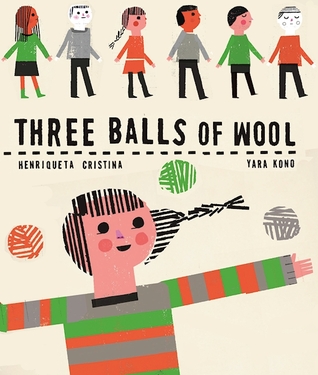
Three Balls of Wool (Can Change the World) by Henriqueta Cristina, illustrated by Yara Kono (9781592702206)

Published in partnership with Amnesty International, this picture book uses colors of wool to speak to the conformity required under Communist regimes. The book focuses on a family who flees their home country in the hopes of finding a better, kinder place to live. At first their new country is good. The children can go to school and the parents are less worried. But steadily things change and soon there are only three colors of sweaters for the children to wear. The mother of the family though, realizes that she can make a difference and sews the yarn from the different sweaters into new patterns that incorporate all three. Soon the new designs spread and things begin to change for the better. Cristina has written this picture book analogy from her own experiences as a child. There is a straightforward nature to the writing that allows the analogy to really work, giving it a strong foundation. The art is graphic and strong, leaping off of the page and yet also paying homage to Communist buildings and structures. This is a clever and intelligent book worth discussing in classrooms and families. Appropriate for ages 6-9. (Review copy provided by Enchanted Lion.)

3 Wintry Picture Books

Two of these picture book welcome winter while another sends it on its way:

Spring for Sophie by Yael Werber

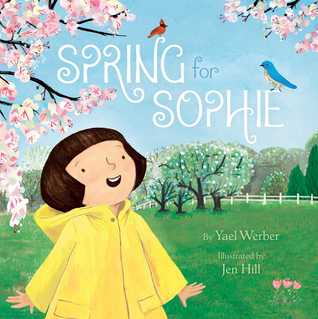
Spring for Sophie by Yael Werber, illustrated by Jen Hill (9781481451345)

Sophie is waiting for spring to come, but she’s not sure how to tell when it arrives. Her mother explains that she should be able to hear the changes, so Sophie is patient and listens while she is outside. Eventually she starts to hear more and more birds in the trees. Still, it was snowy outside. Her father explains that she can use her feet to feel spring coming. So Sophie paid attention to how soft the snow was and eventually, it was less icy and more soft. Still, the snow was there. Her mother tells her to use her eyes and nose. Sophie watches the snow melt, the green return and one day her nose tells her that spring has finally arrived! This picture book celebrates the change of season in a tangible way that children will love. The focus is on the child experiencing the changes themselves with gentle guidance from loving adults. The illustrations celebrate both winter and spring, the slow but steady transformation between seasons. A perfect book to invite exploring outside. Appropriate for ages 3-6. (Reviewed from library copy.)

William_s Winter Nap by Linda Ashman

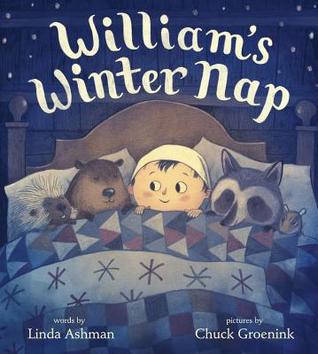
William’s Winter Nap by Linda Ashman, illustrated by Chuck Groenink (9781484722824)

This rhyming picture book tells a story of a boy who is ready for bed. But just as he is about to fall asleep, there comes a tap, tap, tap at his window. It’s a chipmunk and William invites him into his bed to sleep. Again and again, William is about to fall asleep but another animal needs shelter from the cold and the snow. When the last animal knocks, the other animals insist that there isn’t any more room, but somehow they find room for the very large bear with a little help from William. The series of drowsy moments interrupted makes this a great bedtime tale but also a lovely one to share with a group. The illustrations are friendly and inviting, just like William himself. There are opportunities for counting, naming animals and thinking about napping yourself in this very appealing read. Appropriate for ages 2-4. (Reviewed from copy provided by Disney Hyperion.)

Winter Dance by Marion Dane Bauer

Winter Dance by Marion Dane Bauer, illustrated by Richard Jones

Fox wakes up to snowflakes falling and wonders what he should be doing to prepare for winter. A caterpillar suggests that he wrap up in a chrysalis and wake in the spring while the bat thinks a cave would be best. Turtle heads to the bottom of the pond to sleep in the mud and squirrel quickly gathers food. The geese fly south and the snowshoe hare turns white like the snow. Bear falls asleep in a log. But none of those solutions is right for Fox! He finally meets another fox in the woods who knows just what to do. Beautifully written by Bauer, this book uses repetitive structures to evoke a timeless feel that will be welcoming for the youngest listeners. The illustrations by Jones have a lovely softness to them while also showing the changing season and the beauty of the natural setting. A great pick for celebrating the coming winter. Appropriate for ages 2-4. (Reviewed from library copy.)

I’m Just No Good at Rhyming by Chris Harris

I'm Just No Good at Rhyming by Chris Harris

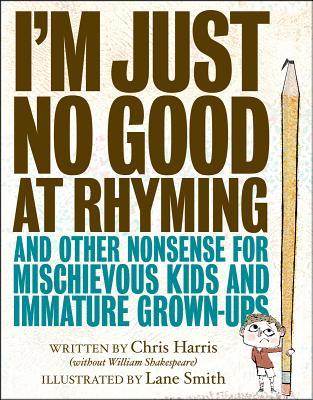
I’m Just No Good at Rhyming: And Other Nonsense for Mischievous Kids and Immature Grown-Ups by Chris Harris, illustrated by Lane Smith (9780316266574)

We need more silliness in our lives and this book provides it. Page after page is worthy of giggles and guffaws. Share it out loud and it comes alive, turning small moments in classrooms and families into a shared frolic of fun. This is Harris’ first collection of poems and each one is a delight. He mixes outright funny with tenderness, elevating this collection into something very special.

Illustrations are provided by the incredible Lane Smith, offering jumping frogs, frowning crustaceans, still rocks, and much more. The illustrations serve to enhance the poetry, never taking front stage, but instead being stunning scenery.

Give this one to fans of Shel Silverstein, it is sure to impress and entertain. Appropriate for ages 5-9.

Reviewed from library copy.

3 Picture Books to Celebrate YOU!

Crown An Ode to the Fresh Cut by Derrick Barnes

Crown: An Ode to the Fresh Cut by Derrick Barnes, illustrated by Gordon C. James (9781572842243)

This picture book celebrates the power of a fresh haircut, the transformation that comes with it and the empowerment that it brings. Written in second person, the poetry draws the reader in and right onto the barber chair with a drape that becomes a superhero cape and men around that seem presidential and majestic. There is affirmation in this book, a celebration of the barbershop, the culture and the community. The text of the book reads like slam poetry, speaking truths and adding wonder. The illustrations are paintings that capture the place but also the joy of the haircut. The combination is exceptional, a book that belongs in every public library in every community. Appropriate for ages 5-7. (Reviewed from library copy.)

When_s My Birthday by Julie Fogliano

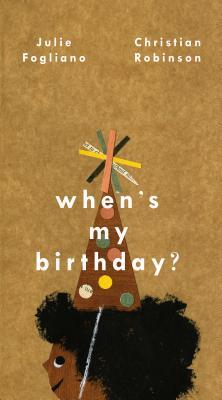
When’s My Birthday by Julie Fogliano, illustrated by Christian Robinson (9781626722934)

When I was little, I asked every day for an entire year whether it was my birthday and then realized how very long it was between them! So this book is exactly the book I needed as a small child. This picture book ask the question over and over again about when a birthday is coming, dreaming of cake and presents and a party. Fogliano uses rhythm and internal rhymes to give the book a fast paced structure that almost sings. It is quick and funny and infectious. Robinson’s illustrations are a treat with their use of collage and a diverse cast of children longing for their special day. The book ends with a birthday, just as it should. Share this one with children longing for their next birthday or who are just about to have one. Appropriate for ages 2-4. (Review copy supplied by Roaring Brook Press.)

The World Shines for You by Jeffrey Burton

The World Shines for You by Jeffrey Burton, illustrated by Don Clark (9781481496322)

This shining and shimmery board book is done in a large format. The thick pages are filled with metallic shine that is embossed on the pages to create texture that can be felt by little fingers, allowing it to be explored by touch. The text of the book is simple and inviting, exploring all of the ways in which the world shines. There are snowflakes and flowers and forests and leaves, it all comes together in a celebration of that child. A great book to share aloud with one or two children and discuss the pictures together. There is so much to explore here! Appropriate for ages 1-3. (Reviewed from library copy.)

Akata Warrior by Nnedi Okorafor

Akata Warrior by Nnedi Okorafor

Akata Warrior by Nnedi Okorafor (9780670785612)

This is the second book in the Akata Witch series, a book that I’ve been looking forward to for some time. It does not disappoint! The second book continues the story of Sunny, a girl who has become part of the secret Leopard Society. Leopard People like Sunny can work magic, do juju, and cross boundaries into the wilderness, a space that is different from the physical world. As Sunny grows into her powers and learns more skills, she is being haunted by dreams of a burning city that seem to indicate a coming apocalypse. As she works towards her destiny, Sunny realizes that she is once again being hunted by the masquerade Ekwensu. She must journey to the city in her dreams, but the journey is harrowing and the skills she needs hard to come by.

Okorafor combines modern Nigeria with fantasy once again in this second novel. So often second books in series can be disappointing, serving only as a bridge between two stronger novels. This is not the case here. Instead, Okorafor takes readers deeper into Leopard Society, enlarges our understanding of juju and other powers, and shows how real the rules of the society are. The author dances the line between horror and fantasy very effectively, all the while incorporating elements of Nigerian society into the story for a very rich and varied experience.

In this second book, readers will see a more experienced and older Sunny. She still has a lot to learn, not only about her powers but about her family and about the society she has joined. Sunny is a determined and thoughtful heroine whose powers are vital to the story but whose bravery and independence make her the person she needs to be to battle evil. There is no way not to adore her as a protagonist, even as she makes mistakes.

Start with the first in the series, because you don’t want to miss a moment of this intoxicating blend of fantasy, horror and Nigeria. Appropriate for ages 13-16.

Reviewed from ARC provided by Viking Books for Young Readers.

3 Art-Filled Books for Children

Art Up Close From Ancient to Modern by Claire dHarcourt

Art Up Close: From Ancient to Modern by Claire d’Harcourt (9781616894214)

This large format picture book invites readers into a Where’s Waldo type exploration of art. Exploring over twenty works of art, children can search for over 200 details, asking them to look more closely at art than they may have before. Along the way, they will discover new details too. The back of the book provides more information on each piece of art as well as a clever lift-the-flap way to give answers. This book is gorgeously done, the images are crisp and large and span a vast number of years and cultures. A great introduction to art through a vehicle that children will find irresistible. Appropriate for ages 6-9. (Review copy provided by Princeton Architectural Press.)

Fallingwater The Building of Frank Lloyd Wrights Masterpiece by Marc Harshman

Fallingwater: The Building of Frank Lloyd Wright’s Masterpiece by Marc Harshman and Anna Egan Smucker, illustrated by Leuyen Pham (9781596437180)

This picture book focuses on just one on Frank Lloyd Wright’s buildings, Fallingwater. It looks at the process that Wright used to design the building, from viewing the site itself to thinking for a very long time about what he would design. It was at the very last moment that Wright actually put the design on paper so that the owner of the site could see his vision. That vision came to life in Fallingwater, where you can hear the waterfall from every room in the house, stand outside on the balconies, and the floor feels like rocks in a streambed. All of these details will help children better understand the architectural process and how it begins with a vision and idea. The illustrations have a lovely vintage sepia tone and feel with the blue water of the site flowing from page to page, swirling and enlivening the images. A lovely and focused look at a famous architect’s work, this picture book is inspiring. Appropriate for ages 6-9. (Review copy provided by Roaring Brook Press.)

Vincent Can_t Sleep Van Gogh Paints the Night Sky by Barb Rosenstock

Vincent Can’t Sleep: Van Gogh Paints the Night Sky by Barb Rosenstock, illustrated by Mary Grandpre (9781101937105)

The duo that created The Noisy Paint Box, which won a Caldecott Honor, return with this look at the childhood and work of Van Gogh. The book focuses on the insomnia that plagued Van Gogh his entire life, even in his childhood when he would head outside in the middle of the night and go out into the heath to watch the stars. He spends much of his time at board school alone and working on his art. As a young man, he has problems working in his uncle’s gallery because of  his moods. The book shows him becoming a full-time artist and heading into the countrysides of Belgium and England. He is a man who understands darkness and night more profoundly than most. This picture book carefully captures the symptoms of Van Gogh’s mental illness, showing him struggling with mood and even hospitalized for a time. The book doesn’t dwell on this, but shows it as part of the complexity of the artist and his gifts. The illustrations are rich and layered, paying homage at times to Van Gogh’s work but at other times standing apart as a witness. Another strong artist biography from this pair that is worth the read and the space on your shelves. Appropriate for ages 6-9. (Reviewed from copy provided by Random House Children’s Books.)