Review: Winston & George by John Miller

winston george

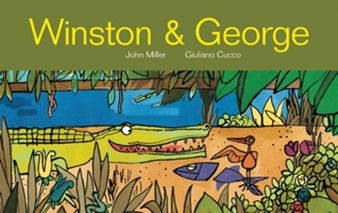
Winston & George by John Miller, illustrated by Giuliano Cucco

Released March 21, 2014.

Winston is a crocodile and George is a crocodile bird, the kind of bird that cleans a crocodile’s skin.  The two of them would fish together in the river with George calling out when he saw a fish and Winston diving into the water to catch it.  Then they would share the meal together on shore.  But George had the bad habit of playing pranks on all of the crocodiles as well as on Winston.  The other crocodiles tell Winston to just eat George to end the problem, but Winston can’t eat his friend.  Then George takes a prank too far and puts Winston’s life in danger.  He has to convince the other crocodiles and animals to help, but at what price?

Written and illustrated 50 years ago, this picture book is finally being published.  Unfortunately, the illustrator died in 2006, so he did not live to see this work finally come to the public.  Happily though, the book is fresh and vibrant with a wonderful vintage feel that makes it feel like an immediate classic.  Miller’s words are simple and drive the story forward at a fast pace.  The ending is immensely satisfying and sharing it aloud one can expect cheers of joy and relief.

Cucco’s illustrations are superb.  They have a wonderful grace of line combined with bright tropical colors that pop on the page.  The dramatic moments of the book are captured with plenty of motion and action.  Best of all, the humor of the text translates directly into humor of image. 

A humorous and dramatic look at an unusual friendship, one only wishes that Winston & George could go on more adventures together.  Appropriate for ages 4-6.

Reviewed from copy received from Enchanted Lion Books.
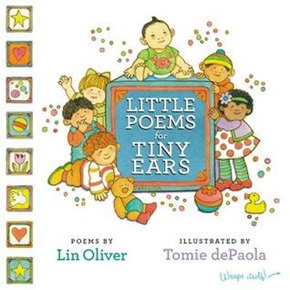
Review: Little Poems for Tiny Ears by Lin Oliver

little poems for tiny ears

Little Poems for Tiny Ears by Lin Oliver, illustrated by Tomie dePaola

Celebrate the wonder of babyhood and toddlerhood with this collection of poems ideal for the youngest listeners.  These poems document the small moments of a child’s early years, seeing these little things as exactly what they are: the foundation of the future.  So each moment is given a gravity by the poems but they are also entirely playful and fun.  There are poems about body parts like noses and tongues, poems about peekaboo and high chairs, poems about naps, others about baths.  Each is short, clever and just right for sharing aloud.

DePaola has illustrated the poems with his signature style, depicting children of all colors and nationalities.  His illustrations embrace the gentleness of the entire book with their soft and bright colors and clear demonstrations of love.

Get this on the shelves right next to Mother Goose, because what you have here is a new classic set of poetry for the little ones.  Appropriate for ages 1-3.

Reviewed from library copy.

Review: No Place by Todd Strasser

no place

No Place by Todd Strasser

Dan seemed to have it all from being popular to his hot girlfriend to probably getting a baseball scholarship to college.  But then his family started having financial problems and they got worse and worse.  Finally, they were forced to leave their home and live in Dignityville, a city park reused as a tent city for homeless people.  Dan struggles to figure out how to continue being the same person with his friends, how to stay focused on his future, and how to keep dating one of the wealthier girls in town.  On a daily basis, Dan is confronted with the differences in lifestyle and priorities.  But Dignityville is not without some good aspects.  Dan gets to spend more time with his family and he gets to know Meg, a girl who attends his high school and who also lives in Dignityville with her brother and family.  Then Meg’s brother is brutally attacked and it quickly becomes evident that there is a conspiracy to destroy Dignityville, one that may end up hurting those that Dan loves.

Strasser tackles the issue of homelessness head on here.  Yet he does in such a way as to make it accessible to those who have not experienced it.  The emphasis is on the fact that there are all sorts of people who are homeless, not just those with addiction and mental health issues.  Seeing the slow fall to homelessness by Dan’s parents and their reaction to being homeless further underlines that people are doing their best in trying and exceedingly difficult situations. 

Dan is a very engaging character, one who quickly learns how profoundly his life has changed.  The other characters at Dignityville are also well drawn and interesting as are Dan’s parents.  The only character I found two-dimensional was Talia, Dan’s girlfriend, who seemed distant and aloof from what was happening.  As the book progressed, the mystery of who was trying to shut down Dignityville moved to the forefront of the story.  I felt that this distracted from an already powerful story and took it over the top.  It was an unnecessary addition to the book.

An important book about a teen and his family experiencing homelessness, teens will find much to love in these pages.  Appropriate for ages 14-17.

Reviewed from copy received from Simon & Schuster.

Bunches of Board Books

Here are my top picks for recent board books, perfect for toddlers:

bedtime for chickies pottytime for chickies

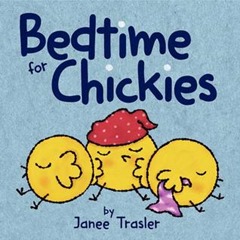
Bedtime for Chickies by Janee Trasler

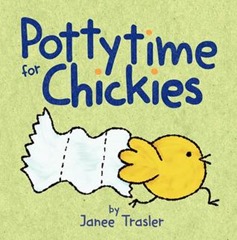
Pottytime for Chickies by Janee Trasler

This pair of board books introduces three small chicks who have problems falling asleep and using the potty correctly.   Trasler uses humor and other animals to make these books great fun to read.  Her artwork is particularly child-friendly and the Chickies themselves are naughty and silly, in the just the way small children would appreciate.  These are sure to be favorites at bedtime.

creature colors creature numbers

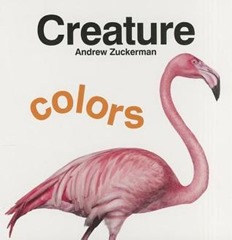
Creature Colors by Andrew Zuckerman

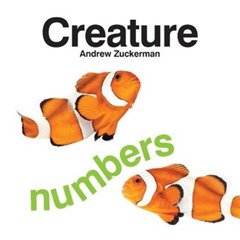
Creature Numbers by Andrew Zuckerman

Filled with crisp and clear photographs of animals against a white background, these books stand out visually in a crowded board book market.  The Colors book is the more successful of the two with the colors popping on each page.  The Numbers book is still well done and extends from counting individual animals to counting legs and fins as well.  Both books are strong additions to library and family collections. 

were going to the farmers market

We’re Going to the Farmers’ Market by Stefan Page

A bright and friendly visit to the Farmers’ Market, this is sure to start daydreams of warm summer days for those of us in northern climes.  The illustrations are colorful and evoke the delight of the market perfectly.  Wonderful for children who have a local farmers’ market and know the pleasure of visiting the different stalls, selecting veggies and heading home to cook and eat. 

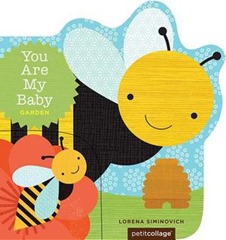
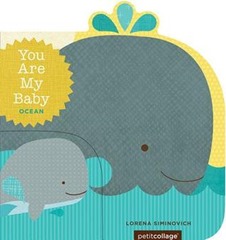
you are my baby garden you are my baby ocean

You Are My Baby: Garden by Lorena Siminovich

You Are My Baby: Ocean by Lorena Siminovich

Both released March 25, 2014.

These are the third and fourth books in this board book series which pairs a larger board book with an inset small book.  The larger book has the images of the adults with the story, and the small book has the images and noises of the babies.  The pages turn independently and work best when you have small hands helping you.  Sturdy and with the fun aspect of mixing and matching, these books are beautifully designed with very accessible illustrations. 

Review: Here Comes the Easter Cat by Deborah Underwood

Here-Comes-the-Easter-Cat

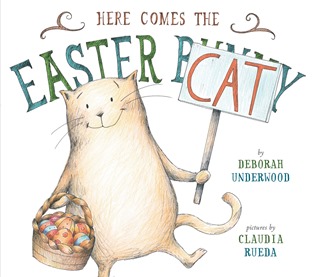
Here Comes the Easter Cat by Deborah Underwood, illustrated by Claudia Rueda

Easter books can be so filled with yellow fluffy chicks, bright Easter eggs, and soft bunnies that the become more than a bit stale.  Enter the Easter Cat, a character who offers exactly what was missing in Easter books: cats!  Cat wants to be able to do what the Easter Bunny does and deliver chocolate himself.  But he’s going to have to figure a lot of things out before he begins: what exactly will be deliver?  How will he travel?  What will he wear?  All of those decisions wear him out so he decides to take his eighth nap of the day, after all, he is a cat.  But then he learns that the Easter Bunny never naps at all.  Are all of his plans ruined?  Perhaps he just needs a little help from the famous Easter Bunny himself.

Underwood of The Quiet Book has created an uproariously funny book this time.  Her Cat character doesn’t speak at all, instead the reader quizzes Cat on what exactly he is doing.  Cat communicates through his expressions and holding up signs most of which have cartoon drawings on them outlining his plans.   The words in the book take on the tone of a parent, making it a real delight to read aloud.  The reader can go from cajoling to stern and back again.

Rueda’s illustrations carry much of the storytelling since Cat doesn’t speak.  She manages to convey his emotions very clearly on his face and in his stance.  Cat is a very enjoyable character with big plans that aren’t very well thought out.  This book on the other hand, has illustrations and words that work together flawlessly.

With the humor of Melanie Watt or Elephant and Piggie, this picture book is sure to find an eager Easter audience.  Ideal for perching in baskets, this book is good enough to share all year round.  Appropriate for ages 3-5.

Reviewed from copy received from Dial Books for Young Readers.

Review: Goose the Bear by Katja Gehrmann

goose the bear

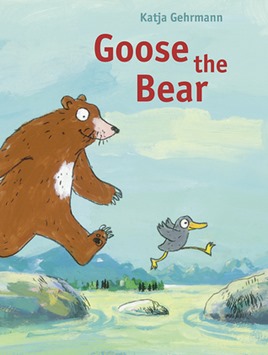
Goose the Bear by Katja Gehrmann

In a Canadian forest, Fox stole an almost-hatched goose egg, planning to eat roast goose very soon.  But he is so proud of himself that he forgets to watch where he’s going and runs right into Bear.  Bear picked up the egg from the ground after Fox ran off and wondered what it is.  Then the gosling hatched and called him “Mama!”  Bear tried to explain that they were not the same type of animal, but the gosling did not understand.  So Bear decided to show the little goose just how different they were.  Bear demonstrated how well bears climb trees, but the gosling could reach the top too.  Bear showed how fast bears can run, but the little goose ran just as quickly.  Finally, Bear jumped in the river and the little goose followed him in.  Then Bear got very worried.  Would the little creature survive the fall into the water?

Gehrmann has created a picture book that stands out from the many books about foxes chasing smaller animals.  Her addition of a bear as a main character adds a clever twist and throughout the book she continues to surprise the reader.  The writing has been done to create a read-aloud that will also keep young readers guessing about what is going to happen next.  With the theme of a tiny creature who can do just what a big bear can do, this book has strong kid appeal.

The premise of the book is quite unique and so is the artwork.  First published in Germany, the book has a European feel, particularly in the art.  It is humorous and bold with changing colors throughout.  Gehrmann’s depiction of the natural world around the characters is particularly rich and layered.

Fresh, vibrant and full of fun surprises, this book is an exceptional take on fox and goose (and bear) stories.  Appropriate for ages 4-6.

Reviewed from library copy.

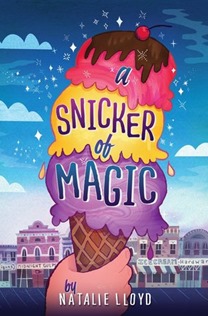
Review: A Snicker of Magic by Natalie Lloyd

snicker of magic

A Snicker of Magic by Natalie Lloyd

Felicity’s mother loves to move to new places, so Felicity has lived all over the country.  But when her mother returns to the small town of Midnight Gulch, Felicity quickly realizes she has never lived in any place quite like this one.  Midnight Gulch had once been full of magic of all sorts, but then a curse took the magic away and drove two brothers apart as well.  But there is magic left in town, if you know where to look.  It’s not big magic, just little pieces that were left behind.  Felicity has one of those pieces of magic herself, she can see words everywhere, words spoken aloud and words thought silently.  She is a word collector keeping a list of the words she finds.  Others in town have some magic too, including Jonah, a mysterious boy who calls himself the Beedle and does good deeds around town.  Then there’s also the ice cream factory that makes a flavor that evokes memories both sweet and sour.  Felicity loves Midnight Gulch, but can she figure out a way to keep her mother from moving on to new places again?

This book was such fun.  Lloyd has created an entire town that is filled with a wonderful mix of magic and history.  Throughout the book, we learn about what first made Midnight Gulch so magical and then how it was taken away.  Then little by little in tantalizing ways readers see the magic that is left and are offered clues about how it may return someday.  It’s a book that is surprising and very readable.

Felicity is a great protagonist as she struggles to keep her family in one place.  As she finds out more about her own family history and discovers members of her family and community she never knew before, she finds herself less lonely in a way that she never though possible.  Perhaps the most delightful piece of all is that Felicity does not need her magic to solve her family’s issues, rather it is about piecing together a mystery and solving a riddle. 

Glowing with magic, this novel is a shining read that should be savored just like an ice cream cone on a hot day.  Appropriate for ages 9-12.

Reviewed from ARC received from Scholastic.

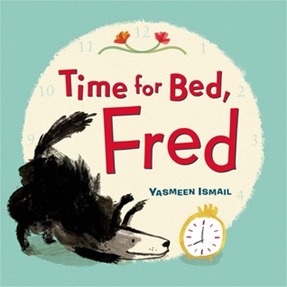
Review: Time for Bed, Fred! by Yasmeen Ismail

time for bed fred

Time for Bed, Fred by Yasmeen Ismail

It’s time for Fred to go to bed, but this dog is not ready!  Instead of heading to bed, Fred dashes outside and tries to hide in the flower bed.  Then he hides in a tree until he falls out of it.  Fred then runs and lands in a huge mud puddle.  So then it’s bath time for Fred.  But just when he’s finally clean, he dashes outside once more!  Back inside, he hides in all sorts of places, even after he gets read a bedtime story.  Finally, Fred is moved to the right bed and falls asleep at last.

Fred is a dog that every toddler will relate to.  From his busyness as he dashes from place to place to his unwillingness to head to bed to the final collapse in exhaustion at the end of the day, Fred reacts exactly the way a young child does.  Ismail keeps the book moving quickly with her dialogue-only text that captures the reaction of the owner as Fred refuses to head to bed.  This makes the book great fun to read aloud as well.

Ismail’s art is reminiscent of Chris Raschka with her loose lines and free-flowing forms.  It is filled with action and movement as Fred runs through the garden on the loose.  The illustrations have a great ease and freedom to them that works particularly well with the storyline. 

An energetic and playful bedtime read, let’s hope your little puppies settled down at the end too!  Appropriate for ages 1-3.

Reviewed from library copy.

Review: The Blossoming Universe of Violet Diamond by Brenda Woods

blossoming universe

The Blossoming Universe of Violet Diamond by Brenda Woods

Violet feels like she just doesn’t fit into her family.  Whenever she goes anywhere with her mother and sister, people are surprised to hear that she is related to them.  They are both white and blonde while she has brown skin and brown hair.  Violet’s father died before she was born, and while her sister knows her other grandparents, Violet has never met hers.  But now Violet takes things into her own hands and starts researching her African-American grandmother who happens to be a well-known artist.  Violet convinces her mother to allow her to go to her grandmother’s new gallery show but things do not go as Violet had dreamed.  Violet just wants to put the pieces of her family into a whole where she fits seamlessly, but it may be too late for that.

It is a joy to have such a charming and positive book that speaks to biracial issues.  Woods does a great job of focusing on both the positive and negative aspects of being bi-racial and having two distinct sides of the family.  I was particularly pleased that all of the adults in the book were supportive and loving towards Violet as she explores her African-American heritage.  Woods also addresses the differences in religions in the book, something that children who come from two religious heritages will appreciate.

Violet herself is a particularly radiant protagonist.  Though she worries about fitting into her family and seeking out the other side of her family, at heart she is an optimist and approaches each event with a sense of adventure and openness.  This is a book that cheers children on to explore their own families and discover others in their world who will adore them too.

Positive, cheery and yet addressing difficult situations, this book is a pleasure to read.  Appropriate for ages 9-12.

Reviewed from copy received from Nancy Paulsen Books.