The Capybaras by Alfredo Soderguit

Cover image.

The Capybaras by Alfredo Soderguit (9781771647823)

The farm was a safe place where life was comfortable and everyone knew their role. There were chickens who had plenty of food and a rather vicious dog who guarded them. Then one day, the capybaras emerged from the swampy part of the pen. There was no room for them there and they were not expected. The hens found them too big, too hairy and too wet. But the capybaras couldn’t go home because the hunting season had started. So the hens set some rules where they would not share food, or their dry pen, or tolerate any noise. Then one day after a chick had a misadventure, everything changed. The capybaras had saved the chick and now they were allowed to sleep in the chicken coop, share food and live together. Then hunting season ended and the capybaras prepared to leave. What were the new friends to do?

This picture book was originally published in Spanish in Latin America. Soderguit has a marvelous gift for wry understatement or in fact just stating the opposite of what is actually happening in the illustrations. This contributes to a sense that horrible things are happening off the page and the characters live in real denial, even before the capybaras arrive. The entire book works beautifully as a statement about refugees, tolerance and building a community.

The illustrations are a marvel of quiet moments with a lot of the power of the book being the things in the illustrations that go unremarked upon in the text. The illustrations are done in pen and ink with pops of orange color and the deep browns of the capybaras. The wide-eyed capybaras contrast impressively with the white chickens and their delicate life balance.

Profound and remarkable. Appropriate for ages 5-8.

Reviewed from e-galley provided by Greystone Kids.
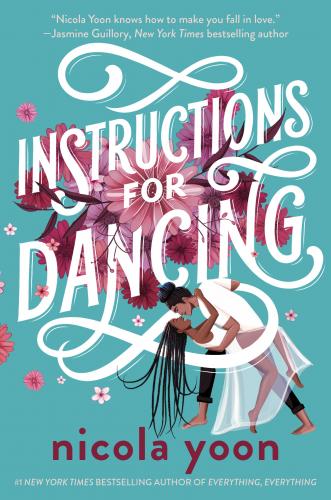
Instructions for Dancing by Nicola Yoon

Instructions for Dancing by Nicola Yoon (9781524718961)

Evie has always been a romantic, hooked on reading spicy romance novels. So when her parents divorce, she is left reeling even though her mother and sister seem to handling it in stride. When Evie donates her stack of romance novels, she meets a woman who gives her the power to witness a couple kissing and then see the beginning, middle and end of their relationship. All of them go to prove to Evie that relationships end with a broken heart. Evie is also directed to a small dance studio where she finds herself asked to join a competition for ballroom dancing. She is paired with X, a young man who has the policy of saying yes to everything in life and taking risks, the exact opposite of Evie. As the two of them dance together and get to know one another, romance sparks between them, but Evie may not be ready to risk heart break thanks to her visions and her parents.

Yoon fills this book with Black joy and with swoony characters straight out of Evie’s romances. At the same time, her characters are deliciously human and struggling with weighty issues that impact them on a variety of levels. It is this grounding of her characters that makes this romance so much more than fluff, instead speaking directly to the risk of falling in love, the depths of loss, and how to continue after being hurt by life.

Yoon also fills her book with marvelous dancing and the gorgeous setting of Los Angeles with all of its diversity, talent and magic. Her writing soars with dialogue between characters, sounding wonderfully human and real. Her touches of magic in everyday life add to the fun.

A winner of a teen romance just right for those looking to be swept off their feet. Appropriate for ages 13-16.

Reviewed from copy provided by Delacorte Press.

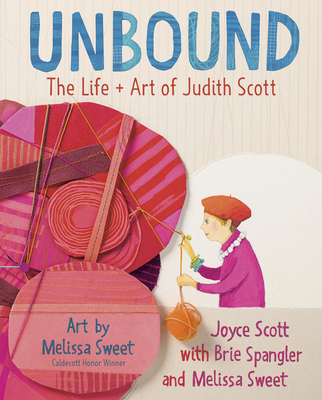
Unbound: The Life & Art of Judith Scott by Joyce Scott

Cover image for Unbound.

Unbound: The Life & Art of Judith Scott by Joyce Scott with Brie Spangler and Melissa Sweet, illustrated by Melissa Sweet (9780525648116)

Told by Joyce Scott, the twin sister of Judith, this picture book explores the closeness of the sisters as small children until they are separated for years. The two sisters shared everything with one another, playing together all the time. Then Joyce is sent to kindergarten and Judith is left behind. Judith has Down syndrome and has never spoken. Then her parents send Judith to a special school where she will live and learn to talk. They don’t visit for a long time and when they do, the school isn’t like other schools. There is no playground, no desks, no books. As they grow older, Joyce gets married and has children. She continues to think of Judith as being at her side all the time. Eventually, she is able to bring Judith out of the institution and to live with her. Joyce finds Judith an art program to be part of. Judith attends but won’t participate at all. Months go by until her teachers give her some natural materials and fabric. Suddenly, Judith is creating unique pieces of sculpture and is celebrated as an artist.

Full of sorrow and loss, this picture book examines the destructive nature of the systematic institutionalization of people with special needs to both the person institutionalized and their loved ones. Having Joyce herself narrate the book is powerful. The beautiful connection the sisters have in their young childhood forms a foundation of connection that allows her to rescue her sister decades later. Even as the book moves to when Judith finds her artistic voice, there is a melancholy to the years lost and the muting of her voice for so long.

Sweet’s illustrations are incredible and moving. She incorporates collage and also builds sculptures to pay homage to Scott’s work. Built with string, textiles, wire and wood, there is a celebratory nature to them of an art newly found. In other moments, Sweet captures wistfulness, longing and connection with light, shadow and color.

An extraordinary look at an artist who was almost lost. Appropriate for ages 6-9.

Reviewed from e-galley provided by Alfred A. Knopf.

Bubbles…Up! by Jacqueline Davies

Cover image for Bubbles Up.

Bubbles…Up! by Jacqueline Davies, illustrated by Sonia Sanchez (9780062836618)

This picture book celebrates the joy of swimming in a pool on a hot summer day. Focusing on the bubbles created by heading underwater, the merry rhythms of the text bounce along like the bubbles heading to the surface. The bubbles capture the light of the sun until you follow them upwards, surfacing like a porpoise. You have a mom who stays at the side of the pool with your little brother who doesn’t swim yet. Interrupted by a thunderstorm, you huddle with the others in the shelter until it’s safe to return to the water with your friends. When your little brother loses his toy in the pool, you rescue it. You can’t stop for lots of mushy attention though, because you have to keep on swimming.

Sure to bring an immediate grin to kids who love to swim or play in the water, this picture book shares the small pleasures of swimming that make it such a treat. The bubbles heading to the surface, the jumping in, the floating, the diving, splashing and more. Davies’ writing is marvelous, full of repetition, rhythms and rhymes. Her words plunge, dive, swirl and create imaginary underwater worlds.

The illustrations are full of pool blues, sunshine and bubbles. Sanchez uses the words as part of her art, creating words that plunge down and float up. Her diverse cast of characters is delightful, everyone enjoying the pool together.

Dive into this summer delight of a picture book. Appropriate for ages 3-5.

Reviewed from e-galley provided by Katherine Tegen Books.

Long Distance by Whitney Gardner

Cover image for Long Distance.

Long Distance by Whitney Gardner (9781534455665)

The author of Fake Blood returns with another fantastical graphic novel. Vega’s parents have moved her from Portland to Seattle, leaving behind her best friend. Vega loves astronomy, something she shared with her best friend. She still has her telescope, but no one to watch the stars with. To help her transition to her new home, Vega’s parents send her off to a summer camp designed to help her make new friends. Vega isn’t interested in making new friends, so she is stand offish to the other kids. As things around camp get stranger, including a camper who changes his appearance regularly to try to make friends, rocks that are speakers, no cellphone service, and really strange food, Vega must join forces with the other campers to figure out what is actually going on.

Gardner’s middle-grade graphic novel is a genuine look at moving away from friends and the struggle to regain your footing and make new ones. Gardner though takes it much farther explaining the weirdness of all summer camp experiences in a fresh way. When all is revealed at the end of the book, readers will have the satisfaction of having figured it out along with Vega and the other characters. The pacing of the different elements is nicely done as is the consistent look at loneliness and friendship throughout.

Gardner’s art style is bold and clear. She offers readers a diverse cast of characters, including Vega herself who is a character of color and also has two fathers for parents. The format feels larger than most with some of the images taking up the entire page with great impact. The entire book feels effortlessly modern.

A perfect summer read, particularly for those who have done summer camps. Appropriate for ages 9-12.

Reviewed from copy provided by Simon & Schuster.

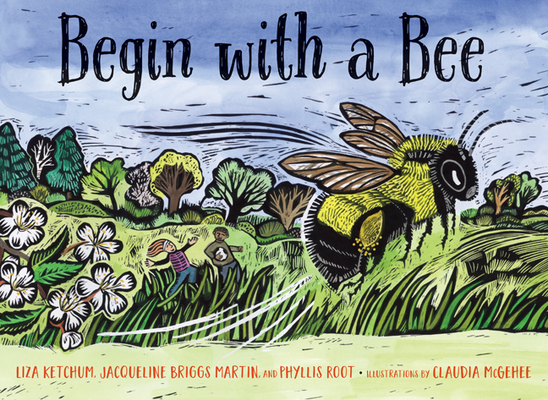
Begin with a Bee by Liza Ketchum

Cover image for Begin with a Bee.

Begin with a Bee by Liza Ketchum, Jacqueline Briggs and Phyllis Root, illustrated by Claudia McGehee (9781517908041)

On a winter day, take a look in a small hole and you will find a solitary rusty-patched queen bee. She waits all winter long, her body holding everything needed to create a new colony of bees that year. As the sun shines and spring comes, the bee awakens and travels from flower to flower, eating and eating. Now she must find where she will build her nest. Once she finds the right spot, she builds a pot of wax from her body and fills it with nectar to help her survive the rainy days and the long days of caring for her eggs. She carries pollen to the nest until she lays her eggs and sits with them, shivering to keep them warm. The eggs hatch into grubs who them make cocoons and weeks later the pupae are finally bees! The queen continues to lay eggs through the summer as the other worker bees gather pollen. That fall, the new queens mate with male bees from neighboring colonies and then must find their own hole to survive the winter.

This picture book celebrates the life of the rusty-patched bee by focusing on how they survive the winter and how one lone queen bee carries the future of an entire colony in her body. Throughout the book, the authors show their own marveling at the way that nature works and the incredible burden and hard work this little queen bee must accomplish to allow her offspring to survive. The text is simple and poetic, letting even the smallest children learn about bees and life cycles.

The illustrations are done in scratchboard art that richly mimics woodcut prints. The thick black lines are accompanied by natural colors that evoke the nature around the bee habitat, including a wide variety of the native plants and flowers that keep them alive. Detailed images of the bee lifecycle are shared, often embraced by oval shapes.

A gorgeous and informative look at the bee lifecycle. Appropriate for ages 2-4.

Reviewed from copy provided by University of Minnesota Press.

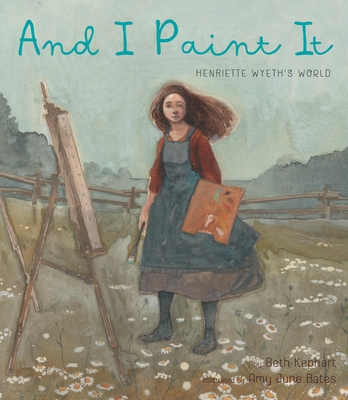
And I Paint It: Henriette Wyeth’s World by Beth Kephart

Cover image for And I Paint It.

And I Paint It: Henriette Wyeth’s World by Beth Kephart, illustrated by Amy June Bates (9781951836047)

This picture book biography looks at the country life of N.C. Wyeth and his family through the eyes of his artist daughter, Henriette. Henriette joins her father as he heads out into the countryside to paint. The two quietly go out, avoiding her talkative sister who is in the henhouse and her brother who is in his workshop building things. Her father greets the flowers along the way, finally stopping to paint the landscape before them. The two sense the world around them, draw the details they see, and smell the earth and plants, painting the sky. They paint together until it is time to head home, and even then Henriette stays behind to paint even more.

The author first discovered Henriette through N.C. Wyeth’s letters and then went on to learn more about her. The statements that the book has Wyeth say to his daughter are taken from his writing about art. The language in the book is poetic and rich, showing all of us how to look more deeply at the world around us and celebrate the small things we see and the large landscape and sky as well.

Bates was also taught art by her own father and notes in her Illustrator’s note that this book pays homage to the Wyeth’s and also to her own experience as she grew up. The illustrations are an engaging mix of watercolor landscapes and then also smaller drawings and paintings that Henriette would have made as they wandered from things she dreamt up and details she noticed.

A lovely look at the Wyeth family, the talented Henriette and how the artistic eye is taught. Appropriate for ages 6-9.

Reviewed from copy provided by Cameron Kids.

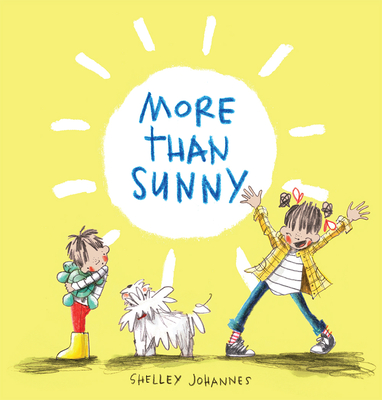
More Than Sunny by Shelley Johannes

Cover image for More Than Sunny.

More Than Sunny by Shelley Johannes (9781419741814)

A girl and her little brother make their way through all of the seasons and all sorts of weather in this merry picture book. Told in rhymes, the book explores what makes each day special with a jolly sense of humor as things become soggy and froggy, or muggy and buggy, or ready and sleddy in the winter. The book centers on the warm relationship of the two children as they head outside no matter what the weather is doing and interact with the seasons.

Throughout the book, it’s the little girl who is always ready to go while her little brother is a bit more hesitant. Then he turns out to love it just as much as she does. Their shared rhymes add to the fun and bolster the clear connection between the two of them. The rhymes give the book a rollicking merriment that works particularly well as the seasons pass. It also works when the book gets quiet at the end and the rhymes continue but slow down.

The illustrations are done in pencil and mixed media and then finished digitally. The result is the warmth of the media and pencil lines combined with the dreamy digital backgrounds. They are inviting no matter the weather.

A cheerful book of rhymes, weather and seasons. Appropriate for ages 2-4.

Reviewed from copy provided by Abrams Books for Young Readers.

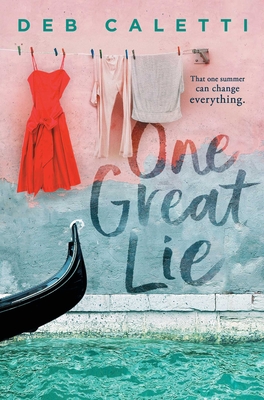
One Great Lie by Deb Caletti

One Great Lie by Deb Caletti (9781534463172)

When Charlotte wins a scholarship to an elite writing workshop given by her favorite author, Luca Bruni, she is thrilled. The workshop takes her to Venice, Italy and a summer spent on a private island with a small group of other college students and Bruni himself. The trip also gives Charlotte a chance to investigate a family legend that one of her female ancestors actually wrote a very famous poem. As Charlotte explore her heritage, looking for clues to a woman who has disappeared into history, she meets Dante, a college student working at the library who works to save flood-ravaged pages. As Charlotte falls for both Venice and Dante, the attentions of Bruni begin to become more problematic. After one girl leaves the program and another has clearly been hurt, Charlotte gains his unwanted attentions and finds herself alone with him. Charlotte must now face her own powerful mentor and decide whether to keep his secrets or not, just as her ancestor and so many women have done before her.

Award-winning author Caletti has created a book that shows exactly why we see music, poetry, painting and more as male dominated throughout history. She highlights real female poets and artists from the 1400s-1600s at the beginning of each chapter, showing how they were quickly either muted, disparaged or killed. She uses these women and the warning signs of Bruni’s behavior throughout the book to foreshadow what is about to happen to Charlotte. It’s terrible to wait for the predator to turn his attentions to her and then strike.

The darkness throughout the book is broken by the accomplishments of some of the historical female figures and also with Charlotte finding her own voice and demanding change. Nothing though is done without cost and loss, there is nothing simple in this novel, no easy way out. The writing is exquisite, dark and rich, with room for a good man like Dante to emerge as a worthy partner for Charlotte.

Feminist, ferocious and full of fight. Appropriate for ages 16-19.

Reviewed from copy provided by Atheneum.