Merci Suárez Can’t Dance by Meg Medina

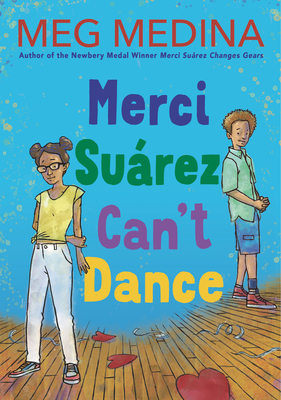
Cover image.

Merci Suárez Can’t Dance by Meg Medina (9780763690502)

This sequel to the Newbery Award winning Merci Suárez Changes Gears continues the story of Merci, her large multigenerational family, and the difficulties of being a seventh grader. This year, Merci has been assigned to manage the small school store along with Wilson, a boy who is amazing at math. As the two reinvent what their school store can be, adding movie merchandise, they end up also being drawn into selling tickets for the Heart Ball, run by Edna, who has managed to become even bossier than usual. Merci has decided not to go to the dance, but is asked to take photographs and agrees as long as she doesn’t even have to enter the gym. When an accident happens, Merci makes a bad decision and covers up the damage, setting off a series of lies that will involve school and family. With no one to talk to, since her grandfather’s dementia is worsening, Merci has to figure out who to trust to help her.

Fans returning to reconnect with Merci will once again find Medina’s rich depiction of Merci’s extended family, her grandfather’s worsening mental abilities, and the gorgeous warmth and love that keeps them all connected. Medina put Merci in quite a horrible situation in this second novel, where she feels alone and unable to be honest. Medina writes it with such empathy and skill that it is almost painful to read, though that makes the resolution all the more marvelous to experience.

As always, Medina’s writing is skillful and detailed. She truly creates a middle school experience with burgeoning romantic feelings and the changes happening between long-time best friends. Medina doesn’t let this all be negative, instead focusing on the confusion but also on the deeper understanding that can result from going through strange middle school circumstances.

Another marvelous Merci novel. Appropriate for ages 9-12.

Reviewed from ARC provided by Candlewick.
One-Osaurus, Two-Osaurus by Kim Norman

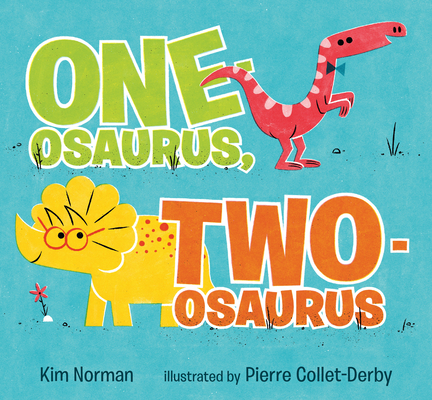
Cover image.

One-Osaurus, Two-Osaurus by Kim Norman, illustrated by Pierre Collet-Derby (9781536201796)

Some dinosaurs start their morning with a counting game. “One-osaurus, two-osaurus, three-osaurus, four.” After counting to seven, a huge ROAR interrupts the counting. The dinosaurs gather together in a herd and then make a run for it, knowing that something big is heading their way. Soon they are all hiding behind their numbers, letting us count them one more time: one through nine. Where is ten? He’s coming now, he’s “ten-osaurus rex.” But he may not be what the readers expect when he is revealed and the book takes a great twist in the end too.

Norman’s simple writing begs to be shared aloud. This counting book really works well, the numbers on the page playing into the rhyming text and building with it. The pace is wild and romping, something that makes the counting all the more fun. Thanks to its clever structure, young readers get to merrily count the dinosaurs again and again in the book without it feeling at all repetitious. The humor is a large part of the success of the book too.

That same humor is reflected in the illustrations which are big and bold, adding to the read-aloud appeal. The various dinosaurs are bright colored and pop against the changing colors of the background. Having them hide behind their big black numbers adds to the counting fun, including a page where the numbers aren’t in order and young children can find the numbers in a new way.

Smart, funny and full of dinosaurs. You can count on this one being popular. Appropriate for ages 2-4.

Reviewed from copy provided by Candlewick Press.

My Day with the Panye by Tami Charles

Cover image

My Day with the Panye by Tami Charles, illustrated by Sara Palacios (9780763697495)

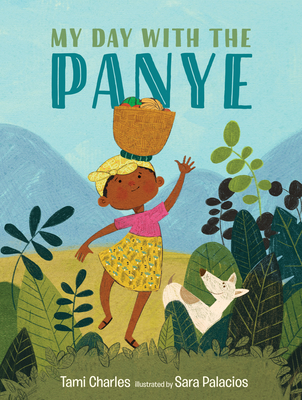
Fallon is invited by her mother to head to the market together. Her mother wraps her hair in a mouchwa and then sets the panye on her head. Her mother lets Fallon try to carry the panye on her head, but it quickly falls off and crashes to the floor. So they set off together with the panye on her mother’s head. She encourages her daughter to take learning the skill slowly and not rush it. She explains that one must move gracefully under the weight of the panye, one must be strong. After they visit the market, the panye is full of food. Fallon knows that to carry the panye is to care for her family. Now she is ready to try once more. But the panye falls again. Her mother encourages her to build her nest and try again. This time Fallon stands tall and takes her time, walking like her mother all the way home.

Set in Haiti, this picture book celebrates the ancient act of carrying a basket on one’s head to handle a heavy load. It’s a skill taught at a young age, just as Fallon is learning it in the book. Fallon’s mother shows patience with her daughter and encourages her to take her time, filling their walk to the market with lessons on what carrying the panye means to the family and also to Fallon herself. It’s an empowering lesson, one that speaks to the strength and resilience of the Haitian people.

Palacios fills the pages with bright and deep colors that show the bustling market and beauty of the hills outside of Port-au-Prince. The grace of carrying the panye is conveyed in the images too, the women tall and upright, full of strength and balance.

A picture book that speaks to tradition and patience when you’re learning a new skill. Appropriate for ages 3-5.

Reviewed from copy provided by Candlewick Press.

Ten Animals in Antarctica: A Counting Book by Moira Court

Cover image

Ten Animals in Antarctica: A Counting Book by Moira Court (9781623542320)

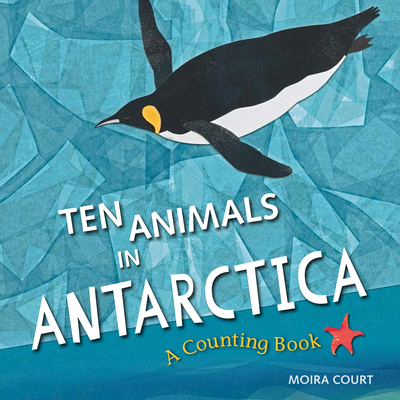
Starting first with briefly exploring the continent of Antarctica itself, this nonfiction picture book quickly moves to the ten animals featured inside. The book is a dynamic mix of animals in Antarctica along with an opportunity to count them as they appear on the double-page spreads. First comes one leopard seal floating on his own iceberg. Two emperor penguins waddle across the next page, followed by elephant seals, whales, petrels, orcas, squid, krill, and fish. The book finishes with ten crimson sea stars that dazzle, bright red against the dark background.

Court has created a picture book that very successfully combines factual information about Antarctic animals with counting them. Her language is marvelous, building rhymes directly into her descriptive sentences. She also uses words that will stretch young vocabularies such as “courtly, portly emperor penguins” and “lumbersome, cumbersome southern elephant seals.” The language is such a treat to discover in a nature-focused counting book.

Court’s illustrations are a combination of printmaking and collage. The deep colors and textures bring the cold and icy landscape to life. Court also beautifully designs each page, paying attention to both ease of counting, but also making all of the animals look lifelike too. Readers will enjoy the additional information at the end of the book on both the continent and the featured animals.

Icy and delightful, this is just right for even the youngest of readers to discover a new continent. Appropriate for ages 2-4.

Reviewed from e-galley provided by Charlesbridge.

The One Thing You’d Save by Linda Sue Park

Cover image.

The One Thing You’d Save by Linda Sue Park, illustrated by Robert Sae-Heng (9781328515131)

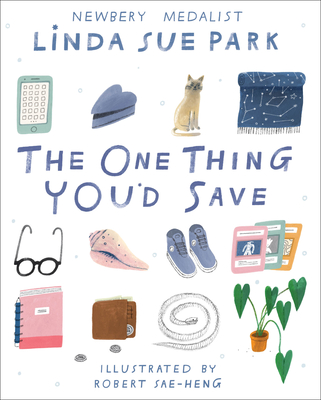
A teacher asks her class to think about what they would save in an emergency. You’re allowed to save one thing, knowing that your family and pets are already safe. What would you save, no matter how big it is. Some of the students very quickly decide what they will save while others find the choices almost impossible. Others pick items that were made by grandparents who have passed away. Some have collections they’d want to rescue. Some are very practical, taking their glasses so that they can see or their wallet so they have money to survive. The class has conversations about what they chose and why, giving everyone lots to think about.

Told in verse, this book is written in the dialogue that happens in the classroom. Park captures this dialogue flawlessly, the voices distinct and clear both in their indecision and their decisiveness. Each person reveals a piece of themselves as they reveal why they chose a certain object. The result is a group of students who understand one another a lot better than when they began.

Park writes with such ease on the page that it is amazing to find out in her Author’s Note that she has used a sijo poetic structure throughout the book that limits the number of syllables per line. Within those parameters, she wrote dialogue that never seems limited or stilted as well as offering space for interjections and conversation.

Immensely clever and thought provoking, this book will be embraced by both teachers and students. Appropriate for ages 8-12.

Reviewed from e-galley provided by Clarion Books.

The Wisdom of Trees: How Trees Work Together to Form a Natural Kingdom by Lita Judge

Cover image

The Wisdom of Trees: How Trees Work Together to Form a Natural Kingdom by Lita Judge (9781250237071)

Through a combination of poetry and science facts, this nonfiction picture book invites readers into the amazing things that trees can do. The book starts with a young beech tree in the Ruhe Forest in Germany, starting to show readers that trees have a language with one another and live much longer than humans do. The roots of the trees act like an instant message web, sending chemical and electrical signals to one another. Trees also have amazing ways to protect themselves from predators, or over-grazing from giraffes. They create our climate, processing carbon dioxide and offering shelter and cool in their ecosystems. They can ask for help from their neighbor trees, who will send them extra nutrients via their root systems. They offer shelter and food to animals. They can tell time via the light, knowing when seasons are changing. The list goes on and on, creating a sense of wonder about the trees that surround us all.

Judge’s poems capture the world from the perspective of the trees themselves. They show what it feels like to be someone’s home, how they continue to live even after they have fallen, how it feels to nurture baby trees, and how it feels to soar high into the sky with your branches. Judge shares facts that truly elevate children’s understanding of trees and how they communicate with one another. The information is fascinating, offering a glimpse into a hidden world. The book ends with an extensive Author’s Note sharing more information, a glossary of terms and a list of sources and websites.

As always, Judge’s illustrations are marvelous. She captures the depths of the forest, the sunbeams kissing the younger trees. She invites us underground to see a den and the roots communicating. She shows us a variety of seasons, from the mellow tones of fall to the cool greens of spring to the ice of winter and the sun of summer. She is a master of light and movement, showing us perspectives that also amaze.

A great nonfiction read that will have young scientists fascinated by their own backyards. Appropriate for ages 6-9.

Reviewed from e-galley provided by Roaring Brook Press.

Where Wonder Grows by Xelena Gonzalez

Cover image for Where Wonder Grows

Where Wonder Grows by Xelena Gonzalez, illustrated by Adriana M. Garcia (9781947627468)

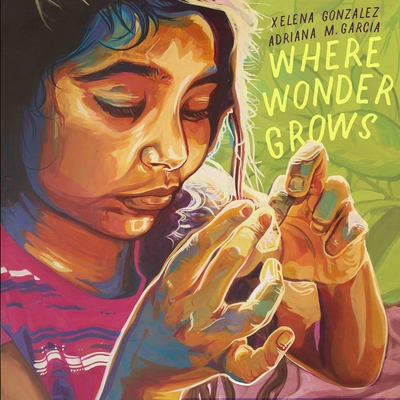
When grandmother heads to her garden, her granddaughters know to follow her. They spread blankets on the ground and get their magic rocks. Grandma taught them that the rocks are alive with wisdom from the long time they have spent on earth, so they respectfully call them grandmothers and grandfathers. The rocks are used in the sweat lodge where they help send songs and prayers into the air and to ancestors. The girls ask about the rocks that can heal. Grandma shows the colorful crystals and shares stories about them. They look at rocks worn by the water and others that fell from the sky. The rocks remind them of their place in the world, of their brief time on earth, their connection to the stars.

Gonzalez writes in beautiful short sentences, showing the connection between the generations of a Native American family, between the group of granddaughters and their grandmother. It’s a book that slows down, lingering over the various rocks, telling their stories, explaining their importance and making space for some dreams too. There is joy here, a delight in time spent together in a lovely garden and in the rocks themselves and what they mean.

Garcia’s illustrations are unique and creative. She lights each illustration as if the family and rocks glow from outside and within. The colors are deep and evocative. The book moves from the brightness of daylight to night with its purples and more subtle light. It is beautiful and filled with portraits of the family members.

An inviting look at rocks, their mystical qualities and how they connect us all. Appropriate for ages 3-5.

Reviewed from e-galley provided by Cinco Puntos Press.

Starfish by Lisa Fipps

Cover image

Starfish by Lisa Fipps (9781984814500)

Ellie loves to swim in the pool in her backyard. It makes her feel weightless and strong. It’s kind of ironic, since a swimming pool is where she was first bullied about her weight, earning her the enduring nicknames of “Splash” and “Whale.” Her mother has made it clear that she hates how Ellie looks, constantly posting articles on the fridge in the kitchen about calories and weight loss. She portions Ellie’s food, forces her to weigh herself every day, and is the source of all of Ellie’s Fat Girl Rules that Ellie tries to live by. Ellie is about the collapse under all of the expectations in middle school, from her mother, and from the entire society about how fat people should be invisible and yet easily mocked. When Ellie starts to see a therapist with the help of her supportive father, she begins to see that she has every right to take up space in this world. She may not be able to fix everything all at once, but she can start with what she says to herself and what she allows others to say about her.

In her verse novel, Fipps achingly captures the experience of being a fat person in today’s society, and even harder, a fat middle-school girl. She writes the bullying words from classmates, showing how each one takes aim and tries to hurt. Yet Fipps also shows beyond the bullies to the pain they are hiding too. Ellie’s family is beautifully contrasted with that of her new best friend, where no one tells Ellie to stop eating or to be ashamed. Her own family experience is one of drastic differences with her mother and older brother unable to even look at Ellie while her father adores her and supports her exactly the way she is.

Ellie is a great character, full doubts about herself and in need of real help to negotiate her family and society. Her internalization of all of the negative messages is deftly shown by the author and then transformed into a platform for advocacy and self respect. The entire book is full of truth about how fat people are treated and then an honest look at moving beyond that into fighting back.

A middle-grade novel that shows how self worth is created despite what others may think. Appropriate for ages 9-12.

Reviewed from copy provided by Nancy Paulsen Books.

The Snail with the Right Heart by Maria Popova

Cover image

The Snail with the Right Heart by Maria Popova, illustrated by Ping Zhu (9781592703494)

Beginning with the mutations and evolution that brought life to Earth, this picture book soon focuses on snails as they climb out of the water and onto land. Mutations continued to happen, including to one specific snail who was discovered by a retired scientist. It was a smaller snail than normal, with a darker shell and a tentacle that had trouble unspooling, and a shell that spiraled in the opposite direction than other snails’. The scientist sent the unique snail to a snail laboratory where it was named Jeremy. It turned out that Jeremy’s body was a mirror image of most other snail’s and he also had inverted internal organs. Because of that, Jeremy could only mate with another mirror image snail, another one in a million. So the snail laboratory made a plea for the entire world to look for another “lefty” snail. Amazingly, in only a few weeks, two potential mates were found and sent to the snail laboratory. When eventually Jeremy had offspring, he was so old that he didn’t live to see them arrive. Sadly, none of the new snails had a left-spiraling shell. The mutation was once again dormant, but it will return again.

Inspired by a true story, this picture book is a touching mix of poetic description and scientific facts. Popova’s language embraces the reader, showing them the beauty and wonder in mutation, genetics and evolution. She marvels at finding two potential mates in the world for Jeremy and then delicately celebrates Jeremy’s life at the end. She writes with real intention both to reveal the amazing nature around us but also to describe the science, including Jeremy’s mirror image body, the way that snails mate, and the work of the scientists who cared enough to explore his mutation.

Zhu’s illustrations are awash in colors, from the blues of the original waters of life to the rich green of English gardens. Done in watercolor swirls and drips, the illustrations are a mix of close ups from a snail’s view and the bustle of humans transporting Jeremy and the other snails. There is even a lovely foldout page that invites readers to even more fully enter the depths of the garden.

Full of wonder and science. Appropriate for ages 5-7.

Reviewed from copy provided by Enchanted Lion.