The Wisdom of Trees: How Trees Work Together to Form a Natural Kingdom by Lita Judge

Cover image

The Wisdom of Trees: How Trees Work Together to Form a Natural Kingdom by Lita Judge (9781250237071)

Through a combination of poetry and science facts, this nonfiction picture book invites readers into the amazing things that trees can do. The book starts with a young beech tree in the Ruhe Forest in Germany, starting to show readers that trees have a language with one another and live much longer than humans do. The roots of the trees act like an instant message web, sending chemical and electrical signals to one another. Trees also have amazing ways to protect themselves from predators, or over-grazing from giraffes. They create our climate, processing carbon dioxide and offering shelter and cool in their ecosystems. They can ask for help from their neighbor trees, who will send them extra nutrients via their root systems. They offer shelter and food to animals. They can tell time via the light, knowing when seasons are changing. The list goes on and on, creating a sense of wonder about the trees that surround us all.

Judge’s poems capture the world from the perspective of the trees themselves. They show what it feels like to be someone’s home, how they continue to live even after they have fallen, how it feels to nurture baby trees, and how it feels to soar high into the sky with your branches. Judge shares facts that truly elevate children’s understanding of trees and how they communicate with one another. The information is fascinating, offering a glimpse into a hidden world. The book ends with an extensive Author’s Note sharing more information, a glossary of terms and a list of sources and websites.

As always, Judge’s illustrations are marvelous. She captures the depths of the forest, the sunbeams kissing the younger trees. She invites us underground to see a den and the roots communicating. She shows us a variety of seasons, from the mellow tones of fall to the cool greens of spring to the ice of winter and the sun of summer. She is a master of light and movement, showing us perspectives that also amaze.

A great nonfiction read that will have young scientists fascinated by their own backyards. Appropriate for ages 6-9.

Reviewed from e-galley provided by Roaring Brook Press.
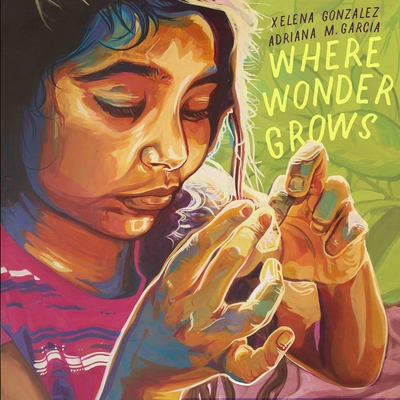
Where Wonder Grows by Xelena Gonzalez

Cover image for Where Wonder Grows

Where Wonder Grows by Xelena Gonzalez, illustrated by Adriana M. Garcia (9781947627468)

When grandmother heads to her garden, her granddaughters know to follow her. They spread blankets on the ground and get their magic rocks. Grandma taught them that the rocks are alive with wisdom from the long time they have spent on earth, so they respectfully call them grandmothers and grandfathers. The rocks are used in the sweat lodge where they help send songs and prayers into the air and to ancestors. The girls ask about the rocks that can heal. Grandma shows the colorful crystals and shares stories about them. They look at rocks worn by the water and others that fell from the sky. The rocks remind them of their place in the world, of their brief time on earth, their connection to the stars.

Gonzalez writes in beautiful short sentences, showing the connection between the generations of a Native American family, between the group of granddaughters and their grandmother. It’s a book that slows down, lingering over the various rocks, telling their stories, explaining their importance and making space for some dreams too. There is joy here, a delight in time spent together in a lovely garden and in the rocks themselves and what they mean.

Garcia’s illustrations are unique and creative. She lights each illustration as if the family and rocks glow from outside and within. The colors are deep and evocative. The book moves from the brightness of daylight to night with its purples and more subtle light. It is beautiful and filled with portraits of the family members.

An inviting look at rocks, their mystical qualities and how they connect us all. Appropriate for ages 3-5.

Reviewed from e-galley provided by Cinco Puntos Press.

Starfish by Lisa Fipps

Cover image

Starfish by Lisa Fipps (9781984814500)

Ellie loves to swim in the pool in her backyard. It makes her feel weightless and strong. It’s kind of ironic, since a swimming pool is where she was first bullied about her weight, earning her the enduring nicknames of “Splash” and “Whale.” Her mother has made it clear that she hates how Ellie looks, constantly posting articles on the fridge in the kitchen about calories and weight loss. She portions Ellie’s food, forces her to weigh herself every day, and is the source of all of Ellie’s Fat Girl Rules that Ellie tries to live by. Ellie is about the collapse under all of the expectations in middle school, from her mother, and from the entire society about how fat people should be invisible and yet easily mocked. When Ellie starts to see a therapist with the help of her supportive father, she begins to see that she has every right to take up space in this world. She may not be able to fix everything all at once, but she can start with what she says to herself and what she allows others to say about her.

In her verse novel, Fipps achingly captures the experience of being a fat person in today’s society, and even harder, a fat middle-school girl. She writes the bullying words from classmates, showing how each one takes aim and tries to hurt. Yet Fipps also shows beyond the bullies to the pain they are hiding too. Ellie’s family is beautifully contrasted with that of her new best friend, where no one tells Ellie to stop eating or to be ashamed. Her own family experience is one of drastic differences with her mother and older brother unable to even look at Ellie while her father adores her and supports her exactly the way she is.

Ellie is a great character, full doubts about herself and in need of real help to negotiate her family and society. Her internalization of all of the negative messages is deftly shown by the author and then transformed into a platform for advocacy and self respect. The entire book is full of truth about how fat people are treated and then an honest look at moving beyond that into fighting back.

A middle-grade novel that shows how self worth is created despite what others may think. Appropriate for ages 9-12.

Reviewed from copy provided by Nancy Paulsen Books.

The Snail with the Right Heart by Maria Popova

Cover image

The Snail with the Right Heart by Maria Popova, illustrated by Ping Zhu (9781592703494)

Beginning with the mutations and evolution that brought life to Earth, this picture book soon focuses on snails as they climb out of the water and onto land. Mutations continued to happen, including to one specific snail who was discovered by a retired scientist. It was a smaller snail than normal, with a darker shell and a tentacle that had trouble unspooling, and a shell that spiraled in the opposite direction than other snails’. The scientist sent the unique snail to a snail laboratory where it was named Jeremy. It turned out that Jeremy’s body was a mirror image of most other snail’s and he also had inverted internal organs. Because of that, Jeremy could only mate with another mirror image snail, another one in a million. So the snail laboratory made a plea for the entire world to look for another “lefty” snail. Amazingly, in only a few weeks, two potential mates were found and sent to the snail laboratory. When eventually Jeremy had offspring, he was so old that he didn’t live to see them arrive. Sadly, none of the new snails had a left-spiraling shell. The mutation was once again dormant, but it will return again.

Inspired by a true story, this picture book is a touching mix of poetic description and scientific facts. Popova’s language embraces the reader, showing them the beauty and wonder in mutation, genetics and evolution. She marvels at finding two potential mates in the world for Jeremy and then delicately celebrates Jeremy’s life at the end. She writes with real intention both to reveal the amazing nature around us but also to describe the science, including Jeremy’s mirror image body, the way that snails mate, and the work of the scientists who cared enough to explore his mutation.

Zhu’s illustrations are awash in colors, from the blues of the original waters of life to the rich green of English gardens. Done in watercolor swirls and drips, the illustrations are a mix of close ups from a snail’s view and the bustle of humans transporting Jeremy and the other snails. There is even a lovely foldout page that invites readers to even more fully enter the depths of the garden.

Full of wonder and science. Appropriate for ages 5-7.

Reviewed from copy provided by Enchanted Lion.

The Gilded Ones by Namina Forna

Cover image

The Gilded Ones by Namina Forna (9781984848697)

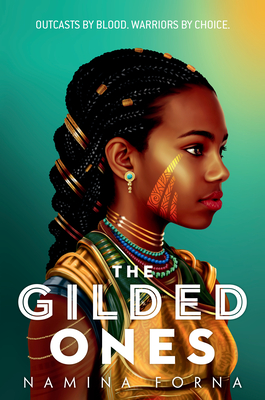
At age 16, Deka is preparing for the blood ceremony in her village that will prove that she is pure and worthy of marriage. When her village is attacked by deathshrieks though, Deka’s blood flows gold rather than red. Deka is discovered and held in a cell where she is drained of her blood regularly. Now unable to die permanently, she suffers through several deaths while her blood is sold by the elite members of her village. When a strange woman arrives wielding the power of the Emperor, she takes Deka with her to join a new elite force of fighters, all of them girls with gold blood and immortality. It is there that Deka becomes a warrior, learning to fight the deathshrieks and also learning about the powers she seems to have that no one else does, including the ability to order the deathshrieks to obey her commands. But all is not what it seems in the training camp. Steadily, Deka and her friends discover what is being hidden from them all.

Written in wildly engaging style, this book is a gripping and tense look at a society that denigrates women yet has to depend on them for their very survival in war. The pacing is strong, the book moving ahead with new discoveries and new revelations nicely. The diverse characters fill the entire cast, making a rich reading experience in an interesting fantasy world with monsters who are more than they seem at first.

Deka is an engaging protagonist. She must push back on the way she was raised to be submissive, something that many girls and women in our own society must do as well. Stepping into her own power is a theme of the book, learning to wield her new weapons and then figuring out who the real enemies are. Readers will figure out the puzzle long before Deka even seems interested in wondering about it. There are a few surprises along the way though, making it worth reading even if the reader has it mostly solved.

Ferocious, feminist, fierce and great fun. Appropriate for ages 13-17.

Reviewed from copy provided by Delacorte Press.

Jump at the Sun: The True Life of Unstoppable Storycatcher Zora Neale Hurston by Alicia D. Williams

Cover image

Jump at the Sun: The True Life of Unstoppable Storycatcher Zora Neale Hurston by Alicia D. Williams, illustrated by Jacqueline Alcántara (9781534419131)

As a little girl growing up in Eatonville, Zora loved to listen to stories. She listened to stories of Brer Rabbit and Brer Fox at the general store. Zora told her own stories too, to anyone who would listen. But her father didn’t approve of her storytelling, since he considered it telling lies. Her mother though, didn’t want her children growing up to till the land, so she encourage Zora to “jump at de sun.” When Zora’s mother died, she was sent to the Florida Baptist Academy boarding school. Zora loved the books there, but soon her school fees were not paid and she had to leave. She didn’t stay long with her family, quickly moving out and finding work though she kept getting fired or quitting. She only loved the times when she could spin stories. Zora decided to return to high school and graduate, so she lied about her age of 26, claiming she was 16. After graduating, she headed to Howard University and decided to become an author, writing her stories of Eatonville. So she moved to New York and eventually sent out some of her stories to a magazine contest. Zora made another leap after she got attention from winning the contest and got a scholarship to another college where she was assigned to collect Negro folklore, something she had been doing since she was a child!

Williams writes Hurston’s biography with such energy and appreciation. She takes the statement Hurston’s mother made and turns it not only into the title of the book but also into a sentiment woven throughout the entire story, showing the connection between Hurston’s success, her talent and her willingness to make leaps of faith to new opportunities. There is bravery and resilience on these pages, shining in the sunlight as Hurston takes risks in the most inspiring ways.

The illustrations are marvelously colorful, filling the pages with Eatonville, various colleges and the dynamic feel of New York City. All of the pages are full-page art, taking the color right to the edge of the page, glowing with streaming sunlight, peach, green, blue and reds.

A shining leap of a picture book biography that suits its subject perfectly. Appropriate for ages 6-9.

Reviewed from copy provided by Atheneum.

Too Small Tola by Atinuke

Cover image.

Too Small Tola by Atinuke, illustrated by Onyinye Iwu (9781536211276)

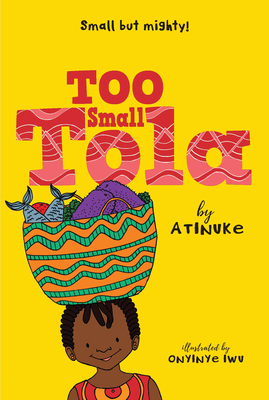
Tola lives in Lagos, Nigeria with her older brother and sister and her grandmother. Tola is the youngest and quite small, though she notices throughout these three stories that often the smallest people turn out to be the strongest too. In the first story, Tola goes with her Grandmommy to the market because she is the best at counting change. She and her grandmother carry the heavy groceries and items back on their heads, stopping along the way for treats. In the next story, the water stops working in their apartment, so Tola wakes her siblings to get water from the well early so they aren’t late for school. But her clever idea doesn’t quite work out as expected. In the last story, Tola and her brother help their neighbor the tailor after he gets into an accident and can’t ride his bike. Thanks to her way with numbers, Tola can measure the clients for their new clothes and her brother is strong enough to pedal them all over the city.

Any new book by Atinuke is a treat, but one that introduces a new character and her family is a particular delight. As always, Atinuke shows both the poverty in Nigeria but also the strength of the community. Tola works hard throughout the book, making sure that she is taking care of her grandmother, her siblings and her neighbors. She uses her own particular skills to help, including her ability to notice small things, count correct change, and measure closely. She also uses her innate kindness and love for others to motivate herself.

The illustrations are done in friendly and often funny line drawings. These drawings show vital elements of the story such as the size of the rice bag that Grandmommy carries on her head and the length of the line at the well. They also help to break up the text, making this early chapter book approachable and adding clever humor.

Another charmer from a master Nigerian storyteller. Appropriate for ages 5-8.

Reviewed from copy provided by Candlewick Press.

Soosie the Horse That Saved Shabbat by Tami Lehman-Wilzig

Cover image

Soosie the Horse That Saved Shabbat by Tami Lehman-Wilzig, illustrated by Menahem Halberstadt (9780998852775)

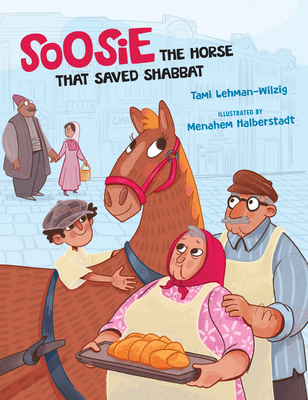
Long ago, when Jerusalem was still a small town, there was a bakery. The bakery specialized in challah, and made enough for the entire community. Jacob was the bakery’s delivery boy who drove the cart that was pulled by Soosie, the owners’ horse. The two traveled in the early morning along the cobblestone streets of Jerusalem, delivering challah. As each family paid, the coins dropped into the metal bank with a clink-clang. They did the same route, day after day, month after month. But then one day, Jacob was too sick to make the deliveries. Jacob was certain that Soosie, the horse, could make the deliveries all on her own. So they put a note on the cart and sent her on her way. Soosie stopped at each place, accepted the money in the bank, and walked on. Back at the bakery, they worried about whether Soosie could do it all on her own. Three hours passed, and finally Soosie was home again with an empty wagon and a bank full of coins.

Inspired by the history of Angel Bakery in Jerusalem, the author created a gentle folktale about dependability, challah and Shabbat. The author explains the details of Shabbat in her author notes, including the importance of animal rights as a part of Shabbat. Her writing pays homage to folklore capturing the same repeating elements as Jacob and Soosie make their regular rounds. She also uses plenty of sounds in her writing, emphasizing them and inviting participation.

The illustrations are light-hearted and merry. From the bustling bakery to the stable next door to the many people of Jerusalem they interact with. The entire book has the same quiet humor and good-natured belief in one another.

Paying homage to folklore and Jerusalem, this Jewish picture book is full of the warmth of bread and community. Appropriate for ages 3-5.

Reviewed from ARC provided by Kalaniot Books.

The Accidental Apprentice by Amanda Foody

Cover image.

The Accidental Apprentice by Amanda Foody (9781534477568)

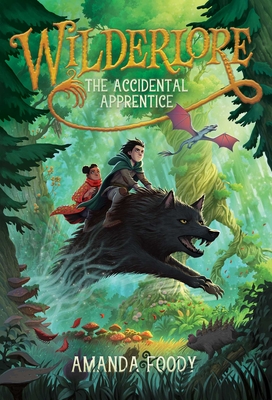
Barclay has only ever wanted to be an apprentice to the town’s mushroom farmer. He’s worked hard and followed all of the rules after his parents’ death when a Beast attacked their small town. The town has lots of rules, some small and some large. One of the biggest is not to wander into the Woods that surrounds it. Barclay wouldn’t dream of breaking the rules, until one day he finds himself a bit farther into the Woods than he meant to be. It’s when he’s there that he bonds accidentally with a Beast and becomes what his entire town fears: a Lore Keeper. Barclay tries to hide it at first, but is soon run out of town by an angry mob. With the help of another Lore Keeper, he reaches the closest town of Lore Keepers where all he hopes to do is have his bond with the Beast removed. But that isn’t as simple as he hoped and soon he is drawn into a competition to get an apprenticeship with the hopes that the masters can save him and allow him to return to a simple life of mushroom gathering.

Foody’s writing is immediately engaging. She has created a fantasy world that is a delightful mix of everyday elements, a dangerous competition and amazing magic and Beasts. Readers get to learn about Lore Masters alongside Barclay even though he does his best not to be impressed or too interested in their ways. The world in particularly well built with elements that all work to form a fascinating and unique whole. The beast-bonding element is interesting and has collectible and connection elements similar to Pokemon but much more physical and with shared abilities that the person receives too.

Barclay is one of those protagonists who has a completely different take on what he is experiencing than the reader will. Even as the reader is delighting in the elements of the Lore Keeper society, Barclay is often whining or looking for a way out. Viola is a great foil for Barclay, someone who was raised as a Lore Keeper and yet has found herself asking questions about their world too. She and the other characters bring diversity to the story, so I often found myself longing for this to be her story instead.

The first in a series, this book is a wild fantasy romp. Appropriate for ages 9-12.

Reviewed from ARC provided by Simon & Schuster.