All of a Sudden and Forever by Chris Barton

All of a Sudden and Forever by Chris Barton

All of a Sudden and Forever: Help and Healing After the Oklahoma City Bombing by Chris Barton, illustrated by Nicole Xu (9781541526693)

This nonfiction picture book takes the tremendous tragedy of April 19, 1995 and leads readers to hope and a way forward. It looks deeply at the loss of life, at how so many people were lost and so many more were impacted by the deaths. It looks at the many broken bones and also the broken minds that resulted from the bombing too. The book then moves to after the bombing and the one tree that remained standing nearby. That American elm tree was battered  and scorched by the blast, yet it remained upright. It survived and became a beacon of hope for those who were impacted by the bombing. In spring, someone collected its seeds which then became part of the annual memorial service for the victims. As new tragedies happen, and they did and will in the future, those seeds and seedlings from Oklahoma City start the healing process and show that survival is possible and hope can return.

Barton’s words ache on the page. They are impossible to read without a deep feeling of mourning and loss, without recognizing what happened and what will continue to happen. The weaving of the story of the elm tree into the book is masterfully done, offering a glimpse of green and a path to the future. Barton writes with such empathy here. He allows the story to be told in all of its anguish and pain, and yet makes sure that hope has its place there as well.

The art by Xu is extraordinary. She uses the roots of the tree to intertwine with and embrace those in mourning, to show how interconnected we all are to one another. Done in ink and digitally, the art is a strong mixture of ethereal colors and grounding tree roots, people and spaces.

A powerful and evocative book about tragedy that celebrates life. Appropriate for ages 8-12.

Reviewed from library copy.
Khalil and Mr. Hagerty and the Backyard Treasures by Tricia Springstubb

Khalil and Mr. Hagerty and the Backyard Treasures by Tricia Springstubb, illustrated by Elaheh Taherian (9781536203066)

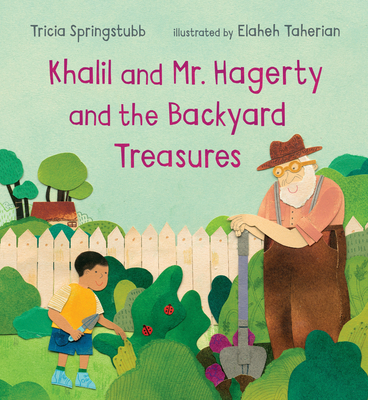
Khalil and his family moved into a new house with two floors. They lived on the top floor and Mr. Hagerty lived downstairs. Khalil’s family was loud while Mr. Hagerty was quiet. Both Khalil and Mr. Hagerty loved the backyard. Mr. Hagerty gardened there while Khalil looked for bugs and rocks. On a hot day in the summer, the two of them had a disappointing day where the carrots were small and shriveled and the ground was too hard to dig for treasure. They took a refreshment break in Mr. Hagerty’s place, sharing chocolate cake and cold milk. Later, both of them had an idea. The next day was much better when Mr. Hagerty found big carrots in his garden and Khalil found buried treasures! It called for more shared cake!

Springstubb shows how two very different people: quiet and loud, old and young, different races, can form a friendship that builds slowly and steadily over time. She keeps her story very focused, allowing many of the details to be shown in the illustrations rather than told in the text. The characters first bond over helping one another with words, which grows into something quite special. It’s that initial acceptance, the creation of a shared space of the backyard, that makes this book work so naturally.

Taherian’s illustrations are done in collage with oil and colored pencil. They have a great depth to them, the layers of the collage offering a real backyard to explore alongside the characters. The colors are vivid and glow with the summer heat and sun.

A lively look at emerging friendship and what it means to be neighbors. Appropriate for ages 3-5.

Reviewed from e-galley provided by Candlewick Press.

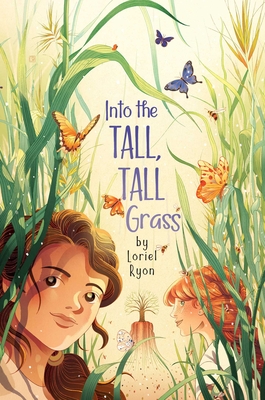
Into the Tall, Tall Grass by Loriel Ryon

Into the Tall, Tall Grass by Loriel Ryon

Into the Tall, Tall Grass by Loriel Ryon (9781534449671)

Yolanda’s family has lived on the pecan farm for generations, but they aren’t accepted by the townsfolks who call the brujas, or witches. Yolanda herself seems to have not gotten a magical gift though. Her younger sister has hers, with bees flying around her head and the ability to make plants grow and flower. It’s similar to her Wela’s gift with butterflies. Now though, Yolanda’s family is dwindling with only her sister and grandmother left. As her grandmother falls into a strange sleep, Yolanda sets out on a journey across their property. Joining her is her ex-best friend, her sister whom she also isn’t really speaking to, and a boy who may have a big crush on Yolanda. The grass has magically grown over the last few days, obstructing the view across their land, lengthening the journey to several days rather than hours, and putting real dangers in their path. They must all work together, Wela included, to complete the journey and find the answers to their family puzzle.

Impossible to summarize in any way that makes sense, this novel is a marvel of natural magic, connection to a place, and an in-depth exploration of a family. The connection to nature is evident throughout the novel both in the way that characters can work their magic with insects and plants but also through the grass that grows and the way the land stretches to create a world to explore. Throughout the book there is an intensity, a focus that allows the strange world to become solid and real.

A large part of that intensity is Yolanda herself, a character who holds grudges and demands to walk her own path, even if it’s foolish. She has lost contact with the people she had been closest to in the world, her best friend and sister, and had also lost connection with her grandfather before his death. The journey is just as much about her finding a way back to these people as it is about solving the larger family puzzle.

Strange and unique, this magical realism novel is an enticing summer read. Appropriate for ages 12-15.

Reviewed from copy provided by McElderry Books.

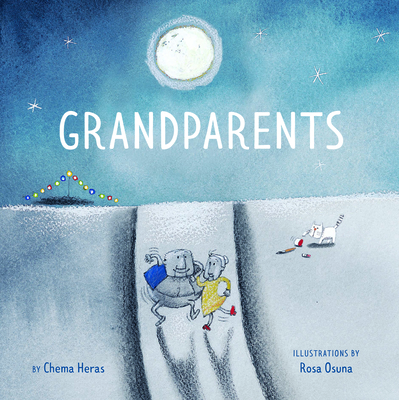
Grandparents by Chema Heras

Grandparents by Chema Heras

Grandparents by Chema Heras, illustrated by Rosa Osuna (9781771645669)

When Grandfather hears an announcement of a party in the main square, he knows just who to invite. He rushes home to ask his wife, Manuela, to join him. But Manuela isn’t quite as eager as he is to head to a party. Grandfather picks Grandmother a flower and tells her how beautiful she is. Grandmother heads inside to put on eyeliner, then mascara, then skin cream, but each time Grandfather tells her that she is lovely just the way she is and to hurry up so they can go dancing! Lipstick, hair dye and a change of clothes are the next delays, but Grandfather is ready to cajole Grandmother along. Finally, the two of them go dancing together, and Grandmother realizes that Grandfather is just as beautiful as the moon too.

First published in Portuguese, this charming picture book explores the power of love and of being oneself. Heras uses a series of metaphors to describe Grandmother’s beauty. Her eyes are “as sad and beautiful as stars at night.” Her white hair is like “a midsummer cloud” and her skin is wrinkly like “nuts in a pie.” Grandmother herself uses negative metaphors to describe herself, but those are all countered by Grandfather’s love and adoration for her.

The illustrations are quirky and interesting, filled with surreal combinations of spaces and objects. As they are together in the house, the couple sometimes appear sideways or upside down as well as right-side-up nearby.

A warm and lovely look at love and self-esteem. Appropriate for ages 3-5.

Reviewed from e-galley provided by Greystone Kids.

Why Do We Cry? by Fran Pintadera

Why Do We Cry by Fran Pintadera

Why Do We Cry? by Fran Pintadera, illustrated by Ana Sender (9781525304774)

After a quiet morning, Mario asked his mother why we cry. His mother explained that people cry for many different reasons. Sometimes crying is due to sadness that can’t be contained. Other times we cry because of the anger we feel like a storm cloud raining and feeling lighter afterwards. Sometimes we are confused and searching for answers. Crying helps us grow and keeps us from turning to stone. Tears can be the best medicine when we are feeling pain inside and out. And then of course, there are times when we cry for happiness.

Pintadera beautifully explores the emotions that we all feel and how they can be expressed through our tears. This is such a heartfelt book, framed by a mother talking to her son about crying. It’s so critical that boys feel that they can express emotion and cry rather than feeling emotions as rage. This book not only supports that but explains the complexity of emotions and how they change and develop.

Sender’s illustrations are gorgeously emotional. She captures the feelings of isolation, loneliness, anger and confusion with real skill, moving from one color palette to another to convey each type of emotion.

A marvelous book about emotions and emotional intelligence. Appropriate for ages 3-6.

Reviewed from e-galley provided by Kids Can Press.

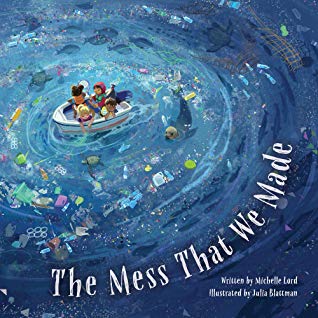
The Mess That We Made by Michelle Lord

The Mess That We Made by Michelle Lord

The Mess That We Made by Michelle Lord, illustrated by Julia Blattman (9781947277144)

This cumulative tale focuses on the environmental impact of our garbage, or the mess that we made. Four children in a little boat float in a sea of nets, bottles, plastic and more. As they watch, a seal is caught in a broken net, a turtle is trapped in a plastic bag, and the landfill near the water grows and grows. Then the book takes a turn and shows how people, large and small, can make a real difference by cleaning up the beach, recycling, using clean energy, protesting problematic fishing, and cleaning up the oceans. 

It is the cumulative format that really works here. Lord never makes it into a towering and overwhelming “This is the house that Jack built” sort of story. She instead plays with the format in a shorter structure, creating a clear cause and effect for young readers both in the destruction of our oceans and in cleaning them up. The result is a cumulative tale that reads aloud really well and smoothly. Her twist of showing how people can help is a call to action that clearly shows how even children can make a difference in our world.

The art is particularly effective when showing underwater scenes and the huge amount of garbage in the ocean. The light from above illuminates the struggles of ocean life and yet also shows the lingering beauty of the habitat and the blue green waters. 

A strong environmental message about our oceans and our responsibility. Appropriate for ages 2-4.

Reviewed from library copy.

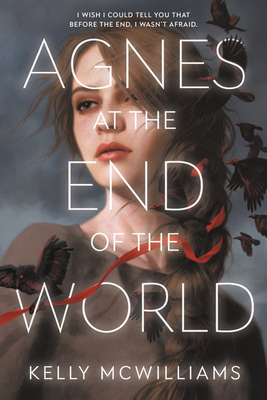
Agnes at the End of the World by Kelly McWilliams

Agnes at the End of the World by Kelly McWilliams (9780316487337)

Agnes has only ever lived in Red Creek with her younger siblings, attending the Prophet’s sermons, and following his rules. Her mother has withdrawn into her room, not even attending church any more. Only Agnes’ sister Beth can get her mother to even eat any more. Agnes is the devoted sister, working to keep her siblings safe and never breaking the rules. No one knows that she has been sneaking insulin into Red Creek for her youngest brother, Ezekiel, to keep him alive. Beth spends much of her time dreaming of escaping Red Creek and kissing a boy. But soon the world around them changes with a virus that brings the end of civilization. The Prophet uses the virus to his advantage, facing the reckoning and putting everyone in Red Creek at risk. Agnes must figure out how to flee Red Creek to keep Ezekiel safe while Beth finds herself trapped in the nightmare that the Prophet has created. The two sisters each face the end of the world, one with the faith, power and abilities to create a new future for everyone.

McWilliams has written the perfect pandemic read, a book that takes all of our fears of our current pandemic and multiplies them into true horror as the virus hits animals and people alike. The world of Red Creek is haunting and shocking, the cult exactly the right place to find Agnes and Beth as society crumbles. McWilliams uses the cult’s brutality, patriarchy and abuse to create a crucible for these two young women as they find their way forward.

Beth and Agnes are marvelous characters, quite different and yet both wrestling with their fundamentalist upbringing and struggling to leave it behind in ashes. Yet their duty to family and the world itself is what keeps them focused and drives their choices in the apocalyptic world they find themselves in.

A dark and harrowing mix of cults, pandemics and faith-based magic. Appropriate for ages 13-17.

Reviewed from e-galley provided by Little, Brown Books for Young Readers.

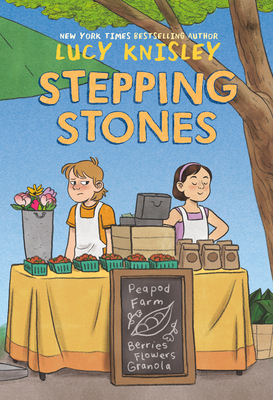
Stepping Stones by Lucy Knisley

Stepping Stones by Lucy Knisley

Stepping Stones by Lucy Knisley (9780593125243)

Jen didn’t want to move out of the city and onto a farm with her mother, leaving her father behind. She particularly doesn’t enjoy her mom’s new boyfriend, Walter, who is always telling her how she should act. On the farm, Jen does love the hayloft with its privacy and kittens. She’s not quite sure about the chickens at first until she meets the fuzzy chicks, but even then taking care of them is a pain! When Walter’s two daughters come to visit on weekends, it’s particularly hard. The girls work at the farm’s stall at the market, selling berries, granola and flowers. But Andy, the oldest daughter, is bossy and constantly putting Jen down. Jen would much rather be drawing in her notebook than doing math at the market. Being a new family is hard, but small steps make big connections.

Knisley is one of my favorite graphic novelists. It is great to see her returning to graphic novels for children. She captures the emotions of being young with such empathy, valuing the perspective of her characters. She also allows her young characters to find their own way forward, the adults around and causing problems at times. Here it is figuring out how to be potential step-siblings while wrestling with a new life in the country, and a frog too.

Knisley fills her book with small moments of life on a farm and in the country. Every person who lives, loves or tolerates the country will enjoy her depiction. As always, her illustrations are clear, funny and full of great moments.

Full of fresh air, chickens, garden-rampaging deer, and a complicated family, this graphic novel is a great summer read. Appropriate for ages 9-12.

Reviewed from e-galley provided by Random House Graphic.

In the Woods by David Elliott

In the Woods by David Elliott

In the Woods by David Elliott, illustrated by Rob Dunlavey (9780763697839)

Enter the woods through this book of poetry for children. The picture book volume shares insight into the different animals living in the woods. First is the musky bear, emerging from his den in the early spring. The red fox also appears in the melting snow, hunting to feed her kits. A scarlet tanager flashes past announcing spring alongside the cowslips. Soon the grass greens, the opossum and her babies bumps along with skunks and their perfume too. Porcupine and fisher cat are also there, quiet and fierce. Hornets buzz in the air while millipedes munch on rotting leaves. Moose, beaver, turkey, raccoon, bobcat and more appear here, each with their own poem that eventually has winter returning with deer appearing ghostlike through the snow storm.

Elliott chains his poems together leading readers steadily through seasonal changes as each animal appears on the pages. The focus is not the seasons though but the animals themselves. Some get longer poems while others get a couple of lines that capture them beautifully. There is a sense that Elliott is getting to the essence of many of the creatures he is writing about here. Each poem is focused and very accessible for children.

Dunlavey’s illustrations in watercolor and mixed media are rendered digitally. Their organic feel works well with the subject matter. Each creature is shown in their habitat and turning the pages feels like rounding a new corner on a walk in the woods.

A poetic journey through the forest that is worth taking. Appropriate for ages 6-9.

Reviewed from e-galley provided by Candlewick.