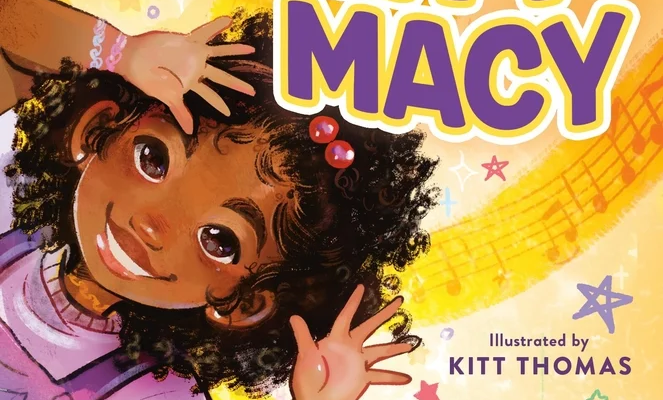
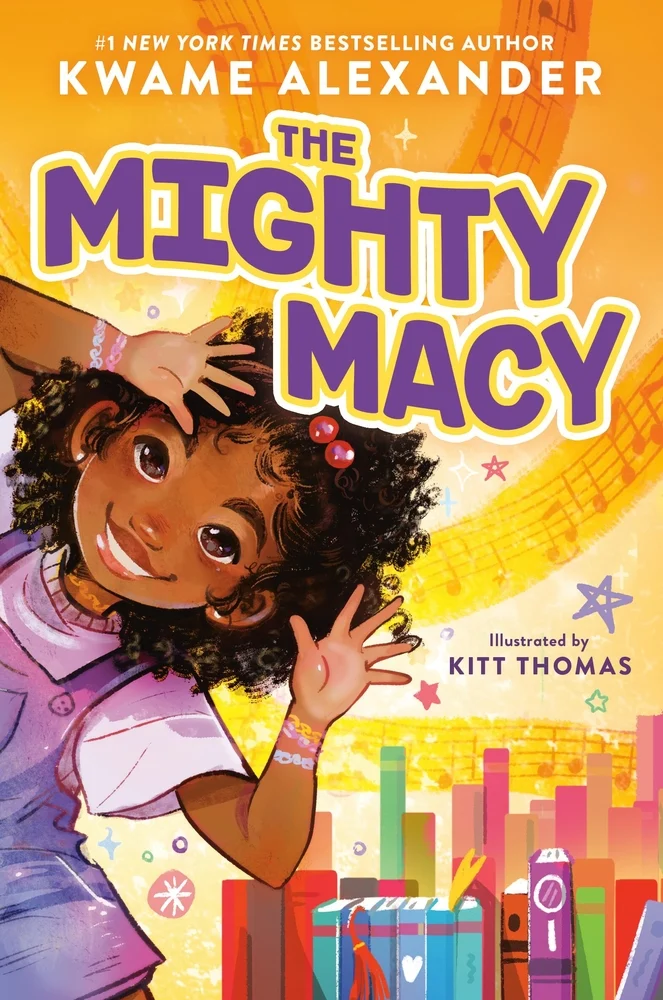
The Mighty Macy by Kwame Alexander, illustrated by Kitt Thomas
Publisher: Little, Brown Books for Young Readers
Publication Date: February 3, 2026
Reviewed from library copy
ISBN: 9780316442169
When Macy gets the first book in the Mighty Zora series for her birthday, she stays up late reading. The next day, she rushes to the school library to get the second book in the series. But the school library is closed due to budget cuts. Now the school library will only be open two days a week instead of all week long. Macy has to figure out how to save the school library while also learning her minuet for her violin concert. It’s all happening at once, but with help from her poet father, her pancake-providing mother and her friends she might just get it all done.
Alexander is a virtuoso of children’s literature. He writes with such warmth here of Macy, a little girl filled with the drive to speak up and finding the courage to do so. Alexander demonstrates that children have a place in social justice work and giving them a voice in processes is vital to making change happen. Written primarily in verse, this book is approachable for readers newer to chapter books. The illustrations add to the joy of the book, sharing Macy’s life and family.
A great new chapter book that speaks up about taking action.
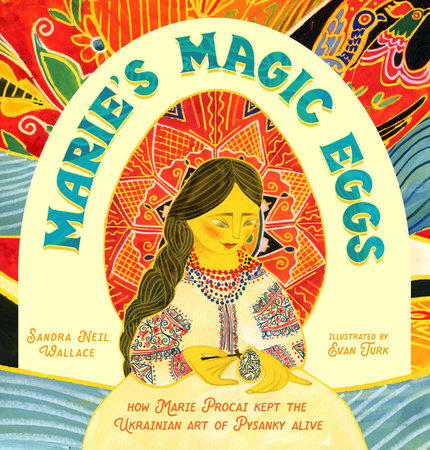
Marie learned to make Ukrainian decorated eggs with the Baba in Ukraine. They used beeswax and sketched stories on the eggs which were then painted in colors created from local plants. Marie followed her brothers when they moved to North America. Marie lived in Minneapolis after discovering her favorite uncle was there. When spring came, Marie longed to make pysanky and slowly found a way to create the colors and tools she needed. Marie married and her tools grew better thanks to her husband. Eventually, Marie started to sell tools and teach people how to create this art. Her Ukrainian Gift Shop became the largest supplier of pysanky kits in the world and her eggs were displayed at the White House. All a tribute to her heritage and her Baba.
This dynamic tale mixes tradition with new opportunities. Throughout the book, Marie is shown as a woman with her own ideas, her own way of approaching things and an undying connection to her Ukrainian heritage and culture. The book shares just enough information about creating pysanky to give young readers a sense of the detail and skill that go into each one. The art by Turk is amazing given that it uses resist, just like pysanky does, for the art. The result is an Easter egg of a book that has a rustic and colorful feel.
A bright inspiring look at a female entrepreneur who used her heritage to create a business that speaks on behalf of Ukrainian heritage. Appropriate for ages 5-8.
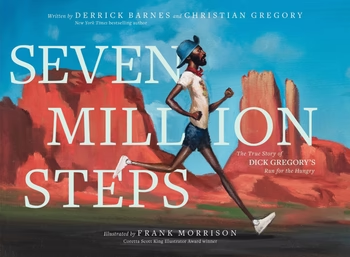
To raise awareness of the problem of hunger in America, Dick Gregory pledged to run 3,500 miles across the United States from Los Angeles to New York City in two and a half months. At first, there were journalists, famous people and others cheering. But soon there was just the quiet of the road. He ran 50 miles a day, seeing America in a new way. At every stop Gregory spoke about why he was running. Running farther, Gregory was joined by local people who met him to run with him for a bit, supporting his cause, even Muhammad Ali came along. There was pain, so much effort and finally success as he entered New York on the Fourth of July.
Told in second person, this book invites you to experience the decisions that went into Gregory’s run as well as the run itself. The text is near poetry, flowing across the page in stanzas that have rhythm that begs to be read aloud. It shares information clearly and with a particular point of view that insists that you look and think about what was accomplished. The art by Morrison is marvelous, filled with the long legs of runners, the vibrancy of brown and Black skin, and playing with perspectives to make the art sing along with the words.
A thrilling and inspiring look at activism in action. Appropriate for ages 5-8.
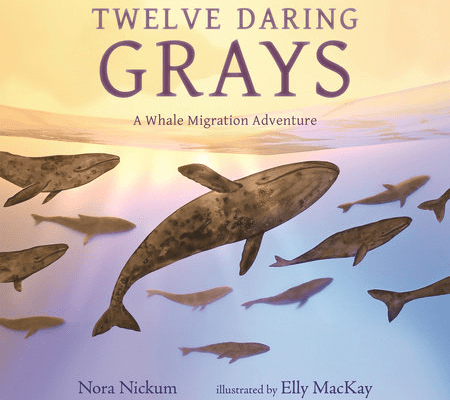
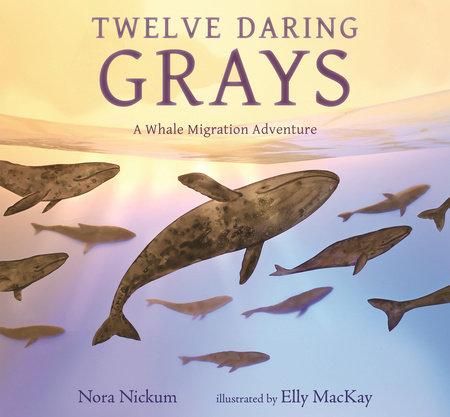
Every February, gray whales travel from Baja California to the Arctic. The trip is 6,000 miles and takes them 2 months. In their midst are 12 whales with a different plan. All of them eat almost nothing along the trip and some die along the way. When they reach Washington State, the 12 whales change course and head to the Salish Sea. The whales must wait for the tide to rise so they can reach the mudflat safely. Still, the water is very shallow where they must forage for the ghost shrimp to help them survive their journey. They stay for days, devouring the shrimp and leaving whale-sized divots in the sand. They set out on their trip north again, heading to the rich Arctic waters and then traveling back to California again to have their calves. Perhaps those calves too will take the dangerous detour to the Salish Sea.
Nickum has created a nonfiction picture book that reads beautifully, welcoming children to the story of these brave animals as they find a new way to survive a dangerous migration. The prose is presented almost like poetry on the page, offering beautiful moments of wonder at what the whales can do when they turn off and then eat in such shallow waters. MacKay’s art is incredible. She uses paper, ink, colored filters and light to create images that shine on the page. Each of the images is amazing, but I’ve never seen anything like what she has created to show the whales in shallow water. Incredible.
Breathtaking story and illustrations make this a journey worth taking. Appropriate for ages 4-8.
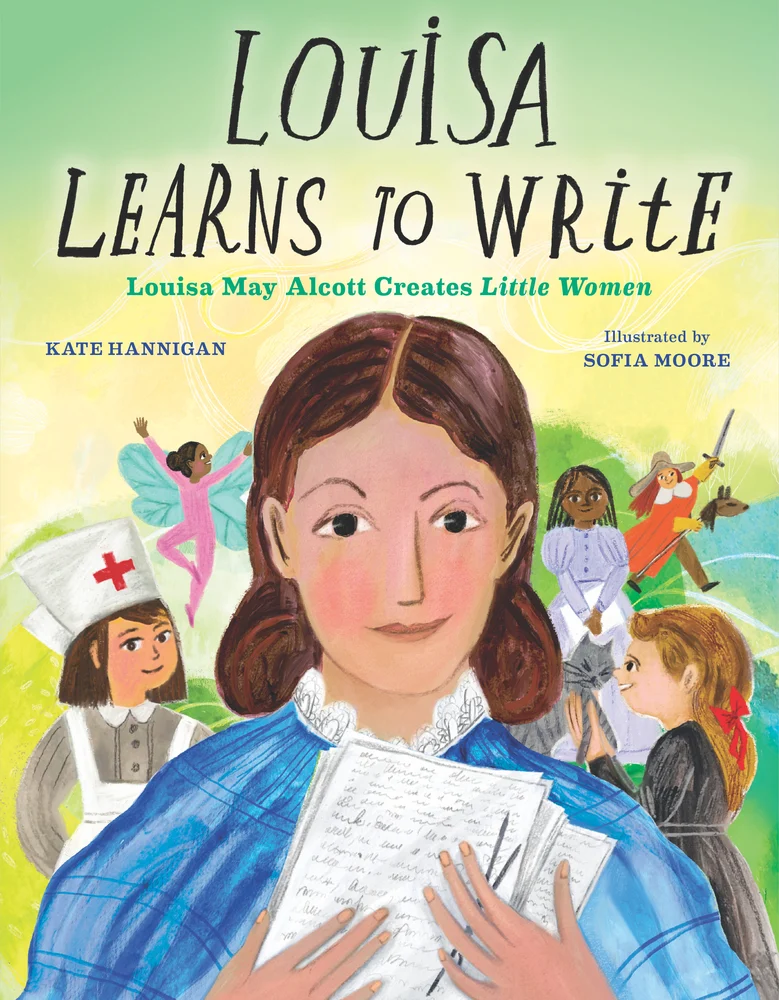
Louisa May Alcott was born into a family very similar to that of Little Women. She had three sisters and they played with the books in her father’s study. The family was poor and moved often. Louisa loved to write in her Imagination Book but her older sisters were already working as domestic servants. When Louisa was twelve, her mother received an inheritance which allowed the family to purchase a new home in Concord, Massachusetts where she met neighbors like Henry David Thoreau and Ralph Waldo Emerson. As they continued to move, one of Louisa’s sisters died and Louisa’s dream of writing seemed far away as she was rejected again and again. It was after her time as a nurse during the Civil War that Louisa found her straight-forward writing style that everyone continues to love in her Little Women.
This approachable picture book biography of the famous author focuses on the parallels between her own life and that of the Marches in Little Women, a perspective that pays off at the end when Little Women is finally published. Alcott’s journey is fraught from the beginning due to poverty and yet she continues to dream of writing, showing a real perseverance as she struggles to find her unique voice. The illustrations are done in a mix of paint, pencil and digital, focusing closely when Alcott’s world begins to draw inward and having wide landscapes at the times of expansive thought and opportunity.
A great picture book biography of a big woman in children’s literature. Appropriate for ages 5-8.
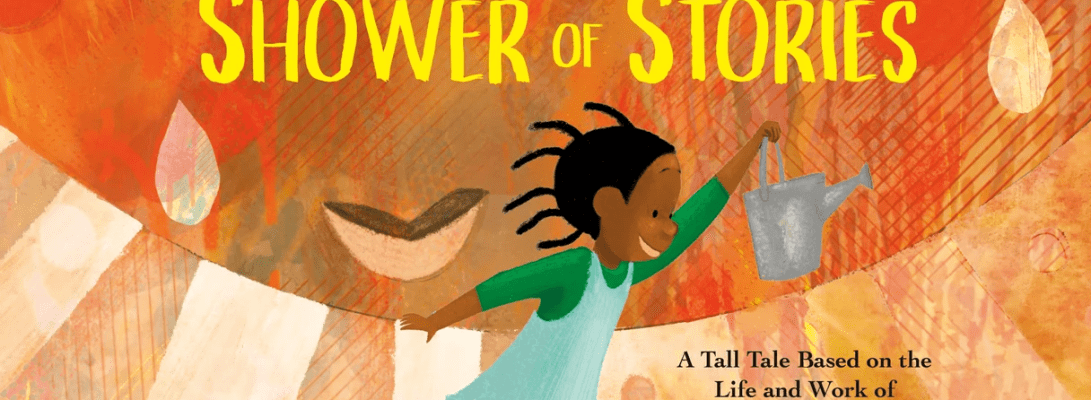
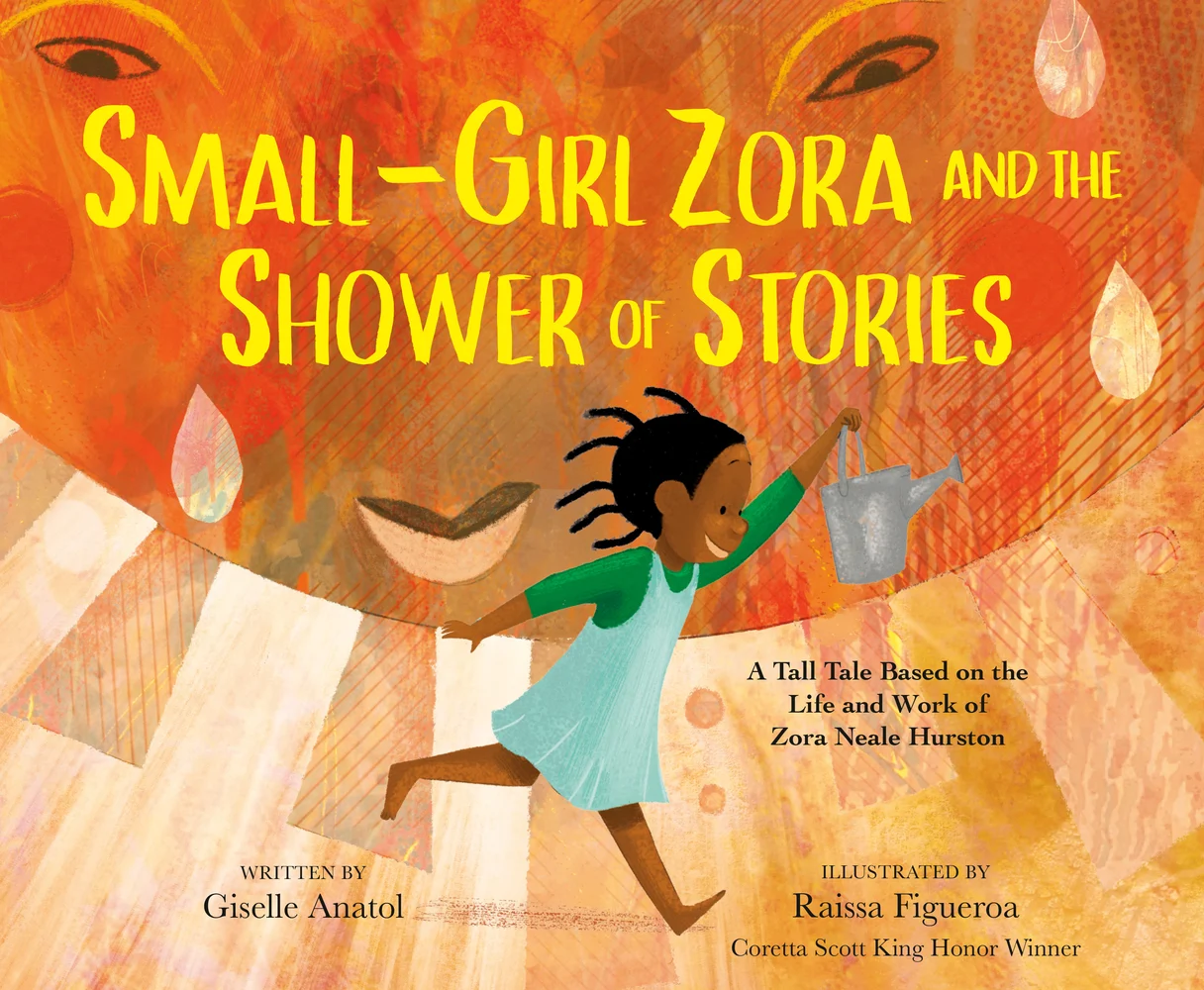
A tall tale based on the life of Zora Neale Hurston takes readers into the life of this renowned author as a small child. Zora was a little girl who didn’t play gently with dolls or tea sets. She was always dirty after a day playing outside, climbing trees. But most of all, Zora was a story teller filling the air around her with tales that she made up on the spot. She dreamed of her stories changing the world and then set out to use her tales to end the local drought. Armed with just a watering can and her imagination, she went around town telling stories. But by the end of the day, there was no water in her can. About to give up, she realized that she had watered a garden with her stories and the drought came to an end as everyone started to use their imaginations together.
This second book in the Small-Girl series is a winner. Young Zora is presented with a huge imagination and a mouth willing to share the stories she creates. She shines brightly on the page, her ideas glowing against the grumpy adults she encounters. The illustrations move from huge suns and moons to fancy parlors to the stories that Zora weaves. The result is a book filled with deep color and sprightly tales.
A clever use of tall tales to speak to the power of stories and one amazing author.
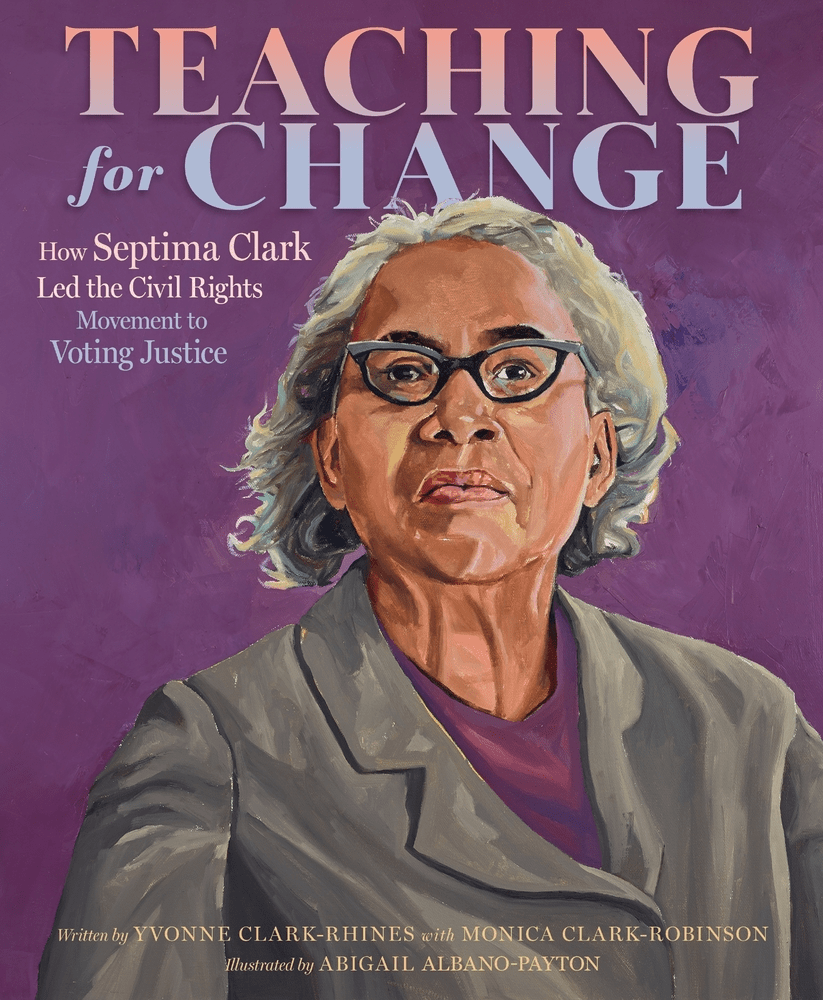
Septima Clark was born in 1898 to a father who had been enslaved and a mother who was raised free in Haiti. Her parents firmly believed in education, getting Septima a real education by trading for lessons. Even as a child, Septima loved to teach others. At age 18, she moved to South Carolina and an all-Black school where she was allowed to teach. She taught children during the day and adults at night. In the 1950s, Septima started teaching at an integrated school for adults, helping people learn to read, write and vote. She worked with Dr. Martin Luther King, Jr. and a team of teachers who helped Black people learn enough to pass the existing voting tests. Septima never stopped teaching and never stopped being the change.
There is something so beautiful about a child raised from poverty and following her own dream of teaching all the way through to its most exultant form, community activism and enabling others to follow their dreams too. Throughout this picture book biography, there is a sense of quiet strength in Clark, leading through teaching, creating change through her work. Dynamically written in poetic prose, the book reads aloud beautifully. The illustrations are oil paintings, capturing Clark from childhood through adulthood with grace and poise.
A force for change and good. Appropriate for ages 5-9.
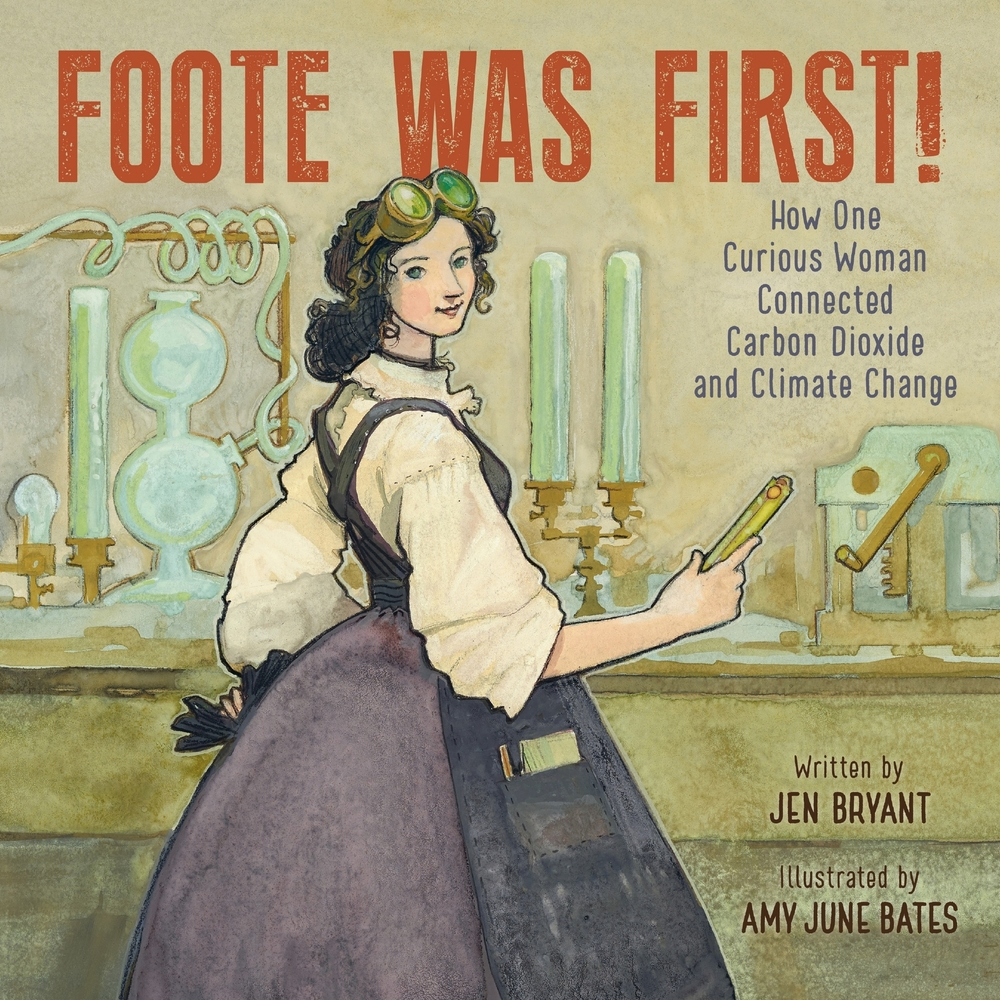
Though an Englishman is credited with discovering that carbon dioxide traps heat, it was actually an American woman, Eunice Newton Foote, who did it first in 1856. Eunice grew up on her family farm and asked lots of questions. At age 17, she was sent to a girls school where she was taught science and able to use a laboratory. She grew up, married and had children and stayed curious. Never a professional scientist, she did science at home, learning about various gasses and their capabilities. When she wasn’t allowed to present her findings since she was a woman, a friend presented them on her behalf. She was the first to tie carbon dioxide to global warming, a foundational learning for our times.
Offering just the right amount of information for young readers, this nonfiction picture book focuses on Foote’s curious mind and scientific studies. The illustrations are particularly striking with Foote in her wide hoopskirts engaged in long walks, scientific experiments and discoveries. They demonstrate how rarely we see women of this period engaged in scientific work.
Inspiring and engaging. Appropriate for ages 7-10.
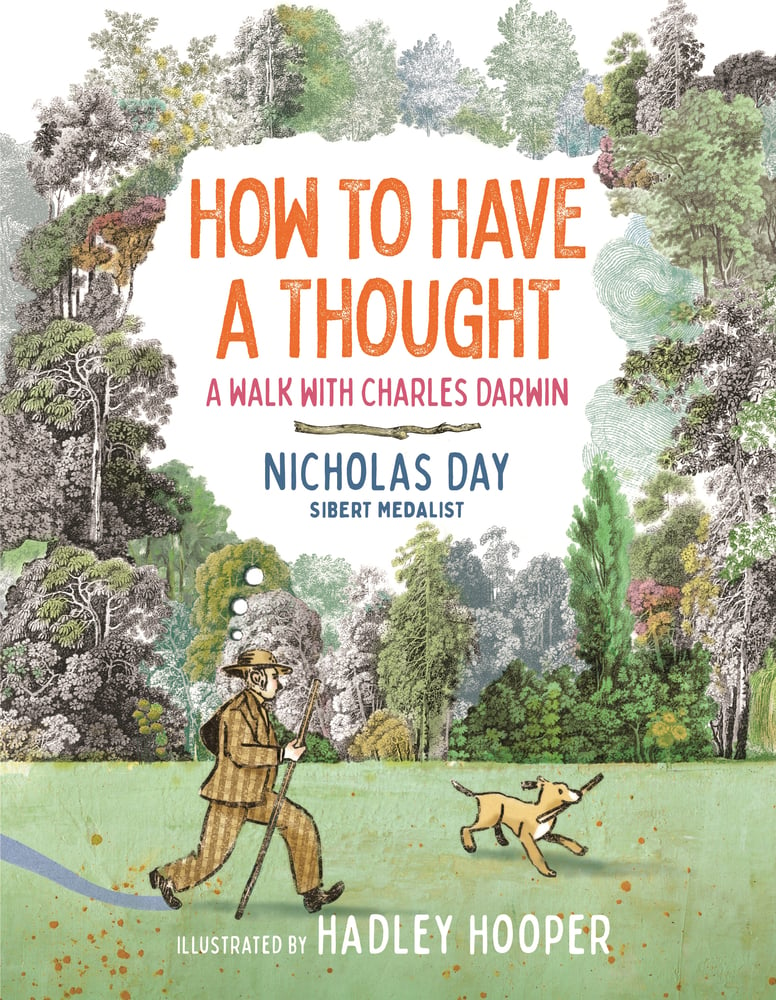
Take a walk like Charles Darwin in this nonfiction picture book that reveals both Darwin’s thinking process and also his scientific discoveries. First find a rock or two, then a walking stick and then find a loop to walk. It could be a loop around the block or a loop around the world, like the one Darwin made on his ship. That’s when he discovered the fossil of a giant sloth, the variety of beaks on finches that lived on the Galapagos Islands, and the bones and skin of a rhea, a bird he’s been seeking but had been served for a meal. Then came the thinking. The why of it all. The walking in loops. The stacking of rocks to count the loops. What will you think of when you take your own walk?
The combination of encouragement to get outside, walk and think with the historical and biographical information on Charles Darwin creates an unexpected treat of a book. The book ends with the author explaining that walks that are celebrated tend to be extraordinary, full of vistas and beauty. That is not the sort of walk we are talking about. These are thinking walks, going the same way every time. And just look at the result. The illustrations play with the dichotomy of the book, sharing historical elements with paintings and offering a light-hearted feel.
A real thinker of a book. Appropriate for ages 5-9.
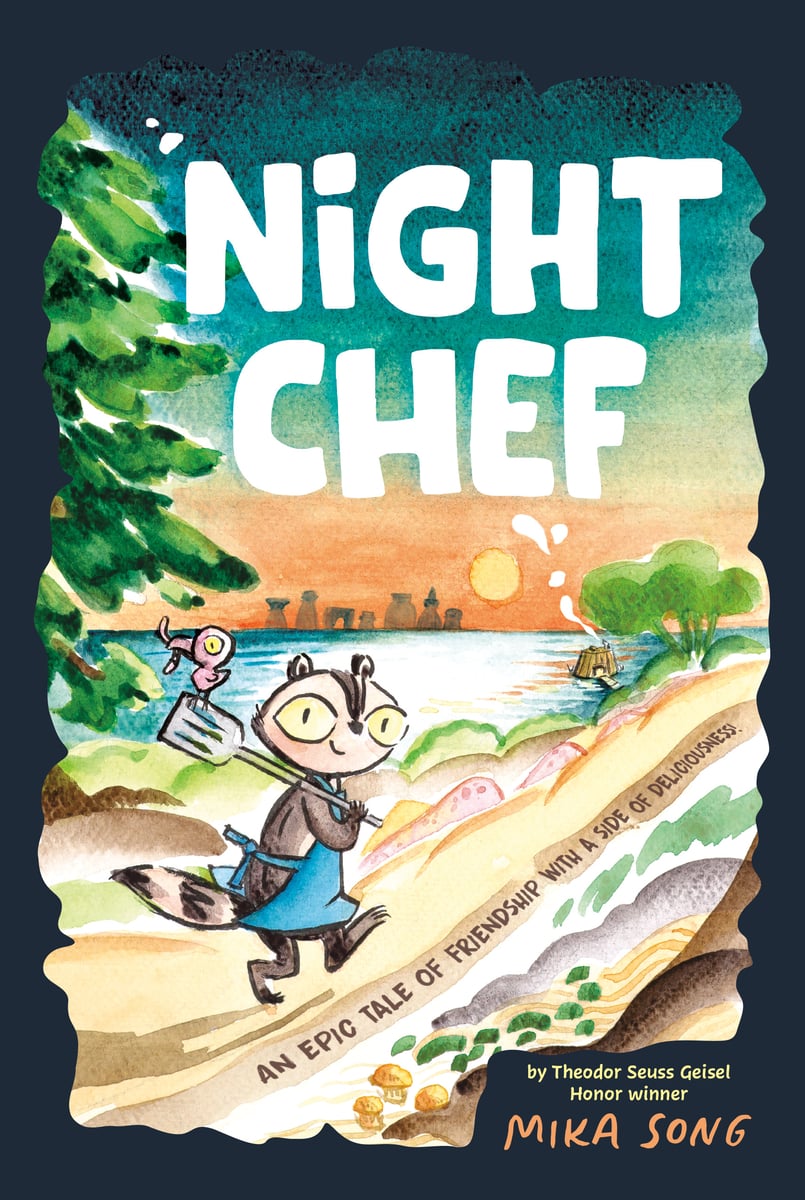
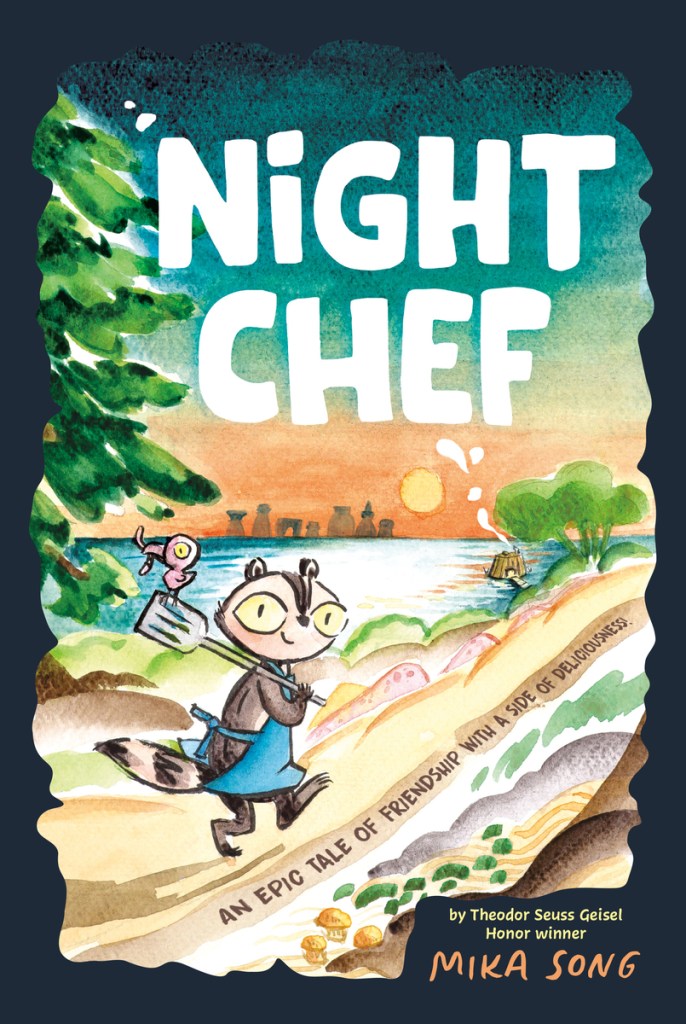
A raccoon has grown up living in the wall of a human restaurant where she emerges at night and cooks. She must make do with ingredients she finds on the window sill and in people’s lockers. When she tries to make ramen, she needs an egg. But just as she finally gets it in her hands, it hatches. She sets off to find the nest that the tiny baby crow came from. On the journey, they find Mole’s Hole, a restaurant for all sorts of animals that serves a variety of things made from worms. They make new friends, including a posse of other raccoons and a major enemy in an owl. Night Chef must find a way to save her little crow friend and that means figuring out where her own life is taking her.
This is Song’s first foray out of beginning readers and picture books and it’s a marvelous one. Her art is welcoming to young readers who will find colorful and friendly new characters on the pages. There is plenty of richly written action to carry the story forward and a quest worthy of our little heroine. The writing is deft and clever, funny at times but also full of heart.
A delicious new recipe for an elementary-aged graphic novel. Appropriate for ages 6-9.
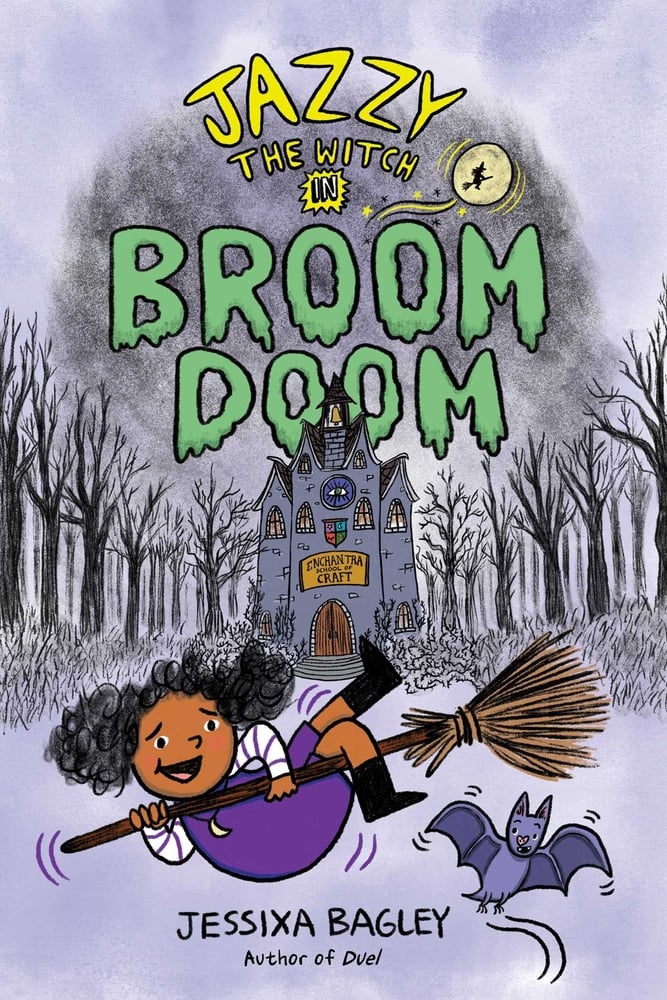
Jazzy comes from a long line of witches who make the brooms that all of them ride. But Jazzy is different. She’s not excited about learning magic spells or about learning to ride a broom. It’s not until Jazzy sees her first bicycle that she finds her passion. Soon she is zipping around secretly on a bicycle that she made with the help of her best friend and Fiona, her pet bat. As Jazzy gets more and more focused on cycling, her friendship starts to fall apart along with her school work. When a broom riding performance is announced, Jazzy must find a way not to embarrass her entire family since she can’t ride a broom yet.
Bagley has created a marvelous witchy world in this graphic novel for elementary-aged readers. The diverse characters, include Jazzy’s family of Black queer women. With the focus on witch traditions vs. human bicycles, readers get to explore what being different from your family and community feels like and how telling the truth is a way to move forward and find acceptance. The art is funny, action-filled and fully depicts the community of witches.
A non-scary witch book that’s worth a ride. Appropriate for ages 6-9.
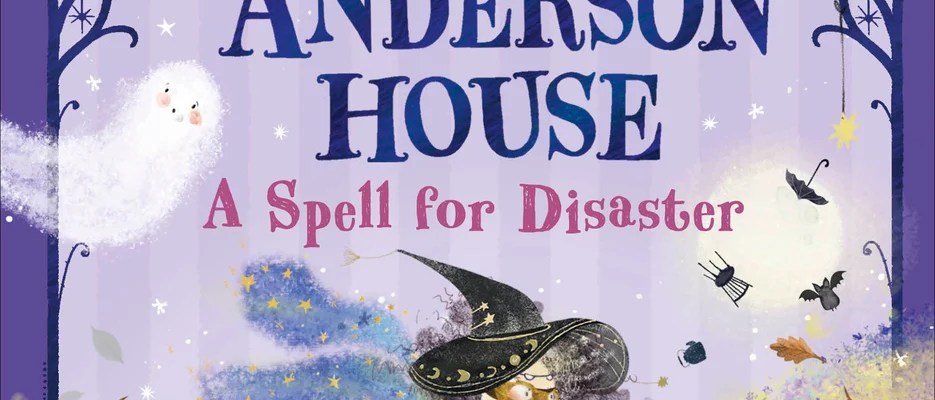
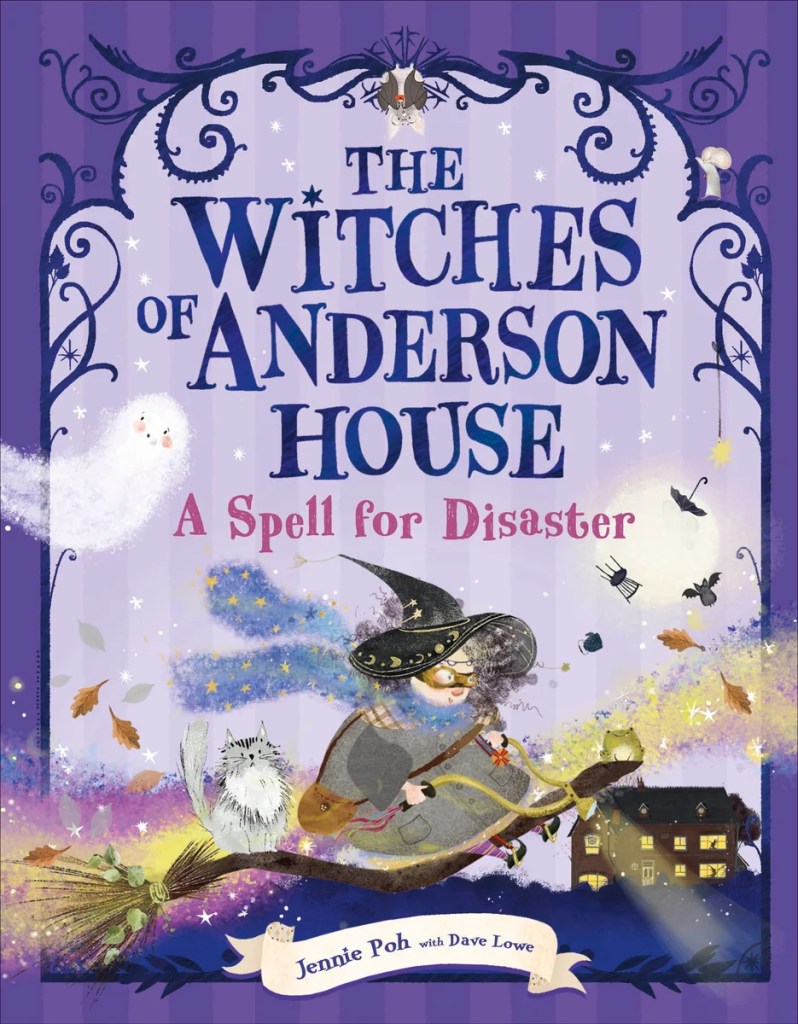
Anderson Hall is a retirement home for witches. Each of the retired witches and their familiars were known for different things, potions or astrology or gardening. Myrtle had been known as a champion broom rider. But when a boy comes to Anderson Hall and asks for Myrtle’s help in finding his missing guinea pig, Myrtle doubts that she can be of any help. It has been a long time since she used spells or rode a broom. With encouragement from her familiar, a pet toad who used to be a mailman, the boy and the other retired witches, Myrtle decides to try to help. It may take a few attempts to get off the ground though.
This early chapter book is a joy. It captures the hesitation of trying something new and taking risks combined with the joy of helping others. The rich witch retirement community is warmly rendered and distinctly and delightfully witchy despite their retirement. The text is approachable and the story moves quickly. The book has full-color illustrations that support the text and contribute to the cozy whimsy of the tale.
A magical read for the autumn season and beyond. Appropriate for ages 5-8.








 Waking Brain Cells