5 Best Poetry Books for Children in 2016

Here are my picks for the top poetry books of 2016. They are powerful reads that demonstrate the importance of words and their ability to stir and transcend.

25785628 28954117

Freedom in Congo Square by Carole Boston Weatherford, illustrated by R. Gregory Christie

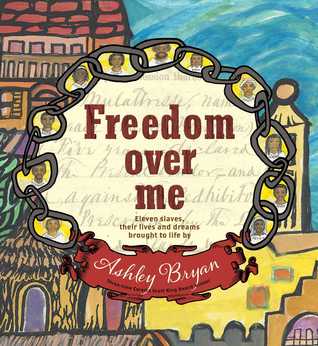
Freedom Over Me: Eleven Slaves, Their Lives and Dreams Brought to Life by Ashley Brya

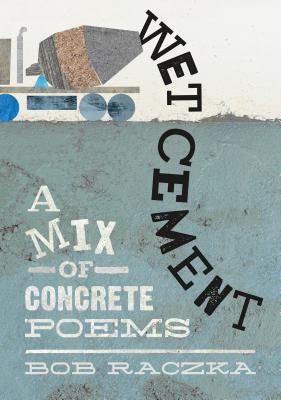
28957208 Wet Cement: A Mix of Concrete Poems

Somos como las nubes / We Are Like the Clouds by Jorge Argueta, illustrated by Alfonso Ruano

Wet Cement: A Mix of Concrete Poems by Bob Raczka

25332008

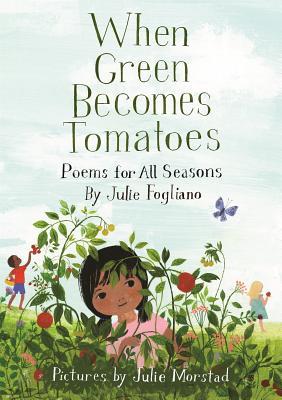
When Green Becomes Tomatoes: Poems for All Seasons by Julie Fogliano, illustrated by Julie Morstad

The Warden’s Daughter by Jerry Spinelli

the-wardens-daughter-by-jerry-spinelli

The Warden’s Daughter by Jerry Spinelli (InfoSoup)

Newbery Medalist Jerry Spinelli tells the story of a girl who lost her mother as an infant and grew up as the daughter of a prison warden. Cammie isn’t a girl who is silly and lots of fun. In fact, she is fast moving and fast talking, exactly why she has the nickname Cannonball Cammie. Cammie is actually angry most of the time. Her best friend has developed faster and seems to be 17 instead of 13 sometimes. She wants to get on Bandstand and be famous. Cammie though is more interested in riding her bike around town and playing baseball. Cammie thinks that her life would be better with a motherly figure, so she begins to try to get the prisoner assigned as their housekeeper to be more like a mother to her. Then there’s Boo Boo, the prisoner who acts motherly towards Cammie but hides a dark secret. Her father too is a mystery, both present and not there, sometimes at the same time. It’s all a confusing mix of emotions for Cammie, who will need to deal with her own grief both past and present before she can do anything but be angry at the world.

Spinelli has written a completely captivating story in this middle grade novel. The setting is richly created with the prison, a full city and community, and one moment after another where Cammie sets it all ablaze with her anger and acting out. Throughout though, Cammie is far more than just as angry person, she is humanity personified, a girl in search of herself even as she spends her time looking for solutions in others. It’s a compelling story, one that is filled with moments of joy and despair.

Spinelli writes like a wizard, unveiling truths slowly and beautifully. As Cammie storms through her life, she also reveals the truths of others around her. And without revealing the entirely riveting and humbling ending, she creates opportunities where others become more than they have ever been before. It is a staggeringly rich novel that is written with such skill that it manages to read in an accessible way.

A masterful book about loss, childhood and recovery by a master of books for children, this is a must-read and a must-buy for libraries. Appropriate for ages 9-12.

Reviewed from e-galley received from Alfred A. Knopf and Edelweiss.


One Last Word by Nikki Grimes

one-last-word-by-nikki-grimes

One Last Word: Wisdom from the Harlem Renaissance by Nikki Grimes (InfoSoup)

Released January 3, 2017.

Master poet Grimes has created a book of poetry that celebrates the poets from the Harlem Renaissance who influenced her. Through her amazing skill, she pays homage to their original poems by creating her own from their words. Using a form called Golden Shovel, she takes lines from their poems and uses them as the final words in the lines of her poems. Both the Harlem Renaissance poetry and Grimes’ speak to the experience of African Americans and for Grimes, African American children and teens. These are poems about difficulties, about racism, about hate and about love.

As I read these poems, I realized over and over again how very skilled Grimes is. It is most stunning when you remember the form she is using, because her poetry flows and dances as if entirely unrestricted. Still, the bold words tie the two poems together and one remembers the strict form she is using and the grace with which she handles it. Grimes speaks directly to children and teens of color in this book, making sure they see themselves and their experiences on the page. That they see the racism, the bullying and the dangers around them. She also makes sure though that they see a strong community, voices to raise in protest and the familial love around them.

The book is beautifully designed with each page washed with yellows and sometimes lined in blue. It is illustrated by some of the top African-American children’s book illustrators working today. It is a stunning collection of art, filled with emotion, pain and endurance.

Masterful, skilled and very timely, this book of poetry elevates us all and sings to the skies that African-American children are valuable and vital in this world. Appropriate for ages 10-13.

Reviewed from ARC received from Bloomsbury.

27 Magic Words by Sharelle Byars Moranville

27-magic-words-by-sharelle-byars-moranville

27 Magic Words by Sharelle Byars Moranville (InfoSoup)

Kobi knows that her parents are still alive. When they sailed off on a two month adventure five years ago and didn’t return, Kobi was still able to see them when she used the magic word “Avanti!” It is one of 27 words that her writer mother gave her when she was little and told her were magical. Kobi and her older sister lived with their grandmother in Paris but now are heading to Des Moines, Iowa to go to school for a few months and live with their Uncle Wim. As Kobi tries to adapt to her new environment, she finds herself telling lies defensively as her classmates ask her questions. As the lies begin to catch up with Kobi, she is forced to realize that she has been lying to herself as well.

Moranville has written a book that is a blissful read. She uses small moments to speak to larger issues, captures details that bring the world she has created fully alive. There is Norman who wears clothes to blend in and not be noticed. There is Kobi’s older sister who is struggling with OCD. The entire family fills the pages with art, gardens, food and color. It is a beautifully built world.

The writing throughout the novel is exceptional. There are paragraphs that are completely exquisite. This one appears on page 108 and is about a woman struggling with Alzheimer’s:

Ms. Hancock was like a beautiful picture that had been rained on, then driven over by a car, then left under a pile of leaves to be nibbled by squirrels, and the only beautiful bit left was a tiny patch of incredible blue in one corner.

A strong novel that blends grief, lies, loss and the potential for real magic. Appropriate for ages 9-12.

Reviewed from library copy.

I Am Not a Number by Jenny Kay Dupuis

i-am-not-a-number-by-jenny-kay-dupuis

I Am Not a Number by Jenny Kay Dupuis and Kathy Kacer, illustrated by Gillian Newland (InfoSoup)

Based on the true story of the author’s grandmother, this picture book captures the experience of First Nations people in Canada being sent to boarding schools. Under threat of fines and jail time, First Nation parents were forced to give their children up to the government. When Irene is taken to her new home, she tries to never forget her real home, her parents and their way of life. Irene is called only by a number at the school and told to scrub the brown off of her skin. Her hair is cut off. She is punished when she speaks her native language by a nun burning her hands. Irene is eventually allowed to return home for the summer, where she continues to have nightmares of her time at school. Finally, her parents decide to hide the children rather than sending them back.

This is not a picture book for preschoolers, rather it is ideal for elementary-aged children closer in age to 8-year-old Irene in the story. The horrific treatment of First Nation children is shown with real clarity. The use of Irene’s own voice to tell the story makes it personal and much more painful. While there is a lot of text on the pages, the book reads well and the text is straightforward and necessary to explain the loss of culture and the darkness of the boarding schools.

The illustrations by Newland are almost like painted photographs. They show the family losing their children, the stern nuns, and the punishment scene is carefully captured afterwards in terms of pain and emotion rather than depicting the punishment itself. There is a feeling of constraint and loss in the images of the boarding school and then freedom when the children return home.

A powerful look at Canadian history and First Nation children, this book would work well paired with When I Was Eight by Christy Jordan-Fenton. Appropriate for ages 7-10.

Reviewed from library copy.


Freedom Over Me by Ashley Bryan

freedom-over-me-by-ashley-bryan

Freedom Over Me: Eleven Slaves, Their Lives and Dreams Brought to Life by Ashley Bryan (InfoSoup)

Based on actual slave auction and plantation estate information, this is a picture book that truly captures the world of enslaved people in the United States. The household has lost its master, who ran the plantation with its eleven slaves. His wife is about to return to England and the slaves will be sold with the rest of the property. The book opens with a poem of the wife and then into the voices of the eleven slaves, each one filled with a refusal to be seen only as a price tag or property, each one celebrating their skills and their lives.

Bryan’s poetry sings on the page, defiant and strong. He writes of the losses of slavery, of families broken up and never seeing one another again, of brutality on the plantation and the auction block, of being taken from Africa and freedom, and of the hardships of life as a slave. Bryan also notes though for each person that there are things that make them far more than any category could put them in, more valuable than their skills, more vital than their age and sex. This is a powerful testament against the inhumanity of slavery done by putting a face to eleven slaves that are impossible to turn away from.

Bryan’s art focuses on the faces of the slaves. He does one portrait almost as a flyer for the auction with their face and price, name and age. Then the page turns and you see their dreams on the page, captured in the same thick paint but no longer framed with words of slavery and now bright with colors and action.

Powerful and unique, this picture book takes on slavery in the most passionate and personalized way possible. Appropriate for ages 7-10.

Reviewed from copy received from Atheneum.

10 Great Books on Immigration & Immigrants

Immigration is huge in the news right now with the Syrian refugees, Mexican immigration to the United States, and the promises of the incoming administration. As libraries and librarians, we serve our entire community wherever they hail from. Here are some wonderful books to celebrate the power and importance of immigration for our nation and the world:

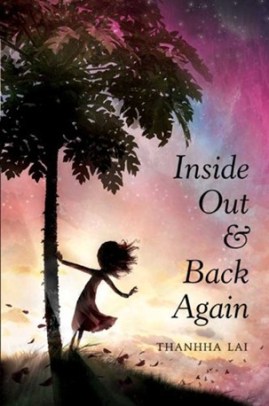
The Arrival insideoutbackagain

The Arrival by Shaun Tan

Inside Out and Back Again by Thanhha Lai

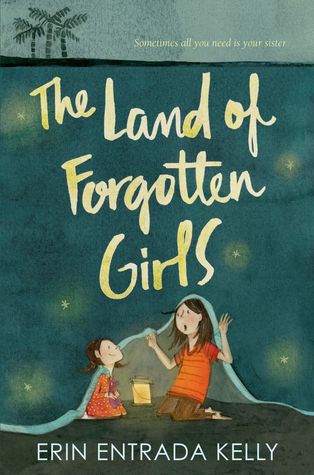
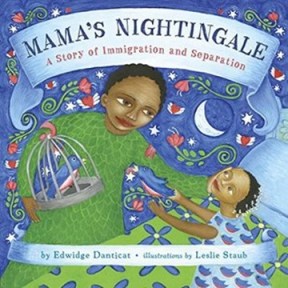
The Land of Forgotten Girls Mamas Nightingale by Edwidge Danticat

The Land of Forgotten Girls by Erin Entrada Kelly

Mama’s Nightingale: A Story of Immigration and Separation by Edwidge Danticat, illustrated by Leslie Staub

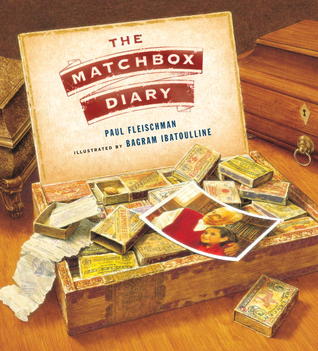
The Matchbox Diary pancho rabbit and the coyote 

The Matchbox Diary by Paul Fleischman, illustrated by Bagram Ibatoulline

Pancho Rabbit and the Coyote: A Migrant’s Tale by Duncan Tonatiuh

the-sun-is-also-a-star-by-nicola-yoon Their Great Gift by John Coy

The Sun Is Also a Star by Nicola Yoon

Their Great Gift: Courage, Sacrifice and Hope in a New Land by John Coy, photographs by Wing Young Huie

The Turtle of Oman unforgotten coat

The Turtle of Oman by Naomi Shihab Nye

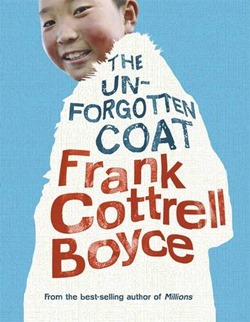
The Unforgotten Coat by Frank Cottrell Boyce

Preaching to the Chickens by Jabari Asim

preaching-to-the-chickens-by-jabari-asim

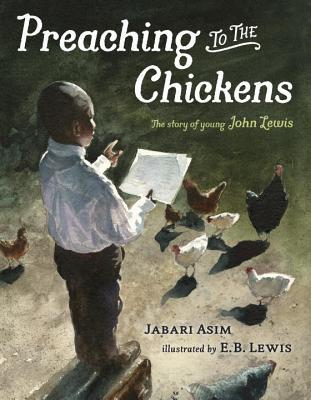
Preaching to the Chickens by Jabari Asim, illustrated by E. B. Lewis (InfoSoup)

John Lewis, renowned Civil Rights leader and Congressman, dreamed of becoming a preacher as a child. When he was put in charge of the family’s flock of chickens on their farm, he knew it was a great responsibility. John loved going to church on Sunday and took what he learned in church back to his flock. He would sermonize to them, the chickens mesmerized by his voice. He would also baptize them, speak up for them when they needed a voice and rescue them when they needed help. As he preached the words he learned in church, he put those words into action while tending his flock.

Asim beautifully ties together the lessons in church to actions in caring for others. There is a richness to the writing in this picture book biography, capturing both scripture and the beauty of life on a small farm filled with hard work. This is not a fantasy farm, but one where toil is what makes for a successful harvest. Still, it is a place that grew an activist like John Lewis, who learned about using his voice for a cause right there on the farm with his chickens.

The illustrations by Lewis are done in watercolor, capturing the chicken coop and John himself with just enough detail to convey their simplicity but also their stature. Lewis uses the play of light spectacularly in the book, deftly incorporating shadow and light into John’s childhood sermons.

A beautifully crafted picture book biography that speaks of the power of childhood dreams to create activism and a man with a voice to change generations. Appropriate for ages 6-8.

Reviewed from library copy.


Catching a Storyfish by Janice N. Harrington

catching-a-story-fish-by-janice-n-harrington

Catching a Storyfish by Janice N. Harrington (InfoSoup)

Moving away from Alabama is hard for Keet. She is moving closer to her beloved grandfather though, which helps. The two of them spend days together fishing, something that Keet used to find challenging because she loves to talk and tell stories. But at her new school, she is teased for her accent and suddenly her words start to dry up. She finds it hard to make friends and even at home she isn’t talking much. Slowly though, Keet starts to find her voice again and makes a new friend. Just as she starts to talk though, her grandfather suffers a stroke and struggles with the slow recovery. Keet though has just the solution, showing him the way forward with stories.

Harrington’s verse novel is pure loveliness. Throughout she plays with various poetic forms, delicately moving from haiku to concrete poems to narrative form with many others included too. She nicely lists them at the end of the book, talking about their difficulty and what makes a poem that form. Her skill is evident throughout with all of the forms as she tells the story of Keet and her progress from losing her confidence and her voice to finding it again. The voice of Keet’s new friend is including in the poems as well, often playing against ones in Keet’s voice.

The characters here are given time to grow and stretch on the page. Keet is a wonderful character filled with a great energy and drive, but also stuck in a lack of confidence that hits her out of nowhere. It is a book about quiet and both its power and the ability to drown in being silenced. It is a book about friendship, about family and the importance of finding your place and your voice.

Beautifully written and strikingly gentle, this book is a celebration of the individual and their ability to speak their own stories. Appropriate for ages 8-12.

Reviewed from library copy.