GoodReads Nominess of Best Middle Grade & Children’s

Join in voting on the 2013 Opening Round to select the Best Middle Grade & Children’s book on GoodReads.  Voting for this initial round runs through November 9th.  Here are the 15 nominees:

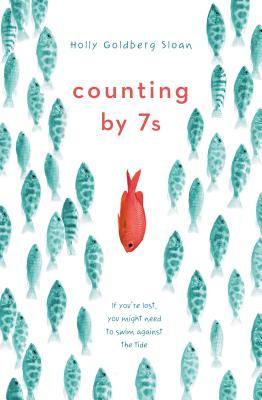
15801381 Counting by 7s Doll Bones

Chasing the Prophecy by Brandon Mull

Counting by 7s by Holly Goldberg Sloan

Doll Bones by Holly Black

Escape from Mr. Lemoncello's Library Fortunately, the Milk Fyre (Septimus Heap, #7)

Escape from Mr. Lemoncello’s Library by Christ Grabenstein

Fortunately, the Milk by Neil Gaiman

Fyre by Angie Sage

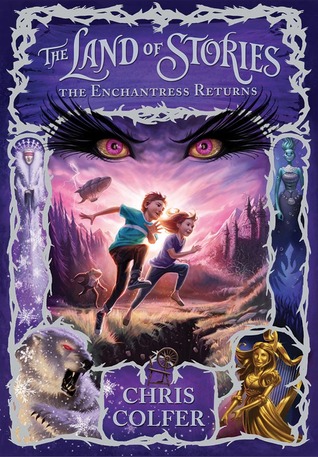
12127810 The Enchantress Returns (The Land of Stories, #2) Navigating Early

The House of Hades by Rick Riordan

The Land of Stories by Chris Colfer

Navigating Early by Clare Vanderpool

Prisoner B-3087 The Runaway King (The Ascendance Trilogy, #2) The Screaming Staircase (Lockwood & Co, #1)

Prisoner B-3087 by Alan Gratz

The Runaway King by Jennifer A. Nielsen

The Screaming Staircase by Jonathan Stroud

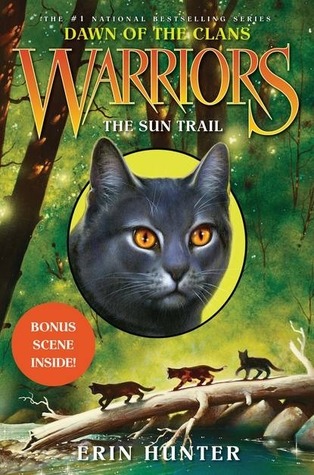
The Sun Trail (Warriors: Dawn Of The Clans, #1) Dork Diaries 6: Tales from a Not-So-Happy Heartbreaker Trust No One (The 39 Clues: Cahills vs. Vespers, #5)

The Sun Trail by Erin Hunter

Tales from a Not-So-Happy-Heartbreaker by Rachel Renee Russell

Trust No One by Linda Sue Park

Review: Locomotive by Brian Floca

locomotive

Locomotive by Brian Floca

This book thoroughly celebrates the days of steam trains when rails were just starting to bridge the nation.  It begins with the building of the railroad, coming from east and west and meeting in the middle.  Filled with the sounds of building and the sounds of trains, this book fairly sings with the noises of the railroad.  Your trip starts on a quiet platform waiting for a train.  Once aboard, readers learn about the way steam powers the engine and the jobs of different people aboard.  Readers ride aboard the train, visit the bathroom which is basically a hole in the floor, and sleep along the way.  On the way west, you can see the landscape change, cross fragile bridges and enter black tunnels.  This entire book is a stirring testament to steam engines and the people who worked them.

Floca offers so many details here.  One might think that would slow the book down, but it is really all about those details and the entire experience of travel by steam train.  He keeps the interest level high by being very selective of the facts he shares.  It makes the reading fascinating and even young train buffs should learn a thing or two. 

Floca’s illustrations are beautiful.  He lingers over details in his images as well as in the text.  Readers get to see mechanisms close up, feel the speed of the train as it moves forward, and see the light reflecting off of the tight tunnel walls.  He creates an experience here that speaks to the time period clearly with his choice of fonts and the design of the entire book.  His illustrations are sometimes front and center, other times serving more as diagrams of interesting facts. 

Gorgeous illustrations, fascinating facts and a clear love of the subject make this a riveting read whether you are a train buff or not.  Appropriate for ages 7-10.

Reviewed from library copy.

Review: Battling Boy by Paul Pope

battling boy

Battling Boy by Paul Pope

This is the first book in a new graphic novel series.  Monsters are attacking Acropolis but they are protected by the hero Haggard West, until he is killed.  Now their fate is in the hands of a young twelve-year-old sent from outer space.  He has powers of different animals that he accesses by wearing different t-shirts.  He can fight, but the monsters are cunning and strong.  Teens from his planet go rambling, but few return.  Battling Boy must not just save Acropolis, he has to prove his worth, make a cunning plan, fight epic battles, and survive.

The reader is quickly thrown into the story in this graphic novel which lays very little background at all.  That approach is perfect for this fast-paced storyline where everything is explained on the fly and the reader has to pick up on clues to put it all together.  Even as the reader is wondering about some things, the action has picked them up and moved them onward.  The result is a brawling book that is a surprisingly engaging read.

Pope’s art has a wonderful vintage comic feel.  The storyline also has its vintage moments but also bursts of surprises.  The melding of steampunk, deities, outer space and monsters makes for a fresh read.

Young fans of graphic novels will find a lot to love here: big battles, a young hero and a mashup of genres.  Appropriate for ages 9-12.

Reviewed from library copy.

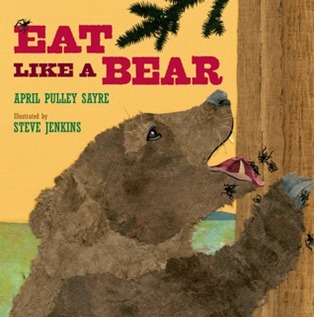
Review: Eat Like a Bear by April Pulley Sayre

eat like a bear

Eat Like a Bear by April Pulley Sayre, illustrated by Steve Jenkins

Released October 22, 2013.

Can you eat like a bear?  It means you will wake up very hungry in early spring and have to dine on sandy plants and frozen dead bison meat.  In May, you will have dandelions and cow parsnips to munch but you will still be hungry, so you eat some ants.  You will also eat clover and fish in icy streams for a meal of trout.  In July you will catch a squirrel you dig out of the dirt and in August you will have moths to munch.  September brings berries and October pinecones.  Then it is time to sleep for the winter, full with all of the various meals you have eaten for the rest of the year.

Sayre makes this book such fun to read.  She takes scientific information about what bears eat and makes it very accessible for a preschool audience.  She uses repetitive structures throughout the book, having the bear dig and pull to find food again and again.  This doesn’t just create a friendly structure for small children, it also underlines the fact that animals are in constant search for food.  Sayre also makes the book inviting by using the second person format, asking children if they can really eat like a bear.  I suspect many will stop saying yes when the ants, squirrels and dead bison appear in the diet.

The art of Jenkins is always beautiful, but he outdoes himself with the depiction of the bear.  I shared this book aloud with my son and we both spent time lingering over the first image of the bear.  Jenkins has managed to use the torn paper as fur, not only along the edges of the bear’s body but on its body too.  The result is fur so plush that you feel like your hand should sink into the page.

A glorious look at bears, this book is a fantastic introduction to a creature, its habitat and its diet.  Appropriate for ages 4-6.

Reviewed from copy received from Henry Holt & Co.
Review: Serafina’s Promise by Ann E. Burg

seraphinas promise

Serafina’s Promise by Ann E. Burg

The author of All the Broken Pieces returns with a new verse novel.  Serafina lives with her mother and father in Haiti.  She and her best friend dream of becoming doctors in order to help save people like her baby brother who died.  But Serafina’s family cannot afford for her to even attend school.  Instead she has to work hard to help her mother who is pregnant with another baby.  Serafina carries water for her family, empties chamber pots, sweeps the floor, and keeps the family fire burning.Her father is one of the lucky ones who has a steady job in the nearby city that he walks to every day.  There is no extra money for anything though, even with his work.  When a large storm comes, their small village is ruined and Serafina’s family moves to higher ground.  It is there that Serafina’s dreams start to come true with her new garden and the money it brings.  Then the earthquake strikes.

Burg tells a gripping story of  a young girl with huge dreams living in abject poverty.  Her family is strong and loving, just unable to lift themselves out of the poverty that surrounds them everywhere.  Burg shares small details of life in Haiti, nicely weaving them into the poetry so that it is revealed in a rich and natural way.  The Creole language is also used throughout the book, offering a rhythm and sound that enlivens the entire setting.

Serafina is a well-developed character.  Many of the poems show her own inner feelings in all of their complex beauty.  She is not a perfect character, sometimes showing stubbornness and jealousy, but that just makes her all the more compellingly human.  And the verse throughout the book is lovely, evocative and very effective.  Readers will know that the earthquake is coming and that also creates a tension that makes the book riveting.

This is a powerful look at the Haitian earthquake through the eyes of one extraordinary young woman.  Appropriate for ages 10-13.

Reviewed from ARC received from Scholastic.

Review: Kenta and the Big Wave by Ruth Ohi

kenta and the big wave

Kenta and the Big Wave by Ruth Ohi

When the tsunami sirens sounded, Kenta headed up the big hill to the school just as he had practiced.  But along the way, he lost hold of his soccer ball and it rolled down the hill.  Kenta’s parents were already at the school and when they returned to their house, it was ruined.  They had to sleep in the school gym and search in the rubble for things to salvage.  But Kenta’s soccer ball had been carried off by the water.  Kenta tried making a soccer ball from scraps but it didn’t work well.  Meanwhile, his ball was being carried by the ocean until it reached another country.  Would it ever find its way back to Kenta?

Ohi has written a very simple but compelling look at surviving a natural disaster.  Her focus on a single beloved possession works particularly well.  I also appreciated that it was not a doll or a stuffed animal but rather something that older children can relate to.  It was also a good choice to not have Kenta and his family in direct peril and survive.  The safe status of everything but the ball and other material objects makes it easier for the ball to be important and mean more.

Ohi’s illustrations are filled with color.  The yellows of the grass pop against the blues of the ocean.  Kenta wears a bright red hoodie and stands out on each page.  The time the ball spends in the ocean is particularly lovely and quiet compared to the mess of the town.

Based on true accounts of objects appearing in other countries after the tsunami in Japan, this book celebrates the connection people can have without ever having met.  Appropriate for ages 4-6.

Reviewed from copy received from Annick Press.

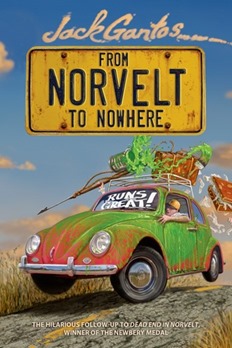
Review: From Norvelt to Nowhere by Jack Gantos

from norvelt to nowhere

From Norvelt to Nowhere by Jack Gantos

Halloween has come to Norvelt right at the height of the Cuban Missile Crisis.  Jack dresses up as the local serial killer to trick or treat, but no one finds him funny.  Even Jack loses his sense of humor when another old lady is killed right in front of him from a poisoned cookie.  Miss Volker, the last surviving original Norvelt woman, takes the murder very personally since the serial killer had been killing in order to marry her.  She is intent on revenge and takes Jack along with her on a cross-country journey to settle the issue once and for all.  But all may not be as simple as it seems as Jack finds himself with plenty of potential killers riding on the same train with them. 

Gantos won the Newbery Medal with the first Norvelt book and it was spectacular.  This book is more of a bumpy ride.  There are moments where Gantos reaches the same smart mix of serious heartfelt writing and humorous situations.  Then it can drag a bit as historical lessons are shared.  But the good thing is that those good parts outnumber the slowdowns and the humor still shines.

A large part of what makes the book work are the characters of Jack and Miss Volker.  This wonderful pairing adds to the fast pacing of the novel, move the story forward and are a pleasure to spend time with.  The book tends to slow when Miss Volker is more quiet and contained.  When she is unleashed, the story is exceptional. 

Fans of the first book will want to read the second and I’m happy to travel along with Jack and Miss Volker anytime.  Appropriate for ages 10-13.

Reviewed from copy received from Farrar, Straus & Giroux.

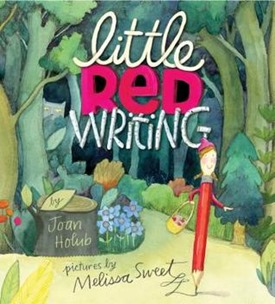
Review: Little Red Writing by Joan Holub

little red writing

Little Red Writing by Joan Holub, illustrated by Melissa Sweet

This is a fresh version of Little Red Riding Hood.  Here Little Red is a pencil and her assignment in school is to write a story, even though it can be quite dangerous.  Her teacher gives her a basket of words to use in case of an emergency, but also warns her to stick to her basic story so that she doesn’t get lost.  Little Red starts writing but soon tries to add more excitement to her story.  Before she knows it, she has bounced right off of the page and into a forest.  It’s a forest full of description, but that’s also something that can bog down a story.  Little Red has to use a word from her basket to get free.  More perils follow with sentences that run on, abandoned punctuation, and a growling voice and twirly tail that lead right to the principal’s office.  It is up to Little Red to both be a hero and finish her story.

Holub has written a very engaging new version of Little Red Riding Hood.  She successfully ties in tips on writing, not allowing them to force her to leave the basic story path.  Her writing is entirely engaging, the format of the story writing works well and she weaves the classic elements of the tale into this one so that it is different but still recognizable. 

Sweet’s illustrations are done in her signature combination of cut paper and drawings.  Her bright colors add much to the liveliness of the book.  She uses the cut paper to good effect throughout, allowing them to set aside important parts of the book as well as using fonts of various styles to really make the book stand out. 

A great pick for writing units, this is one of the best changed-up Red Riding Hoods that I’ve seen.  Appropriate for ages 4-6.

Reviewed from copy received from Chronicle Books.

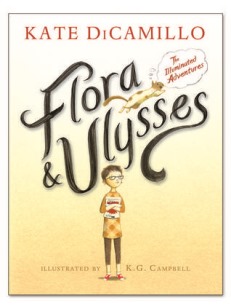
Review: Flora & Ulysses by Kate DiCamillo

flora and ulysses

Flora & Ulysses by Kate DiCamillo, illustrated by K. G. Campbell

Flora is a self-proclaimed cynic who hated romance but loved comic books.  It was the sound of the new vacuum cleaner that interrupted her superhero reading and she made it to the window in time to see her mother swept right off her feet by the power of the vacuum cleaner.  Then the vacuum headed straight for a squirrel.  The squirrel didn’t see it coming, but Flora did and she raced down to see if he could be saved.  The squirrel survived, a lot more bald than he had been, and was now named Ulysses.  Flora knew just what to do, since she spent a lot of time also reading the comic Terrible Things Can Happen to You!  This new friendship between girl and squirrel was made even more special by the superhero powers that Ulysses developed after his accident.  But life is not simple for a superhero squirrel and his human sidekick as they quickly find out.

DiCamillo has created yet another incredible read.  She manages to write such very different and distinct books from one another, making each one a delight and a surprise to pick up and open.  Here she manages to create a superhero book that will appeal to both fans of comics and non-fans.  I personally appreciate a book that has a female protagonist who loves comics.  The addition of a furry creature as a main character is also wonderful.  Ulysses manages to be both a full-fledged character but also remain primarily an animal.  All of this speaks to the skill of the writer and her ability to create honest characters even from absurd and hilarious situations.

Interspersed throughout the book are comic panels that tell some of the story.  The book begins with one of these introducing the vacuum cleaner and Flora’s parents.  Done in black and white, the comic panels are very funny and add just the right tribute to comics.

A great read-aloud, this unlikely superhero pair are sure to fly off the shelves.  Appropriate for ages 8-12.

Reviewed from library copy.