Review: Zig and Wikki in the Cow by Nadja Spiegelman

zig and wikki in the cow

Zig and Wikki in the Cow by Nadja Spiegelman and Trade Loeffler

This is the second Zig and Wikki book, featuring two little aliens who find their way to Earth.  In this book, the two friends lose their spaceship when they return Zig’s pet fly its native habitat.  On the way, the two discover that flies eat poop, that dung beetles use it as well, and that cows have multiple stomachs.  It’s all a matter of learning things up close and personal, right down to being swallowed by a cow.  This humorous mashup of scientific fact, alien appeal, and comic format makes for an engaging read for young readers.

It is really the blend that works so well here.  The writing is light and funny, combined with scientific facts that are highlighted with photographs.  Readers learn about food cycles, ecology and habitats without even realizing it.  Add in the humorous poop factor and the graphic novel format, and this is one appealing package.

A graphic novel series that is a lot of fun and also informational, this second book is a winner, winner, cow dinner.  Appropriate for ages 7-9.

Reviewed from copy received from Candlewick Press.

Review: Secrets of the Garden by Kathleen Zoehfeld

secrets of the garden

Secrets of the Garden: Food Chains and the Food Web in Our Backyard by Kathleen Weidner Zoehfeld, illustrated by Priscilla Lamont

Alice loves it when spring arrives and they can start planting the garden.  Her dad gets the soil ready for planting and then she and her brother start putting the seeds in.  It seems like a long time before the seeds finally sprout.  Then other seedlings are transplanted from pots and potatoes are sown.  Lettuce and radishes are ready to eat first, and Alice spots a rabbit munching on them too.  She also thinks a mouse might be eating the fallen corn.  Hawks hunt in the garden and there are plenty of insects too.  Autumn nears and harvest begins, and the food cycle of the garden is complete for another year.  Throughout the book, the chickens offer commentary about the cycle itself with information about herbivores and carnivores, compost, worms and much more. 

This is an outstanding example an information book for children.  The chickens give the book a lighter tone, even though they are the ones offering the hard science.  The story celebrates gardening, the food cycle, and having a place connects one with nature.  Zoehfeld’s writing is breezy and cheerful, setting just the right tone of exploration, wonder and science.

Lamont’s illustrations add to the delight.  They have a similar feel to Michael Rosen’s with the friendly characters.  The colors tend towards the subtler side, inviting close inspection and learning.

This is a choice book for units on the food cycle or for children looking for information that they will enjoy learning.  Appropriate for ages 5-8.

Reviewed from copy received from Alfred A. Knopf.

Review: The Humming Room by Ellen Potter

humming room

The Humming Room by Ellen Potter

When Roo’s parents are murdered, it’s her ability to hide that saves her, as she retreated to her favorite spot under their trailer.  There she can look at the items she has “collected” or stolen, and she can press her ear to the ground to hear the tiny movements of animals, worms and roots.  After spending some time in foster care, Roo is taken to live on an island with her wealthy uncle who looks very similar to Roo’s father but with none of the carefree spirit her father had.  The island is on the St. Lawrence and the house used to be a tuberculosis sanatorium.  Now Roo is left there with little attention from her often-away uncle, and two servants.  The island is filled with life, including tantalizing glimpses of a wild boy who seems to live on the river.  Roo has to discover the truth of the strange house and the many secrets it holds.

Potter has stated that this is a novel inspired by The Secret Garden, and readers familiar with that work will definitely see it woven into this story.  At the same time, this book stands on its own beautifully.  It is a delightful blend of character and setting.  Roo is a prickly child, one who would be difficult to relate to except for her connection to nature.  That small piece of her character alone makes her human and accessible for the reader.  She is also prickly for very good reasons, including her parents’ death but also her misery of a life before their death.  The reader understands Roo deeply.   The secondary characters are all quirky and fascinating as well, especially the wild boy.

Then there is the setting.  Potter brings the St. Lawrence, the island, and this house to life.  This story could not be set anywhere else, as the setting is so closely married to the story.  The river is a large part of the book, including Roo’s growing understanding of its moods and the isolation of the island.  The house is central to the story as well, brooding and huge, its very walls hiding secret doors to wonders.  Then there is the garden itself, because of course there is a secret garden, and its rebirth that echoes Roo’s. 

Haunting and lovely, this book unfolds like the petals of a flower as each new discovery is made.  Environmentalism permeates the book in a gentle, green way that leaves readers wanting to connect with nature and preserve it without ever being preached to about the issue.  This is a delicate, wondrous read that is sure to be a hit with fans of The Secret Garden or those of us who are already fans of Ellen Potter.  Appropriate for ages 9-12.

Reviewed from copy received from Feiwel & Friends.

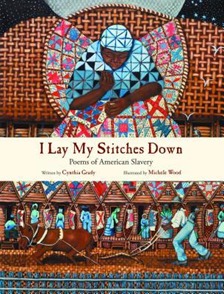
Review: I Lay My Stitches Down by Cynthia Grady

i lay my stitches down

I Lay My Stitches Down: Poems of American Slavery by Cynthia Grady, illustrated by Michele Wood

This collection of poems tell the story of slavery in America from the points of view of many different slaves.  There is the poem of the house slave who breaks some dishes, the story of the Underground Railroad, children being sold away from their parents, whipping, and much more.  Still, Grady manages to also weave into the stories softer moments of learning, art, and music.  They all focus around slavery and its ugliness, despite the beauty that the slaves create.  The message is the same in the illustrations, a wrenching mix of brutality and beauty that speaks directly to the difficult subject matter.

Grady’s poems are built with references in each poem to spiritual, music and quilting.  The poems are brief and powerful, filled with language that soars and lifts despite the horror of the subjects.  This dance of harshness and loveliness makes the poems particularly compelling.  Following each poem is a paragraph or two of explanation about that aspect of slavery or references made in the poem.

The illustrations are done in paint, but directly reference quilts.  Quilt patterns form the ground, walls, water and sky.  The people are woven into the quilts, surrounded by the art form.  It conveys a certain beauty as well as a sheltering feeling that would be missed if the illustrations had a bareness or minimalist nature.

Brutal, beautiful and educational, this book uses poetry to create a memorable book about slavery in America.  Appropriate for ages 9-12.

Reviewed from copy received from Eerdmans Books for Young Readers.

Review: The Camping Trip That Changed America by Barb Rosenstock

camping trip

The Camping Trip That Changed America: Theodore Roosevelt, John Muir, and Our National Parks by Barb Rosenstock, illustrated by Mordicai Gerstein

Teddy Roosevelt and John Muir had little in common growing up except for one thing: they both loved the outdoors and the wilderness.  So in 1903, when President Roosevelt read a book by John Muir that pleaded for people to save the trees, he couldn’t stop thinking about losing all of the trees in the mountain forests.  Roosevelt set out to meet with Muir in Yosemite.  After a few pictures, the two men rode off together with no entourage or photographers along.  Roosevelt got to see the giant sequoias, listen to Muir’s stories, see valleys carved by glaciers, and awaken under inches of snow.  Together the two men dreamed a new dream for the United States and its wild areas, one where they were protected for generations to come.

Rosenstock tells this story with a wonderful joy that permeates the entire work.  She captures the differences between the two men clearly but binds them together through their love of the outdoors.  The natural parts of the story are also captured in imagery and distinct moments where the men connect with each other and with the wilderness itself. 

Gerstein’s illustrations have a depth to them that nicely captures both the men and the natural beauty.  The quiet of Roosevelt’s life is shown in deep colors and stillness.  It contrasts powerfully with the blues, golds and greens of the natural world that is light filled and also full of action. 

This is a celebration of two men and the difference they made in our lives by creating the National Parks.  It is also an invitation to head out and explore the parks for yourself, looking for your own moments of connection to the wilderness.  Appropriate for ages 7-10.

Reviewed from copy received from Dial Books.

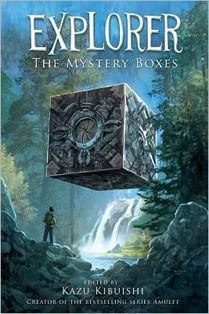
Review: Explorer: The Mystery Boxes by Kazu Kibuishi

mystery boxes

Explorer: The Mystery Boxes by Kazu Kibuishi

Released March 1, 2012.

Kibuishi is the author of the Amulet series of graphic novels as well as the anthologist for Flight.  Here he has created an anthology for children that has seven short stories in graphic format that focus on a single subject: opening a mystery box.  The seven stories all take very different approaches to the focal subject, some of them approaching with humor, others with drama.  The differences deepen when the drawing style is factored in, some creating almost real images and others looking more like mainstream cartoons.  They all add up together to a whole that works well, the entire book rather like a mystery box since you never know what story is coming after the next turn of the page.

Kibuishi’s skill in anthologies is apparent here, weaving the seven individual stories together into a flow that works well.  Many of the stories focus on the boxes showing the characters more depth to their world than they ever knew existed.  There are dolls that come to life, spiritual worlds in modern suburbia, magicians searching for magical objects, war, aliens and treasure too.  Just like textual short stories, these are focused stories that get to the point and end up surprising and delighting thanks in part to their brevity.

This is a great addition to library collections and will offer glimpses of rich worlds to graphic novel fans.  Appropriate for ages 9-12.

Reviewed from ARC received from Amulet Books.

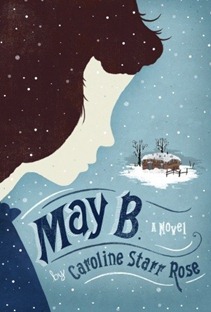
Review: May B. by Caroline Starr Rose

may b

May B. by Caroline Starr Rose

May has grown up living out on her family’s homestead on the Kansas prairie.   When money gets tight, she is sent to become live-in help for other homesteaders, but just until Christmas.  May finds herself in a small sod house fifteen miles away from her own.  The young wife, who is almost May’s age, is unhappy on the prairie and runs away.  The husband heads after her and neither return.  May is left alone on the prairie where at first the days are lovely, sunny and warm and she enjoys the freedom.  Then winter comes, and May is alone on the prairie with a dwindling food supply, just a little wood for heat, and only the prairie itself for company.  This book written in verse is a look at the dangers, hardship and courage of homesteading.

Rose has written a book that pays homage to the Little House on the Prairie books and reads a lot like The Long Winter.  At the same time, it also has a stark reality about it that makes it gripping.  The format of a verse novel works particularly well here as most of the story is May’s reaction to her situation.  What could have been lengthy treatises on loneliness instead are verses that speak to the harrowing nature of abandonment. 

The book also deals with May’s dyslexia which makes her almost unable to read.  She had one teacher, shown in flashbacks, who treated her with respect and worked with her.  But after that, another teacher arrived who used shame to try to get May to learn to read.  It is the story of an obviously bright and very resourceful girl with dyslexia.  Her struggles to read strike a delicate balance in the book, showing an inner battle that plays against the external forces at work.

A taut, frightening novel of solitary confinement set in wide-open spaces, this book would work well with reluctant readers or as a classroom read.  Appropriate for ages 9-12.

Reviewed from copy received from Schwartz & Wade Books.

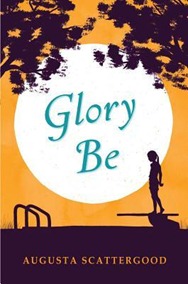
Review: Glory Be by Augusta Scattergood

glory be

Glory Be by Augusta Scattergood

In Hanging Moss, Mississippi, summer is filled with swimming at the pool, visits to the library, and just trying to stay cool.  But for Glory, the summer of 1964 when she turned 12, was a very different summer.  Now her older sister Jesslyn, doesn’t want anything to do with her.  She is interested in boys more than in playing games with Glory.  Her best friend Frankie has always been easy to get along with, but now things are strained.  Glory does have a new friend, a girl from the north whose mother is helping set up a clinic where everyone is welcome.  Desegregation has come to Hanging Moss, and the pool is closed rather than stop being segregated, tempers are high, and neighbors and families are torn.  In this setting, it is Glory who shines, growing into a young woman with passion and a voice to match.

Scattergood’s debut novel is a gem of a novel.  She manages to write with a distinct point out view without negating the fears of the time but still firmly standing against any racism.  It’s a difficult thing to do, but because she manages it, the book is much stronger.  While the book is about civil rights, it also explores the complicated relationship of sisters, who are by turns drawn together and then pushed away.  The book is intelligent, explores the complexity of the day fully, and remains very human.

Glory is a great heroine, one who is confused at times about what is happening around her, but also one who sees when a stand must be taken.  Her growing confidence along with the support of her father and sister, create a compelling story of a young woman finding her voice.  The growth of Glory throughout the book is clear and natural.

This is a book that could be shared in the classroom, but I think it would read best on a blazing hot day near a swimming pool to remind everyone of what human rights are.  This is one strong, dazzling debut.  Appropriate for ages 9-12.

Reviewed from ARC received from Scholastic.

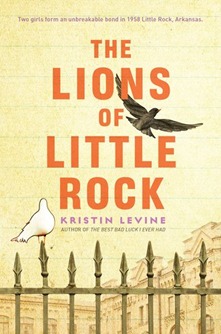
Review: The Lions of Little Rock by Kristin Levine

lions of little rock

The Lions of Little Rock by Kristin Levine

Little Rock in 1958 was a divided city at the forefront of the integration battles.  Marlee finds herself at the crossroads of that battle when the high schools in Little Rock are closed and her sister is sent away to go to school in another town.  Marlee is a quiet person, often unable to speak up even when she would most like to.  When she meets Liz, a new girl in her class, the two girls become fast friends with Liz helping Marlee find her voice.  The two girls work together on an oral project but before they can present it, Liz is discovered to be passing as a white girl to go to school there.   Marlee has to find a way to continue being friends with the best friend she has ever had, despite the dangers.  Otherwise she’s lost another person that she can actually talk to.  She has to find her voice and learn how to use it to make a difference.

Levine’s setting is one later than most books about Little Rock.  This book takes place a year after the Little Rock Nine enrolled at Little Rock Central High School.  It explores the effect of their courage on the community and also the way that the problems were not solved in that year alone.  The passions on both sides of of the segregation debate are shown clearly, as is the toll that it took on the Little Rock community.  The most important piece of the book is the courage of the ordinary citizen in taking on larger forces and winning for the good of everyone.  These are lessons that are vital for our children to learn.

The title of the book refers to the lions in the Little Rock Zoo.  Marlee lives close enough to the zoo to hear the lions roaring at night before she goes to bed.  The zoo is also the place that she sometimes meets with Liz.  This gives the book a strong level of symbolism that will give young readers something to relate to and discuss as the book progresses.

The character of Marlee is especially well drawn.  She is shy, nearly silent, and underneath that is brave, a good friend, and passionate.  She has trouble communicating with her own mother, rarely speaking, and yet she is inspiring and has a large impact on her mother and others.  There is a strength to her character that is more subtle than most, but also more steely.  She’s an incredible heroine and one that will inspire young readers.  The other characters are equally well done.  Liz, the best friend, is complex and interesting, battling her own problems with being too out-spoken.  Marlee’s parents are both teachers, watching their livelihood and professions being slowly destroyed in Little Rock. 

This powerful book is ideal for using in classrooms talking about civil rights and segregation.  It’s a book that will read aloud well and has plenty of action to keep listeners riveted.  An impressive and memorable book that should be in every public and school library.  Appropriate for ages 9-12.

Reviewed from ARC received from G. P. Putnam’s Sons.

Also reviewed by: