Cece Rios and the Desert of Souls by Kaela Rivera

Cover image for Cece Rios and the Desert of Souls.

Cece Rios and the Desert of Souls by Kaela Rivera (9780062947550)

Cece lives in Tierra del Sol, a town at the edge of the desert where criatura, powerful legendary beings, roam. Devoted to the Sun, the town stands against the influx of these beings. Cece though is unique in her town. She has a water spirit, given to her when she was young, that is considered a curse by the rest of the residents, including her own family. When her older sister is stolen away by a criatura to become his bride, Cece blames herself for bringing her sister into the desert. Now Cece must figure out how to rescue her sister. She decides that the only way is to become a bruja herself and control the soul of a criatura. The first criatura she meets is the legendary Coyote, who agrees to join her in her quest. As Cece joins the brutal contests of the bruja, she must find her own way, a way that may just change the relationships between criatura, bruja and humans.

Rivera’s novel is entirely immersive and engaging. She invites readers into the world of Mexican folklore, highlighting several legendary figures both kind and cruel. Still, the world she creates is also entirely her own with the small community of humans standing in the way of the powerful criatura and the disdain that those people have for Cece and what she becomes. The world of criatura, bruja and humans is a delicate balance where power if vied for and battles are commonplace. Just knowing who to trust is difficult and may lead to ruin.

The characters placed in this world are beautifully written. From Cece herself, who is courageous, caring and unwilling to lose herself in order to gain power. To Coyote, who is funny, wild and true. The soft spot that Coyote has for humans is one that will be shared by readers towards him. His character is complex and so much a heart of this book.

A great middle-grade fantasy full of magic, legend and individuality. Appropriate for ages 9-12.

Reviewed from library copy.

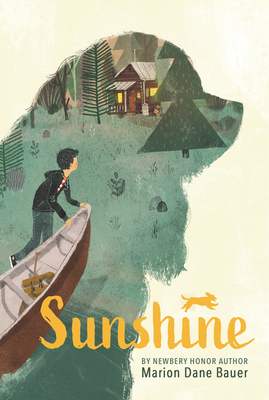
Sunshine by Marion Dane Bauer

Cover image for Sunshine.

Sunshine by Marion Dane Bauer (9781536214116)

Ben lives with his father and his faithful imaginary dog, Sunshine. This summer, he’s going to spend an entire week with his mother, whom he hasn’t seem since he was three. She lives alone on an island in northern Minnesota. As he and his father journey to meet her, Ben struggles to ignore Sunshine, since his father thinks Ben is too old to have an imaginary friend. After journeying to his mother’s island home by canoe, Ben finds himself struggling with his anxiety and often unable to speak. He has so many questions he wants to ask her and has imagined many conversations together, but nothing comes out. He desperately wants to figure out how to get her to return to living with them. Instead of asking, Ben spends his days on the island, giving his mother time to read. After a disastrous expedition to see some bears and another harrowing solo journey in a canoe, a disaster hits the island and a path to forgiveness is formed.

Bauer is such a remarkable writer. Her books are invitingly brief for young readers and also offer real depth of emotion. In this novel, she shows the struggles of someone with anxiety who is often asking “what if” rather than diving in. She doesn’t allow it to be superficial, instead really exploring what it feels like. At the same time, readers will realize that Ben is incredibly brave and fueled by anger that he won’t acknowledge. His connection to Sunshine is fully realized, from the way they curl up to sleep together to her position in the canoe to their ongoing friendship in a new place.

Ben is a complex character and so are his parents. His father is fastidious, clearly anxious himself in ways that Ben can’t articulate. His mother is a remarkable character in children’s literature. A mother who left her child behind for reasons that are hinted at but not fully revealed until later in the novel. Yet she is given the space to be warm, kind and caring while also being rather distant and reserved. She is many things, and also far more than she realizes.

A book full of dangers, adventure and heart. Appropriate for ages 9-12.

Reviewed from ARC provided by Candlewick.

The Power of Style by Christian Allaire

Cover image for The Power of Style.

The Power of Style by Christian Allaire (9781773214900)

This nonfiction book explores the importance of fashion as a way to pay homage to heritage, culture and identity. The book looks at the work of designers who are incorporating their own Indigenous heritage into their work, such as ribbon work. The book moves on to hair styles and the importance of embracing natural hair, keeping long hair as a connection to culture, and the art of braiding. Cosplay comes next focusing on size acceptance within the cosplay community and the people who are forcing more inclusivity. Modest fashion and hijabs and head scarves are explored next with a focus on style and individuality. Then the book moves on to talk about high heels for men and the importance of standing tall for LGBTQIA+ rights. The final section is about makeup, both as a way to express yourself and as a way to see yourself included as modern makeup embraces more skin tones.

Each turn of the page in this book shows people of color, different cultures and religions, various gender and sexual identities, a wide range of sizes, and it embraces all of them as valid and beautiful. Written by an Ojibwe author who is the Fashion and Style Writer for Vogue, this book represents so many movements in the fashion world to be seen and accepted. Allaire’s writing is friendly and fresh, inviting readers to explore the pages, showing what allyship looks like, and giving real space to these new ideas and designs.

The book is full of photographs, making it a visual delight to read. Allaire has clearly carefully selected the photographs to show the fashion and also the figures who make the fashion come alive. They are bright, beautiful and truly speak to the diversity he is highlighting.

A gorgeous and enticing book about fashion that will broaden definitions and embraces inclusion. Appropriate for ages 12-16.

Reviewed from ARC provided by Annick Press.

15 June Children’s Books to Wake Your Brain Cells

Here are 15 of the buzziest books for middle schoolers and elementary ages that are coming out in June. Enjoy!

Ahmed Aziz’s Epic Year by Nina Hamza

Athena: Goddess of Wisdom and War by Imogen Greenberg, illustrated by Isabel Greenberg

Chibi-Usagi: Attack of the Heebie Chibis by Julie and Stan Sakai

Chunky by Yehudi Mercado

Crossing the Stream by Elizabeth-Irene Baitie

A Glasshouse of Stars by Shirley Marr

Harry versus the First 100 Days of School by Emily Jenkins, illustrated by Pete Oswald

Jukebox by Nidhi Chanani

The Legend of Auntie Po by Shing Yin Khor

Matasha by Pamela Erens

Monster Friends by Kaeti Vandorn

The Most Perfect Thing in the Universe by Tricia Springstubb

My Own World by Mike Holmes

Rez Dogs by Joseph Bruchac

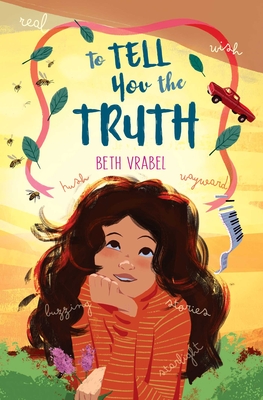
To Tell You the Truth by Beth Vrabel

Force of Fire by Sayantani DasGupta

Cover image for Force of Fire

Force of Fire by Sayantani DasGupta (9781338636642)

The author of the Kingdom Beyond books returns with a stand alone novel set in the same universe. Pinki is the daughter of two of the most renowned rakkhosh members of the resistance to the take over of the Kingdom Beyond by the snakes. But Pinki resolutely refuses to join the resistance, focusing on herself instead. She is a rakkhosh who has fire magic but can’t control it at all. So when a handsome snake prince offers her a way to learn to control her fire, she agrees to find the hidden moonbeams for him. But the moonbeams are not what Pinki had thought they were. As she follows the trail to find the moonbeams, she finds herself learning about what the snakes are doing to people and children in particular, including one of Pinki’s own little cousins, who has lost the ability to speak. But can Pinki forgive her neglectful parents and find a way to embrace her fire and her heritage?

The world building here is marvelous, full of beings from Bengali folktales and stories. As they journey through cave complexes, into ornate palaces and beneath the sea, the entire landscape not only is revealed but becomes a large part of the story as it is impacted by the snake magic and decrees. Readers will also see ties to the Indian Revolution against British rule throughout the story, something that is mentioned in the Author’s Note at the end of the book. This use of a real tyranny as a basis offers a strong foundation for this fantasy to rest upon.

The characters are well drawn. Pinki in particular is a delight of a female character, full of pride in her largess, her horns and her talons, she also struggles to make friends and to rely on others for help. This is all made understandable as her personal story is revealed. She is a character who starts out as surprisingly selfish and steadily proves that she is not, again and again. With funny characters who add charm, like the egg-gifting little cousin, the book also has a lot of humor throughout to offset the darkness.

Fiery, fun and fabulous. Appropriate for ages 9-12.

Reviewed from ARC provided by Scholastic.

Treaty Words: For as Long as the Rivers Flow by Aimee Craft

Cover image.

Treaty Words: For as Long as the Rivers Flow by Aimee Craft, illustrated by Luke Swinson (9781773214962)

A girl sits on the bank of the kitchi sipi with her Mishomis. He has taught her how to sit still in nature and listen. He had lived on that land all of his life and though she lived in the city, it was here that she felt most at home. Every spring, he would head into the woods for weeks and call her when he returned. Then she would come and visit, spending time at the river with him, experiencing the world around them by watching and listening. As the sun broke up the ice on the river, he reminded her that they all have responsibilities to the land and water, and stories. Then he shared the story of the first treaty between the moon, the sun and the earth to create life. Treaties form the basis of all relationships, from relationships with wildlife to a treaty with the English crown where the land seemed to be owned. As nature continued to move around them and the seasons shifted, she could see what those treaties had created for them as long as the sun shines, the grass grows, and the rivers flow.

First, I must mention the small size of this book. It’s more like a field guide size, which is just right for reading at a river bank, around a fire, or curled together as a shared story. The book speaks directly to treaties, from the original treaty between sky and earth to the damaging treaties with the Crown. The importance of treaties to the Anishinaabe people, allowing them to understand their place in Creation, is emphasized here including the respect that is meant to be shown through a treaty. Anishinaabemowin words are used throughout the text, easily understood through the context in the sentences.

The art by an Anishinaabe illustrator embraces the landscape of the river and the hills. He shows them in changing light and season, creating beautiful yet simple vistas that cradle the text.

This small book speaks loudly about the understanding of Indigenous treaties and their deep history and meaning. Appropriate for ages 9-12.

Reviewed from copy provided by Annick Press.

The Memory Thief by Jodi Lynn Anderson

Cover image.

The Memory Thief by Jodi Lynn Anderson (9781481480215)

The first in the Thirteen Witches trilogy, this fantasy novel tells the story of Rosie Oaks who survived a witch attack as a newborn baby. She was left though with a mother who cannot love her and can barely care for her at all. Rosie has always known her mother to be this way, so she doesn’t expect anything else. Rosie spends her time reading books and writing her own stories until one day she decides that she is too old for them and burns her stories. That triggers the sight, allowing her to see the ghosts that live all around her. Ebb, a ghost boy, shows her the Witch Hunter’s Guide to the Universe, a book her mother hid that contains all she knew about the thirteen witches that control the world. Rosie discovers that her mother has been cursed, her memories stolen by the Memory Thief, a witch who may be the weakest but is also unstoppable. As Rosie learns more about the witches, her mother’s curse, family secrets and friendship, she realizes that she is the one who must now hunt the witch but at what cost?

Anderson has written a unique fantasy novel where witches are profoundly powerful beings, able to steal memories, stop time, and inflict curses. The world building is skillfully crafted, offering a world parallel to our own where a ladder goes to the moon, where ghosts exist and strive to head to the Beyond, and where witch hunters have magical weapons they craft themselves. Through Rosie, readers get to experience the wonder of discovering that world as well as feel the tragedy of her mother’s curse deeply too.

Anderson populates her book with characters who are fascinating and worthy of their own novels. There is Ebb, the ghost boy who has his pet ghost spider and who befriends Rosie when she needs it most. There is Germ, Rosie’s only friend, who loves Rosie and can see ghosts suddenly just like Rosie can. There is the Murderer, an angry ghost with his own tragic story who Rosie discovers holds the secret to her own survival as an infant. The Memory Thief herself is a fascinating mix of tragedy, danger and horror.

A great start to a new fantasy trilogy, this book mixes ghosts, magic and witches into something spectacularly new. Appropriate for ages 9-12.

Reviewed from copy provided by Aladdin.

Merci Suárez Can’t Dance by Meg Medina

Cover image.

Merci Suárez Can’t Dance by Meg Medina (9780763690502)

This sequel to the Newbery Award winning Merci Suárez Changes Gears continues the story of Merci, her large multigenerational family, and the difficulties of being a seventh grader. This year, Merci has been assigned to manage the small school store along with Wilson, a boy who is amazing at math. As the two reinvent what their school store can be, adding movie merchandise, they end up also being drawn into selling tickets for the Heart Ball, run by Edna, who has managed to become even bossier than usual. Merci has decided not to go to the dance, but is asked to take photographs and agrees as long as she doesn’t even have to enter the gym. When an accident happens, Merci makes a bad decision and covers up the damage, setting off a series of lies that will involve school and family. With no one to talk to, since her grandfather’s dementia is worsening, Merci has to figure out who to trust to help her.

Fans returning to reconnect with Merci will once again find Medina’s rich depiction of Merci’s extended family, her grandfather’s worsening mental abilities, and the gorgeous warmth and love that keeps them all connected. Medina put Merci in quite a horrible situation in this second novel, where she feels alone and unable to be honest. Medina writes it with such empathy and skill that it is almost painful to read, though that makes the resolution all the more marvelous to experience.

As always, Medina’s writing is skillful and detailed. She truly creates a middle school experience with burgeoning romantic feelings and the changes happening between long-time best friends. Medina doesn’t let this all be negative, instead focusing on the confusion but also on the deeper understanding that can result from going through strange middle school circumstances.

Another marvelous Merci novel. Appropriate for ages 9-12.

Reviewed from ARC provided by Candlewick.

The One Thing You’d Save by Linda Sue Park

Cover image.

The One Thing You’d Save by Linda Sue Park, illustrated by Robert Sae-Heng (9781328515131)

A teacher asks her class to think about what they would save in an emergency. You’re allowed to save one thing, knowing that your family and pets are already safe. What would you save, no matter how big it is. Some of the students very quickly decide what they will save while others find the choices almost impossible. Others pick items that were made by grandparents who have passed away. Some have collections they’d want to rescue. Some are very practical, taking their glasses so that they can see or their wallet so they have money to survive. The class has conversations about what they chose and why, giving everyone lots to think about.

Told in verse, this book is written in the dialogue that happens in the classroom. Park captures this dialogue flawlessly, the voices distinct and clear both in their indecision and their decisiveness. Each person reveals a piece of themselves as they reveal why they chose a certain object. The result is a group of students who understand one another a lot better than when they began.

Park writes with such ease on the page that it is amazing to find out in her Author’s Note that she has used a sijo poetic structure throughout the book that limits the number of syllables per line. Within those parameters, she wrote dialogue that never seems limited or stilted as well as offering space for interjections and conversation.

Immensely clever and thought provoking, this book will be embraced by both teachers and students. Appropriate for ages 8-12.

Reviewed from e-galley provided by Clarion Books.