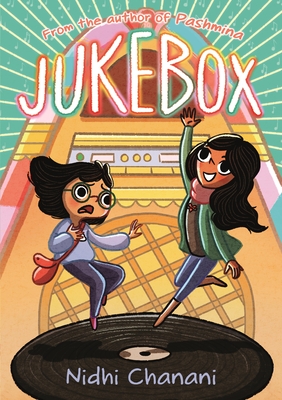
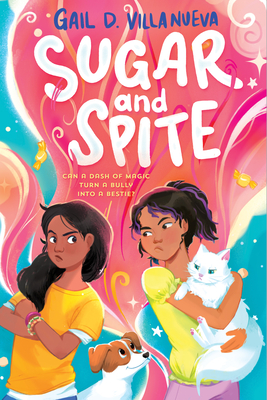
The author of the Kingdom Beyond books returns with a stand alone novel set in the same universe. Pinki is the daughter of two of the most renowned rakkhosh members of the resistance to the take over of the Kingdom Beyond by the snakes. But Pinki resolutely refuses to join the resistance, focusing on herself instead. She is a rakkhosh who has fire magic but can’t control it at all. So when a handsome snake prince offers her a way to learn to control her fire, she agrees to find the hidden moonbeams for him. But the moonbeams are not what Pinki had thought they were. As she follows the trail to find the moonbeams, she finds herself learning about what the snakes are doing to people and children in particular, including one of Pinki’s own little cousins, who has lost the ability to speak. But can Pinki forgive her neglectful parents and find a way to embrace her fire and her heritage?
The world building here is marvelous, full of beings from Bengali folktales and stories. As they journey through cave complexes, into ornate palaces and beneath the sea, the entire landscape not only is revealed but becomes a large part of the story as it is impacted by the snake magic and decrees. Readers will also see ties to the Indian Revolution against British rule throughout the story, something that is mentioned in the Author’s Note at the end of the book. This use of a real tyranny as a basis offers a strong foundation for this fantasy to rest upon.
The characters are well drawn. Pinki in particular is a delight of a female character, full of pride in her largess, her horns and her talons, she also struggles to make friends and to rely on others for help. This is all made understandable as her personal story is revealed. She is a character who starts out as surprisingly selfish and steadily proves that she is not, again and again. With funny characters who add charm, like the egg-gifting little cousin, the book also has a lot of humor throughout to offset the darkness.
Fiery, fun and fabulous. Appropriate for ages 9-12.
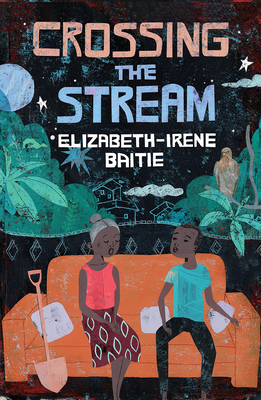
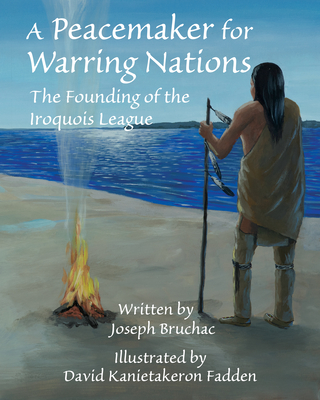
A girl sits on the bank of the kitchi sipi with her Mishomis. He has taught her how to sit still in nature and listen. He had lived on that land all of his life and though she lived in the city, it was here that she felt most at home. Every spring, he would head into the woods for weeks and call her when he returned. Then she would come and visit, spending time at the river with him, experiencing the world around them by watching and listening. As the sun broke up the ice on the river, he reminded her that they all have responsibilities to the land and water, and stories. Then he shared the story of the first treaty between the moon, the sun and the earth to create life. Treaties form the basis of all relationships, from relationships with wildlife to a treaty with the English crown where the land seemed to be owned. As nature continued to move around them and the seasons shifted, she could see what those treaties had created for them as long as the sun shines, the grass grows, and the rivers flow.
First, I must mention the small size of this book. It’s more like a field guide size, which is just right for reading at a river bank, around a fire, or curled together as a shared story. The book speaks directly to treaties, from the original treaty between sky and earth to the damaging treaties with the Crown. The importance of treaties to the Anishinaabe people, allowing them to understand their place in Creation, is emphasized here including the respect that is meant to be shown through a treaty. Anishinaabemowin words are used throughout the text, easily understood through the context in the sentences.
The art by an Anishinaabe illustrator embraces the landscape of the river and the hills. He shows them in changing light and season, creating beautiful yet simple vistas that cradle the text.
This small book speaks loudly about the understanding of Indigenous treaties and their deep history and meaning. Appropriate for ages 9-12.
The first in the Thirteen Witches trilogy, this fantasy novel tells the story of Rosie Oaks who survived a witch attack as a newborn baby. She was left though with a mother who cannot love her and can barely care for her at all. Rosie has always known her mother to be this way, so she doesn’t expect anything else. Rosie spends her time reading books and writing her own stories until one day she decides that she is too old for them and burns her stories. That triggers the sight, allowing her to see the ghosts that live all around her. Ebb, a ghost boy, shows her the Witch Hunter’s Guide to the Universe, a book her mother hid that contains all she knew about the thirteen witches that control the world. Rosie discovers that her mother has been cursed, her memories stolen by the Memory Thief, a witch who may be the weakest but is also unstoppable. As Rosie learns more about the witches, her mother’s curse, family secrets and friendship, she realizes that she is the one who must now hunt the witch but at what cost?
Anderson has written a unique fantasy novel where witches are profoundly powerful beings, able to steal memories, stop time, and inflict curses. The world building is skillfully crafted, offering a world parallel to our own where a ladder goes to the moon, where ghosts exist and strive to head to the Beyond, and where witch hunters have magical weapons they craft themselves. Through Rosie, readers get to experience the wonder of discovering that world as well as feel the tragedy of her mother’s curse deeply too.
Anderson populates her book with characters who are fascinating and worthy of their own novels. There is Ebb, the ghost boy who has his pet ghost spider and who befriends Rosie when she needs it most. There is Germ, Rosie’s only friend, who loves Rosie and can see ghosts suddenly just like Rosie can. There is the Murderer, an angry ghost with his own tragic story who Rosie discovers holds the secret to her own survival as an infant. The Memory Thief herself is a fascinating mix of tragedy, danger and horror.
A great start to a new fantasy trilogy, this book mixes ghosts, magic and witches into something spectacularly new. Appropriate for ages 9-12.
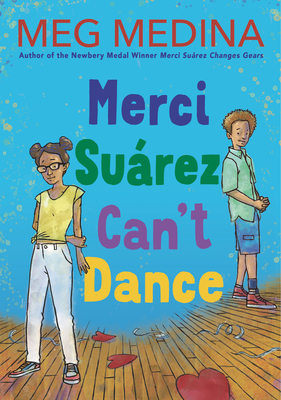
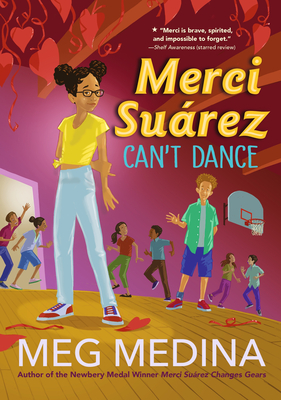
This sequel to the Newbery Award winning Merci Suárez Changes Gears continues the story of Merci, her large multigenerational family, and the difficulties of being a seventh grader. This year, Merci has been assigned to manage the small school store along with Wilson, a boy who is amazing at math. As the two reinvent what their school store can be, adding movie merchandise, they end up also being drawn into selling tickets for the Heart Ball, run by Edna, who has managed to become even bossier than usual. Merci has decided not to go to the dance, but is asked to take photographs and agrees as long as she doesn’t even have to enter the gym. When an accident happens, Merci makes a bad decision and covers up the damage, setting off a series of lies that will involve school and family. With no one to talk to, since her grandfather’s dementia is worsening, Merci has to figure out who to trust to help her.
Fans returning to reconnect with Merci will once again find Medina’s rich depiction of Merci’s extended family, her grandfather’s worsening mental abilities, and the gorgeous warmth and love that keeps them all connected. Medina put Merci in quite a horrible situation in this second novel, where she feels alone and unable to be honest. Medina writes it with such empathy and skill that it is almost painful to read, though that makes the resolution all the more marvelous to experience.
As always, Medina’s writing is skillful and detailed. She truly creates a middle school experience with burgeoning romantic feelings and the changes happening between long-time best friends. Medina doesn’t let this all be negative, instead focusing on the confusion but also on the deeper understanding that can result from going through strange middle school circumstances.
Another marvelous Merci novel. Appropriate for ages 9-12.
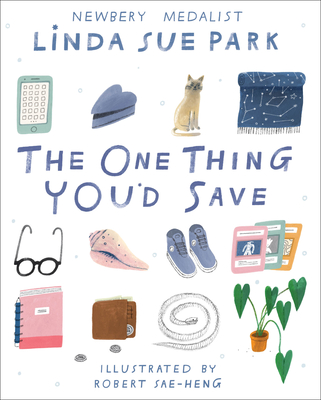
A teacher asks her class to think about what they would save in an emergency. You’re allowed to save one thing, knowing that your family and pets are already safe. What would you save, no matter how big it is. Some of the students very quickly decide what they will save while others find the choices almost impossible. Others pick items that were made by grandparents who have passed away. Some have collections they’d want to rescue. Some are very practical, taking their glasses so that they can see or their wallet so they have money to survive. The class has conversations about what they chose and why, giving everyone lots to think about.
Told in verse, this book is written in the dialogue that happens in the classroom. Park captures this dialogue flawlessly, the voices distinct and clear both in their indecision and their decisiveness. Each person reveals a piece of themselves as they reveal why they chose a certain object. The result is a group of students who understand one another a lot better than when they began.
Park writes with such ease on the page that it is amazing to find out in her Author’s Note that she has used a sijo poetic structure throughout the book that limits the number of syllables per line. Within those parameters, she wrote dialogue that never seems limited or stilted as well as offering space for interjections and conversation.
Immensely clever and thought provoking, this book will be embraced by both teachers and students. Appropriate for ages 8-12.
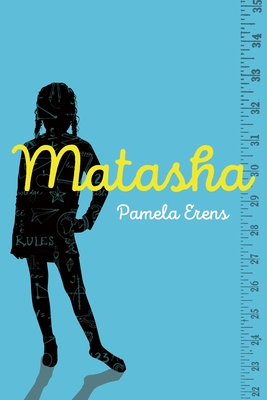
Ellie loves to swim in the pool in her backyard. It makes her feel weightless and strong. It’s kind of ironic, since a swimming pool is where she was first bullied about her weight, earning her the enduring nicknames of “Splash” and “Whale.” Her mother has made it clear that she hates how Ellie looks, constantly posting articles on the fridge in the kitchen about calories and weight loss. She portions Ellie’s food, forces her to weigh herself every day, and is the source of all of Ellie’s Fat Girl Rules that Ellie tries to live by. Ellie is about the collapse under all of the expectations in middle school, from her mother, and from the entire society about how fat people should be invisible and yet easily mocked. When Ellie starts to see a therapist with the help of her supportive father, she begins to see that she has every right to take up space in this world. She may not be able to fix everything all at once, but she can start with what she says to herself and what she allows others to say about her.
In her verse novel, Fipps achingly captures the experience of being a fat person in today’s society, and even harder, a fat middle-school girl. She writes the bullying words from classmates, showing how each one takes aim and tries to hurt. Yet Fipps also shows beyond the bullies to the pain they are hiding too. Ellie’s family is beautifully contrasted with that of her new best friend, where no one tells Ellie to stop eating or to be ashamed. Her own family experience is one of drastic differences with her mother and older brother unable to even look at Ellie while her father adores her and supports her exactly the way she is.
Ellie is a great character, full doubts about herself and in need of real help to negotiate her family and society. Her internalization of all of the negative messages is deftly shown by the author and then transformed into a platform for advocacy and self respect. The entire book is full of truth about how fat people are treated and then an honest look at moving beyond that into fighting back.
A middle-grade novel that shows how self worth is created despite what others may think. Appropriate for ages 9-12.
Reviewed from copy provided by Nancy Paulsen Books.
Here are some of the top new books for children coming out in April. There is a delightful mix of returning characters. well-known authors and new voices. No fooling!
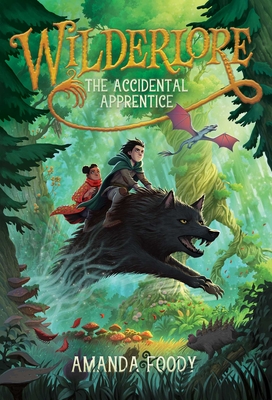
Barclay has only ever wanted to be an apprentice to the town’s mushroom farmer. He’s worked hard and followed all of the rules after his parents’ death when a Beast attacked their small town. The town has lots of rules, some small and some large. One of the biggest is not to wander into the Woods that surrounds it. Barclay wouldn’t dream of breaking the rules, until one day he finds himself a bit farther into the Woods than he meant to be. It’s when he’s there that he bonds accidentally with a Beast and becomes what his entire town fears: a Lore Keeper. Barclay tries to hide it at first, but is soon run out of town by an angry mob. With the help of another Lore Keeper, he reaches the closest town of Lore Keepers where all he hopes to do is have his bond with the Beast removed. But that isn’t as simple as he hoped and soon he is drawn into a competition to get an apprenticeship with the hopes that the masters can save him and allow him to return to a simple life of mushroom gathering.
Foody’s writing is immediately engaging. She has created a fantasy world that is a delightful mix of everyday elements, a dangerous competition and amazing magic and Beasts. Readers get to learn about Lore Masters alongside Barclay even though he does his best not to be impressed or too interested in their ways. The world in particularly well built with elements that all work to form a fascinating and unique whole. The beast-bonding element is interesting and has collectible and connection elements similar to Pokemon but much more physical and with shared abilities that the person receives too.
Barclay is one of those protagonists who has a completely different take on what he is experiencing than the reader will. Even as the reader is delighting in the elements of the Lore Keeper society, Barclay is often whining or looking for a way out. Viola is a great foil for Barclay, someone who was raised as a Lore Keeper and yet has found herself asking questions about their world too. She and the other characters bring diversity to the story, so I often found myself longing for this to be her story instead.
The first in a series, this book is a wild fantasy romp. Appropriate for ages 9-12.





 Waking Brain Cells