Review: Earmuffs for Everyone by Meghan McCarthy

earmuffs for everyone

Earmuffs for Everyone!: How Chester Greenwood Became Known as the Inventor of Earmuffs by Meghan McCarthy

Chester Greenwood is credited with being the inventor of the earmuffs.  The story goes that he was a boy with big ears that were sensitive to cold so he had his grandmother create him a pair of earmuffs from wire and cloth.  However, the author also shows that earmuffs were actually invented before Greenwood was even born.  He did however get a patent himself at age 19 for ear-mufflers.  Chester had a great business sense too, one that he honed even as a boy.  He also invented other things besides ear-mufflers, designing new features into kettles and rakes and even creating a portable house.  It was an article in Life Magazine in the 1930s that credited Greenwood with the invention and that continued into the 1970s when there was a day named after him in Maine that continues to be celebrated today.

McCarthy immediately invites readers into the earmuff mystery, showing the early patents by others and then turning to Greenwood.  Readers will see how convoluted stories can become in history, how distorted credit for inventions can be, and also how hard it can be to piece together the truth fully once again.  It is to McCarthy’s credit that her focus is on more than the inventor but also on the others in history and the patent process.  Don’t miss her notes at the end which detail even more fully her search for the truth about earmuffs.

McCarthy populates her books with friendly characters with big googly eyes.  Her paintings are fresh and colorful.  They range from double-page spreads to smaller images on the page.  All of them exude a cheery feeling and invite readers to explore.

This nonfiction picture book embraces the complexity of the past and demonstrates the search for the truth behind an everyday object.  Appropriate for ages 6-9.

Reviewed from copy received from Simon & Schuster.
Review: Raindrops Roll by April Pulley Sayre

raindrops roll

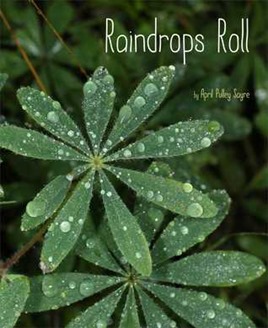
Raindrops Roll by April Pulley Sayre

The author of Eat Like a Bear returns with another great nonfiction picture book.  In this book she offers the joy of rain and water.  Told in a poetic way, the text conveys the anticipation of rain that you can feel coming and the changes in the sky.  When the rain arrives, it makes noise, makes things wet, including animals out in the weather.  There is running water, mud, all sorts of changes take place.  When the rain stops, the raindrops remain and weigh things down, dot and cling.  They change things as they linger until the sun returns to dry them away.

Sayre’s poem dances like the rain itself, pattering along and showing the beauty of the rain.  This is a book that celebrates darkening skies and weather, showing the importance of rain, the way that insects protect themselves from it, and the dazzle that it leaves behind.  Sayre manages to convey science along the way, though the focus of the book continues to be the loveliness of this type of weather.

Her photographs are part of the dazzle of this book.  They are large, clear and brilliantly done.  She captures insects before and after the rain, drops that merge together, rain as it runs and dots.  Her photos are colorful, filled with water and gorgeous.

A perfect book to share in the spring or just before heading out with umbrellas into the garden.  This is just the sort of book we need to encourage children to get outside and play in the rain.  Appropriate for ages 3-6.

Reviewed from copy received from Beach Lane Books.

Review: Leontyne Price by Carole Boston Weatherford

leontyne price

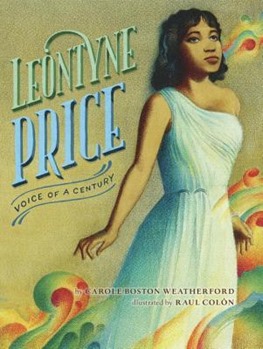
Leontyne Price: Voice of a Century by Carole Boston Weatherford, illustrated by Raul Colon

This picture book biography looks at the life of Leontyne Price, an African-American opera singer who burst through the color barrier.  Born in Mississippi in 1927, Leontyne grew up poor in money but rich in music from both her parents.  They also taught her that she was just as good as anyone else, no matter what their color.  Leontyne was inspired when she saw Marian Anderson perform and then got to sing in the church choir when Anderson performed in 1939 after being barred from a whites-only concert hall.  Leontyne headed to Ohio to college where she planned to be a teacher, but when her voice was discovered she changed her major to voice.  She then went to Julliard and on to the world stage where she sang on Broadway in Porgy and Bess.  She became the first black singer to star at La Scala and broke wide the door that Marian Anderson had first opened. 

Weatherford writes in prose that reads like poetry, broken into stanzas and offering celebrations of this inspiring woman on the page.  From the pride and power of her upbringing by her parents to the final pages that show how far she has come, the book captures the strength and determination that it took to take a natural gift and break down barriers with it.   Weatherford’s words are filled with moments that are inspiring, times that are amazing, but she also keeps things down to earth, showing even on the final page that Price is entirely human even as she reaches incredible heights in her career.

Colon’s illustrations are beautiful.  Filled with his trademark scratches and lines, they have a beautiful flowing texture that carries from one image to the next.  He uses sweeping colors to show the beauty of the music coming from both Price and Anderson, filling the world with the colors of music. 

A beautiful and powerful testament to one of the ground breaking artists of our time.  Appropriate for ages 7-9. 

Reviewed from copy received from Knopf Books for Young Readers.

My Top 30 Children’s Nonfiction Books of 2014

Here are my picks for the best nonfiction titles for children from this past year.  The list includes books of poetry and nursery rhymes along with more factual forms of nonfiction.  Enjoy!

All Different Now: Juneteenth, the First Day of Freedom Beyond Magenta: Transgender Teens Speak Out

All Different Now: Juneteenth, the First Day of Freedom by Angela Johnson

Beyond Magenta: Transgender Teens Speak Out by Susan Kuklin

Born in the Wild: Baby Mammals and Their Parents 17320985

Born in the Wild: Baby Mammals and Their Parents by Lita Judge

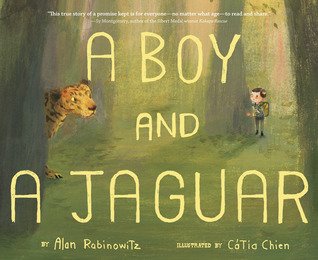
A Boy and a Jaguar by Alan Rabinowitz

Brown Girl Dreaming 21892530

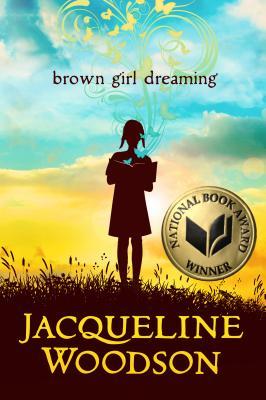
Brown Girl Dreaming by Jacqueline Woodson

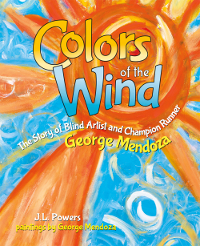
Colors of the Wind: The Story of Blind Artist and Champion Runner George Mendoza by J. L. Powers

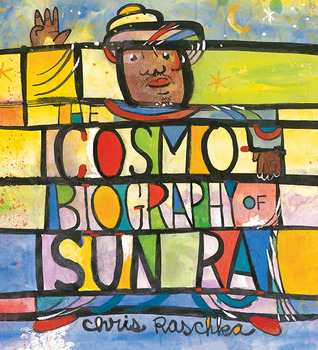
The Cosmobiography of Sun Ra: The Sound of Joy Is Enlightening Dare the Wind: The Record-breaking Voyage of Eleanor Prentiss and the Flying Cloud

The Cosmobiography of Sun Ra: The Sounds of Joy Is Enlightening by Chris Raschka

Dare the Wind: The Record-breaking Voyage of Eleanor Prentiss and the Flying Cloud by Tracey E. Fern, illustrated by Emily Arnold McCully

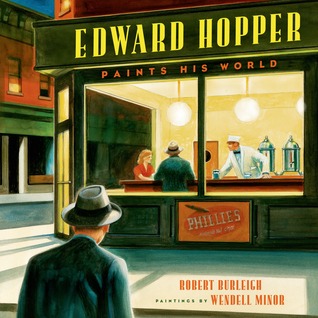
Edward Hopper Paints His World Eye to Eye: How Animals See The World

Edward Hopper Paints His World by Robert Burleigh

Eye to Eye: How Animals See the World by Steve Jenkins

17870871 Firefly July A Year of Very Short Poems

Feathers: Not Just for Flying by Melissa Stewart

Firefly July: A Year of Very Short Poems by Paul B. Janeczko

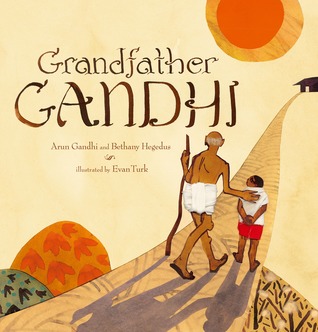
Goodnight Songs Grandfather Gandhi

Goodnight Songs by Margaret Wise Brown

Grandfather Gandhi by Arun Gandhi and Bethany Hegedus, illustrated by Evan Turk

Hi, Koo! A Home for Mr. Emerson

Hi, Koo!: A Year of Seasons By Jon J. Muth

A Home for Mr. Emerson by Barbara Kerley, illustrated by Edwin Fotheringham

How I Discovered Poetry The Iridescence of Birds: A Book About Henri Matisse

How I Discovered Poetry by Marilyn Nelson

The Iridescence of Birds: A Book about Henri Matisse by Patricia MacLachlan

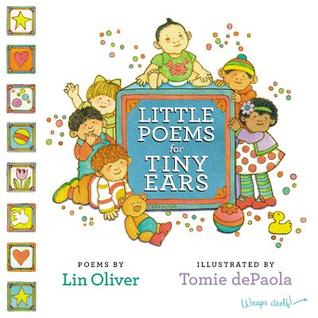
20388100 Little Poems for Tiny Ears

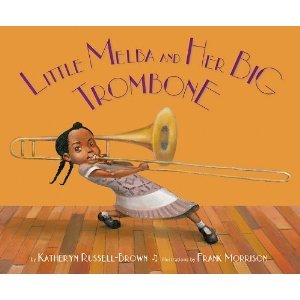
Little Melba and Her Big Trombone by Katheryn Russell-Brown, illustrated by Frank Morrison

Little Poems for Tiny Ears by Lin Oliver, illustrated by Tomie dePaola

Mr. Ferris and His Wheel The Noisy Paint Box: The Colors and Sounds of Kandinsky's Abstract Art

Mr. Ferris and His Wheel by Kathryn Gibbs Davis, illustrated by Gilbert Ford

The Noisy Paint Box: The Colors and Sounds of Kandinsky’s Abstract Art by Barb Rosenstock, illustrated by Mary GrandPre

Not My Girl Poem-Mobiles: Crazy Car Poems

Not My Girl by Christy Jordan-Fenton and Margaret Pokiak-Fenton, illustrated by Gabrielle Grimard

Poem-Mobiles: Crazy Car Poems by J. Patrick Lewis and Douglas Florian, illustrated by Jeremy Holmes

The Right Word: Roget and His Thesaurus The Scraps Book

The Right Word: Roget and His Thesaurus by Jennifer Fisher Bryant, illustrated by Melissa Sweet

The Scraps Book: Notes from a Colorful Life by Lois Ehlert

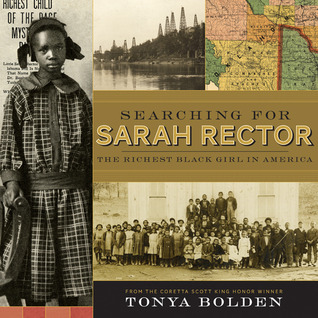
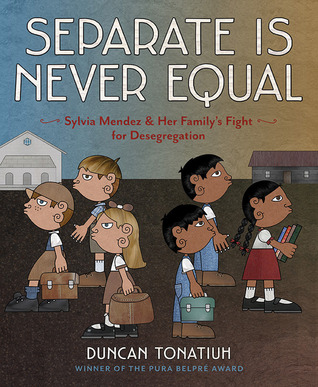
Searching for Sarah Rector: The Richest Black Girl in America Separate Is Never Equal: Sylvia Mendez and Her Family's Fight for Desegregation

Searching for Sarah Rector: The Richest Black Girl in America by Tonya Bolden

Separate Is Never Equal: Sylvia Mendez and Her Family’s Fight for Desegregation by Duncan Tonatiuh

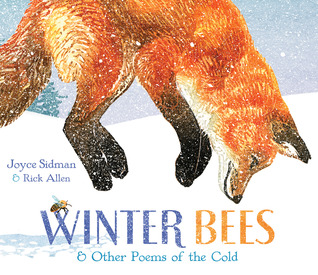
Thomas Jefferson: Life, Liberty and the Pursuit of Everything Winter Bees & Other Poems of the Cold

Thomas Jefferson: Life, Liberty and the Pursuit of Everything by Maira Kalman

Winter Bees and Other Poems of the Cold by Joyce Sidman and Rick Allen

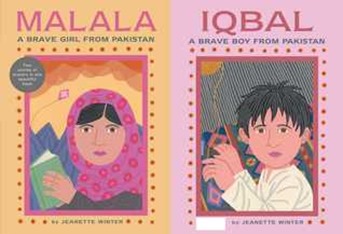
Review: Malala, a Brave Girl from Pakistan/Iqbal, a Brave Boy from Pakistan by Jeanette Winter

malala iqbal

Malala, Brave Girl from Pakistan/Iqbal, a Brave Boy from Pakistan by Jeanette Winter

This nonfiction picture book celebrates the accomplishments of two young heroes from Pakistan.  Told side-by-side, in a book that flips over, the two young people both managed to make real changes in their country.  Malala Yousafzai is a very well-known heroine who fights for the rights of young women in Pakistan to have an education.  Iqbal Masih has also won human rights awards and fought for the end of child slavery in the carpet industry.  Both of them were shot as a result of their efforts to change their country.  Tragically, Iqbal was killed while Malala survived and continues to inspire people around the world.  These are examples of children who created the change their country was desperate for, changing the lives of other children through their efforts.  True heroes in every sense of the word!

Winter begins each of these nonfiction stories with an Author’s Note that explains in detail the life of the young person.  The story parts are told in spare text that shows on every page the ferocious pride that Winter has for their work.  There is an anger on the page, one that is exactly the right tone for what is happening in their stories.  While Iqbal may be lesser known to American children than Malala, their stories are so supportive of one another that the pairing strengthens both their stories.  Readers may pick up the book for Malala and along the way learn of this boy whose efforts were just as amazing.

Winter’s illustrations have the feeling of framed artwork on the page.  Done in strong colors, they have a beauty and straightforward nature that works well with the subject.  There is a directness here that you will also feel in the writing, the two combining to make a book that hits hard at what injustice there is in the world but also at how important children can be in realizing change.

A beautiful and inspiring picture book that adds diversity and true child heroism to your shelves.  Appropriate for ages 5-8.

Reviewed from copy received from Beach Lane Books.

Review: Emmanuel’s Dream by Laurie Ann Thompson

emmanuels dream

Emmanuel’s Dream: The True Story of Emmanuel Ofosu Yeboah by Laurie Ann Thompson, illustrated by Sean Qualls

Emmanuel was born in Ghana, West Africa, with a deformed leg.  His father left the family but his mother continued to encourage Emmanuel to make something of himself.  Emmanuel taught himself to crawl and hop, so he was able to hop the two miles to school and then hop all the way back home at the end of the day.  At school kids would not play with him at first, so he saved up his money to buy a new soccer ball that he shared with the others as long as they let him play too.  Soon he was playing soccer using crutches to get around.  It was at school that Emmanuel also taught himself to ride a bike.  Then his mother fell ill and Emmanuel had to leave school to support his family.  He headed for the big city of Accra where he looked for a job.  It took time, but he started working as a shoe shiner and for a restaurant that also gave him a place to stay.   He sent money home and two years later returned home because his mother’s health was failing.  After her death, he decided to follow his dream to bike around Ghana.  He worked to get help with his dream, becoming a spokesperson in his country for people with disabilities.  He completed his journey of 400 miles in just ten days, an amazing journey that proved that one person’s dreams could deeply change a culture.

Thompson’s writing is in stanzas and moves between feeling like poetry and prose.   This fluidity makes the book very readable, it also lets her make her points with a grace and brevity that is purely poetic.  Thompson’s text shines with her appreciation for Emmanuel and his achievements in life.  Where his culture told him that he was cursed and unworthy, he has become a hero.  It is also a sort of tangible heroism that children will completely understand.  They will know what his achievement is and how difficult it would be to accomplish.

Qualls’ illustrations are incredible.  Filled with beautiful people, strong color, patterns and light, the illustrations let the backgrounds fade to white and black and the people come forward and shine.  Bright colors ripple across skin, fill cheeks, and color the air around people.  There is a sense of life within these illustrations, one that can’t be contained.

A truly inspiring story that shows the creation of a national hero from his infancy through his achievements.  Appropriate for ages 7-9.

Reviewed from digital galley received from Random House and Edelweiss.

Review: Chimpanzee Children of Gombe by Jane Goodall

chimpanzee children of gombe

Chimpanzee Children of Gombe by Jane Goodall, photos by Michael Neugebauer

Jane Goodall invites young readers to spend some time in the Gombe National Park in Tanzania with the chimpanzee families she has been studying for decades.  Readers are introduced to two chimpanzee families, F-family and G-family, who are all named with that letter as the first in their name.  So there are Ferdinand, Faustino and Fifi and also Gremlin, Galahad and Gaia.  Goodall shows similarities between humans and chimpanzees, including greeting each other with kisses, having mothers who are good and others who are not so good, and children who love to play.  The book celebrates the close family bonds of chimpanzees, the caring mothers who lug children on their fronts and then their backs, siblings who play together, and the way young are taught to use tools.  The result is a book that is a trip to their world and an invitation to learn more about these amazing endangered animals.

Goodall writes with a wonderful inviting tone, explaining facts carefully but also allowing the images of the animals to tell much of the story.  She plays hostess in the book, taking care to make sure that children know the basics about the chimpanzees and then also moving on to include other animals like baboons and monkeys that live in the same area.  The book nicely balances offering just enough information to stay fascinating and not overwhelming children with too many small facts.  Instead it reads as a stroll alongside Goodall through her research center.

The photographs by Neugebauer reinforce what Goodall is explaining in words.  Readers see the close family ties, they witness young chimpanzees at play, and there are gorgeous shots of the habitat itself that show how special and important this place is. 

A strong introduction to Goodall’s work, this book is engaging and inspiring.  Appropriate for ages 6-9.

Reviewed from library copy.

Review: Creature Features by Steve Jenkins

creature features

Creature Features: 25 Animals Explain Why They Look the Way They Do by Steve Jenkins and Robin Page

Look right into the eyes of 25 animals as they answer a question about why they look the way that they do.  The animals range from sun bears to various birds to giraffes to frogs and fish.  With each turn of the page there is a new animal looking straight at you, ready to explain the feature that is their most unusual.  That explanation is filled with just enough scientific information to be fascinating and to inspire more exploration of the animal.  The paragraphs are short enough to be shared with even quite young children who are fascinated by animals.  This is a great addition to even the most crowded of animal shelves.

Filled with Jenkins’ trademark cut paper art, this is an exquisite look at each animal, some of which you may never have seen straight on from the front like the mole rat or the shoebill stork. The unique point of view makes for unusual images of these animals that make you look at them in a different way.  Wonderfully, Jenkins manages to make each meet your eyes in a distinct way that matches their species.  See how long you can lock gazes with the ferocious ones!

One that will be read again and again by young animal lovers, this book deserves a spot in every public library.  Appropriate for ages 6-9.

Reviewed from library copy.

Review: Winter Bees by Joyce Sidman

winter bees

Winter Bees & Other Poems of the Cold by Joyce Sidman and Rick Allen

Master nature poet, Sidman, takes readers on a journey through the wonders of nature during winter in this new book.  Each poem focuses on a specific animal, showing the amazing adaptations they have made in order to survive the cold temperatures.  Done in a variety of poetic formats and styles, all of the poems have a lush beauty to them.  Each poem is paired with a paragraph of information that further explains the animal and their lives during the winter months.  The animals include tundra swans, voles, fox, moose, birds, insects and of course bees. 

Sidman’s poems are exceptional.  She clearly has designed them for children, but they stretch vocabulary and concepts.  Even better, they reveal things below the surface, inviting further exploration and investigation of the concepts.  The nonfiction paragraphs are equally welcoming.  They are filled with fascinating facts and will have nature-loving children fully engaged.

Allen’s illustrations are linoleum prints.  They have such depth and texture, with details of feathers and fur clear on the page.  Done in vibrant colors, the illustrations show the color of the world despite its layer of white snow.  Rich and detailed, these illustrations are luminous on the page.

An amazing book of nature poetry, get this into the hands of teachers doing nature units, units on winter, and share the poems merrily with children at any time.  Simply gorgeous.  Appropriate for ages 6-9.

Reviewed from library copy.