2013 Best Children’s Nonfiction

Here are my 20 picks for the best of children’s nonfiction this year.  There were a lot that I didn’t read, so please share your favorites in the comments!
africa is my home brush of the gods eat like a bear

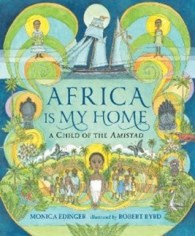
Africa Is My Home: A Child of the Amistad by Monica Edinger, illustrated by Robert Byrd

Beautifully written and illustrated, this book gives a first-person account of the Amistad, looking beyond the revolt into the trial and what happened to one little girl caught in history.

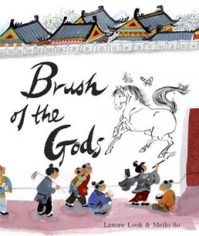
Brush of the Gods by Lenore Look

This is a very impressive biography of an incredible artist that few children will be aware of before reading this book, making it perfect to share with children in art classes.

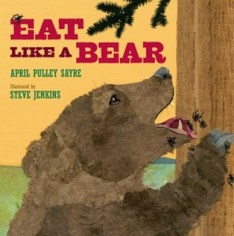
Eat Like a Bear by April Pulley Sayre, illustrated by Steve Jenkins

A glorious look at bears, this book is a fantastic introduction to a creature, its habitat and its diet.
etched-in-clay frog song

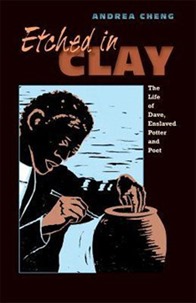
Etched in Clay: The Life of Dave, Enslaved Potter and Poet by Andrea Cheng

This powerful book informs middle grade readers about a man who could have been one of the many lost faces of slavery but who through art and bravery had a voice.

Frog Song by Brenda Z. Guiberson

Beautiful, intriguing and great fun to read, this book is an impressive testament to the importance of frogs in our ecosystems.
henry-and-the-cannons lifetime

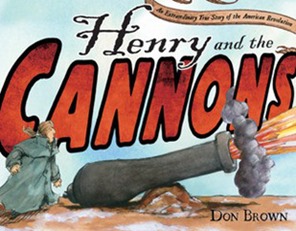
Henry and the Cannons by Don Brown

Strong and noteworthy, this picture book nonfiction title has history and also plenty of action and adventure.

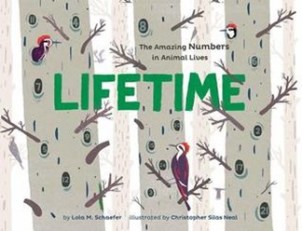
Lifetime by Lola M. Schaefer

One of the most visually stimulating and smart concepts for a nonfiction picture book, this one is sure to beat the averages and be read more than once.
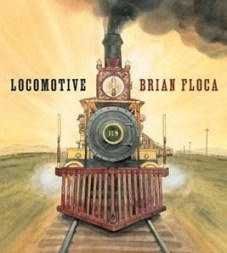
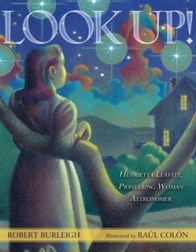
locomotive look up nelson mandela

Locomotive by Brian Floca

Gorgeous illustrations, fascinating facts and a clear love of the subject make this a riveting read whether you are a train buff or not.

Look Up! Henrietta Leavitt, Pioneering Woman Astronomer by Robert Burleigh, illustrated by Raul Colon

This picture book biography invites children to follow their own passions and get involved in science as well.

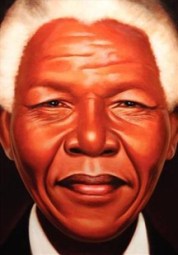
Nelson Mandela by Kadir Nelson

This is the story of Nelson Mandela captured fully in a picture book that celebrates all of his accomplishments and what he stands for as a human being.  Beautiful.
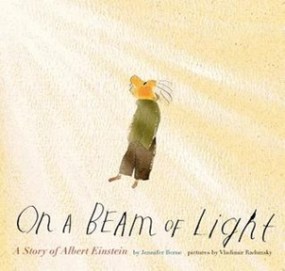
on a beam of light parrots over puerto rico

On a Beam of Light: A Story of Albert Einstein by Jennifer Berne, illustrated by Vladimir Radunsky

A great read about a great man, this picture book biography should be welcomed by young scientists as well as in science classrooms.

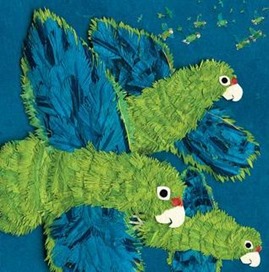
Parrots Over Puerto Rico by Susan L. Roth and Cindy Trumbore

A dazzling nonfiction book that will be welcome in classroom discussions and units about conservation and environment.
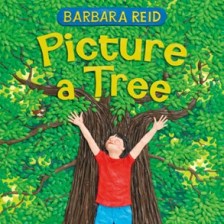
picture a tree price of freedom primates

Picture a Tree by Barbara Reid

An awesome addition to any Arbor Day, Earth Day, tree-related or seasonal story time or unit, this book should inspire all of us to wonder about trees.

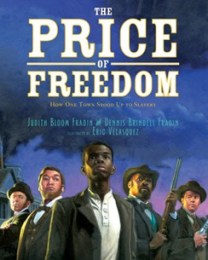
The Price of Freedom: How One Town Stood Up to Slavery by Dennis Brindell Fradin and Judith Bloom Fradin, illustrated by Eric Velasquez

This is a nonfiction picture book that is sure to inform children about an aspect of slavery that they will not have heard of as well as a tale of what a group of brave citizens can do.

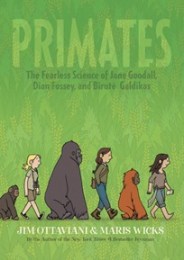
Primates: The Fearless Science of Jane Goodall, Dian Fossey, and Birute Galdikas by Jim Ottaviani and Maris Wicks

A great graphic novel, this is a stellar pick for school libraries and public libraries that will have children learning about scientific history without even realizing it!

rotten pumpkin splash of red

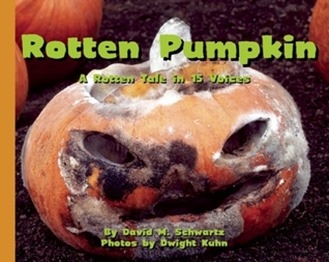
Rotten Pumpkin: A Rotten Tale in 15 Voices by David M. Schwartz, photos by Dwight Kuhn

Perfect for autumn and Halloween, this book will have kids looking at their slumping pumpkins with new eyes.

A Splash of Red: The Life and Art of Horace Pippin by Jen Bryant, illustrated by Melissa Sweet

Another very successful collaboration of these two masters, this biographical picture book should serve as its own splash of red on every library’s shelves.

when the beat was born when thunder comes wild boy

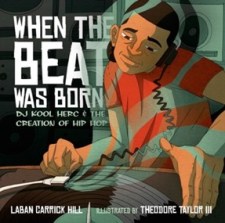
When the Beat Was Born: DJ Kool Herc and the Creation of Hip Hop by Laban Carrick Hill, illustrated by Theodore Taylor III

A great nonfiction picture book biography, this book will help fill in gaps in library collections and will speak to the history of the music kids are listening to right now.

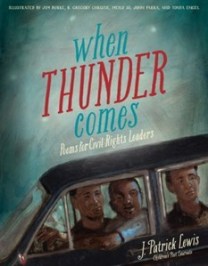
When Thunder Comes by J. Patrick Lewis

Strong and powerful, this book of poetry deserves to be shared widely and these names known and understood.

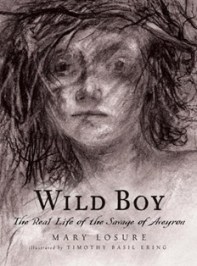
Wild Boy: The Real Life of the Savage of Aveyron by Mary Losure, illustrated by Timothy Basil Ering

An engaging, wrenching read that brings history to life in the form on one amazing person.

Jumping Penguins by Marije Tolman and Jesse Goossens

jumping penguins

Jumping Penguins by Marije Tolman and Jesse Goossens

This nonfiction book is filled with facts about different animals.  And not just any facts!  These are facts that are funny, amazing and memorable.  For instance, did you know a giraffe has no vocal chords?  That caterpillars throw their poop?  That crocodiles are cannibals?  That a flamingo can only swallow if its head is upside down?  Fifty animals are shown here with whimsical illustrations by the award-winning Tolman. 

Goossens masterfully selects facts that mix the incredible with the bizarre with the humorous.  The book is a wonderful mix of fictional depictions of the animals and scientific facts.  Due to the pile up of animals on the cover, I was expecting a fictional book rather than this page-turner of a book that gets you so intrigued that you have to keep on reading.

Tolman’s illustrations are beautiful.  She has such a unique style and one that works particularly well with animals and their diverse habitats.  With each, she seems to capture what makes them interesting and special.  At the same time, she mixes in furniture, hats, sun glasses and more.  So the animals look hip, silly or serious depending on the page.

Delightful, whimsical and a great choice for children who love animals, this book is appropriate for ages 4-7.

Reviewed from copy received from Lemniscaat.

Review: When the Beat Was Born by Laban Carrick Hill

when the beat was born

When the Beat Was Born: DJ Kool Herc and the Creation of Hip Hop by Laban Carrick Hill, illustrated by Theodore Taylor III

Clive had loved music since he was a child.  He lived in Kingston, Jamaica and loved to listen to DJs at the parties in his neighborhood.  He was too young to attend, but he watched them set up before the parties and dreamed of becoming a DJ himself.  When he was 13, Clive moved to New York City with his mother.  That was where he started to play sports and got the nickname “Hercules” due to his size.  He was soon known as Kool Herc.  When his father got a sound system, Kool Herc became a DJ at a party he threw with his sister.  Herc noticed that people loved to dance during the parts of the songs with no lyrics, so he found a new way of playing the records that extended that part of the song.  He started calling out the names of his friends in the crowd.  Soon he was creating the music that led to a new style of dance: breakdancing.  And that’s how hip hop was born.

Hill tells this story of a legendary DJ with a mix of straight forward tone and rhythmic writing.  There is nothing overt in his rhythm, just a wonderful beat that the entire book moves to.  Hill clearly ties DJ Kool Herc to the entire hip hop movement from the very beginning of his book through to the end.  He traces the connections and makes them clear and firm, just like Herc did with the connections to the giant speakers to get them to work.

The illustrations have a wonderful groove as well.  This is Taylor’s first picture book and I hope he does more.  His images have a wonderful richness of color without being dark at all.  They also merge strong graphic qualities into the images, making them really sing.

A great nonfiction picture book biography, this book will help fill in gaps in library collections and will speak to the history of the music kids are listening to right now.  Appropriate for ages 7-9.

Reviewed from library copy.

Review: The Tree Lady by H. Joseph Hopkins

tree lady

The Tree Lady by H. Joseph Hopkins, illustrated by Jill McElmurry

Kate Sessions is the woman who made San Diego into the green city that it is today.  She was a pioneering female scientist who grew up in the forests of Northern California.  After becoming the first woman to graduate with a degree in science from the University of California, she moved to San Diego to be a teacher.  San Diego was a desert town with almost no trees at all.  So Kate decided to change all of that and began to hunt for trees that survive and thrive in a desert.  Soon trees were being planted all over San Diego, but that was not enough for Kate who then worked to fill entire parks with her trees and gardens.  Kate Sessions was a remarkable woman who helped San Diego become the great city it is today.

Hopkins takes a playful approach to this picture book biography.  From the beginning he uses a format that ends each new event in Kate Session’s life with “But Kate did.”  Not only does this create a strong structure for the story, but it shows Session’s determination to not be swayed by what others thought was possible.  From the beginning, she was a unique person with a unique vision.  It is that vision and her strength in the face of societal opposition that made her so successful.

McElmurry’s illustrations add a beauty to the book.  She captures the lush green of the California forests and then allows readers to experience the transformation of San Diego from a barren desert to the lush green of Session’s many trees.  She also shows all of the hard work that it took to make that transformation possible.

Sessions will be a newly found historical figure for most of us, and what an inspiration she is!  Appropriate for ages 4-6.

Reviewed from copy received from Beach Lane Books.

Review: Africa Is My Home by Monica Edinger

africa is my home

Africa Is My Home: A Child of the Amistad by Monica Edinger, illustrated by Robert Byrd

Based on a real person from history, this fictionalized account is told through the eyes of Margru, one of the few children aboard the Amistad.  Due to a famine in Mendeland, West Africa, Margru’s father was forced to pawn her out to feed the rest of the family.  From there, Margru is taken captive and put upon a slave ship with many other people heading for a plantation in the Caribbean.  But on the journey, the captive men rebelled against their captors and took over the ship, attempting to sail it back to Africa.  Deceived by the ship’s navigator, they landed in Long Island, NY and the adults were put on trial.  The children were kept as witnesses to the crimes aboard the ship.  Margru longed for her African homeland but also ended up learning not only to read but graduating from college as a teacher.  This is Margru’s story of fear, bravery, slavery, captivity and freedom.

Edinger beautifully captures this famous moment in history from Margru’s point of view.  The use of the first person perspective makes the book read as easily as fiction, but throughout the reader can also feel the weight of the historical research behind the story.   The use of historical information throughout the book is very helpful and combined with that first person view it is a book that is compelling reading with a heroine who is equally fascinating.

Byrd’s art is stunning.  He uses moves gracefully between historically-accurate images that capture important historical moments to more stylized pictures that flow with lines and dream of Africa.  He starkly contrasts the worlds of the greens of Africa and the cold, formality of the United States. 

Beautifully written and illustrated, this book gives a first-person account of the Amistad, looking beyond the revolt into the trial and what happened to one little girl caught in history.  Appropriate for ages 8-10.

Reviewed from library copy.

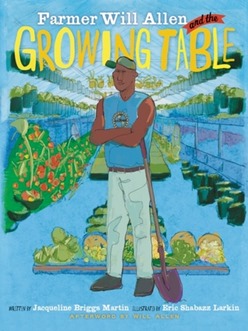
Review: Farmer Will Allen and the Growing Table by Jacqueline Briggs Martin

farmer will allen

Farmer Will Allen and the Growing Table by Jacqueline Briggs Martin, illustrated by Eric-Shabazz Larkin

Will Allen is a farmer who can see the potential where others can’t.  When he sees a vacant lot, he sees a farm with enough to feed everyone.  When he was a boy, he grew up helping care for a large garden that kept their family fed.  But Allen did not want to spend his life weeding and digging in the dirt, so he decided to become a basketball player, and he did.  But then living in Milwaukee, he saw empty greenhouses standing vacant and realized that he could feed people who had never eaten a fresh vegetable.  First though, he had to clear the land and then figure out how to improve his soil so that something could grow there.  That was the first time that the neighborhood kids helped out, bringing compost items to feed the worms.  Slowly and steadily, a community garden emerged and Will Allen taught others to be farmers too.  His Milwaukee farm now gets 20,000 visitors a year so that others can learn to grow gardens where there had only been concrete. 

I had seen the documentary, Fresh that includes Will Allen as part of the film about new thinking about food.  So I was eager to see a picture book about this inspiring figure.  It did not disappoint.  Martin captures the natural progression of Allen’s life from child eating from the garden to farmer giving other children that same experience and spreading the word about what is possible in an urban setting.  Martin’s tone throughout has a sense of celebration of Allen and his accomplishments.  She captures his own inherent enthusiasm on the page.

Larkin’s illustrations are striking.  Each could be a poster for farming and urban gardens on their own.  Combined into a book, they become a celebration of this large man with an even larger dream.  The colors are bright, the textures interesting and the image backgrounds evoke farming and nature.

This picture book biography is a visual feast that invites everyone to its community table.  Librarians and teachers in Wisconsin should be particularly interested in adding this to their collection, but it will hold interest in urban and farming areas across the country.  Appropriate for ages 6-9.

Reviewed from copy received from Readers to Eaters.

Review: How Big Were Dinosaurs? by Lita Judge

how big were dinosaurs

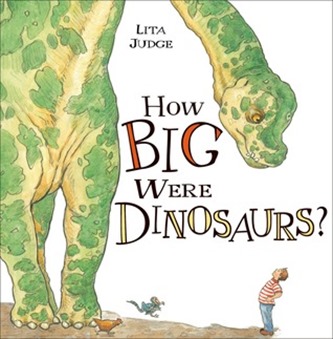
How Big Were Dinosaurs? by Lita Judge

Whenever you think of dinosaurs, they are like the one on the cover of the book.  Huge, green and either placid plant eaters or ferocious meat eaters.  This nonfiction picture book takes a look at dinosaurs that are quite different.  There is the microraptor who is the size of a chicken.  The long-named Leaellynasaura stood as tall as an emperor penguin and lived in that same climate.  Of course there were bigger dinosaurs too.  The akylosaurus stood as tall as an SUV.  There were dinosaurs with huge claws that ate plants, ones with armor and still others with odd parts of the body that no one understands yet. 

Judge carefully chooses her dinosaurs in this book.  Understanding that the littlest dinosaurs lack the vibrant punch of the huge ones, the book quickly changes to the more imposing creatures.  She shares just enough about each dinosaur to make the book readable.  In fact, this is one nonfiction picture book about dinosaurs that could be shared at a storytime or aloud in a unit.  Judge packs lots of fascinating facts into the book.  It ends with the science behind figuring out what dinosaurs used to look like and a fold-out page with all of the dinosaurs in the book shown next to each other with lots of numbers and facts.

Judge’s playful illustrations are great fun.  Throughout the book, she uses humans to show the scale of the dinosaurs as well as other animals.  The humans don’t just stand next to the dinosaurs, they interact and react to them.  I particularly enjoyed the image of the woman batting at a dinosaur with a broom.  It’s those little touches of humor that suit this book so well.

Readable, fun and filled with science, this book on dinosaurs will be a welcome addition to those crowded shelves.  Appropriate for ages 4-7.

Reviewed from copy received from Roaring Brook Press.

Review: Parrots Over Puerto Rico by Susan L. Roth

parrots over puerto rico

Parrots Over Puerto Rico by Susan L. Roth and Cindy Trumbore

This exceptional nonfiction picture book tells the story of the Puerto Rican parrot.  It is a bird that has flown over Puerto Rico for millions of years but almost became extinct in the 1960s.  The book tells of the changes that came to Puerto Rico and its environment thanks to settlers, wars, hunting, and foreign invasive species.  Forests began to disappear too, so the parrots were limited to living in just one place.  By 1967, only 24 parrots lived in Puerto Rico.  With them almost extinct, people started trying to save the parrots.  The book tells the story of rescued parrots, storms and the dedicated scientists who figured out how to save this species from disappearing entirely.

Roth and Trumbore tell this story deftly.  They focus on what was almost lost, a sky crowded with these blue and green birds.  The book explores the history of Puerto Rico, tying it closely and innately into the story of the parrots themselves.  The entire book is fascinating and becomes even more compelling when the story turns to the rescue efforts.  Small victories such as saving a young parrot’s wings are celebrated, while the larger effort is also looked at in detail. 

Roth’s collages are exquisite.  She captures the beauty of the birds, as you can see from the cover image above, but also the beauty of Puerto Rico itself with all of its lush greens.  The book is beautifully designed as well.

A dazzling nonfiction book that will be welcome in classroom discussions and units about conservation and environment.  Appropriate for ages 7-9.
Reviewed from digital copy received from Lee & Low and Edelweiss.

Review: Snowcial by Chelsea Prince

snowcial

Snowcial: An Antarctic Social Network Story by Chelsea Prince, photography by Keoki Flagg and Robert Pittman

This nonfiction book follows the journey of a family to visit the Antarctic Peninsula.  They travel aboard an icebreaker ship that has an ice breaking hull but sails only in warmer temperatures.  Along the way, the children in the family, Anna and Rory explore the ship.  They watch the different birds that follow the ship and find out information on their habitat and how they survive out at sea.  Soon they are seeing icebergs, glaciers and lots of snow and ice.  They also get to visit places where penguins and seals live.  They even spot some killer whales hunting in the ocean.  A mix of science and exploration, this book invites readers along on a journey to an icy world that is full of life.

Price sets just the right tone with her book.  She writes with a merry voice, one that invites children reading the book to learn right alongside her and her characters.  Throughout the book there is a sense of adventure and a strong tie to information and science.  This is a book that teaches in an easy and welcoming way.

While Price sets the tone, the incredible photography from Flagg and Pittman truly capture the setting.  Their close ups of wounded penguins, hunted seals, and the activity of a penguin colony truly allow readers to see Antarctica up close.  Their photography is visually beautiful but also a way to learn more about this incredible place.

Brilliant science nonfiction, join the journey to Antarctica with this gorgeous book.  Appropriate for ages 7-9.

Reviewed from copy received from Chelsea Print and Publishing.