Through a series of eye-catching infographics, this book introduces readers to the world. The infographics focus on personal things like family structure, most popular names, living spaces, and breakfast foods. It also looks more broadly at things like world population, city populations, traffic in cities, schools and homework. There are more light hearted infographics too like most popular dog breeds, summer vacations, sports and birthdays.
This book is worth exploring closely. Each double-page spread offers an infographic with layered information and an intriguing look at what data can show us about ourselves and about our world. The infographics are done in a modern flat style that works well with the numbers that are designed into the images. The images and numbers are carefully selected to be of interest to children and also easily understood by them.
A fascinating glimpse into our world from a variety of points of data. Appropriate for ages 6-9.
This deeply personal graphic memoir tells the author’s story of being a creative person in our modern world. Spanning from 2011 to 2019, the book explores her life as a young adult. Starting with her time in art school with its loneliness and her growing meltdowns and self harm, the book explore the darker side of her personality. Her inner flame of creativity and passion battles the hole that she sees as gaping right at her middle. Still, that darkness is offset by wonderfully mundane happy moments such as apple picking in the fall and watching TV with people she enjoys. As the years progress, that strain of darkness and depression vs. creativity and wild energy continues. Stevenson shares her huge accomplishments too such as publishing her first graphic novel to great acclaim and winning national awards for it and running a highly successful series for Netflix. Still, those never quiet the negative thoughts. After finally crashing to her lowest point, Stevenson emerges like a phoenix, a woman in love, getting married and carrying her fire with her still.
There is so much sheer honesty and vulnerability on these pages that it is breathtaking. The mix of Stevenson’s writing with her illustrations, many created at the time she is talking about, makes for a dynamic read where her skill as both writer and artist is evident on every page. Perhaps most telling is how her huge successes did not diminish her negative internal experience, instead perhaps accelerating the crash. Her honesty about self harm and struggles with mental illness is amazing.
Stevenson carefully stays away from generalizing her experience, instead keeping her memoir very personal and about her own journey through creativity and the way it can burn and destroy as well as build. Because of this, readers can see themselves in her, relate to her feelings and see a way forward that does not involve a complete loss of self or creativity. It’s a book of hope, for creative queer people in particular.
Strong, personal and empowering, this is a memoir is a courageous look at mental illness. Appropriate for ages 16-19.
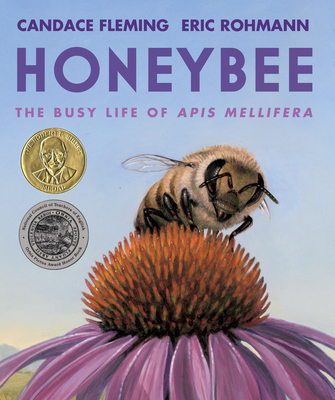
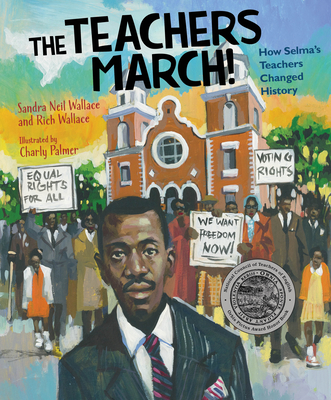
The National Council of Teachers of English (NCTE) has announced the winner, honor books and recommended books for the 2021 NCTE Orbis Pictus Award which recognizes excellence in the writing of nonfiction for children. Here are the winner and selected books:
The AAAS/Subaru Prize for Excellence in Science Books is awarded for “outstanding science writing and illustration for children and young adults.” It encourages the writing and publishing of high-quality science books for all ages. Below are the longlists for middle grades and picture books. The young adult list tends to be adult nonfiction titles, you can find that here. All of these lists are great collection development tools for librarians. Here are the longlisted titles:
2021 Longlist for Children’s Science Picture Book Award
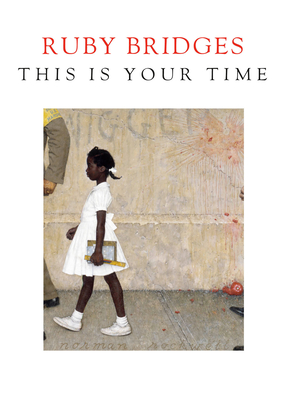
At age six, Ruby Bridges was the first Black child to attend an all-white elementary school in New Orleans. She had to be escorted to school by federal marshals, leading to iconic photographs of her small size and the screaming, threatening crowds. In this book for children, Bridges tells the story of her harrowing time attending school, how she was taught in a classroom all by herself with a teacher who made her feel safe and loved, and how it felt to be that little girl. Filled with historical photographs, the book shows and explains the battle for desegregation across the country and also the modern fights for equity, inclusion and antiracism.
This is one of those books that gives chills. It is a profoundly moving read as Bridges shares photos that demonstrate the intensity of the battle, the danger she was in, and the bravery that it took her and her family to take such a public stand for change. As Bridges moves into talking about modern youth and their battles, she maintains the same tone, challenging all of us to join us in the fight for civil rights and social justice.
The photographs and the iconic Norman Rockwell picture add a deep resonance to this book, taking Bridges’ beautifully written words and elevating them. The photo selection is done for the most impact, at times mixing modern and historical photographs together to show how little has changed but also how important the fight is.
One of the most important books of the year, this brings history and future together in one cry for justice. Appropriate for ages 9-12.
Reviewed from e-galley provided by Random House Children’s Books.
Take a look at living things and their DNA in this informative picture book. Living things grow in different habitats, some grow quickly and others very slowly. Some grow to only a small size while others become enormous. It is each creature’s DNA that serves as a pattern how it will grow, from nose shapes to eye color. Your DNA also shows who is related to whom and what animals are closest to us genetically. DNA connects us to our ancestors and to other creatures in our world. It is both unique and universal.
Davies presents this scientific information in an engaging mix of details about DNA and how it works and also a marveling at the role that DNA plays in our lives and throughout the generations. That tone makes this book a great pick to share aloud with a classroom that is exploring these concepts. It is a very readable and delightful nonfiction picture book.
The art by Sutton is marvelous, detailed and interesting. From DNA charts and double helix to dinosaur skeletons and all sorts of animals from around the world, the illustrations invite exploration. They also depict a wide variety of people on the pages, diverse and of all ages.
A top notch nonfiction picture book that shows how we are all connected. Appropriate for ages 4-6.
Feel the Fog by April Pulley Sayre (9781534437609)
This is the fourth book in the Weather Walks series, following books on snow, rain and autumn. Here the phenomenon of fog is explored in all of its mysterious qualities. Fog rolls in, covering stone and forests. It covers up details of the landscape, making lights dim. The fog is cold and dewy. It coats spiderwebs and drips. The picture book goes on to explain why fog forms and the variety of places where fog is most likely to appear. It’s a misty, moist beautiful exploration of fog.
Sayre excels at mixing poetry with facts. She creates a sense of wonder and fascination with weather and its various forms. Her poem keeps the foggy facts accessible for small children, inviting them to explore and experience fog themselves. The end of the book includes an author’s note on fog and water vapor, explaining in more detail how fog forms and why it acts and feels the way it does.
As always, Sayre’s photographs are exceptional. She has so many images of fog here, from fog entering landscapes to close-ups of animals and creatures in the fog, both cloaked by it and clear against the foggy backgrounds. It is like taking a walk with her through the fog, as she shows you all of its wonders.
Beautiful and mysterious, explore the fog in this nonfiction picture book. Appropriate for ages 3-5.
Reviewed from e-galley provided by Beach Lane Books.
The Children’s Book Prize for Social Justice is the juvenile version of the Goddard Riverside Stephan Russo Book Prize for Social Justice. In its inaugural year, the award is given by The Children’s Book Council and Goddard Riverside in New York. The prize is given to nonfiction books for young readers that “represent urban life and themes of community, compassion, and equality.” The winner will be announced on October 29th. Here is the shortlist: