3 Wolfish Picture Books

Baabwaa & Wooliam by David Elliott

Baabwaa & Wooliam by David Elliott, illustrated by Melissa Sweet (9780763660741)

Wooliam and Baabwaa are sheep who spend their time together reading books and knitting. When they decide to head out on an adventure together, they find a distinct lack of adventure in the sheep pasture. Then a stranger appears and suddenly they are on an adventure. The stranger turns out to be a wolf! When the sheep discover that the wolf needs their skilled help, they band together to teach him to read and knit him something better to wear. This picture book celebrates the mix of quiet life and excitement that makes life an adventure. The writing by Elliott has a strong narrative voice that adds a dash of humor to the tale. Sweet is an exceptional illustrator and it’s great to see her doing a lighthearted picture book filled with her watercolors and collage. A great pick for fans of books, knitting or sheepish wolves. Appropriate for ages 3-5. (Reviewed from library copy.)
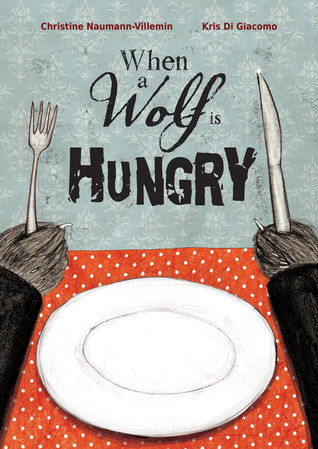
When a Wolf Is Hungry by Christine Naumann-Villemin

When a Wolf Is Hungry by Christine Naumann-Villemin, illustrated by Kris Di Giacomo (9780802854827)

Edmond Bigsnout is a hungry wolf on a mission: a mission to catch and eat a city rabbit. But when he travels out of the woods and to the city, he discovers that it’s not that easy. The rabbit lives in an apartment building with lots of neighbors and Edmond is mistaken for a new neighbor. Edmond makes plan after plan to capture the rabbit, but somehow ends up helping all of the neighbors instead. Edmond soon realizes that he may just have to join them instead, particularly when he meets a lady wolf who also lives in the building. The pacing of this book is beautifully done with rushing to and fro that adds a dashing pace and then the slower moments of helping others that lead to the natural conclusion. The art uses unique perspectives that are appealing and visually interesting. A little dark and a lot of fun, this picture book is just right for ages 4-6. (Review copy from Eerdmans Books for Young Readers.)
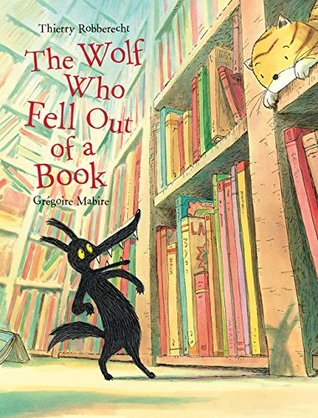
The Wolf Who Fell Out of a Book by Thierry Robberecht

The Wolf Who Fell Out of a Book by Thierry Robberecht, illustrated by Gregoire Mabire (9781423647973)

When a book falls to the floor, a wolf is ejected from his story. At first he thinks he can just hide under the book, but a hungry cat starts to stalk him. When he tries to enter the book he came from, he can’t seem to find the right place in the story to come in. He tries another book then, but that one is filled with princesses and dancing and the wolf is expected to dress up. Trying another book, he discovers the dangers of dinosaurs. The wolf finally discovers a book where the wolf has gone missing, and it’s just the right choice. This fractured story is a lot of fun and unlike other fractured tales doesn’t expect the readers to know many fairy tales or folk tales. Readers will enjoy the pitch black wolf struggling to enter the candy-colored story books around him. This is a story of stories worth the read. Appropriate for ages 3-5. (Reviewed from library copy.)
 

3 Picture Books to Celebrate Being Yourself

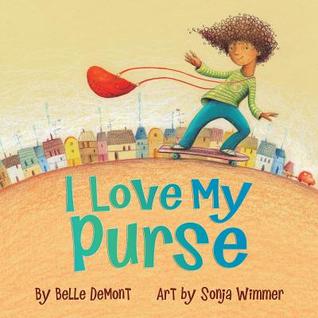
I Love My Purse by Belle Demont

I Love My Purse by Belle Demont, illustrated by Sonja Wimmer (9781554519545)

Charlie decided one morning to take the bright red purse that his grandmother had given him and wear it to school. His dad noticed immediately and mentioned that boys don’t carry purses, but Charlie continued down the stairs with his purse. His father thought  about the Hawaiian shirts he would love to wear to work. At school, a girl in his class noticed the purse and told Charlie that boys don’t carry purses. Charlie carried on. The girl started to wonder about wearing face paint to school. At lunch, some older boys pointed out that Charlie had a purse and then one of the boys wondered about what it would be like to cook real food at school. The crossing guard mentioned his favorite sparkly shoes when he saw Charlie’s purse. The next day, things changed. Charlie still carried the big red purse but others were doing what they wanted to too.

Demont manages to write a book about embracing children who are not following gender norms without making the book about lecturing readers. The clever piece of the book is that those protesting Charlie’s purse are then inspired themselves to break with societal norms and rules in their own way. Wimmer does a great job with making the illustrations bright and merry, showing Charlie as a happy child who is sure of himself even as others question him. A winner for families and schools being more inclusive about breaking gender norms. Appropriate for ages 4-6. (Reviewed from e-galley received from Netgalley and Annick Press.)

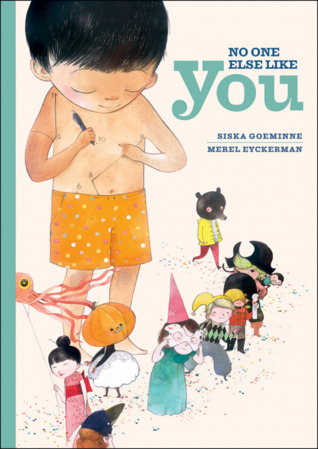
No One Else Like You by Siska Goeminne

No One Else Like You by Siska Goeminne and Merel Eyckerman (9780664263539)

In a world of more than 7 billion people, you are unique. This picture book explains just how special you are. People live in different types of places around the world. People can be quiet or noisy. People have different types of bodies, come in different colors, shapes and sizes. They wear different clothes. People are also similar. They are all fragile, all need compliments and care. Some people are happy, some scared. They come from different families, different faiths. All of those differences add up to mean that there is no other person just like you!

Originally published in Belgium, this picture book has a decidedly European feel to it. The loosely structured book has a lovely meandering style, rather like a conversation with a good friend about how special you are. The illustrations are smaller and more contained, the pages filled with plenty of white space. They have a playful style, showing different people and lots of different children. A lovely book to encourage self esteem and individuality. Appropriate for ages 4-6. (E-galley provided by Netgalley and Westminster John Knox Press.)

Why Am I Me by Paige Britt

Why Am I Me? by Paige Britt, illustrated by Sean Qualls and Selina Aiko (9781338053142)

Told in simple yet profound poetry, this picture book asks a deep question about identity. Why are you the person that you are? What would happen if you were someone else? How would that change you and your experience? Due to how simple the text is, the illustrations are key to the success of the book. They are vibrant and rich, showing an urban setting with lots of different races and religions living in harmony together. This picture book is a great way to start a discussion with a class or single child. Perfect for public libraries in search for diverse picture books that invite children to think deeply about the subject. Appropriate for ages 3-5. (ARC provided by Scholastic.)


4 Diverse Biographies of Women

Here are four of my top picks for picture book biographies. They just happen to be about exceptional diverse women.

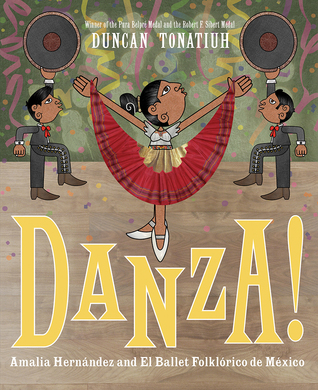
Danza! by Duncan Tonatiuh

Danza!: Amalia Hernández and El Ballet Folklórico de México by Duncan Tonatiuh (9781419725326)

When Amalia saw the dancers in her town square as a child, she knew that she wanted to be a dancer. She studied ballet and modern dance but always remembered those folk dancers from her childhood. Amalia traveled throughout Mexico, watching the different folk dances in different regions. She used her dancing and choreography skills to turn those dances into performances for the stage. Founding her own dance company, she became known throughout the world.

Tonatiuh uses his signature illustration style that is a delightful mix of folk images and modern edge. The illustrations are a match for the topic, each strengthening the other. He writes of the large amount of work and dedication that Hernández had as well as the vision she carried through her entire life of folk dance and its importance. Appropriate for ages 6-9. (Reviewed from library copy.)
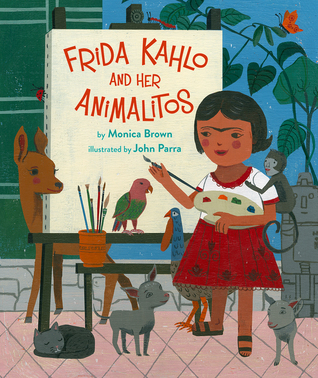
Frida Kahlo and Her Animalitos by Monica Brown

Frida Kahlo and Her Animalitos by Monica Brown, illustrated by John Parra (9780735842694)

This picture book biography focuses on Frida Kahlo’s lifelong relationship with animals. As a child she had a blue parrot, the color of the home she grew up in. She also had a fawn and a cat. But when Frida was six, she got very ill and had to stay in bed for a long time. Her illness caused one of her legs to be different from the other, but once she was better it didn’t slow her down at all. Frida also had an eagle, two monkeys, two turkeys and three dogs. Her animals had a place in their garden to play, designed by Diego Rivera, Frida’s husband. As she painted, her animals stayed around her and appeared in her self portraits.

Brown uses the animals in Kahlo’s life to point out specific characteristics of her personality, each tied to a specific pet. This strengthens Kahlo’s already strong connection to her animals and makes it more clear for the reader as well. Parra’s illustrations are done on board. They have an appealing combination of organic feel, connection to nature and folk images. An appealing and unique look at Frida Kahlo. Appropriate for ages 6-9. (E-galley received from Netgalley and NorthSouth Books.)

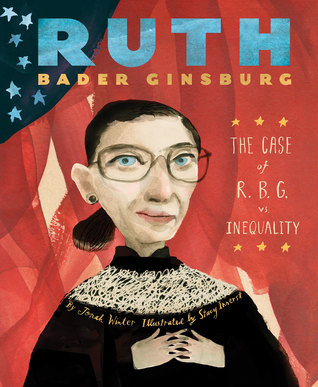
Ruth Bader Ginsburg by Jonah Winter

Ruth Bader Ginsburg: The Case of R.B.G. vs. Inequality by Jonah Winter, illustrated by Stacy Innerst (9781419725593)

This picture book biography of Ruth Bader Ginsburg shows her intelligence from childhood onward. With a mother who loved books and reading, Ruth was raised to go to college in a time when most women did not attend. Ruth’s mother passed away the day she graduated high school and never saw her daughter head to Cornell and then on to law school. Along the way, Ruth noticed all of the inequities around her, towards minorities and women. She experienced some of the directly: having her pay slashed when pregnant and being barred from the Law Library at Harvard because she was a woman. With the fight for equality for women, Ruth became the most important female attorney in the nation as she argued before the Supreme Court. Eventually, she would become the second female court justice and the author of some of the most powerful dissents in the Court’s history.

This picture book starts with Ruth’s childhood and the importance of her mother and also ends that way. Throughout it is a celebration of the power of women and the importance of their roles and their voices. Winter writes with a strong sense of history and shows both the possibilities there are in the world and also what hard work it takes to get there. The illustrations by Innerst have a quirky historical quality to them with watercolor but also a distinct modern twist as well. This is a strong biography of Ginsburg and her importance to the entire country. Appropriate for ages 7-9. (Reviewed from library copy.)
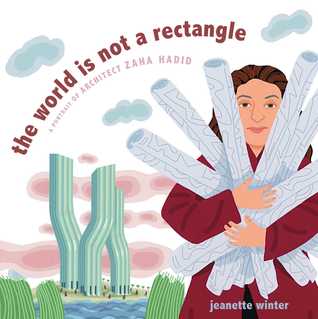
The World Is Not a Rectangle by Jeanette Winter

The World Is Not a Rectangle: A Portrait of Architect Zaha Hadid by Jeanette Winter (9781481446693)

Growing up in Iraq, Zaha Hadid saw all of the natural features around her: rivers, marches, sand dunes, and more. As a child, she dreamed of creating her own cities. She designed her own clothes. In school in London, Hadid learned more about cities and architecture. She opened her own studio, designing buildings without corners that echoed the natural features of her homeland. Even after winning an architectural contest, her buildings don’t get built. But she refuses to change or stop designing. Eventually, her buildings gain attention and are built around the world. Her studio grows and gets busier. Even after she passes away, her ideas and designs and the work of her studio continue.

Winter has a gorgeous way with biographies, keeping them brief enough for even preschool audiences but detailed enough to intrigue and to speak to the individual and their life. Look in the back of the book for information on where her buildings are located in the world. The illustrations, also by Winters, capture the soaring spirit of Hadid’s designs and their unique vision. Appropriate for ages 5-7. (Review copy provided by Beach Lane.)

3 Fun Fall Picture Books

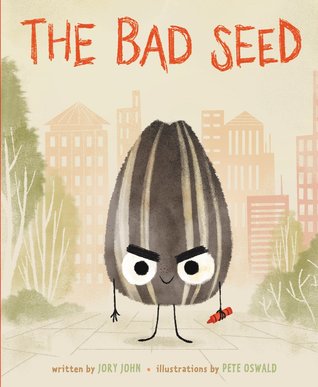
The Bad Seed by Jory John

The Bad Seed by Jory John, illustrated by Pete Oswald (9780062467768)

He is a very bad seed. He cuts in line, tells pointless lies, never washes his hands (or his feet), and is late to everything. He wasn’t always that way. Once he was happy with his family of seeds on top of a sunflower. But when the flower drooped, he was gathered and put into a bag of seeds. Darkness fell until he was almost eaten by a giant! After that, he was a bad seed. Everyone knew it. But what happens when a bad seed doesn’t want to be bad anymore? Can he become a good seed? This picture book looks at the power of choice and transformation. An interesting read aloud for gardening story times or autumn units. Appropriate for ages 3-5. (Review copy provided by HarperCollins.)

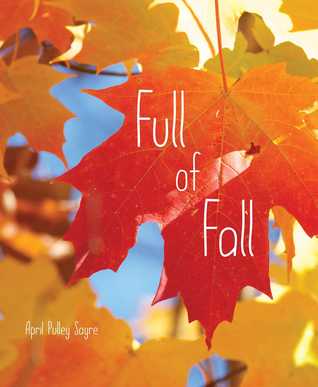
Full of Fall by April Pulley Sayre

Full of Fall by April Pulley Sayre (9781481479844)

With vibrant photographs, this picture book celebrates the beauty and colors of autumn. Told in rhyme, the book focuses on the changing leaves. Different colors are shown clearly in the images, making this a great book to explore for colors too. The leaves go from bright colors on the trees, to falling down, to heaps on the ground and sinking into the water too. Finally, there is snow. This is a great addition to Sayre’s body of work on nature. It is simple enough to use with very young preschoolers and even toddlers all of whom will enjoy the vivid clarity of the photographs. Appropriate for ages 2-4. (Reviewed from library copy.)
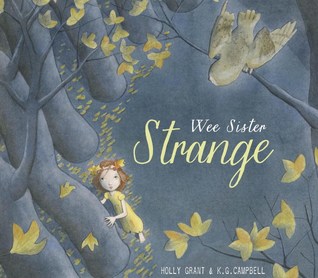
Wee Sister Strange by Holly Grant

Wee Sister Strange by Holly Grant, illustrated by K. G. Campbell

Wee Sister Strange is a girl who lives by herself by the woods in an old house. She spends time in the woods when others won’t be there. She enjoys the moon and the dark. She talks to the owls and buries the bones from their meals. She rides on the back of a ferocious bear. She climbs trees as wolves prowl below. She dives deep into the water of the bog looking at snail shells. Then a bright window beckons her closer. There is the reader, snug in bed reading this book! And Wee Sister Strange stays there, right outside, listening to the story and snuggling down in her own bed outside.

The poetry of this book immediately tells readers that they are in an odd world, one where a child merrily lives on her own. Wee Sister Strange is a beautiful and wild child; the language in the poem makes sure that children will see her as a welcome and safe part of the woods. Still, the bear is fierce and the wolves are about, so this is a wild woods, one where other may fear to explore. The bog is like that as well, cleverly not described as a lake and with the slime emphasized for good measure too. The art by Campbell is glowing and rich. The leaves on the trees are just about almost fallen entirely with a few stubborn yellow leaves lighting the branches like lanterns. The moon is full and throws shadows. The animals are strong and fanged. It’s a book with shivers and wonder galore. Appropriate for ages 4-6. (Reviewed from e-galley received from Edelweiss and Schwartz & Wade.)

3 Picture Books Filled with Empathy

These three picture books all look at empathy in different ways and all are worth exploring.

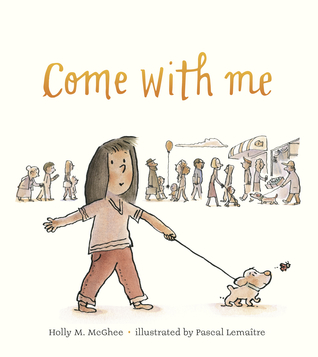
Come with Me by Holly M. McGhee

Come with Me by Holly M. McGhee, illustrated by Pascal Lamaitre (9781524739058)

Seeing the news about anger and hate in the world, a little girl wonders what she can do to help. So each of her parents take the little girl out in their diverse and urban community. They are kind to others on the subway. They greet their neighbors and shop at stores owned by people of different races and faiths. Then the little girl asks to walk the dog on her own. Will her parents be brave enough to let her leave fear behind and head into the world on her own?

Told simply and with great kindness, this picture book shows children and families exactly the small steps they can take to bring love and joy back into their lives during these stressful fear-filled times. The illustrations are simple, showing the diversity of the community with clarity. Families looking for ways to get beyond worry and fear will embrace this picture book. It is exactly what our world and our children need. (ARC received from Penguin.)

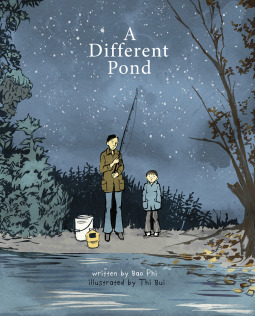
A Different Pond by Bao Phi

A Different Pond by Bao Phi, illustrated by Thi Bui (9781479597468)

Written and illustrated by two Vietnamese-Americans, this picture book captures the author’s experience as a child accompanying his father to a local fishing pond. The two of them are up early since his father has to head to second job that he just got. They stop at the bait shop and pick up minnows. Then head to the pond, where the boy’s father fishes and the boy builds a fire for them. It’s cool during this Minnesota dawn. The two share sandwiches, a small memory from Vietnam about fishing, and catch fish for dinner. When they return home, the extended family is there and that evening they all feast on the fish together.

Phi’s prose is filled with the skill of a poet. He stitches the past and present together into a richness that is poignant. He welcomes young readers into the life of a refugee family in Minnesota. The illustrations have a modern edge to them, sometimes framed like a graphic novel and other times soaring to the sides of the page. Bui uses her format skillfully and enlivens this quiet tale of fishing and new lives. Told with grace and strength, this picture book is wondrous. (Reviewed from library copy.)
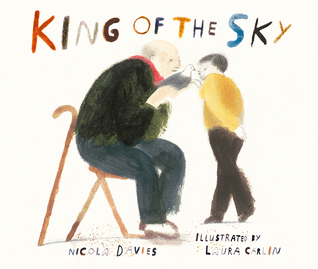
King of the Sky by Nicola Davies

King of the Sky by Nicola Davies, illustrated by Laura Carlin (9781406348613)

A boy is now far from his Italian home and only one thing in this new place reminds him of Italy and where he used to live. It is Mr. Evans’s pigeons and their cooing that reminds the boy of Rome. The boy spends time with Mr. Evans and the pigeons. Mr. Evans gives him one as his own, a gray pigeon with a white head that the boy names “King of the Sky.” But the pigeon is slow to return home as the pigeons train, though Mr. Evans insists the bird will be a champion. Finally, the bird gets the perfect long distance race, flying back from Italy. But will he make it or will he stay in Italy like the boy would long to?

Davies is a masterful writer, inviting the reader into the pain of a boy who has left the country he loves and hasn’t found a place that feels right in his new country. It is a book about loneliness and finding your way forward. It’s a book about connection with your neighbors and community to find that way. The illustrations by Carlin are quirky and beautifully layered. They have a dreamlike quality to them, filled with soft edges and even softer light. This is a picture book that invites readers to understand what home really is. Appropriate for ages 5-8. (Reviewed from library copy.)
3 Scary-Good Picture Books


Creepy Pair of Underwear by Aaron Reynolds

Creepy Pair of Underwear by Aaron Reynolds, illustrated by Peter Brown (9781442402980)

Jasper returns for a second gently-scary story. In this picture book, Jasper needs some new underwear. He decides to get one pair of green creepy underwear, because he is big enough for them. When he wears them to bed, he finds out that they glow with a green light. Jasper quickly changes to plain white underwear, hiding the creepy underwear in the bottom of the hamper. Waking up the next morning, he realizes that he has the creepy underwear on! Jasper tries all sorts of things to get rid of the underwear, from mailing it to China to cutting it into bits, but the underwear keeps on coming back. What is a bunny to do? This picture book is a delightful mix of funny and scary with echoes of classic monster movies. Exactly the right pick for Halloween reading. Appropriate for ages 4-6. (Review copy provided by Simon & Schuster.)

The Pomegranate Witch by Denise Doyen

The Pomegranate Witch by Denise Doyen, illustrated by Eliza Wheeler (9781452145891)

Deftly written in rhyme, this picture book features a mouthwatering pomegranate tree that is watched over by a witch. Still, the children of the town desperately want a pomegranate from the tree and are willing to go to war with the witch to get one. The children tried again and again, but the witch stopped them with water cannons and rolling walnuts. In the end though, the children got one delectable pomegranate to split among themselves. The next day, the tree was picked bare and the war was over. It was time for Halloween where a Kindly Lady gladly shared out pomegranates from her home. A lady that looks a lot like the glimpses readers get of the witch.

Doyen’s writing is spooky and rich. This is not a picture book for preschoolers, since the writing demands a longer attention span. Elementary classes would enjoy it or it could be added to a read aloud for older children on Halloween. Perhaps with pomegranate seeds to try. Appropriate for ages 5-7. (Review copy provided by Chronicle Books.)

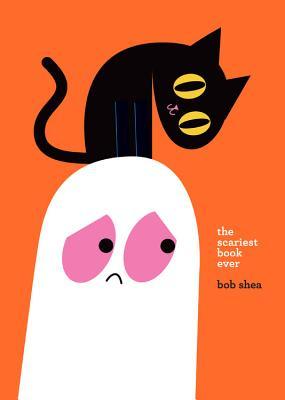
The Scariest Book Ever by Bob Shea

The Scariest Book Ever by Bob Shea (9781484730461)

A spooky ghost lives by a frightening dark forest in this picture book. The ghost is the one who is scared, asking the reader to keep on checking on what is happening in the forest. But the forest isn’t nearly as scary as the ghost expects, which adds a zingy humor to this story. The tone of the book is deftly handled, walking a line between shivery ghost story and Halloween party for friends. It’s a book that will invite children to be just as scared as they might like, but also enjoy doughnuts and some costumes too. The art is lovely and graphic, filled with zaps of bright color emphasized by white and black. A great read aloud for slightly older children. Appropriate for ages 5-8. (Reviewed from library copy.)

5 Brilliant Board Books (Plus a Bonus Book!)

Looking for some great new board books for your library or classroom? Here are some of the best of the new ones:

33160332

Flora and the Ostrich by Molly Idle (9781452146584)

This board book pairs Flora with an ostrich to demonstrate opposites. With fold-out pages, there is plenty for small hands to explore here. The unfolding pages add to the feel of dance and movement that are present in all of the Flora books. Expect the youngest Flora fans to adore this one. The flaps are sturdily made and should withstand library and classroom use. (Review copy provided by Chronicle Books.)

Hello Humpback!

Hello Humpback by Roy Henry Vickers and Robert Budd (9781550177992)

This board book is a glorious look at the West Coast shown through the eyes of a First Nations artist. The illustrations glow with light, whether it is dawn appearing through the pine trees with a bear nearby, an eagle on a branch silhouetted against the setting sun, or an orca breaching into a rainbow sky. The animals and trees are done in raised ink on the page, so little hands can explore the book in a tactile way as well. This is an exceptional board book that belongs in all public libraries. (Reviewed from library copy.)

Lines

Lines by Sarvinder Naberhaus, illustrated by Melinda Beck (9781481490740)

Lines combine on the page to form squares and circles. Then children can locate those shapes in the town and on the road. The book then swoops outward, showing how entire cities and roads are created from these building block shapes until readers are finally looking at the solar system going round and round in circles. A simple concept book about shapes that shows how our entire universe features squares and circles. (Review copy provided by Simon and Schuster.)

32894569 32894570

Motor Mix by Emily Snape and Rilla Alexander (9781452148380 & 9781452148397)

These two books in a new series offer flaps that let young readers mix and match their vehicles into crazy new ones. As the vehicles change, so does the text of the book, allowing them to explore different regions, make different noises and use different verbs to describe what they are doing. It’s great fun and just right for little vehicle lovers. These are sturdy enough to stand up to public libraries and classrooms. (Review copies provided by Chronicle Books.)

BONUS BOOK! This picture book is just right for the toddler crowd too!

I See a Cat

I See a Cat by Paul Meisel (9780823436804)

Told in the simplest of text, this book invites children to enjoy a dog’s day as he looks out the window. He gets intrigued when he sees a cat and then a bird, lazily looks at a fly and a bee. But when a squirrel passes the door, he gets very very excited! The day goes by with rounds of wild barking and calm sleepiness until the dog’s boy returns home and they can go outside together. And there’s a squirrel out there!

This picture book from a Geisel Honor winner shows a clarity and understanding of children’s sense of humor. The book reads aloud wonderfully and the pace changes swiftly adding to the fun. Share this with toddlers who will join in barking at the squirrels. (Review copy provided by Holiday House.)


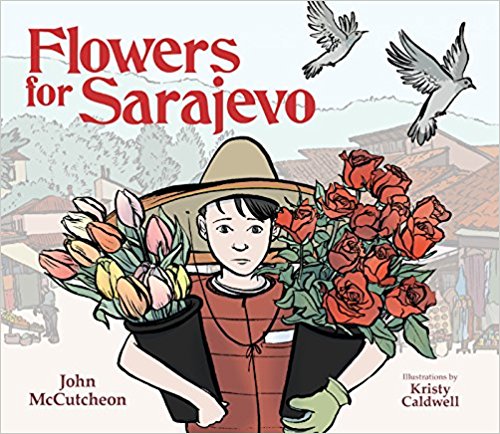
Flowers for Sarajevo by John McCutcheon

Flowers for Sarajevo by John McCutcheon

Flowers for Sarajevo by John McCutcheon, illustrated by Kristy Caldwell (9781561459438, Amazon)

Drasko sells flowers with his father in the marketplace in Sarajevo. They sell the best roses in the entire city. But when war came, Drasko’s father leaves to fight and Drasko is alone selling flowers. He is pushed out of their usual spot to one at the edge of the market. The only good thing is that he can now hear the symphony playing. Suddenly, the market is hit by a mortar and 22 people are killed. Drasko returns to the market the next day, but all is silent and empty. Then a man with a cello enters the square and sits down to play. For 22 days, he plays, once for each person who died. Around him, the market returns and Drasko works to find a way that he too can be courageous each day.

Based on the true story of Vedran Smailovic, the cellist who played, this picture book focuses on the impact of the bombing and the bravery of the cellist on one boy. Readers will realize that Drasko is brave from his approach to his father leaving and his returning day after day to sell flowers. The power of the music and the musician though brings that bravery into the light and shows how it’s important to be visibly brave for others too.

The illustrations by Caldwell are layered and misleadingly simple. They show Drasko’s loneliness but also his discovery of a community around him that will support him. The illustrations have inset pieces with frames that shatter with the mortar shell and then return to being whole as the story progresses.

A look at war and acts of bravery and art. Appropriate for ages 6-8.

Reviewed from library copy.


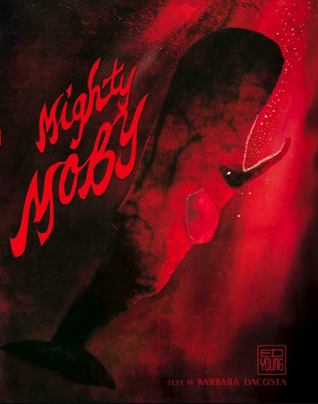
Mighty Moby by Barbara Dacosta

Mighty Moby by Barbara Dacosta

Mighty Moby by Barbara Dacosta, illustrated by Ed Young (9780316299367, Amazon)

This thrilling picture book tells the story of Moby Dick in a way that children can understand. The sailors sing of their travels and exploits. Then the captain shouts at a whale, giving chase. Finally, they reach the huge beast and send out boats that quietly row to his side. The captain throws his harpoon, spearing the beast who tows the captain down into the deeps. The whale again returns to the surface and then. Then the story takes a little twist away from the classic tale and into more familiar picture book territory: bath time.

In the author’s note, readers discover that the book was made backwards. Young created the art first out of collage and then Dacosta created the text,  the words all taken from the original tale except for one. It is quite an endeavor to turn the huge classic of Moby Dick into a picture book. This one works surprisingly well thanks to a clear focus on the whale and the captain and their battle with one another.

As always, Young’s art is superb. He creates true drama on the page here, as can be seen in the cover image. The spearing of the whale introduces scarlet streams of blood onto the page along with the white of the whale and blue water. They dramatic dive into the water, keeps the red tinge to the whale and emphasizes the size difference between man and whale.

An exceptional work of picture book art. Appropriate for ages 6-8.

Reviewed from library copy.