Plant the Tiny Seed by Christie Matheson

plant-the-tiny-seed-by-christie-matheson

Plant the Tiny Seed by Christie Matheson

The author of Tap the Magic Tree and Touch the Brightest Star returns with another interactive picture book that is a companion to the first two. The child first plants the seeds by pressing them into the ground. They wiggle their fingers to water them. Then comes sunshine and rain. A hungry snail has to be hurried on its way. And all the while the plants are growing and growing. Then come the flowers, bright zinnias of purple, orange and red. The flowers fade and soon there are new seeds to be scattered.

This book shows the cycle from seed to plant to flower to seed in a simple and very approachable way. While it won’t work well for large groups, smaller groups of children or single children will love the interactive component and the feeling that they are gardening along with the book. The book incorporates plenty of other nature as well with snails, bees, birds and butterflies on the page. There is also lots for parents and children to talk about, making the book even more interactive.

Matheson’s illustrations are bright and simple. She keeps the plants in the same spot on each page, so the weather and creatures provide movement and changes. Deep brown soil richly frames the bottom of the pages and most of them have a clear white as a background that lets the simple illustrations pop.

A great way to explore the life cycle of plants, this picture book is simple and friendly enough for toddlers to enjoy. Appropriate for ages 2-4.

Reviewed from copy received from HarperCollins.
 

Lola Gets a Cat by Anna McQuinn

lola-gets-a-cat-by-anna-mcquinn

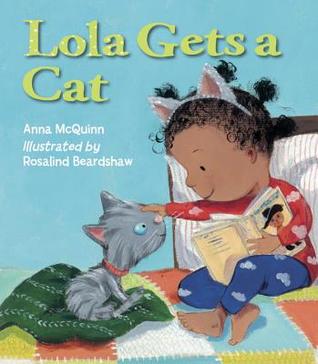
Lola Gets a Cat by Anna McQuinn, illustrated by Rosalind Beardshaw

Released February 14, 2017.

Continuing the Lola series, this book is all about Lola wanting a pet of her own. Lola’s mother says that cats are a lot of work, so Lola researches about cats and starts to practice on her stuffed toy cat, Dinah. Eventually, her mother agrees that Lola can have her own cat. They go to the shelter where one cat picks out Lola. The family shops for all of the items they will need to take care of their new pet. Lola practices a lot of patience, letting her new pet settle in before trying to play. The two of them steadily become great friends with lots of snuggles.

There is a gorgeous warmth to all of the Lola books and this one is no exception. The strong family dynamic is shown once again here as well with Lola’s parents making sure that she is capable of caring for a pet before allowing her to have one. The book has a strong focus not only on Lola’s wishes for a pet but on the importance of allowing the pet to be happy as well.

Beardshaw’s illustrations are full of small details that add to the warm feel. There are drawings of cats around the rooms. Lola’s interest in cats is evident from her patterned pajamas to the barrette in her hair to the decorations in her room. As she practices to own a cat, the emphasis is on effort not perfection as Lola spills water. All of these elements add up to show children that they too can one day care for an animal in their own way.

A lovely book about pet ownership that shows the importance of giving a new pet space and time to find their own way. Appropriate for ages 2-4.

Reviewed from copy received from Charlesbridge.


Wolf in the Snow by Matthew Cordell

wolf-in-the-snow-by-matthew-cordell

Wolf in the Snow by Matthew Cordell

A little girl heads home from school as snow starts to fall. She is warmly dressed for the weather in a bright-red coat and a scarf over her face. She has a dog at home waiting eagerly for her return. There is also a pack of wolves nearby with one small wolf cub. The snow falls faster and both girl and cub become lost, finding one another in a small grove of trees. They can hear the howls of the wolves, so the girl picks up the cub and heads that direction. Along the way, they have to cross a river and face other animals. When they reach the wolves, the little girl returns the cub to the pack and heads home herself. She can hear her dog barking and see the lights of home, but becomes too cold and weak to continue. Luckily, she has made friends of the wolves.

This is a beautiful story told in an almost wordless way with the only words in the form of howls of the wolves and barks of the dog. It is a book about selflessness and courage in the face of adversity. It is also about kindness and taking the time to save someone else even if it puts you into danger. The book is paced beautifully, taking time to create moments that underline the new connections and friendships being made as the girl displays her humanity.

The images have to carry this wordless book and do so with an appealing use of panels that create a sense of brisk pace and adventure throughout. The illustrations are filled with just enough drama to make it clear that there is real danger in being out on a winter night. Still, the danger never seems to be the wolves themselves but the cold and the snow.

A beautiful look at nature and wolves and the way that kindness can build bridges without words. Appropriate for ages 4-6.

Reviewed from library copy.


The Unexpected Love Story of Alfred Fiddleduckling by Timothy Basil Ering

the-unexpected-love-story-of-alfred-fiddleduckling-by-timothy-basil-ering

The Unexpected Love Story of Alfred Fiddleduckling by Timothy Basil Ering

Captain Alfred is heading home with his boat full of ducks for his farm and one special duck egg that’s about to hatch as a present for his wife. But his boat is hit by a storm and everything including the egg is thrown overboard. Luckily, the egg survives the storm, kept afloat in the Captain’s fiddle case. When the duckling hatches from the egg, he is all alone until he spots something else floating in the sea. It’s the Captain’s fiddle and when the duckling hugs it closely it produces a beautiful sound. But how can one little duckling and one fiddle survive the open sea? It will take the magic of music.

Ering is the illustrator of The Tale of Despereaux and has created other picture books of his own. This picture book has a gorgeous tone and pace, each moment shining and special as the story unfolds. Ering allows the story space to speak, giving time to the duckling finding the fiddle, a moment to pause when the duckling reaches land, and many other such moments too. Each is beautifully told with a voice that reads aloud beautifully. It’s a tale that children will enjoy, an adventure of wonder and music.

The illustrations are a wonderful mix of cartoon and lush realistic settings. The duckling has a personality all his own, glowing yellow on the page. Other moments like the storm approaching are filled with nature in all of its beauty and fury. The pages turn and one is never sure if it will reveal a sweep of nature or a new comical moment. The entire book works as a whole, the surprise of page turns, the comic elements and the natural details.

A picture book about music and friendship that is a great pick for a read aloud. Appropriate for ages 4-6.

Reviewed from library copy.

10 Great Picture Books on Heroism

On the eve of inauguration day, I hope that we all have the courage to be the heroes and heroines that our nation needs right now. Here are 10 picture books to inspire young ones and you too!

dare the wind emmanuels dream

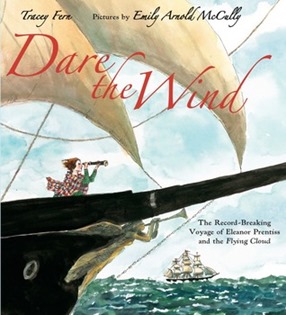
Dare the Wind: The Record-Breaking Voyage of Eleanor Prentiss and the Flying Cloud by Tracey Fern, illustrated by Emily Arnold McCully

Emmanuel’s Dream: The True Story of Emmanuel Ofosu Yeboah by Laurie Ann Thompson, illustrated by Sean Qualls

hidden how-to-be-a-hero-by-florence-parry-heide

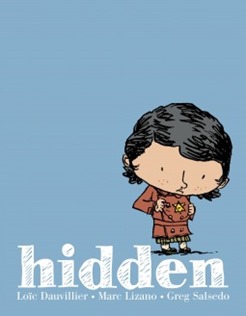
Hidden: A Child’s Story of the Holocaust by Loic Dauvillier, illustrated by Marc Lizano and Greg Salsedo

How to Be a Hero by Florence Parry Heide, illustrated by Chruck Groenink

little dog lost Little Red and the Very Hungry Lion by Alex T. Smith

Little Dog Lost: The True Story of a Brave Dog Named Baltic by Monica Carnesi

Little Red and the Very Hungry Lion by Alex T. Smith

Luna and Me by Jenny Sue Kostecki Shaw malala iqbal

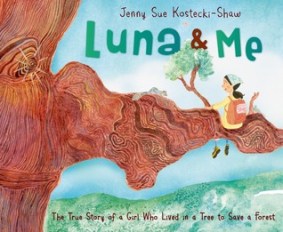
Luna & Me: The True Story of a Girl Who Lived in a Tree to Save a Forest by Jenny Sue Kostecki-Shaw

Malala, Brave Girl from Pakistan/Iqbal, a Brave Boy from Pakistan by Jeanette Winter

princess in black price of freedom

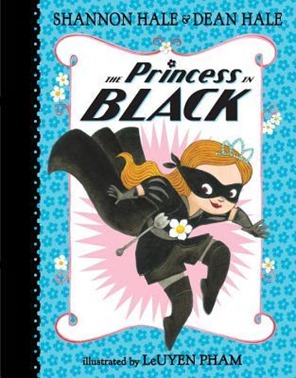
The Princess in Black by Shannon Hale & Dean Hale, illustrated by LeUyen Pham

The Price of Freedom: How One Town Stood Up to Slavery by Dennis Brindell Fradin and Judith Bloom Fradin, illustrated by Eric Velasquez

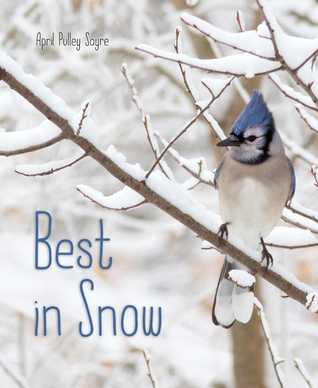
Best in Snow by April Pulley Sayre

best-in-snow-by-april-pulley-sayre

Best in Snow by April Pulley Sayre (InfoSoup)

A companion book to Raindrops Roll, this book celebrates the wonder of snow. Combining lovely photography with a poem on the changing nature of snow, this picture book invites readers to see beyond the chill of winter and into the beauty of it. The book moves from freezing weather and gathering clouds to a full snowstorm where snowflakes land on a squirrel’s nose. The snow covers things and the wind blows. Then the sun returns, water starts to seep and icicles drip. But wait, there’s more snow on the way and another squirrel’s nose too.

Sayre has a beautiful tone here, one of wonder and deep understanding. She writes more detailed information about snow and water in a note at the end that also includes a bibliography of more resources. The progression of the book is lovely, moving from one storm into a brief respite of sun to another storm, something that those of us in a cold climate will recognize. The poetry is a mix of playfulness and natural facts that is very appealing.

Sayre’s photography is truly beautiful. She captures the motion of snow, the various way that the light hits it, the different forms it takes. She has images of animals and birds, allowing the reader to see snow from a natural point of view rather than a human one.

This is a wintry journey worth taking, perfect with a mug of cocoa. Appropriate for ages 3-5.

Reviewed from copy received from Beach Lane Books.


Why Am I Here? by Constance Ørbeck-Nilssen

why-am-i-here-by-constance-orbeck-nilssen

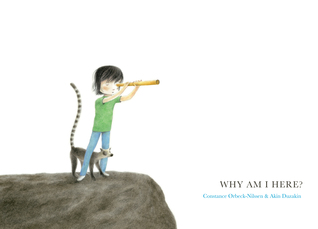
Why Am I Here? by Constance Ørbeck-Nilssen, illustrated by Akin Duzakin (InfoSoup)

A child wonders aloud why they are here in this specific place and in this life. They could instead be in a crowded place with lots of other people. They could be in a place torn by war. They could be a refugee, searching for safety. The land could be desert or snow and ice or rivers with trees. Does anyone else wonder about why they are where they are? Will this child ever leave this place and adventure to the spots they have dreamed of? Are they right where they are supposed to be, after all?

This is a very thoughtful and thought-provoking book that demonstrates empathy throughout. It’s a book that explores the “why” of our circumstances, looking at other places and how different a life could be just by being moved somewhere else with a different situation and a different family. The book takes the time to stay in that ambiguity and wonder about it, before releasing readers in the final pages into an understanding that we simply are where we are.

The illustrations by Duzakin have a quiet thoughtfulness about them. The main character who speaks in first person can be interpreted to be either gender adding another layer to the ambiguity of the book. The illustrations capture dreamlike settings of war, desert, ice or greenery that allow readers to wonder along with the story.

A quiet and contemplative picture book that will create opportunities for conversation. Appropriate for ages 4-6.

Reviewed from copy received from Eerdmans Books for Young Readers.


I Dissent by Debbie Levy

i-dissent-by-debbie-levy

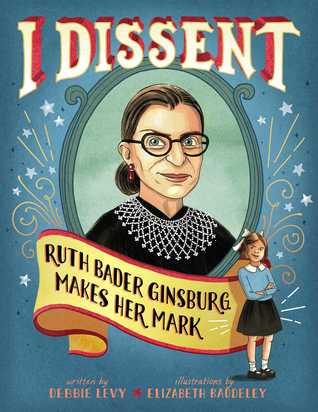
I Dissent: Ruth Bader Ginsburg Makes Her Mark by Debbie Levy, illustrated by Elizabeth Baddeley (InfoSoup)

The life of Supreme Court Justice Ruth Bader Ginsburg is told in this first picture book about her. Ruth grew up in Brooklyn in the 1940s where her mother took her to the library so she could learn. She was taught that girls could do anything they wanted. As a Jewish girl, Ruth knew racism with signs posted that Jews would not be served at specific establishments. Ruth learned that there were limits to what she was sometimes allowed to do, and sometimes she won when she protested and sometimes things stayed the same. She went to college in the 1950s when most women did not attend. She was one of nine women in her law school class of over 500. She went on to become a law professor even though she had a baby daughter at home. She was appointed to the Supreme Court in 1993 and has continued to be a voice for change and equality. She has made a difference in the country by being willing to disagree.

Levy cleverly uses the framework of one disagreement or dissent after another to frame Ginsburg’s life. From her mother originally disagreeing with how girls were meant to be raised to the way that Ginsburg and her husband’s roles in their marriage to the work she has done in courtrooms and the justice system. There is a clarity to the writing that keeps it very readable and Ginsburg is a great figure for children to know better.

Baddeley’s illustrations capture the expectations of the 1940s and 1950s in images and move into 1970s showing that Ginsburg continued to break the rules. There is a merriment to the illustrations that captures Ginsburg spirit and her intelligence as well.

A robust look at an amazing woman’s life, this is one for every library. Appropriate for ages 7-9.

Reviewed from copy received from Simon & Schuster Books for Young Readers.


Don’t Cross the Line by Isabel Minhós Martins

dont-cross-the-line-by-isabel-martins

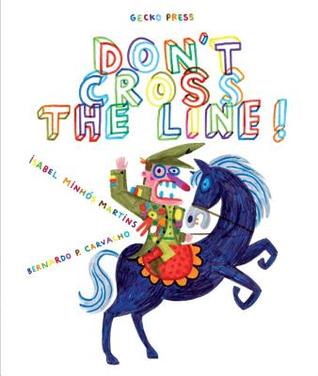
Don’t Cross the Line by Isabel Minhós Martins, illustrated by Bernardo Carvalho (InfoSoup)

This very original picture book comes from an award-winning author and illustrator team from the publisher Planeta Tangerina and was first published in Portuguese. The book opens with an armed soldier standing towards the middle of the book surrounded by white space. A small dog enters and starts sniffing around and then a man comes on the page, but when he tries to head across to the right-hand page, the soldier stops him and tells him no one is allowed to go there by order of the general so he can join the story whenever he feels like and have plenty of room. More and more people arrive and the left-hand page gets crowded. Then some boys accidentally bounce their ball across the page and head over to retrieve it with others following along. The general then arrives and threatens to arrest the soldier who allowed them onto the other page. But the people stand up to him, rejoicing together in their new-found freedom to fill both pages.

This book is all about standing up to those in power and peacefully creating change. There is a wonderfully subversive tone to the entire book, winking and laughing at the threat of not being able to cross what is not usually a boundary in a book. Still, there is a real general and a real threat that is disarmed by numbers and action. It is a wonderful book to share when talking about the importance of demonstrating and standing for causes.

Carvalho’s illustrations are a delight. Filled with bright colors that add a wild and festive note to the story, they jump on the page. The end papers are filled with the characters of the book and their names. Looking into the crowd, one can follow each character through the story, from the astronaut who has trouble breathing to the escaping prisoners to the ghost and several animals. It’s a bright and vibrant group of people with large noses and lots of personality.

A great read perfect for our current political climate, this picture book is about peaceful demonstrations and the power of the people. Appropriate for ages 4-6.

Reviewed from copy received from Gecko Press.