I Dissent by Debbie Levy

i-dissent-by-debbie-levy

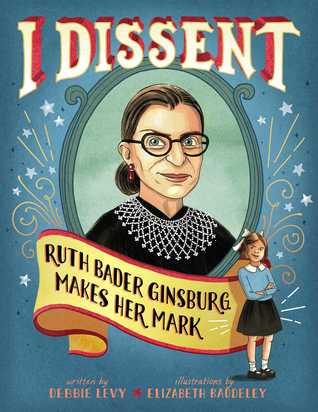
I Dissent: Ruth Bader Ginsburg Makes Her Mark by Debbie Levy, illustrated by Elizabeth Baddeley (InfoSoup)

The life of Supreme Court Justice Ruth Bader Ginsburg is told in this first picture book about her. Ruth grew up in Brooklyn in the 1940s where her mother took her to the library so she could learn. She was taught that girls could do anything they wanted. As a Jewish girl, Ruth knew racism with signs posted that Jews would not be served at specific establishments. Ruth learned that there were limits to what she was sometimes allowed to do, and sometimes she won when she protested and sometimes things stayed the same. She went to college in the 1950s when most women did not attend. She was one of nine women in her law school class of over 500. She went on to become a law professor even though she had a baby daughter at home. She was appointed to the Supreme Court in 1993 and has continued to be a voice for change and equality. She has made a difference in the country by being willing to disagree.

Levy cleverly uses the framework of one disagreement or dissent after another to frame Ginsburg’s life. From her mother originally disagreeing with how girls were meant to be raised to the way that Ginsburg and her husband’s roles in their marriage to the work she has done in courtrooms and the justice system. There is a clarity to the writing that keeps it very readable and Ginsburg is a great figure for children to know better.

Baddeley’s illustrations capture the expectations of the 1940s and 1950s in images and move into 1970s showing that Ginsburg continued to break the rules. There is a merriment to the illustrations that captures Ginsburg spirit and her intelligence as well.

A robust look at an amazing woman’s life, this is one for every library. Appropriate for ages 7-9.

Reviewed from copy received from Simon & Schuster Books for Young Readers.
 

Don’t Cross the Line by Isabel Minhós Martins

dont-cross-the-line-by-isabel-martins

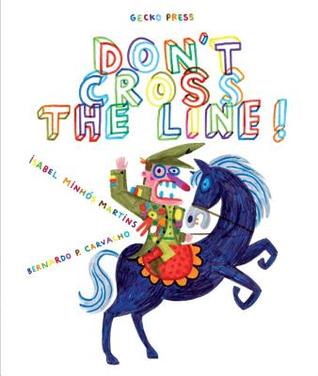
Don’t Cross the Line by Isabel Minhós Martins, illustrated by Bernardo Carvalho (InfoSoup)

This very original picture book comes from an award-winning author and illustrator team from the publisher Planeta Tangerina and was first published in Portuguese. The book opens with an armed soldier standing towards the middle of the book surrounded by white space. A small dog enters and starts sniffing around and then a man comes on the page, but when he tries to head across to the right-hand page, the soldier stops him and tells him no one is allowed to go there by order of the general so he can join the story whenever he feels like and have plenty of room. More and more people arrive and the left-hand page gets crowded. Then some boys accidentally bounce their ball across the page and head over to retrieve it with others following along. The general then arrives and threatens to arrest the soldier who allowed them onto the other page. But the people stand up to him, rejoicing together in their new-found freedom to fill both pages.

This book is all about standing up to those in power and peacefully creating change. There is a wonderfully subversive tone to the entire book, winking and laughing at the threat of not being able to cross what is not usually a boundary in a book. Still, there is a real general and a real threat that is disarmed by numbers and action. It is a wonderful book to share when talking about the importance of demonstrating and standing for causes.

Carvalho’s illustrations are a delight. Filled with bright colors that add a wild and festive note to the story, they jump on the page. The end papers are filled with the characters of the book and their names. Looking into the crowd, one can follow each character through the story, from the astronaut who has trouble breathing to the escaping prisoners to the ghost and several animals. It’s a bright and vibrant group of people with large noses and lots of personality.

A great read perfect for our current political climate, this picture book is about peaceful demonstrations and the power of the people. Appropriate for ages 4-6.

Reviewed from copy received from Gecko Press.

A Poem for Peter by Andrea Davis Pinkney

a-poem-for-peter-by-andrea-davis-pinkney

A Poem for Peter: The Story of Ezra Jack Keats and the Creation of The Snowy Day by Andrea Davis Pinkney, illustrated by Lou Fancher and Steve Johnson (InfoSoup)

The son of Polish immigrants, Ezra Jack Keats grew up in poverty in Brooklyn. Early in his life, Ezra followed his dream of being an artist. As an 8 year old, he earned money painting store signs. His father worried about this dream, but also helped by bringing home partially used paint from the artists at the cafe he worked at. Ezra was encouraged at school by teachers and at the library by librarians. Just as Ezra was about to leave for art school, his father died. He thought his artist dream was gone, but then during the Great Depression the New Deal emerged with The Art School League. It was then that he discovered what would be the beginning of The Snowy Day, but World War II would intervene before that dream could come true.

Pinkney’s poem sings on the page, telling the story of how an image can create real magic, just like the snow that inspired it too. She writes with real passion about poverty, the transformation that snow brings to poor neighborhoods, the delight of creation, the wonder of art and the long path it takes to bring a story to life sometimes. Pinkney’s words are magic, dashing and reacting along with the reader, swirling like snowflakes against your cheeks.

The illustrations by Fancher and Johnson are wonderful. Done in collage and paint, they capture Brooklyn as a clear setting and the hardship of Keats life enlivened by art. They then go on to inspire new thoughts of snowflakes and snow as they pay homage to The Snowy Day.

Perfect for fans of The Snowy Day, this picture book speaks to the power of art in one’s life and the way that one man’s dreams have inspired generations to dream too. Appropriate for ages 5-8.

Reviewed from library copy.

The Cat from Hunger Mountain by Ed Young

the-cat-from-hunger-mountain-by-ed-young

The Cat from Hunger Mountain by Ed Young (InfoSoup)

On Hunger Mountain, there lived a great lord who was wealthy and had anything he ever dreamed of. He lived in the tallest pagoda, had his rice washed in the stream, ate only the first half of his food, and wore the most beautiful fabrics. Then drought came to his land, yet the lord did not stop his consumption. A second year of drought and famine came and the others left his land. The lord finally realized he would starve alone in his pagoda so he left the mountain and tried to find food. When he met two beggars, they told him of a generous monk who would give others food. The monk gave the lord food and the cat realized that this was lovely grain and some of the best he had ever eaten. He asked the monk where he had gotten the rice and was told that it was washed down the river from Hunger Mountain where a wealthy lord had wasted it.

Young writes this story with real precision. He keeps his prose short and child-friendly with a tone of a storyteller who offers just enough detail yet keeps the pace brisk. Young allows the story itself to stand, not adding judgment in the text about what should be learned from it.

The illustrations are the opposite of the pared down text with a rich opulence built from layered collage. Some of the collage is patterned paper while others are photographs of fur, water or mountains. They have a serious energy to them, filled with motion and expression.

A vibrant picture book that looks at waste, consumption and humility. Appropriate for ages 5-8.

Reviewed from library copy.


How to Find a Fox by Nilah Magruder

how-to-find-a-fox-by-nilah-magruder

How to Find a Fox by Nilah Magruder (InfoSoup)

A little girl sets out to find a fox. She immediately finds a fox hole, but the fox isn’t home. She sets out fox bait, then hides and waits so long that she gets sleepy. She tries following fox tracks, but fox are sneaky animals. She puts out more bait and eventually falls fast asleep. She tries making fox calls. Finally, when she climbs a tree to look around, she spots the fox! But she loses him. The little girl is ready to give up, but convinces herself to keep on trying. Perhaps the solution is making the fox want to find her!

Magruder has created a wonderfully appealing picture book with an African-American protagonist. Both the little girl and the fox are dynamic characters who capture your attention. While the little girl searches for the fox, young readers will love spotting him themselves as the little girl just happens to be looking in the wrong direction. These missed encounters add to the excitement of the book. The entire book reads very well and is perfect to share aloud. It shares the value of resilience and persistence.

The art has a lot of charm and is reminiscent of Dora the Explorer which will make this a book that children pick up. There are illustrations that are wonderful, such as the little girl about to give up, lying flat on her back on the grass, spent. The art will project well for a group.

A great addition to storytime units on foxes or being outside. Appropriate for ages 2-4.

Reviewed from library copy.

35 Best Picture Books of 2016

OK, this is the final list of my annual favorites. And it’s a quirky one, perhaps revealing far too much about my odd and distinct tastes! It’s not going to be one that matches anyone else’s, and I hope you find some new treasures to enjoy:

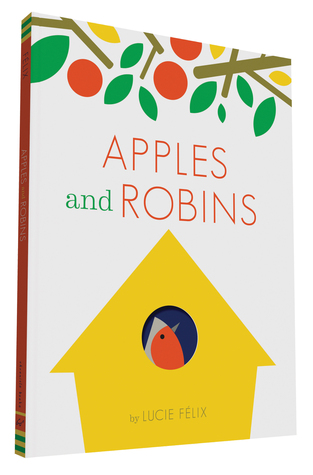
Apples and Robins 25332012

Apples and Robins by Lucie Felix

Before I Leave by Jessixa Bagley

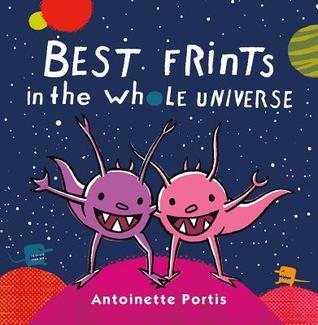
Before Morning Best Frints in the Whole Universe

Before Morning by Joyce Sidman, illustrated by Beth Krommes

Best Frints in the Whole Universe by Antoinette Portis

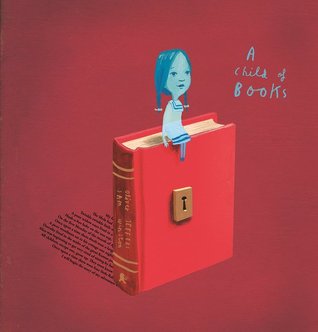
The Branch A Child of Books

The Branch by Mireille Messier

A Child of Books by Oliver Jeffers and Sam Winston

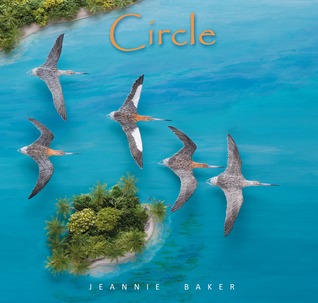
27130709 Circle

Chirri and Chirra by Kaya Doi

Circle by Jeannie Baker

Du Iz Tak? A Hat for Mrs. Goldman: A Story About Knitting and Love

Du Iz Tak? by Carson Ellis

A Hat for Mrs. Goldman by Michelle Edwards, illustrated by G. Brian Karas

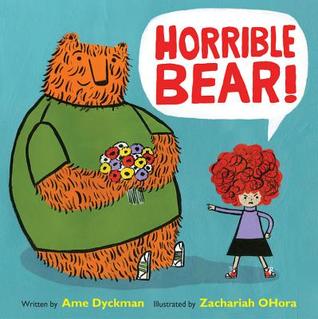
Horrible Bear! How This Book Was Made

Horrible Bear! by Ame Dyckman, illustrated by Zachariah OHora

How This Book Was Made by Mac Barnett

A Hungry Lion, or A Dwindling Assortment of Animals Ideas Are All Around

A Hungry Lion, or A Dwindling Assortment of Animals by Lucy Ruth Cummins

Ideas Are All Around by Philip C. Stead

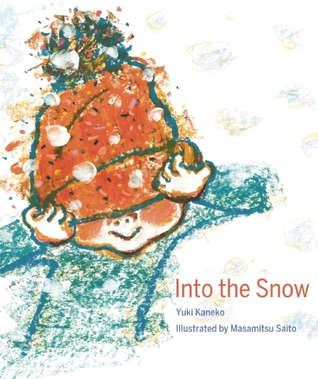
Into the Snow 28818766

Into the Snow by Yuki Kaneko, illustrated by Masamitsu Saito

The Journey by Francesca Sanna

Leave Me Alone Lion Lessons

Leave Me Alone by Vera Brosgol

Lion Lessons by Jon Agee

Lucy Maybe Something Beautiful: How Art Transformed a Neighborhood

Lucy by Randy Cecil

Maybe Something Beautiful: How Art Transformed a Neighborhood by F. Isabel Campoy and Theresa Howell, illustrated by Rafael López

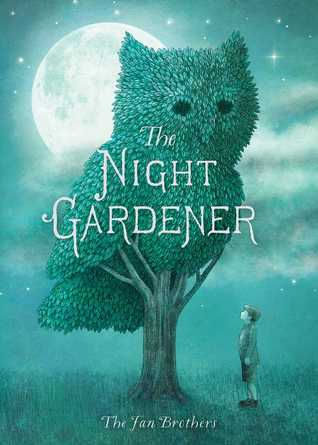
The Night Gardener One Day in the Eucalyptus, Eucalyptus Tree

The Night Gardener by The Fan Brothers

One Day in the Eucalyptus Eucalyptus Tree by Daniel Bernstrom

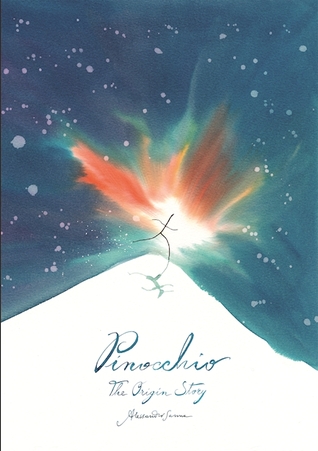
Pinocchio: The Origin Story 28118479

Pinocchio: The Origin Story by Alessandro Sanna

The Sound of Silence by Katrina Goldsaito, illustrated by Julia Kuo

30205595 Super Happy Magic Forest

Stepping Stones: A Refugee Family’s Journey by Margriet Ruurs, artwork by Nizar Ali Badr

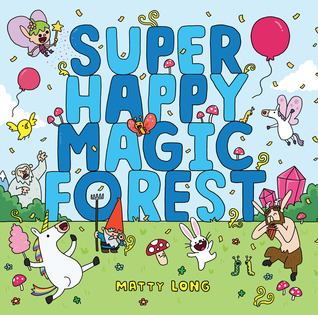
Super Happy Magic Forest by Matty Long

The Sword in the Stove 28101612

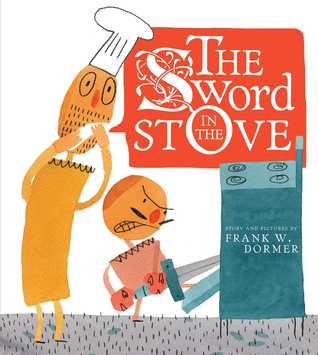
The Sword in the Stove by Frank W. Dormer

They All Saw a Cat by Brendan Wenzel

Thunder Boy Jr. Twenty Yawns

Thunder Boy Jr. by Sherman Alexie, illustrated by Yuyi Morales

Twenty Yawns by Jane Smiley, illustrated by Lauren Castillo

The Uncorker of Ocean Bottles The Water Princess

The Uncorker of Ocean Bottles by Michelle Cuevas, illustrated by Erin E. Stead

The Water Princess by Susan Verde, illustrated by Peter H. Reynolds

What Color is the Wind? The White Cat and the Monk: A Retelling of the Poem “Pangur Bán”

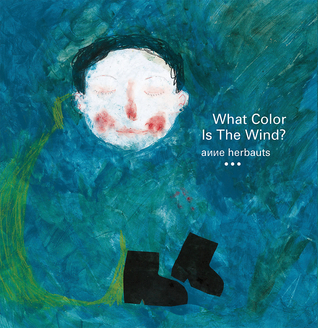
What Color Is the Wind? by Anne Herbauts

The White Cat and the Monk by Jo Ellen Bogart, illustrated by Sydney Smith

25027836

Worm Loves Worm by JJ Austrian, illustrated by Mike Curato

10 Best Nonfiction Books for Children in 2016

It was a wonderful year for nonfiction books for children, particularly those with a focus on diversity. I only wish I had managed to read more of them. Here are the ones I enjoyed most this year:

20899295 26240643

The Book Itch: Freedom, Truth & Harlem’s Greatest Bookstore by Vaunda Micheaux Nelson, illustrated by R. Gregory Christie

Cloth Lullaby: The Woven Life of Louise Bourgeois by Amy Novesky, illustrated by Isabelle Arsenault

25664556 24885797

The First Step: How One Girl Put Segregation on Trial by Susan E. Goodman, illustrated by E. B. Lewis

My Story, My Dance: Robert Battle’s Journey to Alvin Ailey by Lesa Cline-Ransome, illustrated by James E. Ransome

28588346 18552623

Preaching to the Chickens by Jabari Asim, illustrated by E. B. Lewis

Radiant Child: The Story of Young Artist Jean-Michel Basquiat by Javaka Steptoe

25738883 28186006

The Secret Subway by Shana Corey, illustrated by Red Nose Studio

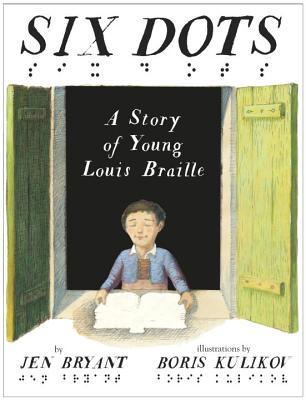
Six Dots: A Story of Young Louis Braille by Jen Bryant, illustrated by Boris Kulikov

28114411 26543145

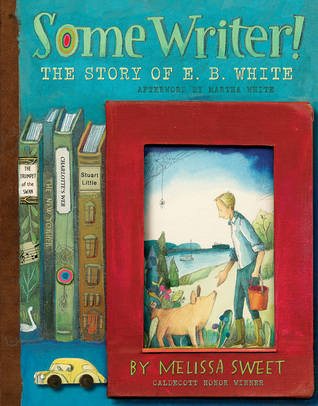
Some Writer!: The Story of E. B. White by Melissa Sweet

Their Great Gift: Courage, Sacrifice and Hope in a New Land by John Coy, photographs by Wing Young Huie

A Greyhound, A Groundhog by Emily Jenkins

a-greyhound-a-groundhog-by-emily-jenkins

A Greyhound, A Groundhog by Emily Jenkins, illustrated by Chris Appelhans (InfoSoup)

Released January 3, 2017.

This is a picture book that will leave you breathless in two ways. First, it is an astounding feat of wordplay that romps and gallops. Second, if you read this aloud I guarantee you will be out of breath by the end, much to the delight of your little listeners. A long lean greyhound that is round when it curls to sleep meets a very round brown groundhog and the two of them spend time playing together. They run and dash, filling the pages with movement and speed. The book takes a lovely pause suddenly when the two spot a butterfly and then more butterflies. And it ends with the two exhausted friends dozing side-by-side. Be ready to read it again and again, if you can do it!

Jenkins takes wordplay on a wild ride in this picture book that is pure mad joy. Readers not caught up in the swirl of words will notice that they all make sense, the wordplay is not at the expense of the story, rather it builds it and allows the play to happen. It is a wonder of rhythm and rhyme. The pacing is very well done from the blazing pace of the playing together to the delicious stop for the wonder of butterflies to the dozy ending. It is masterfully built and executed.

Appelhans’ illustrations are buoyant and bounding. He uses watercolor to create the two characters who whirl across the page, jumping and leaping, dashing and darting, the two becoming one joyous act of play together. Appearing on a white background, it the characters who shine on the page, simple and sunny.

A truly breathless read aloud, this picture book will be a wonderful addition to any story time. Save it for the end! Appropriate for ages 2-4.

Reviewed from ARC received from Schwartz & Wade.

Penguin Problems by Jory John

penguin-problems-by-jory-john

Penguin Problems by Jory John, illustrated by Lane Smith (InfoSoup)

One rather grumpy penguin takes readers on a tour of all the things that are wrong in his penguin life. There is the cold, the snow, the crowd of other penguins who make too much noise and all look like him. The sea is too salty. The sun is too bright. There are predators in the water. He waddles when he walks and can’t fly. It goes on and on. Then a wise walrus overhears the penguin and explains that he is wasting his one life focused on the negative rather than the spectacular beauty around him. But is the penguin ready to hear this? Maybe for a moment or two.

John’s text is uproariously funny. The litany of complaints is cleverly written and ends up having a rather jaunty if petulant rhythm to it. Even children will recognize that there are some people who just complain all the time. The walrus’ wisdom is rich and lovely, delivered as a lecture and something that makes this book even more fun to share aloud. Even better is the penguin’s reaction, which ends the book in just the right way.

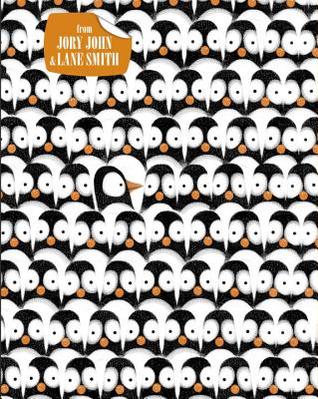
Smith’s art adds to the humor. The penguin looks like all the others but has a personality all his own. The illustrations use a subtle color palette filled with shades of whites and grays to create the snowy landscape. Against that, the penguins pop. The dark underwater scenes are deep and menacing, setting a great contrast to the snow.

Don’t miss the book jacket where the penguin greets readers with his attitude right from the start. Appropriate for ages 3-6.

Reviewed from copy received from Random House Books for Young Readers.