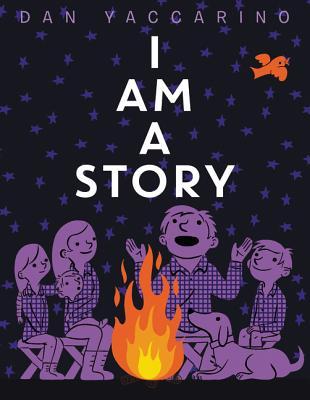
I Am a Story by Dan Yaccarino

i-am-a-story-by-dan-yaccarino

I Am a Story by Dan Yaccarino (InfoSoup)

This picture book celebrates stories in all of their forms from the past through to the present. Beginning with oral storytelling around fires, the book then moves to cave paintings, clay tablets and hieroglyphics. Formats change to papyrus and paper, tapestries to printed books. Libraries evolve from private to public and books with their stories travel the world. They are censored sometimes and even burned, but they survive. They are inspiring, portable and immortal.

Yaccarino takes huge concepts and boils them down into a focused tale of the story. He uses simple language, inviting readers to think deeply about the power of story and how it transforms us all. While a lot of the book is about formats and changes as the technology changed, some of it is about the emotional tug of stories and how they move people.

The simple text is accompanied by vivid pictures alive with bright colors that range from tangerine to lemon to deep plums and chocolate browns. The illustrations are stylized and clever, using blocks of color that shout from the pages.

A cheerful picture book about the power and necessity of story. Appropriate for ages 2-4.

Reviewed from copy received from HarperCollins.


10 Great Picture Books on Quietness

There is something powerful about quiet and silence. It’s another important thing for children to learn, that silence is not frightening but offers space to think and dream. May you find time today for your own quiet time.

Before Morning An Egg Is Quiet

Before Morning by Joyce Sidman, illustrated by Beth Krommes


An Egg Is Quiet by Dianna Aston, illustrated by Sylvia Long.

Leave Me Alone May the Stars Drip Down

Leave Me Alone by Vera Brosgol

May the Stars Drip Down by Jeremy Chatelain, illustrated by Nikki McClure

The Night World The Quiet Book

The Night World by Mordicai Gerstein

The Quiet Book by Deborah Underwood, illustrated by Renata Liwska

The Sound of Silence Tiptoe Tapirs

The Sound of Silence by Katrina Goldsaito, illustrated by Julia Kuo

Tiptoe Tapirs by Hanmin Kim

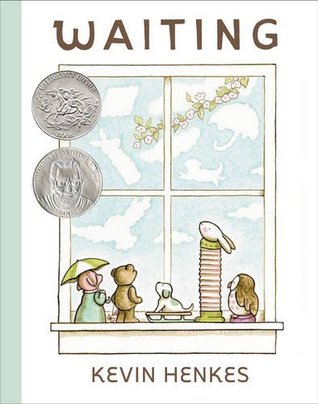
Waiting  The White Cat and the Monk: A Retelling of the Poem “Pangur Bán”

Waiting by Kevin Henkes

The White Cat and the Monk by Jo Ellen Bogart, illustrated by Sydney Smith


10 Great Picture Books about Bullying

As I look at our nation and what this election showed us, I see a tolerance for bullying that is concerning and frightening. Yet, it gives me great joy to see that we are teaching our children to reject bullies through the picture books they read. Here are some great picture books to share:

The Artist and Me 15062342

The Artist and Me by Shane Peacock, illustrated by Sophie Casson

Bully by Laura Vaccaro Seeger

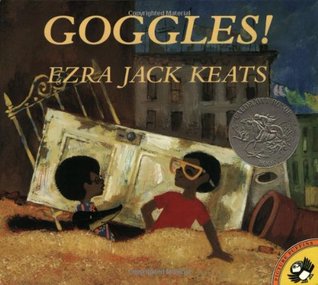
Bully Goggles!

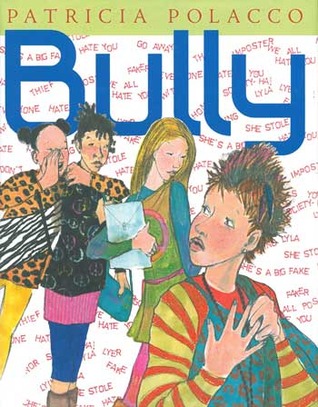
Bully by Patricia Polacco

Goggles by Ezra Jack Keats

18763344 I'm Number One

I Am Jazz by Jessica Herthel & Jazz Jennings, illustrated by Shelagh McNicholas

I’m Number One by Michael Rosen, illustrated by Bob Graham

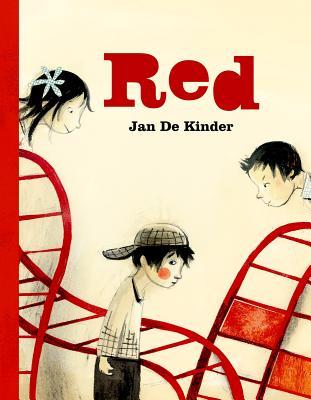
Jacob's New Dress Red

Jacob’s New Dress by Sarah and Ian Hoffman, illustrated by Chris Case

Red by Jan De Kinder

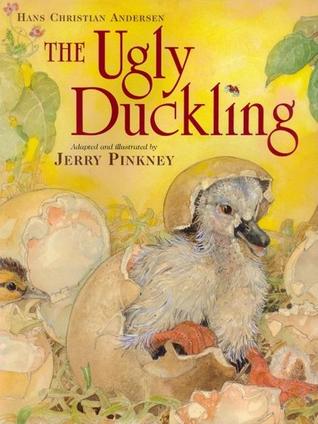
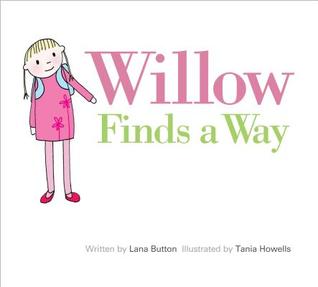
The Ugly Duckling Willow Finds a Way

The Ugly Duckling by Jerry Pinkney

Willow Finds a Way by Lana Button

10 Great Picture Books on Compassion

Continuing my series of superb picture books about the kind of world we want to live in and to remind ourselves that people are inherently good, here is my list of ten great picture books on compassion:

835202 21413862

A Chair for My Mother by Vera B. Williams

Fox’s Garden by Princesse Camcam

How to Heal a Broken Wing Ladder To The Moon

How to Heal a Broken Wing by Bob Graham

Ladder to the Moon by Maya Soetoro-Ng, illustrated by Yuyi Morales

My Heart Will Not Sit Down The Passover Lamb

My Heart Will Not Sit Down by Mara Rockliff, illustrated by Ann Tanksley

The Passover Lamb by Linda Elovitz Marshall, illustrated by Tatjana Mai-Wyss

Red Kite, Blue Kite A Sick Day for Amos McGee

Red Kite, Blue Kite by Ji-li Jiang, illustrated by Greg Ruth

A Sick Day for Amos McGee by Philip C. Stead, illustrated by Erin E. Stead

Smoky Night Zen Ties

Smoky Night by Eve Bunting, illustrated by David Diaz

Zen Ties by Jon J. Muth

What Color Is the Wind? by Anne Herbauts

what-color-is-the-wind-by-anne-herbauts

What Color Is the Wind? by Anne Herbauts (InfoSoup)

A child who is blind walks through the world asking what color the wind is. He gets very different answers from those he asks. The wolf says the wind is “the dark smell of the forest.” For the bees, the wind is “the color of  sunshine.” The apple tree sees the wind as “a sugary color” while its roots view it as “the color of sap and pomegranates.” By the end of the book, the child reaches a giant who says that the wind is the color of all of these things. Then readers are encouraged to flip the pages of the book, creating a rainbow of colors along the way and a breeze of wind too.

Herbauts’ book is exceptional. She has created a book filled with the senses. She incorporates touch into her illustrations, taste and smell are in many of the colors of the wind, and throughout there is a feel for the lack of vision and the increased vitality of the other senses. The imagery she matches with each character’s point of view is spot on. It’s done in a lush and lovely way that makes the experience of reading it intense and fascinating.

The illustrations have raised ridges in places that can be felt by the fingertips. They also have gloss on them to bring some of the tactile features out visually as well. Others are almost hidden until you run your fingers along them. The pages are filled with colors and playfulness with the child’s black boots walking along from page to page and other pages covered in raindrops or laundry.

Immensely beautiful, lush and wondrous, this picture book is a feast for all of the senses. Appropriate for ages 3-5.

Reviewed from copy received from Enchanted Lion Books.

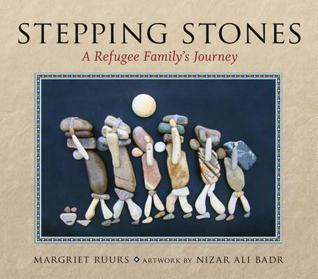
Stepping Stones by Margriet Ruurs

stepping-stones-by-margriet-ruurs

Stepping Stones: A Refugee Family’s Journey by Margriet Ruurs, artwork by Nizar Ali Badr (InfoSoup)

Told in both English and Arabic, this picture shares the story of a family of Syrian refugees. The book begins with Rama talking about their life in Syria and how things have changed and freedoms have been lost. War arrived with a lack of food and people began to leave. Still, Rama and her family stayed until bombs fell too close to their home and they joined “the river of people.” They walked and walked until they reached the sea where they boarded a small boat. People died aboard but Rama’s family survived. They walked farther, no longer in a world torn by war until they came to their new home and were greeted by smiling new neighbors.

This picture book is simple enough to share with children. It speaks to the horrors of war but with a delicate touch. Still, it is a book that will spark questions and discussion for children who will want to understand if they will ever need to be refugees themselves and how they can help. It is a picture book that speaks to our universal humanity, the power of war and the courage of hope.

The illustrations are spectacular. Ruurs opens the book with an explanation of discovering his art on Facebook and reaching out to him to see if he would do a book with her on Syrian refugees. His art is moving and emotional, the faceless rocks somehow capturing fear, strain, despair and eventually joy. Done with subtle natural colors, the art is powerful and wrenching.

A noteworthy and extraordinary picture book on the refugee crisis, this picture book belongs in all libraries. Appropriate for ages 5-8.

Reviewed from library copy.


Be the Change by Arun Gandhi

be-the-change-by-arun-gandhi

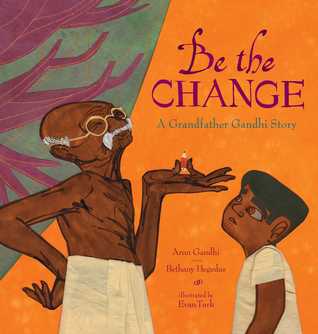
Be the Change: A Grandfather Gandhi Story by Arun Gandhi and Bethany Hegedus, illustrated by Evan Turk (InfoSoup)

Arun lives in a village with his grandfather. The purpose of life in the ashram was to work in service for one another. For Arun, that meant following his grandfather’s rules as well and the hardest for Arun was not to waste. One day, Arun grew tired of his vow not to waste and threw an almost worn out pencil away into the grass. When he asked for a new pencil that night, his grandfather said that he had had a fine pencil just that morning. He went on to explain that the thing of importance was not the pencil but Arun himself. So Arun set off after dark to find the pencil nub in the grass. Still, it would take more teachings from his grandfather for Arun to finally connect wasting nothing with nonviolence as Arun works to define what passive violence actually is.

In a lesson ideal for our time of large consumption and rude political discourse, this picture book is a gentle salve. It speaks of small moments of choice actually shaping our persona and our ideas. One small pencil nub is actually a decision to live without excess and without damaging others. The message is delivered through the curious eyes of a young boy who asks the questions that readers will also have. This is a lovely and accessible look at the teachings of Gandhi.

Turk’s illustrations are lush and patterned. He uses collage at times, fabric folds popping off the page. Gorgeous colors fill nature with purple trees, silver rimmed clouds, the glow of orange understanding after a darkness of shadow.

This second picture book about Grandfather Gandhi is a treat and offers opportunity for discussions about waste and care for others. Appropriate for ages 5-7.

Reviewed from copy received from Atheneum.


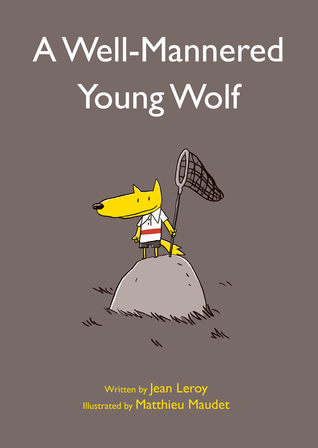
A Well-Mannered Young Wolf by Jean Leroy

a-well-mannered-young-wolf-by-jean-leroy

A Well-Mannered Young Wolf by Jean Leroy, illustrated by Matthieu Maudet (InfoSoup)

A young wolf who has been taught good manners by his parents heads into the wolf to hunt alone for the first time. One of the most important rules is that he must honor the final wishes of his prey. When he nets a rabbit, the rabbit requests that the young wolf read him a story. So the wolf heads home to find his favorite book but when he returns to the woods, the rabbit has left. Next, the wolf captures a chicken who requests music. After the wolf returns with an instrument, the chicken is gone too. The wolf then captures a little boy, who asks for a drawing. The wolf almost doesn’t agree, but the little boy has said please. When the wolf returns, the boy is still there waiting! And the boy loves the picture so much that he wants to show his friends. In a twist ending that is both satisfying and wonderfully dark, the wolf finally succeeds in his hunt.

Leroy sets a brisk pace in this picture book where much of the dialogue is done in speech bubbles and the text is kept to a minimum. The book dashes along on the hunt with the wolf, to and fro from his house and back to his disappearing prey. As the book gains momentum thanks to the repeating pattern, Leroy breaks it and moves ahead with the story at just the right time. It’s a wild and wolfish look at manners that everyone will enjoy.

Maudet’s illustrations convey the frustration of the young wolf very clearly. The wolf uses the book to capture the chicken and then leaves the instrument smashed on the ground in frustration. The limited color palette is filled with orange and red, played against gray and brown.

The book is completely wonderful, satisfying and the twist ending will leave children surprised and asking to hear it again. Appropriate for ages 4-6.

Reviewed from copy received from Eerdmans Books for Young Readers.


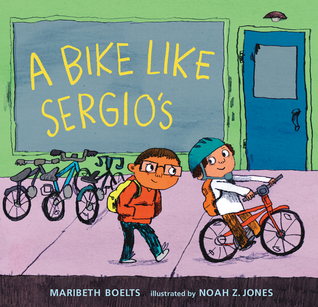
A Bike Like Sergio’s by Maribeth Boelts

a-bike-like-sergios-by-maribeth-boelts

A Bike Like Sergio’s by Maribeth Boelts, illustrated by Noah Z. Jones (InfoSoup)

Ruben would love to have a bike like his friend Sergio has. Even though his birthday is coming, Ruben knows that he doesn’t get presents like bicycles. His family is large and there’s not enough money even for all of the groceries they need some weeks. One day when he is at the store for his mother, a lady in front of him drops a dollar bill. Ruben picks it up and puts it in his pocket, but when he looks at it later he discovers it’s actually a one-hundred dollar bill! That’s enough for him to get the bike he’s always wanted. Now Sergio has a dilemma, does he give the money to his family for groceries? Does he give it back to the woman? Or does he buy the bike of his dreams?

Boelts has created a story that is much more than a lesson in morals. This story is about ethical choices yes, but also about economic disparity and families living on the edge. It is a story told with real subtlety and offering an understanding of what would drive a child who is good at heart to steal what they thought was a dollar. It’s a book about the stories we tell ourselves to make our decisions “right” and the way that doing the right thing may not always be easy or clear.

The illustrations by Jones are modern and rather quirky. They fill the page with the vividness of the urban setting. The love and caring of Ruben’s family are also celebrated in the illustrations.

Subtle and smart, this book about decisions and doing the right thing asks all the right questions. Appropriate for ages 5-7.

Reviewed from library copy.