Review: Sand Swimmers by Narelle Oliver

sand swimmers

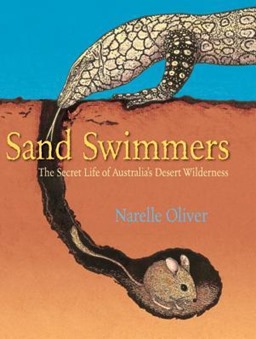
Sand Swimmers: The Secret Life of Australia’s Desert Wilderness by Narelle Oliver

Set in the ferocious center of Australia, this book looks at one of the harshest climates in the world and the animals that not only survive there but thrive there. The “Dead Heart” of Australia can appear completely uninhabited at first, but this book has us look closer and see what the Aboriginal people have known for thousands of years. The huge salt lake has lizards, shrimp and frogs if you know where to look. The mulga scrublands have tangled timber but that is also shelter for spiders, ants, geckos, and birds. Down deep under the earth, there are even more animals sheltering. Even the oceans of rock and sand have animals living there. Explore an amazing ecosystem along with early explorers of Australia who failed to see the creatures hiding around them.

Oliver takes readers on an amazing journey through various regions of the center of Australia. Even the rocks and sand and plants themselves are wild and different from other parts of the world. Everything seems to combine to make the most uninhabitable ecosystem in the world, but that’s not true if you look deeper. Oliver takes readers deeper into the desert and readers will discover the beauty and life hidden in this desolate landscape.

Oliver’s illustrations combine line drawings of the creatures with smudged drawings of the early explorers. The combination of the crisp line drawings with the more smudged ones is very successful, giving readers a taste of both the animals themselves and the history.

A brilliant look at a fascinating habitat, this book goes far beyond the stereotypical kangaroos and koala bears of Australia. Appropriate for ages 6-9.

Reviewed from library copy.
Review: Seeds of Freedom by Hester Bass

seeds of freedom

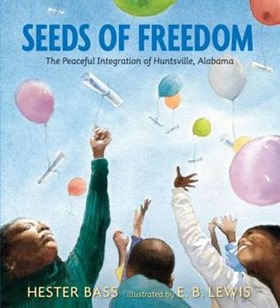
Seeds of Freedom: The Peaceful Integration of Huntsville, Alabama by Hester Bass, illustrated by E. B. Lewis

Violence was a large part of the Civil Rights Movement in the 1960s.  However in Huntsville, Alabama something quite different happened, quietly and successfully.  They managed through cooperation, quiet civil disobedience, and courage to stand up for what was right for all members of their community.  There were lunchroom protests where young black people sat at the counters they were not allowed to eat at.  There were marches with signs.  There were arrests, even one of a mother with an infant that gained national news. There were lovely protests like refusing to purchase new clothes for Easter and instead dressing in blue jeans to deny some stores their business. There were balloons with messages of coming together even as a segregationist ran for governor. There were brave children who attended schools where they were the only people of color. Yet it all happened in a community of support and with no violence at all.

Bass emphasizes throughout her book that there were challenges in the society and reasons for protest.  Time and again though just as the reader thinks things will be more rough and confrontational, it abates and progress is made. Her use of details from the other cities in Alabama as well as the national Civil Rights Movement will show children how violent the struggles often were. It is against that backdrop that the progress in Huntsville really shines.

Lewis’s paintings also shine.  He captures the strength and determination of those working for their civil rights.  On each page there is hope from the children reaching to the sky with their balloons to the one black child in the class and his smile.  It all captures both the solemnity of the struggle and the power of achieving change.

Beautifully told and illustrated, this nonfiction picture book offers a compelling story about a community’s willingness to change without violence.  Appropriate for ages 7-10.

Reviewed from library copy.
Review: The Bus Ride by Marianne Dubuc

bus ride

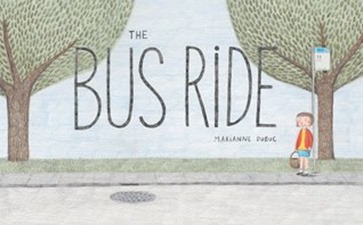
The Bus Ride by Marianne Dubuc

Released March 1, 2015.

A little girl sets off on her first bus ride all by herself.  Her mother packed her a snack and her sweater too.  But this is not a normal bus, with its passengers of rabbits, a bear, a turtle, a mouse and a very sleepy sloth.  Stop by stop, the bus picks up and drops off more and more animals.  A family of wolves enters the bus at one point and the little girl shares her snack happily with the little wolf.  The bus goes through a dark tunnel and everything gets mixed around in the dark, but things are quickly sorted back into some sort of normal.  There is even a cunning fox thief that the little girl helps chase off the bus at the next stop.  This is one wonderful adventure for a little girl all on her own who has an amazing ride.

First published in France, this picture book celebrates a child traveling on their own.  Though the larger animals may seem threatening at first, those fears are quickly allayed by their actions.  Even the wolf family acts very appropriately on the bus.  There is the thief but again the little girl is empowered enough to put a stop to his shenanigans herself.  Children in the U.S. will be astonished at the freedom of this little girl and the trust she is given.  They will also love the Little Red Riding Hood ties that are evident in the story.

Dubuc’s illustrations are done in fine lines and subtle colors. That adds to the gentleness of the tale and the feeling that everything is nonthreatening and OK.  Subtle things change on each page and children will want time to look closely at the pictures, particularly after the tunnel switches things around.

Warm and confident, this picture book is a friendly introduction to bus rides even though real life ones aren’t likely to have bears, wolves and sloths as part of the community. Appropriate for ages 3-5.

Reviewed from digital galley received from Netgalley and Kids Can Press.

Review: The Queen’s Shadow by Cybele Young

queens shadow

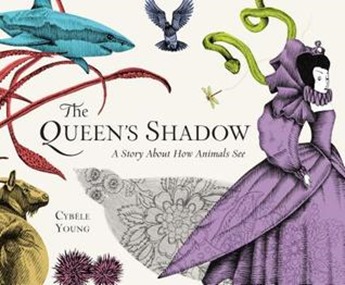
The Queen’s Shadow by Cybele Young

Released March 1, 2015.

This fascinating and unique nonfiction picture book takes a mystery and turns it into information about how various animals see.  At the Queen’s Ball, several different animals have gathered.  Then there is a flash of lightning and a moment of darkness.  When the lights come back on, the Queen’s shadow has been stolen!  Who stole it and how can they prove it?  One by one, each animal offers testimony to what they witnessed “colored” by the way they are able to see the world.  There are the eyes of the chameleon who can look in two directions at once but only shoot out his tongue when both eyes are focused on the same thing.  The shark excels at seeing contrast more than anything and notices patterns of light and dark. Pit viper sees in heat and cool. Dragonfly offers perspective from compound eyes. It will take each of their ways of seeing the world to solve this mystery. 

Young creates an entirely abstract and amazing world here. There is a strong sense of decorum throughout the book, no animals attacking each other and the human queen unafraid of any of her more predatory guests. She combines information for the mystery about what was witnessed through that specific set of eyes and then shares strictly scientific information in offset text boxes too. The result is a book that keeps you turning pages not only to solve the mystery but to continue seeing the world in such unique ways and learning more.

The illustrations have a feel of vintage illustrations with finely detailed ink drawings washed with color. This style is reworked though when seeing through other animals’ eyes so that with each turn of the page, the art is ever-changing and fascinating.

Peculiar in a delightful way, this nonfiction picture book is one that will appeal to children wanting to “see” more of the natural world.  Appropriate for ages 6-9.

Reviewed from digital galley received from Netgalley and Kids Can Press.

2015 Waterstones Children’s Book Prize Shortlist

The shortlist has been announced for the 2015 Waterstones Children’s Book Prize.  There are 18 books on the shortlist for this British children’s book prize and refreshingly 15 of them are by women.  The winner in each category as well as the overall winner will be announced on March 26.

BEST ILLUSTRATED BOOK

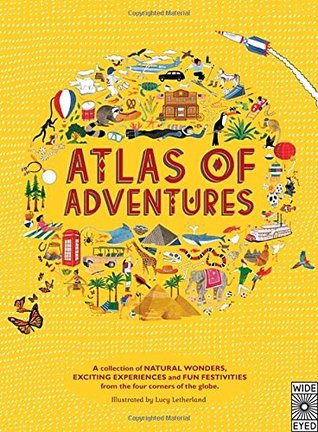
Atlas of Adventures: A collection of natural wonders, exciting experiences and fun festivities from the four corners of the globe. Blown Away

Atlas of Adventures by Lucy Letherland, words by Rachel Williams

Blown Away by Rob Biddulph

The Dawn Chorus The Queen's Hat

The Dawn Chorus by Suzanne Barton

The Queen’s Hat by Steve Antony

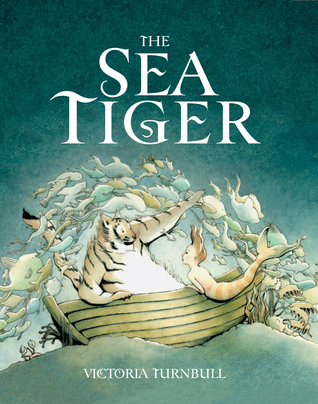
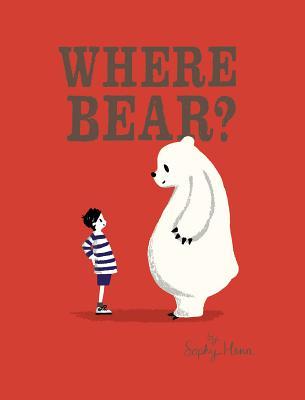
The Sea Tiger Where Bear?

The Sea Tiger by Victoria Turnbull

Where Bear? by Sophy Henn


BEST FICTION FOR 5-12s

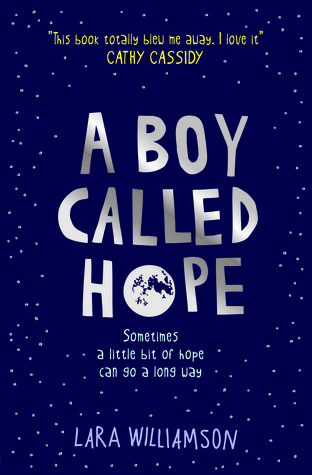
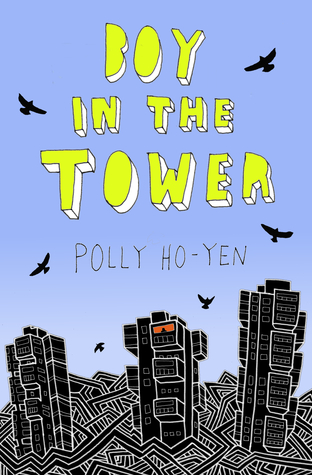
A Boy Called Hope Boy In The Tower

A Boy Called Hope by Lara Williamson

Boy in the Tower by Polly Ho-Yen

Cowgirl Girl With a White Dog

Cowgirl by G. Gemin

Girl with a White Dog by Anne Booth

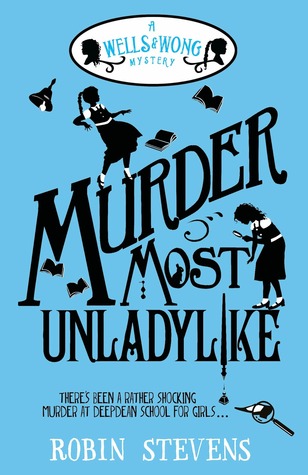
Murder Most Unladylike (Wells and Wong, #1) Violet and the Pearl of the Orient

Murder Most Unladylike by Robin Stevens

Violet and the Pearl of the Orient by Harriet Whitehorn, illustrated by Becka Moor


BEST BOOK FOR TEENS

The Apple Tart of Hope Dead Ends

The Apple Tart of Hope by Sarah Moore Fitzgerald

Dead Ends by Erin Jade Lange

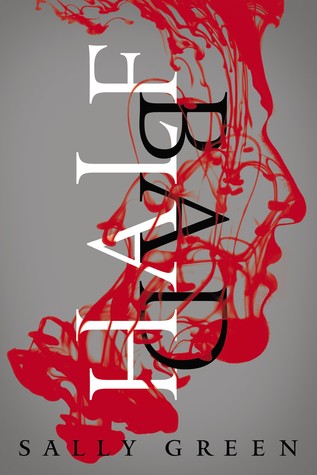
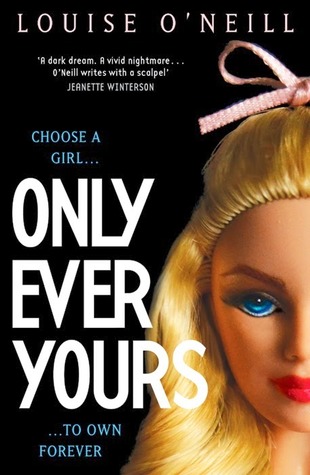
Half Bad (Half Bad, #1) Only Ever Yours

Half Bad by Sally Green

Only Ever Yours by Louise O’Neill

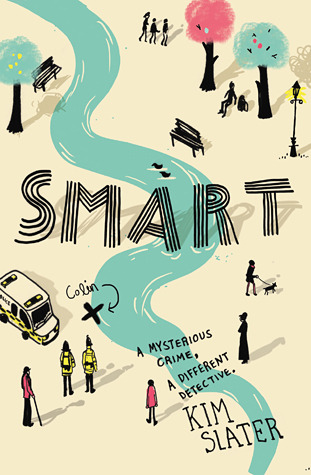
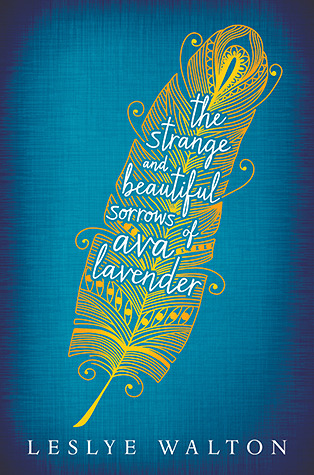
Smart The Strange and Beautiful Sorrows of Ava Lavender

Smart by Kim Slater

The Strange and Beautiful Sorrows of Ava Lavender by Leslye Walton

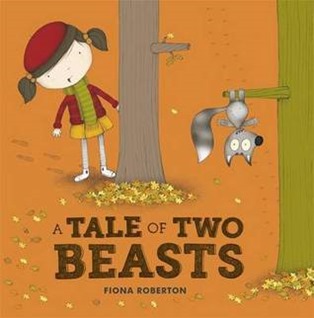
Review: A Tale of Two Beasts by Fiona Roberton

tale of two beasts

A Tale of Two Beasts by Fiona Roberton

Released March 1, 2015

First we hear the story from one point of view, then the other.  A little girl tells of walking in the woods and seeing a little beast in the forest.  He was stuck in the tree and very sad, so she rescued him and took him home with her.  There she bathed him, dressed him in a hat and sweater, gave him nuts to eat and built him a house out of a cardboard box.  She even walked him in a leash to give him exercise.  But in the end, he escaped out of the window.  Alone in her bed, she couldn’t sleep and then the beast returned to get his hat so they headed off into the woods together.  But she couldn’t stop wondering about why he came back.  The second half of the book is told from the little animal’s point of view and it’s a very different perspective.  But in the end, the two of them found a connection despite their different ways of seeing what happened.

Roberton could have kept this book solely about perspectives and had it be full-on humor, but instead she manages to imbue the book with a real heart.  The connection between the two “beasts” is slow to come, with the final moment of real understanding being so freeing for both of them as they in turn realize that the other one is not quite as bad as they had thought.  Using similar language for both stories in that moment really shows their connection, particularly because otherwise their perspectives had been so very different.

Roberton uses her art to frame the story, showing the same exact story not only verbally from different perspectives but also vividly in the images as different from one another.  One moment that stands out is the cardboard box home that she builds the creature, which he detests.  The illustrations show her pleasure at it and then in turn his trapped feeling of being in the box with nothing to do.  And don’t miss their final dash together into the woods and then their clothing hanging on tree branches side-by-side.  Freedom!

Cleverly crafted and told, this picture book explores points of view and how connections are possible even with different beasts.  Appropriate for ages 4-6.

Reviewed from online copy from Kane Miller.

2015 Notable Children’s Books

Notable seal image

The Association for Library Service to Children have announced their list of the 2015 Notable Children’s Books.  The books are selected by committee and are defined as “Worthy of note or notice, important, distinguished, outstanding. As applied to children’s books, notable should be thought to include books of especially commendable quality, books that exhibit venturesome creativity, and books of fiction, information, poetry and pictures for all age levels (birth through age 14) that reflect and encourage children’s interests in exemplary ways.”

The list covers preschool through grade 8.  Lots of great reads!

Review: Here in the Garden by Briony Stewart

here in the garden

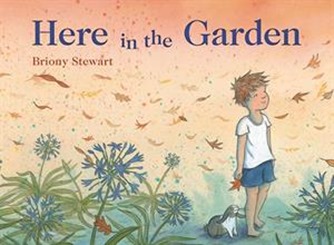
Here in the Garden by Briony Stewart

Released March 1, 2015.

This import from Australia tells the seasonal story of a boy and his garden.  A boy spends time in his backyard, but is missing someone.  The wind blows, he plants seedlings in the garden, and dreams of his special someone joining his side.  When the rain comes, he watches from the back steps, still missing the one who would love to see the garden turn so green.  Summer comes with its sunshine and heat and the boy continues to feel his loss but begins to realize that he can still be in touch with the one he misses by being out in nature and enjoying the same things they used to do together.

Stewart beautifully allows the book to speak to anyone who has experienced loss.  In the end though, this book is clearly about the loss of a pet rabbit, the same one who is pictured at the boy’s side throughout the story.  That reveal is done tenderly and gently, clearly tying the boy to nature and to his memories of all the times they had together.  It’s beautifully and caringly presented.

Stewart’s art is washed in watercolors, colors that sweep and blow across the page, evoking the movement of air and the freshness of outdoors.  Though the book is filled with loneliness, the art remains resolutely lovely and cheery.  Even the one in the dark of night is filled with a light that illuminates.

A quiet story of grief, loss and the healing power of nature, this is a lovely little foreign title.  Appropriate for ages 4-6.

Reviewed from digital galley received from Kane Miller.

Review: Red by Michael Hall

red

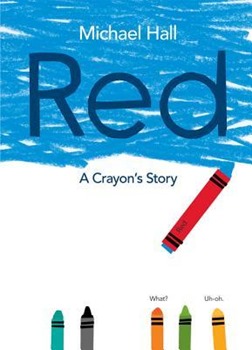
Red: A Crayon’s Story by Michael Hall

A blue crayon labeled as red is not very good at being red at all. His fire trucks were all wrong. He thought more practice might help, but his strawberries didn’t look anything like Scarlet’s. When he tried to mix with other colors, like Yellow to make orange, it turned very green on him. His parents tried to warm him up with a scarf, but it didn’t work either. Everyone had advice for him, like just trying harder or sharpening himself to a new point. Nothing made any difference. Then he made a new friend who asked him to make an ocean for her boat to sail on. Red protested at first because oceans aren’t red, but then agreed to try. And suddenly he realized that he had been blue all along!

Told in symbolism that children will immediately understand, this book works on a variety of levels.  It can inspire children to be who they really are on the inside and to be true to that and not the labels that society puts on you. Others will read it as a metaphor for being gay or transgendered and I think it works beautifully for that as well.  Perhaps the best praise that can be given this book is that it can mean so many different things to people.

Hall’s artwork is simple and lovely. His various crayons are different heights and have wonderful color names that range from more normal colors to “Cocoa Bean” and “Hazelnut” and “Grape.”  They all have something to say too, helpful and not-so-helpful alike.  But they are Red’s community and children will see in them things that are said to people who are different in some way.

A celebration of inner diversity, this picture book is all about accepting and celebrating our differences.  Appropriate for ages 3-5.

Reviewed from copy received from HarperCollins.