Review: Winnie by Sally M. Walker

winnie

Winnie: The True Story of the Bear Who Inspired Winnie-the-Pooh by Sally M. Walker, illustrated by Jonathan D. Voss

When Harry Colebourn saw a bear cub at the train station, he immediately asked about her.  Since she was for sale, he bought her for $20 and took her aboard the train with him, naming her Winnipeg.  He was on his way to military training in Quebec and there the two of them bonded even further.  Winnie helped Harry in his veterinarian duties, caring for the military horses and searching the pockets of his uniform for treats.  Harry fed her condensed milk and she slept on the floor under his cot.  When news came that they would be leaving for England, Harry took her along.  But when they were going to head to battle in France, Harry knew he had to do something else with Winnie since she could be hurt in warfare.  So Winnie was placed in the London Zoo where she quickly made friends with the other bears.  It was there that she met one special little boy named Christopher Robin and his father, A. A. Milne.

Walker writes a warm story here.  Though they are surrounded by preparations for World War I, the book focuses on the relationship between Harry and Winnie.  Happily, Walker also shares information on how Winnie was cared for, showing the freedom that she had and the loving care she was given by Harry and the rest of the soldiers.  Just as fascinating is her time at the zoo where she was so gentle that children were allowed to ride on her back.  This was one special bear indeed.

The book’s endpages are filled with photographs of the real Harry and Winnie.  Voss’ illustrations are realistic and detailed, staying true to the photographs that readers see first.  The result is a lovely continuum from the real to the story of what happened, with no jarring differences.

A delightful and cheery story of a bear who is found by one man and then adored by many.  Appropriate for ages 6-9.

Reviewed from copy received from Henry Holt & Co.

Review: Earmuffs for Everyone by Meghan McCarthy

earmuffs for everyone

Earmuffs for Everyone!: How Chester Greenwood Became Known as the Inventor of Earmuffs by Meghan McCarthy

Chester Greenwood is credited with being the inventor of the earmuffs.  The story goes that he was a boy with big ears that were sensitive to cold so he had his grandmother create him a pair of earmuffs from wire and cloth.  However, the author also shows that earmuffs were actually invented before Greenwood was even born.  He did however get a patent himself at age 19 for ear-mufflers.  Chester had a great business sense too, one that he honed even as a boy.  He also invented other things besides ear-mufflers, designing new features into kettles and rakes and even creating a portable house.  It was an article in Life Magazine in the 1930s that credited Greenwood with the invention and that continued into the 1970s when there was a day named after him in Maine that continues to be celebrated today.

McCarthy immediately invites readers into the earmuff mystery, showing the early patents by others and then turning to Greenwood.  Readers will see how convoluted stories can become in history, how distorted credit for inventions can be, and also how hard it can be to piece together the truth fully once again.  It is to McCarthy’s credit that her focus is on more than the inventor but also on the others in history and the patent process.  Don’t miss her notes at the end which detail even more fully her search for the truth about earmuffs.

McCarthy populates her books with friendly characters with big googly eyes.  Her paintings are fresh and colorful.  They range from double-page spreads to smaller images on the page.  All of them exude a cheery feeling and invite readers to explore.

This nonfiction picture book embraces the complexity of the past and demonstrates the search for the truth behind an everyday object.  Appropriate for ages 6-9.

Reviewed from copy received from Simon & Schuster.

Review: Raindrops Roll by April Pulley Sayre

raindrops roll

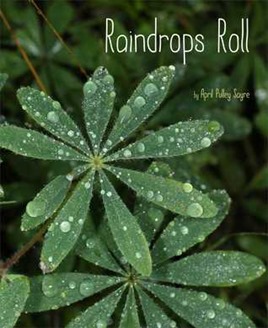
Raindrops Roll by April Pulley Sayre

The author of Eat Like a Bear returns with another great nonfiction picture book.  In this book she offers the joy of rain and water.  Told in a poetic way, the text conveys the anticipation of rain that you can feel coming and the changes in the sky.  When the rain arrives, it makes noise, makes things wet, including animals out in the weather.  There is running water, mud, all sorts of changes take place.  When the rain stops, the raindrops remain and weigh things down, dot and cling.  They change things as they linger until the sun returns to dry them away.

Sayre’s poem dances like the rain itself, pattering along and showing the beauty of the rain.  This is a book that celebrates darkening skies and weather, showing the importance of rain, the way that insects protect themselves from it, and the dazzle that it leaves behind.  Sayre manages to convey science along the way, though the focus of the book continues to be the loveliness of this type of weather.

Her photographs are part of the dazzle of this book.  They are large, clear and brilliantly done.  She captures insects before and after the rain, drops that merge together, rain as it runs and dots.  Her photos are colorful, filled with water and gorgeous.

A perfect book to share in the spring or just before heading out with umbrellas into the garden.  This is just the sort of book we need to encourage children to get outside and play in the rain.  Appropriate for ages 3-6.

Reviewed from copy received from Beach Lane Books.

Review: Whale Trails by Lesa Cline-Ransome

whale trails

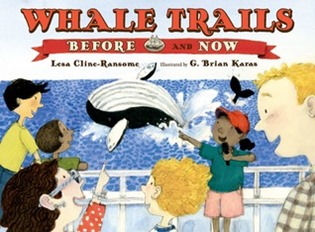
Whale Trails: Before and Now by Lesa Cline-Ransome, illustrated by G. Brian Karas

Released January 20, 2015.

A little girl and her father run a whale boat that takes people out onto the water to view the whales in the sea.  Her family has worked the sea there for generations, so she explains how different their search for whales is from those in the past where the whalers were hunting whales.  Each pair of pages shows modern day and then turns in sepia tones to the past.  From changes to the pier and the businesses along it to the design of the boats themselves to the routes and tools used, each pair of pages show how things have changed.  Yet at night as they head home, the bay is the same and so are the whales that live there.

Cline-Ransome has cleverly combined history with always-popular whale watching, creating a book that invites exploration.  Not only is this a look at the changes of the boats over time and what they do with the whales in the bay, but more subtly and importantly, it also looks at the changes in attitudes towards wildlife.  Throughout it is a hopeful book, examining the past with a frank and factual approach. 

Karas’ illustrations clearly show the modern and the historical side-by-side.  His sepia tones spread all the way to edges of the page while the illustrations themselves are framed by lines.  The more colorful modern pages have illustrations that take up the entire page and are less formal feeling thanks to the lack of framing.  These cues will help children keep the two time periods clear.

Clever, smart and engaging, this mix of modern and historical whaling is a superb addition to any library collection.  Appropriate for ages 6-9.

Reviewed from copy received from Henry Holt & Co.
Review: Leontyne Price by Carole Boston Weatherford

leontyne price

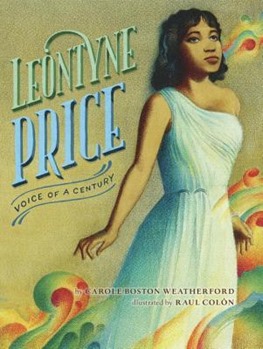
Leontyne Price: Voice of a Century by Carole Boston Weatherford, illustrated by Raul Colon

This picture book biography looks at the life of Leontyne Price, an African-American opera singer who burst through the color barrier.  Born in Mississippi in 1927, Leontyne grew up poor in money but rich in music from both her parents.  They also taught her that she was just as good as anyone else, no matter what their color.  Leontyne was inspired when she saw Marian Anderson perform and then got to sing in the church choir when Anderson performed in 1939 after being barred from a whites-only concert hall.  Leontyne headed to Ohio to college where she planned to be a teacher, but when her voice was discovered she changed her major to voice.  She then went to Julliard and on to the world stage where she sang on Broadway in Porgy and Bess.  She became the first black singer to star at La Scala and broke wide the door that Marian Anderson had first opened. 

Weatherford writes in prose that reads like poetry, broken into stanzas and offering celebrations of this inspiring woman on the page.  From the pride and power of her upbringing by her parents to the final pages that show how far she has come, the book captures the strength and determination that it took to take a natural gift and break down barriers with it.   Weatherford’s words are filled with moments that are inspiring, times that are amazing, but she also keeps things down to earth, showing even on the final page that Price is entirely human even as she reaches incredible heights in her career.

Colon’s illustrations are beautiful.  Filled with his trademark scratches and lines, they have a beautiful flowing texture that carries from one image to the next.  He uses sweeping colors to show the beauty of the music coming from both Price and Anderson, filling the world with the colors of music. 

A beautiful and powerful testament to one of the ground breaking artists of our time.  Appropriate for ages 7-9. 

Reviewed from copy received from Knopf Books for Young Readers.

My Top 35 Picture Books of 2014

This is my last list for 2014, but I saved the biggie for last.  There are many more that could have been on the list, but this is where I could bear to cut it off.  Enjoy!

Baby Bear Big Bug

Baby Bear by Kadir Nelson

Big Bug by Henry Cole

Blizzard Blue on Blue

Blizzard by John Rocco

Blue on Blue by Dianne White, illustrated by Beth Krommes

The Book with No Pictures Cat Says Meow: and other animalopoeia

The Book with No Pictures by BJ Novak

Cat Says Meow by Michael Arndt

A Dance Like Starlight: One Ballerina's Dream Draw!

A Dance Like Starlight by Kristy Dempsey, illustrated by Floyd Cooper

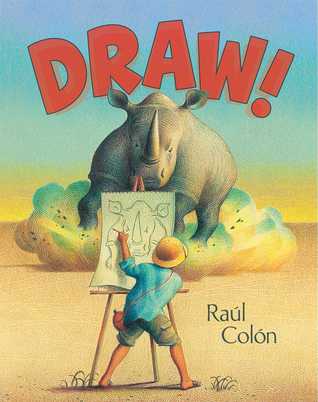
Draw! By Raul Colon

Elizabeth, Queen of the Seas The Farmer and the Clown

Elizabeth Queen of the Seas by Lynne Cox, illustrated by Brian Floca

The Farmer and the Clown by Marla Frazee

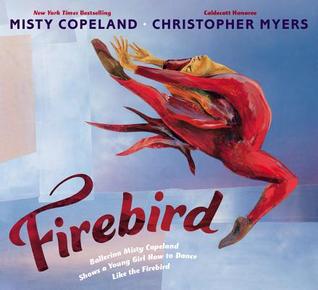
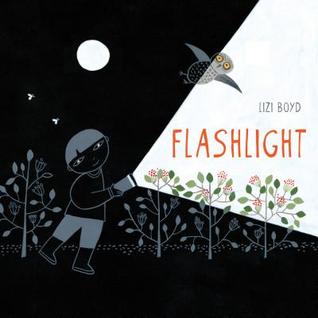
Firebird Flashlight

Firebird by Misty Copeland, illustrated by Christopher Myers

Flashlight by Lizi Boyd

The Fox and the Crow 21413862 

The Fox and the Crow by Manasi Subramaniam

Fox’s Garden by Princesse Camcam

Hannah's Night 19156005

Hannah’s Night by Komoko Sakai

Hunters of the Great Forest by Dennis Nolan

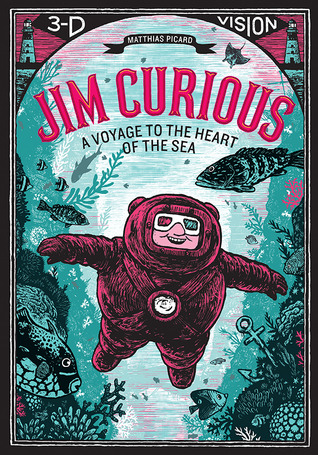
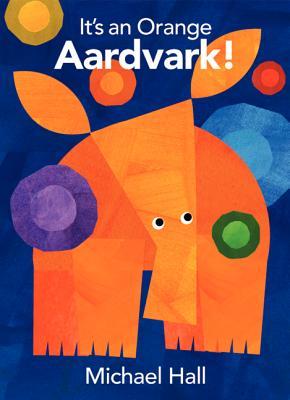
Jim Curious: A Voyage to the Heart of the Sea in 3-D Vision It's an Orange Aardvark!

Jim Curious by Matthias Picard

It’s an Orange Aardvark by Michael Hall

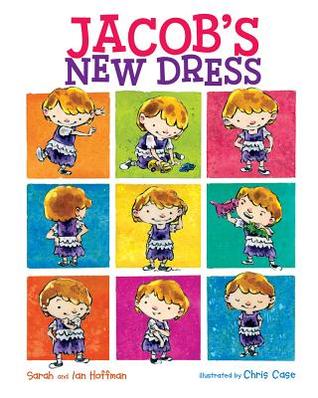
Jacob's New Dress The Lion and the Bird

Jacob’s New Dress by Sarah and Ian Hoffman, illustrated by Chris Case

The Lion and the Bird by Marianne Dubuc

May the Stars Drip Down Once Upon an Alphabet: Short Stories for All the Letters

May the Stars Drip Down by Jeremy Chatelain, illustrated by Nikki McClure

Once Upon an Alphabet by Oliver Jeffers

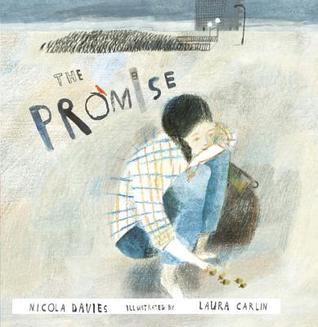
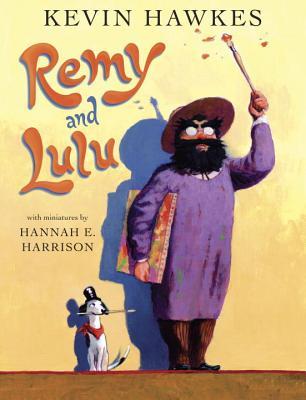
The Promise Remy and Lulu

The Promise by Nicola Davies, illustrated by Laura Carlin

Remy and Lulu by Kevin Hawkes

The River Sam and Dave Dig a Hole

The River by Alessandro Sanna

Sam and Dave Dig a Hole by Mac Barnett, illustrated by Jon Klassen

Shh! We Have a Plan The Storm Whale

Shh! We Have a Plan by Chris Haughton

The Storm Whale by Benji Davies

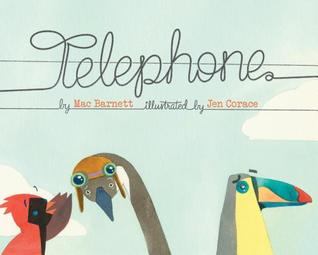
Take Away the A Telephone

Take Away the A by Michael Escoffier, illustrated by Kris Di Giacomo

Telephone by Mac Barnett, illustrated by Jen Corace

This Is a Moose Three Bears in a Boat

This Is a Moose by Richard T. Morris, illustrated by Tom Lichtenheld

Three Bears in a Boat by David Soman

Viva Frida What If...?

Viva Frida by Yuyi Morales, photographs by Tom O’Meara

What If…? By Anthony Browne

Winter Is Coming

Winter Is Coming by Tony Johnston, illustrated by Jim LaMarche

Review: A Fine Dessert by Emily Jenkins

a fine dessert

A Fine Dessert: Four Centuries, Four Families, One Delicious Treat by Emily Jenkins, illustrated by Sophie Blackall

Released January 27, 2015.

Follow one recipe through the centuries in this exceptional picture book!  Starting over 300 years ago in England, the book starts with a mother and daughter out picking blackberries.  Once home, the mother skims cream from the milk from their cow and whips it with a bundle of twigs for 15 minutes until she has whipped cream.  That is combined with squashed and strained blackberries mixed with sugar to create blackberry fool.  The fool then needs to be cooled, so they head to the hillside to chill it with sheets of winter ice that they store there.  Then the family enjoys it and the little girl licks the bowl clean.  As readers turn to the next family in Charleston, South Carolina about 200 years ago, they will notice so many changes just not in the recipe itself.  The method of refrigeration changes, the method of whisking the cream and the time it takes, the way they get the ingredients, and the family setting.  Next comes even more changes as the setting turns to a century ago in Boston and then the final family, a modern San Diego father and son.  Each family brings updates to the methods but enjoys the delicious dessert exactly the same way, with gusto!

Jenkins has an author’s note at the end of the book that further explains and points out the changes from one century to the next in the way food is procured and prepared.  Even the use of actual recipes only appears in the final family.  Written in a jolly way, this picture book uses repetition and patterns to make sure that children will see the differences in the way the food is prepared as the time passes.  It is a fascinating look at how food preparation has progressed but also in how very much has stayed the same.

Blackall’s illustrations are playful and clever.  She too uses repetition in her illustrations, showing the joy of licking the whisk or spatula and the final head dive into the bowl after the meal is complete.  There is a simplicity to her art as well, allowing the settings she conveys on the page to speak clearly.  One knows even without the words that you are in a different time and place thanks just to the illustrations.

A joy to read and share, this book has all the delight of a great dessert but is also packed full of historical information and detail.  Appropriate for ages 6-9.

Reviewed from digital galley received from Schwartz & Wade and Edelweiss.

Review: A Poem in Your Pocket by Margaret McNamara

poem in your pocket

A Poem in Your Pocket by Margaret McNamara, illustrated by G. Brian Karas

The third in the Mr. Tiffin’s Classroom series, this book focuses on Elinor, a girl who just wants everything to be perfect.  Unfortunately though, poetry and perfection really don’t work together no matter whether you are talking haikus, concrete poems or rhyming stanzas.  A poet is going to be visiting their school and Elinor desperately wants to impress her with her poetry.  But as the time goes by, the pressure builds and Elinor becomes less and less able to write poetry.  When she finally does start writing, she’s not happy with any of the poems she has written.  Can the kind teacher Mr. Tiffin find a way to let Elinor know that it’s OK to make mistakes?  Maybe this is a job for a poet!

This is a wonderful addition to an already strong series.  McNamara “perfectly” captures the trap of perfectionism for students and the pressure that it builds in a person.  Tying it to poetry was inspired, something that doesn’t work with tension or pressure but instead relies on inspiration and creativity.  Elementary students will see themselves in both Elinor and her classmates who are more relaxed about the entire thing.  Watch for the poem that ties to How Many Seeds in a Pumpkin? for fans of the series. 

Karas’ illustrations continue in his signature style that is playful and friendly.  His drawings add to the accessibility of the entire book and the series as a whole. 

A winning addition to a popular series, this third book will delight during poetry units and may inspire a more relaxed approach to writing too.  Appropriate for ages 6-9.

Reviewed from digital galley received from Schwartz & Wade and Edelweiss.

My Top 30 Children’s Nonfiction Books of 2014

Here are my picks for the best nonfiction titles for children from this past year.  The list includes books of poetry and nursery rhymes along with more factual forms of nonfiction.  Enjoy!

All Different Now: Juneteenth, the First Day of Freedom Beyond Magenta: Transgender Teens Speak Out

All Different Now: Juneteenth, the First Day of Freedom by Angela Johnson

Beyond Magenta: Transgender Teens Speak Out by Susan Kuklin

Born in the Wild: Baby Mammals and Their Parents 17320985

Born in the Wild: Baby Mammals and Their Parents by Lita Judge

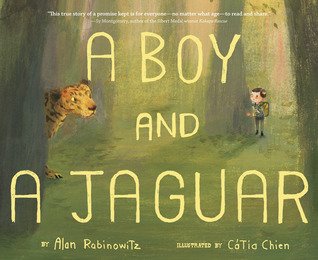
A Boy and a Jaguar by Alan Rabinowitz

Brown Girl Dreaming 21892530

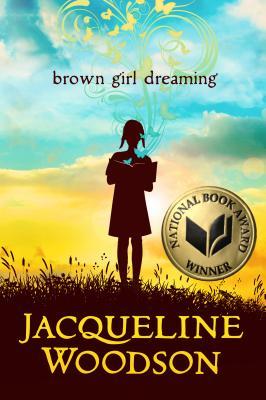
Brown Girl Dreaming by Jacqueline Woodson

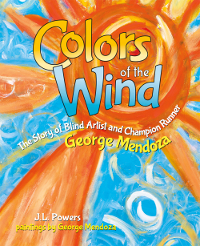
Colors of the Wind: The Story of Blind Artist and Champion Runner George Mendoza by J. L. Powers

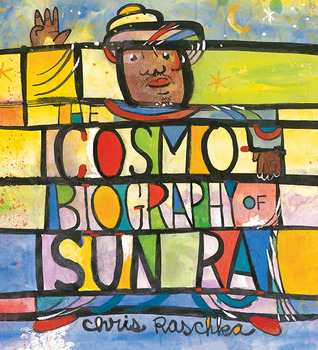
The Cosmobiography of Sun Ra: The Sound of Joy Is Enlightening Dare the Wind: The Record-breaking Voyage of Eleanor Prentiss and the Flying Cloud

The Cosmobiography of Sun Ra: The Sounds of Joy Is Enlightening by Chris Raschka

Dare the Wind: The Record-breaking Voyage of Eleanor Prentiss and the Flying Cloud by Tracey E. Fern, illustrated by Emily Arnold McCully

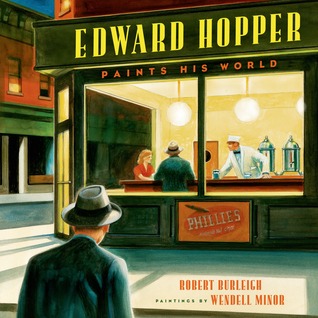
Edward Hopper Paints His World Eye to Eye: How Animals See The World

Edward Hopper Paints His World by Robert Burleigh

Eye to Eye: How Animals See the World by Steve Jenkins

17870871 Firefly July A Year of Very Short Poems

Feathers: Not Just for Flying by Melissa Stewart

Firefly July: A Year of Very Short Poems by Paul B. Janeczko

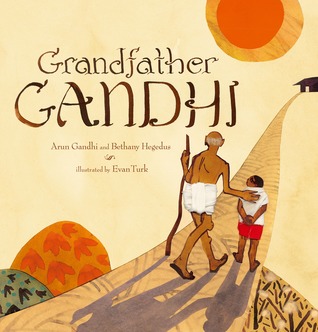
Goodnight Songs Grandfather Gandhi

Goodnight Songs by Margaret Wise Brown

Grandfather Gandhi by Arun Gandhi and Bethany Hegedus, illustrated by Evan Turk

Hi, Koo! A Home for Mr. Emerson

Hi, Koo!: A Year of Seasons By Jon J. Muth

A Home for Mr. Emerson by Barbara Kerley, illustrated by Edwin Fotheringham

How I Discovered Poetry The Iridescence of Birds: A Book About Henri Matisse

How I Discovered Poetry by Marilyn Nelson

The Iridescence of Birds: A Book about Henri Matisse by Patricia MacLachlan

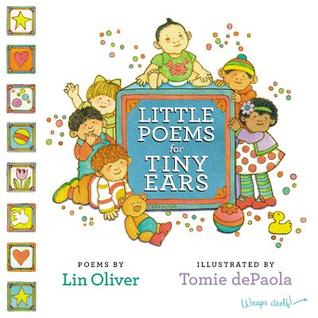
20388100 Little Poems for Tiny Ears

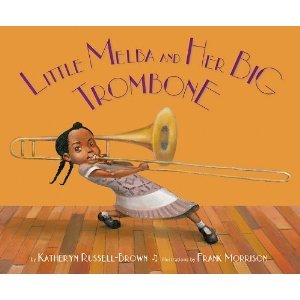
Little Melba and Her Big Trombone by Katheryn Russell-Brown, illustrated by Frank Morrison

Little Poems for Tiny Ears by Lin Oliver, illustrated by Tomie dePaola

Mr. Ferris and His Wheel The Noisy Paint Box: The Colors and Sounds of Kandinsky's Abstract Art

Mr. Ferris and His Wheel by Kathryn Gibbs Davis, illustrated by Gilbert Ford

The Noisy Paint Box: The Colors and Sounds of Kandinsky’s Abstract Art by Barb Rosenstock, illustrated by Mary GrandPre

Not My Girl Poem-Mobiles: Crazy Car Poems

Not My Girl by Christy Jordan-Fenton and Margaret Pokiak-Fenton, illustrated by Gabrielle Grimard

Poem-Mobiles: Crazy Car Poems by J. Patrick Lewis and Douglas Florian, illustrated by Jeremy Holmes

The Right Word: Roget and His Thesaurus The Scraps Book

The Right Word: Roget and His Thesaurus by Jennifer Fisher Bryant, illustrated by Melissa Sweet

The Scraps Book: Notes from a Colorful Life by Lois Ehlert

Searching for Sarah Rector: The Richest Black Girl in America Separate Is Never Equal: Sylvia Mendez and Her Family's Fight for Desegregation

Searching for Sarah Rector: The Richest Black Girl in America by Tonya Bolden

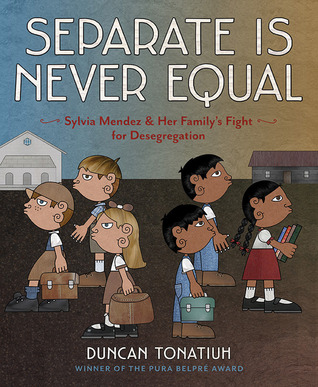
Separate Is Never Equal: Sylvia Mendez and Her Family’s Fight for Desegregation by Duncan Tonatiuh

Thomas Jefferson: Life, Liberty and the Pursuit of Everything Winter Bees & Other Poems of the Cold

Thomas Jefferson: Life, Liberty and the Pursuit of Everything by Maira Kalman

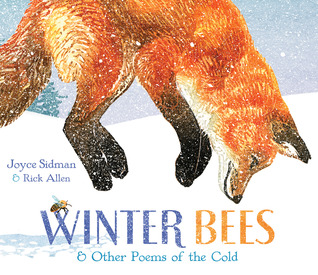
Winter Bees and Other Poems of the Cold by Joyce Sidman and Rick Allen