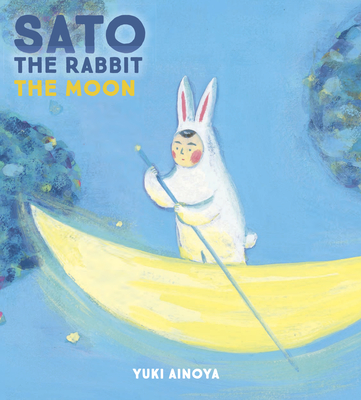
Sato the Rabbit: The Moon by Yuki Ainoya

Cover image for Sato the Rabbit: The Moon.

Sato the Rabbit: The Moon by Yuki Ainoya (9781592703067)

This is the second book in the Sato the Rabbit trilogy. In a series of chapters, Sato explores the world around him. When the moon disappears into a nearby thicket, Sato pulls it out and makes it into a boat. Exploring a brown, dry field, he discovers a green sprout that turns like a screw and soon green is popping up all around. On a rainy day, Sato sets up a rain party where he captures the sheets of rain with ribbons. Other stories have fallen leaves that roll up into a rug, the moon turned into a blanket, and the wonder of a hole in a hat.

This Japanese picture book series is surprising and surreal. Just when you think you know where each of the short chapters is headed, a page turn takes it in an entirely different direction. It’s these little surprises along the way that make the book so charming. Each chapter features Sato doing amazing things with regular items we interact with in our world too.

The illustrations add to the fun of the surreal stories. They make what is being said in the brief text come alive as wondrous things happen in each story.

A charming addition to the Sato series. Appropriate for ages 4-7.

Reviewed from copy provided by Enchanted Lion Books.
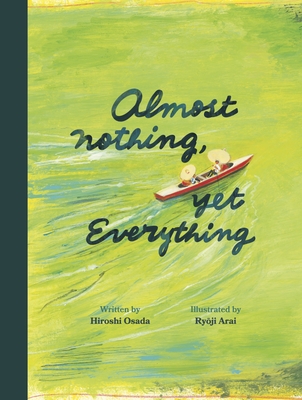
Almost Nothing, Yet Everything by Hiroshi Osada

Cover image for Almost Nothing Yet Everything.

Almost Nothing, Yet Everything by Hiroshi Osada, illustrated by Ryoji Arai (9781592703579)

The author/illustrator team who created Every Color of Light returns with a picture book celebrates a different element: water. A parent and child head off on a journey along the waterways. Water has no color of its own, but can be any color based on where it is. It forms to any shape, but you can’t slice it or hold it in your hands. It reflects us back when we look into it and also the sky and clouds. It flows, rains, cascades and overflows. It is simple, but vital to life on earth.

Translated from the original Japanese, this picture book is beautifully poetic. It looks at the many aspects of water through the eyes of a child who is interacting with it on a journey along the river. The ending of the book adds a child’s question about whether water is the pee-pee of the gods. After such a lyrical poem, the question is marvelous in its honesty, simplicity and wonder.

Arai’s illustrations are exceptional. Filled with the beauty of water, they capture it both in its impact on landscapes and as it flows through one’s fingers. The large landscapes are deep green and dramatic while the close ups are personal and capture small moments of discovery. The combination of the two make the importance of water in our lives clear.

Another winning elemental picture book from Japan. Appropriate for ages 3-5.

Reviewed from copy provided by Enchanted Lion Books.

Looking for a Jumbie by Tracey Baptiste

Cover image for Looking for a Jumbie.

Looking for a Jumbie by Tracey Baptiste, illustrated by Amber Ren (9780062970817)

When night comes, Naya doesn’t want to go to bed, she wants to find a jumbie. A jumbie is a creature from Caribbean tales rather like fairies or trolls. After being tucked into bed, Naya heads outside to find a jumbie. A voice in the woods asks her what a jumbie looks like, so Naya explains that a Douen has a big mouth and backward feet. The creature who had asked her the question looks a lot like a douen, but the two continue on together in search of jumbies. The next creature Naya meets looks like a lagahoo with thick fur, sharp teeth and chains. The three then venture on, meeting a fiery soucouyant, the goat-like huge Papa Bois, and the watery snakelike Mama D’Leau. All of them bring Naya back home, but what will her mother think?

This playful picture book has the structure and rhythm of traditional and beloved stories which will make it familiar to many children. The Caribbean creatures described will be new to many readers as will the idea of a jumbie in general. Readers will love the jaunt across the fields, woods and rivers to discover a variety of jumbies who are tricksters but also kind to Naya.

Ren’s illustrations take the bright tropical colors and pair that with the dark of night to create illustrations that stand out. The creatures themselves are a wide range of colors and types, each so different from the others that they are surprising and delightful when the pages turn.

Adventure into the land of Caribbean stories with this picture book. Appropriate for ages 3-5.

Reviewed from e-galley provided by Balzer + Bray.

Maybe… by Chris Haughton

Cover image for Maybe…

Maybe… by Chris Haughton (9781536220247)

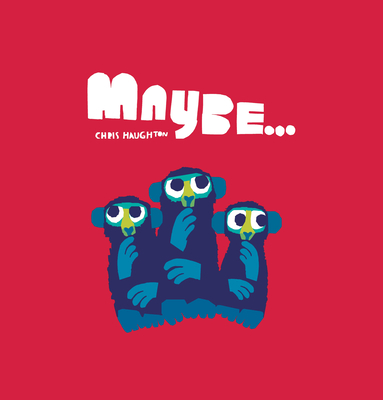
When the older monkey leaves, they warn the three little monkeys to NOT go down to the mango tree because there are tigers down there. But the little monkeys can’t stop thinking about how much they love mangos. Maybe… they could just head down and look. They see no tigers and a mango close enough to reach. They keep a close look out and quickly grab the mango. Yum! But what happens when they decide to have more mangoes and stop being careful? Tigers!

Haughton’s picture book about naughty and curious monkeys is a great read aloud. The text is made up solely of the monkeys’ dialogue with one another, so make sure you have at least four monkey voices at hand! With simple text, Haughton creates a book full of building tension that also offers a wild chase scene that will have readers merrily gasping along with the monkeys, before a final twist.

As always, Haughton’s illustrations are bold and bright. The deep blue monkeys stand out against the red backgrounds. Their simple and funny faces shine with their emotions as they pursue delicious mangos. The book expands its colors to mango yellow, rich oranges and purple/pink trees.

Gasps, giggles and glee accompany the monkeys on their adventure. Appropriate for ages 2-4.

Reviewed from e-galley provided by Candlewick.

May Your Life be Deliciosa by Michael Genhart

Cover image for May Your Life Be Deliciosa.

May Your Life be Deliciosa by Michael Genhart, illustrated by Loris Lora (9781951836221)

Rosie’s family gathers every Christmas Eve to make tamales with her Abuela. She and her sister soak and clean the corn husks, her cousins chop onions and garlic, her aunt roasts the chiles, her mother prepares the masa dough, and her Abuela cooks the meat filling. The recipe with its secret seasonings isn’t written down anywhere, but her grandmother shares it with everyone in the family. Every year her grandmother shares a story about making the tamales. It wishes everyone that they are flexible, secure, proud, satisfied, loved and supported by family. Now the time has come to make dozens and dozens of tamales together with no recipe, just using your senses. Soon they get to practice patience as good smells fill the house. Finally it is time to eat!

Told with a deep sense of family and generational wisdom, this picture book celebrates time spent around the holidays together. Centered around the grandmother, this book gives her space to share not only her recipe but also her insights into what is important in life. The stories are shared as she creates the first tamale, tying them closely to what she is making with the protective layer, the olive at the heart, the corn, and more. It’s no surprise when you reach the Author’s Note that this is based on his own experiences in his Abuela’s kitchen growing up.

Lora’s illustrations show a multi-generational family and are inspired by her own Mexican family. Using bright yellows, warm oranges, and rich browns, she creates scenes where you can almost smell the spices. The stories are done in a mix of color and black and white, framing them as their own special time.

Full of love, food and warmth. Appropriate for ages 3-5.

Reviewed from e-galley provided by Abrams.

Before I Grew Up by John Miller

Cover image for Before I Grew Up.

Before I Grew Up by John Miller, illustrated by Giuliano Cucco (9781592703616)

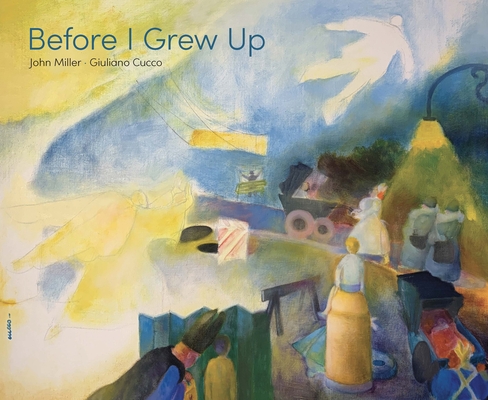
This surreal picture book takes the paintings of the late Giuliano Cucco and uses them to tell the story of his childhood. Cucco’s journey to becoming an artist is shown in his creativity as a child. From games he played with his mother to imagining paper boats he made floating away. His father was a scientist who studied light and preferred to spend time alone. Cucco spent time in his mother’s garden, dreaming and imagining as he lay surrounded by flowers. Sent to the city to live with his aunt and uncle, the book becomes more surreal and wild with a moon rising out of a box, swinging priests, and doves saved from the dinner plate. Returning to the country, he reconnected with the land and water of his childhood, creating paintings of ocean, violins, and the landscape.

This tribute of a picture book is one that celebrates the creativity of childhood and how allowing unfettered time and space allow that creativity to carry into adulthood. Miller uses his words as a minimal framework to offer a glimpse of the artist’s life and also to share his work. It is those paintings that truly tell the story, sharing emotions through the art. From darker moments to those filled with inspiration and light. The art is whimsical at times, literal at others.

A lovely surreal look at an artist, creativity and childhood. Appropriate for ages 4-6.

Reviewed from copy provided by Enchanted Lion.

The People Remember by Ibi Zoboi

Cover image for The People Remember.

The People Remember by Ibi Zoboi, illustrated by Loveis Wise (9780062915641)

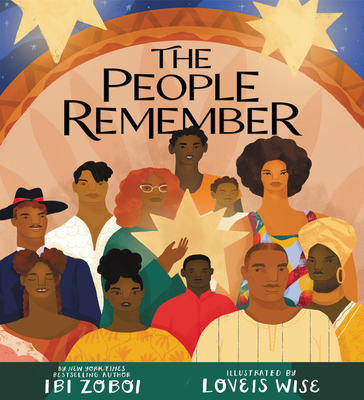
This nonfiction picture book explores African American history by connecting it to the seven principles of Kwanzaa. The book starts with Africa during a time of war when people disappeared or were sold. The history continues as they are taken into slavery, landing in places like South Carolina, Hispaniola and Brazil. Some escaped while those who could not escape found a common language and unity. People today remember the days of slavery, seeing that they have self-determination to change the nation. When slavery ended, the Great Migration came along with music on the streets and in churches, showing their collective work and responsibility. The history continues with examples of places that Black people created themselves and Black people who were successful, showing the principle of cooperative economics. Purpose came with voting rights, marches for civil rights, and the grief and hate of lynching. Creativity is shown again and again with music, dance, writing and more. The book ends with faith, a commitment not to forget and to carry forward with hope for change.

This Zoboi’s picture book debut. Her writing is exceptional, an ode to African Americans and their collective impact on the world. Using the Kwanzaa principles to guide the structure of the book works well, as the book naturally forms into seven sections. Zoboi uses a repeating structure of the various African tribes who were taken to America as slaves. In these sections and throughout, there is a call to Black pride, to seeing oneself as survivors and removing any shame from the narrative. Zoboi works to clearly draw the connection between history and today, showing the continuum that reaches backward and forward.

Wise’s illustrations are filled with lush colors, depicting connections between modern times and history. Their art is flat and graphic, almost poster like in its powerful simplicity. Each one could be framed and used to call out a movement or moment in history.

Powerful, unflinching and important. Appropriate for ages 6-9.

Reviewed from e-galley provided by Balzer + Bray.

Something Good by Marcy Campbell

Cover image for Something Good.

Something Good by Marcy Campbell, illustrated by Corinna Luyken (9780759557420)

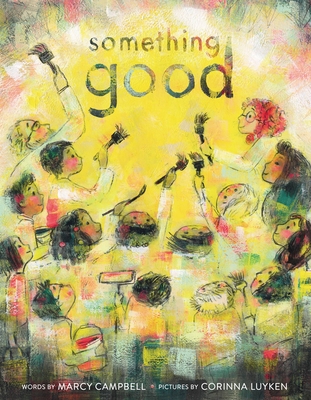
When a “bad-something” is found written on the wall in the girls’ restroom at school, the principal says that this won’t be tolerated. One girl and her friends sneak into the bathroom to see what the bad thing is. It’s fun at first, until they see what is written. The bad something is truly bad, leaving them all feeling horrible. No one knows who wrote it, so everyone is looking closely at one another for clues. Afterwards people were meaner to each other. So the school decided to give everyone ribbons to remind them who they are and then launched an art project to permanently cover the bad thing. Everyone worked together painting and creating until they had made something remarkable. Sharing poems afterwards, students became kinder to one another, reminded who they are and who they want to be.

Based on happenings in her children’s schools, this picture book shows the continued impact that hate speech can have on a school. Campbell shows the emotions of the various children clearly, making space for different reactions to what has been written and also showing how not knowing exactly what was said can also cause emotional and negative responses. The book is filled with empathy for the students and offers one of many solutions to bring the student body back around. Using art to express themselves allows for emotions to be shared and the community itself to step forward.

The art is done in gouache, colored pencil and ink. The art shows the mixed emotions of the students in the school, reddened and sharpened feelings of accusation, dark red and black of meanness, bright yellow of hope and change. The illustrations are a gorgeous mix of lightness of line with deep color that conveys the feelings.

A look at hate speech and how to confront its impact. Appropriate for ages 4-7.

Reviewed from e-galley provided by Little, Brown and Company.

Oscar’s Tower of Flowers by Lauren Tobia

Cover image for Oscar’s Tower of Flowers.

Oscar’s Tower of Flowers by Lauren Tobia (9781536217773)

This wordless picture book tells the story of Oscar and his love of plants and flowers. Oscar’s mother has left him with a relative and his favorite picture of him and his mother is full of flowers. At first, they grow just one little plant in a pot but soon after a visit to a garden store, Oscar has much more. He selects seeds to plant, potting soil and tools. Back in the apartment, they fill all sorts of containers with soil and seeds, placing them on the sunny windowsill. Then they all sprout! The apartment fills with plants, including the bathroom. It all gets a little too crowded, so Oscar gives the plants away to their neighbors. With his mother back, she and the reader can see the way that Oscar transformed not only one apartment but the entire neighborhood.

Tobia creates a warm and lovely story here filled with an adult empowering a child to follow his interest. Oscar communicates through his drawings of plants, showing his desire to grow something. The woman taking care of him, who may be an aunt or a rather young grandmother, dives in with him, getting him the tools and items he needs to truly grow plants. The solution of sharing his success with everyone is transformational for the entire apartment complex. The diverse urban setting changes from stark to vibrantly green and growing in the course of a few months, thanks to one little boy.

A wordless picture book about sharing, community and the impact a child can have. Appropriate for ages 2-4.

Reviewed from e-galley provided by Candlewick Press.