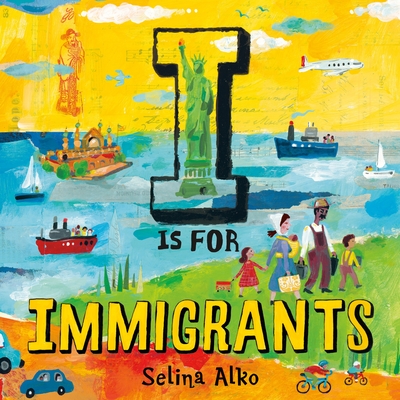
I Is for Immigrants by Selina Alko

Cover image for I Is for Immigrants.

I Is for Immigrants by Selina Alko (9781250237866)

This alphabet book is a celebration of diversity and the immigrants who come to America. The book is a series of double-page illustrations that include words that match each of the letters. For example, A is ancestors, abuelita, African dance, ambition, art and aspire. F contains flags, food trucks, fish & chips, falafel, frankfurters, families, friends, freedom, a father with a fez, fields and flea markets. The book is joyful and moves effortlessly between cultures, often showing the connections between them and also the unique elements they have brought to our country.

The illustrations are paintings that appear to include collage elements as well. They use a variety of fonts to share the various words for each letter, allowing the words and the images to swirl together into a beautiful mix. So much food is celebrated here that your mouth will be watering by the end for samosas, sushi, spices and more on just one page!

Joyous and inclusive, this is a beautiful alphabet book celebrating the best of America. Appropriate for ages 2-4.

Reviewed from e-galley provided by Henry Holt & Co.
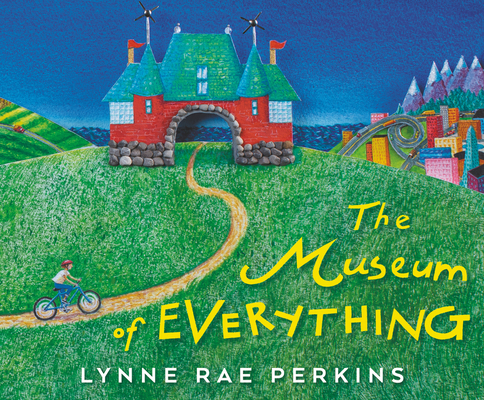
The Museum of Everything by Lynne Rae Perkins

Cover image for The Museum of Everything.

The Museum of Everything by Lynne Rae Perkins (9780062986306)

When the world gets too busy and big, you can look at the smaller pieces around you. You can put those things in a quiet place like a museum in your mind. Or maybe it could be a real museum. It could have things like a Museum of Islands because there are so many kinds and sizes. A Museum of Bushes could have skirts made out of different bushes and then real bushes too. A Museum of Shadows could have usual shadows but also ones that you don’t expect. The Sky Museum is already right over your head, ready to be seen every day. All these small pieces fit together in one large puzzle, creating the Museum of Everything all around us all the time.

Newbery Medalist Perkins has created a picture book exploration of imagination that invites readers to look around themselves and see the elements that are worthy of placement in their own museums of everything. She takes expansive ideas and turns them firm and real with her examples given through the perspective of the child narrator of the book. The result are charming stories of bushes, hiding places, shadows and much more. The everyday is turned amazing.

Her illustrations are done in a wide variety of media. Some pages are done in collage, the paper elements overlapping into a layered world. Other pages are filled with objects that celebrate bushes and hidden places. These are 3 dimensional dioramas or sculptures that draw readers right into them.

Celebrating the extraordinary ordinary, this picture book is a lesson in imagination and creativity. Appropriate for ages 4-6.

Reviewed from e-galley provided by Greenwillow Books.

Faraway Things by Dave Eggers

Faraway Things by Dave Eggers, illustrated by Kelly Murphy (9780316492195)

Lucian spent his time on the beach after storms, searching for “faraway things” that have been swept onto the shore. One day, he discovered a silver, gold and copper cutlass wrapped in seaweed. Lucian had never seen anything like it and hung it on the wall of his room. That night he dreamt of his father. The next day, he played with the sword on the beach, eventually turning one of his sleeves from long to short when he swung it. That afternoon, a great wooden ship appeared as the fog cleared and a rowboat came towards shore. The ship’s captain spoke with Lucian, explaining that not only was his ship caught on a sandbar due to the lighthouse being unlit, but he was missing his cutlass. Lucian tried to claim the cutlass was his, but the captain had the matching sheath on his belt. The captain offered a trade, and Lucian got to head to the ship and pick out anything he wanted from the captain’s stateroom. Out of all of the wonderful objects, Lucian picked out a lantern. When he returned home again, he took that lantern to the top of the lighthouse tower and once again the beam of light went out over the water.

Written in beautiful language and with sentences that sing with wind and saltwater, this picture book is one that should be shared out loud. The writing has a gorgeous cadence to it while it also has rich metaphors embedded in it. The story itself is well crafted with a lovely arc that begins with searching the beach and the discovery of the cutlass. That story is woven with the loss of Lucian’s father and the dimming of the lighthouse. When the captain arrives, the story takes a marvelous turn toward adventure and possibility.

Murphy’s art is a gorgeous study of foggy beaches, newly bright sun, and one great ship. She shares small details in her images, celebrating the crowded stateroom and the treasures of beachcombing in Lucian’s room. The illustrations play with sea and sky, each expansive and full of deftly applied color.

One to share aloud, this book is a treasure. Appropriate for ages 4-6.

Reviewed from e-galley provided by Little, Brown and Company.

13 July Picture Books to Wake Your Brain Cells

Here are 13 picture books coming out in July that have gotten starred reviews and attention. Enjoy!

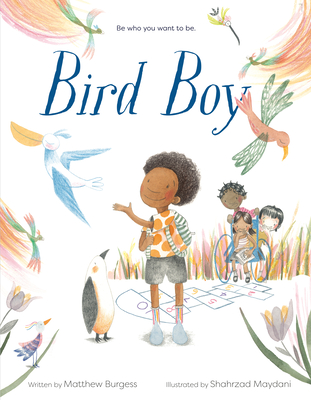
Bird Boy by Matthew Burgess, illustrated by Shahrzad Maydani

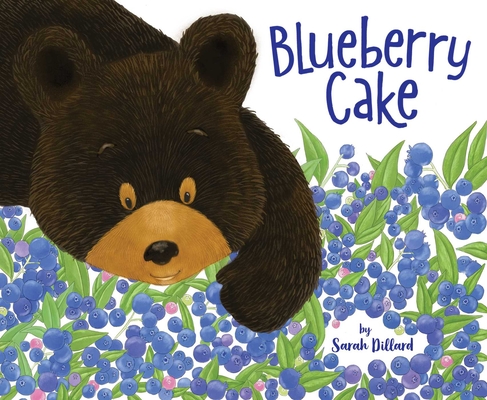
Blueberry Cake by Sarah Dillard

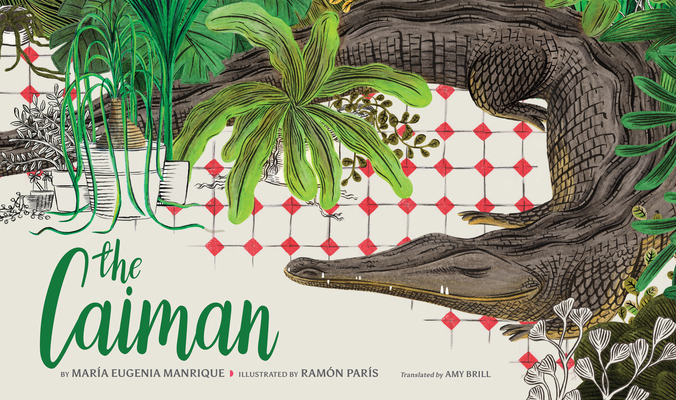
The Caiman by Maria Eugenia Manrique, illustrated by Ramon Paris

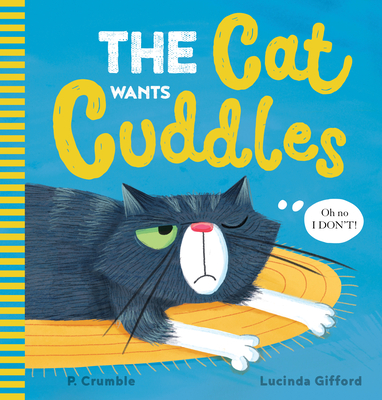
Cat Wants Cuddles by P. Crumble, illustrated by Lucinda Gifford

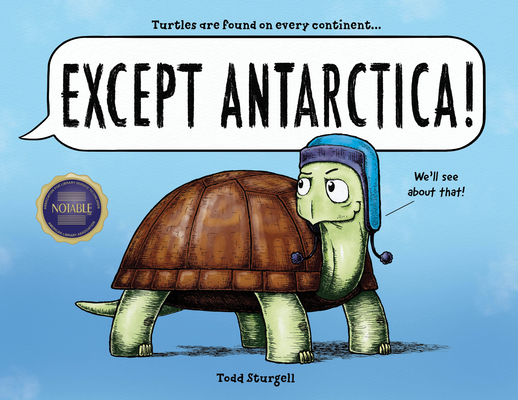
Except Antarctica by Todd Sturgell

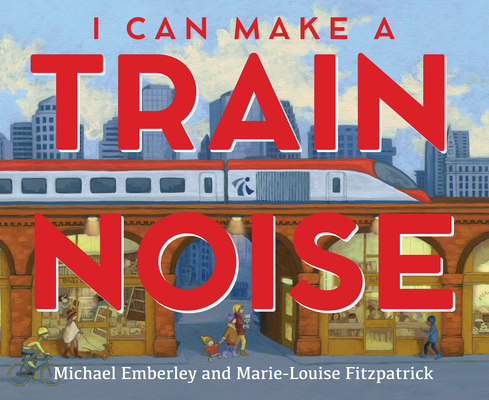
I Can Make a Train Noise by Michael Emberley and Marie-Louise Fitzpatrick

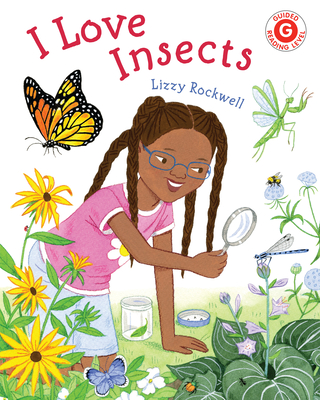
I Love Insects by Lizzy Rockwell

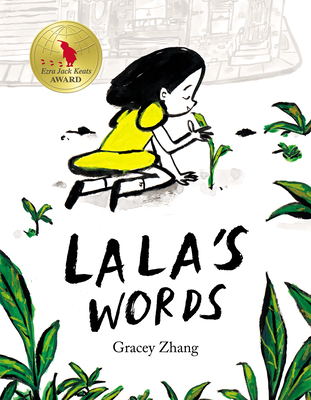
Lala’s Words by Gracey Zhang

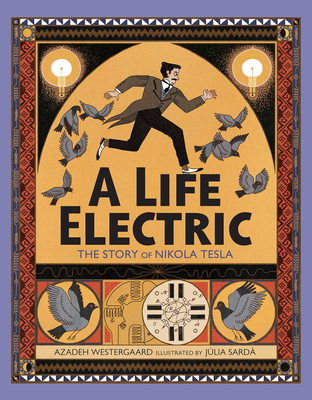
A Life Electric: The Story of Nikola Tesla by Azadeh Westergaard, illustrated by Julia Sarda

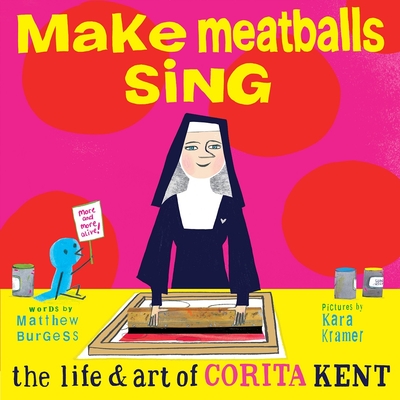
Make Meatballs Sing: The Life and Art of Corita Kent by Matthew Burgess, illustrated by Kara Kramer

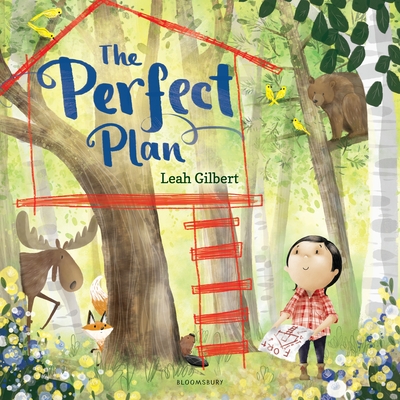
The Perfect Plan by Leah Gilbert

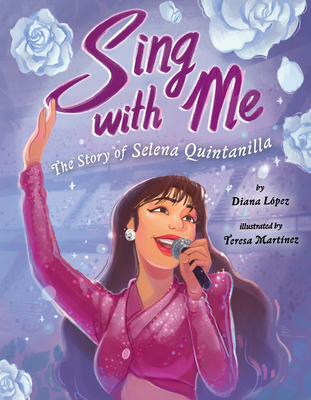
Sing with Me: The Story of Selena Quintanilla Cover

Sing with Me: The Story of Selena Quintanilla by Diana Lopez, illustrated by Teresa Martinez

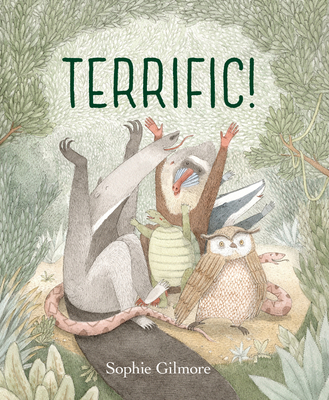
Terrific! by Sophie Gilmore

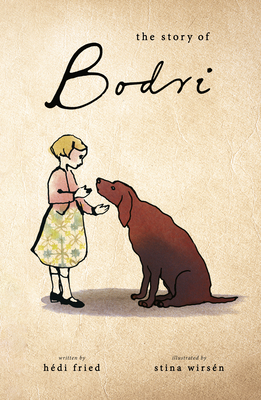
The Story of Bodri by Hédi Fried

Cover image for The Story of Bodri

The Story of Bodri by Hédi Fried, illustrated by Stina Wirsen (9780802855657)

Inspired by the author’s experiences during the Holocaust, this picture book takes a child’s view of the horrors of that time. Hédi grew up in Romania. She loved her dog Bodri, and he loved her most of all. She had a best friend who lived nearby. They had all sorts of things in common, except Hédi was Jewish and her friend went to church. When Adolf Hitler shouted on the radio, Hédi’s parents assured her that he would never come there. But his soldiers did come and Hédi was forbidden to play with her Christian friend. Soon the family was told to pack their belongings. They went to the train station, followed by Bodri, who had to be left behind. Hédi’s parents disappeared in the concentration camps but Hédi and her little sister survived. She went back home and found Bodri still waiting for her.

Fried survived several Nazi labor camps, including Auschwitz and Bergen-Belsen. She lives in Sweden and continues to be an expert voice for democracy and anti-racism. This book was inspired by a question she received at one of her presentations about what happened to her dog. The book translates the larger racism and hatred of the Nazis into a personal story of the impact of the Nazis. Fried writes through a child’s eyes, a child watching her parents to gauge what is happening. Using her dog as an anchor as time passes is very moving as he continued his vigil through the seasons.

Wirsen’s art is haunting. There is an ethereal nature to it throughout the book even as the girls play in the park full of pinks and greens. The colors change to more somber as the Nazis arrive. Wirsen uses watercolors and prints to create her images. The juxtaposition of the girls after they are liberated from the camp to before they went in is both startling and heartrending.

A powerful look at the Holocaust through the eyes of a survivor and her dog. Appropriate for ages 7-9.

Reviewed from copy provided by Eerdman’s Books for Young Readers.

The Capybaras by Alfredo Soderguit

Cover image.

The Capybaras by Alfredo Soderguit (9781771647823)

The farm was a safe place where life was comfortable and everyone knew their role. There were chickens who had plenty of food and a rather vicious dog who guarded them. Then one day, the capybaras emerged from the swampy part of the pen. There was no room for them there and they were not expected. The hens found them too big, too hairy and too wet. But the capybaras couldn’t go home because the hunting season had started. So the hens set some rules where they would not share food, or their dry pen, or tolerate any noise. Then one day after a chick had a misadventure, everything changed. The capybaras had saved the chick and now they were allowed to sleep in the chicken coop, share food and live together. Then hunting season ended and the capybaras prepared to leave. What were the new friends to do?

This picture book was originally published in Spanish in Latin America. Soderguit has a marvelous gift for wry understatement or in fact just stating the opposite of what is actually happening in the illustrations. This contributes to a sense that horrible things are happening off the page and the characters live in real denial, even before the capybaras arrive. The entire book works beautifully as a statement about refugees, tolerance and building a community.

The illustrations are a marvel of quiet moments with a lot of the power of the book being the things in the illustrations that go unremarked upon in the text. The illustrations are done in pen and ink with pops of orange color and the deep browns of the capybaras. The wide-eyed capybaras contrast impressively with the white chickens and their delicate life balance.

Profound and remarkable. Appropriate for ages 5-8.

Reviewed from e-galley provided by Greystone Kids.

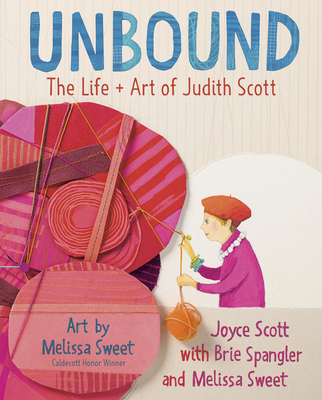
Unbound: The Life & Art of Judith Scott by Joyce Scott

Cover image for Unbound.

Unbound: The Life & Art of Judith Scott by Joyce Scott with Brie Spangler and Melissa Sweet, illustrated by Melissa Sweet (9780525648116)

Told by Joyce Scott, the twin sister of Judith, this picture book explores the closeness of the sisters as small children until they are separated for years. The two sisters shared everything with one another, playing together all the time. Then Joyce is sent to kindergarten and Judith is left behind. Judith has Down syndrome and has never spoken. Then her parents send Judith to a special school where she will live and learn to talk. They don’t visit for a long time and when they do, the school isn’t like other schools. There is no playground, no desks, no books. As they grow older, Joyce gets married and has children. She continues to think of Judith as being at her side all the time. Eventually, she is able to bring Judith out of the institution and to live with her. Joyce finds Judith an art program to be part of. Judith attends but won’t participate at all. Months go by until her teachers give her some natural materials and fabric. Suddenly, Judith is creating unique pieces of sculpture and is celebrated as an artist.

Full of sorrow and loss, this picture book examines the destructive nature of the systematic institutionalization of people with special needs to both the person institutionalized and their loved ones. Having Joyce herself narrate the book is powerful. The beautiful connection the sisters have in their young childhood forms a foundation of connection that allows her to rescue her sister decades later. Even as the book moves to when Judith finds her artistic voice, there is a melancholy to the years lost and the muting of her voice for so long.

Sweet’s illustrations are incredible and moving. She incorporates collage and also builds sculptures to pay homage to Scott’s work. Built with string, textiles, wire and wood, there is a celebratory nature to them of an art newly found. In other moments, Sweet captures wistfulness, longing and connection with light, shadow and color.

An extraordinary look at an artist who was almost lost. Appropriate for ages 6-9.

Reviewed from e-galley provided by Alfred A. Knopf.

Bubbles…Up! by Jacqueline Davies

Cover image for Bubbles Up.

Bubbles…Up! by Jacqueline Davies, illustrated by Sonia Sanchez (9780062836618)

This picture book celebrates the joy of swimming in a pool on a hot summer day. Focusing on the bubbles created by heading underwater, the merry rhythms of the text bounce along like the bubbles heading to the surface. The bubbles capture the light of the sun until you follow them upwards, surfacing like a porpoise. You have a mom who stays at the side of the pool with your little brother who doesn’t swim yet. Interrupted by a thunderstorm, you huddle with the others in the shelter until it’s safe to return to the water with your friends. When your little brother loses his toy in the pool, you rescue it. You can’t stop for lots of mushy attention though, because you have to keep on swimming.

Sure to bring an immediate grin to kids who love to swim or play in the water, this picture book shares the small pleasures of swimming that make it such a treat. The bubbles heading to the surface, the jumping in, the floating, the diving, splashing and more. Davies’ writing is marvelous, full of repetition, rhythms and rhymes. Her words plunge, dive, swirl and create imaginary underwater worlds.

The illustrations are full of pool blues, sunshine and bubbles. Sanchez uses the words as part of her art, creating words that plunge down and float up. Her diverse cast of characters is delightful, everyone enjoying the pool together.

Dive into this summer delight of a picture book. Appropriate for ages 3-5.

Reviewed from e-galley provided by Katherine Tegen Books.

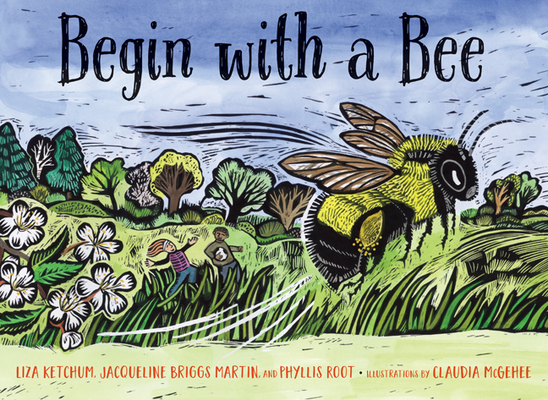
Begin with a Bee by Liza Ketchum

Cover image for Begin with a Bee.

Begin with a Bee by Liza Ketchum, Jacqueline Briggs and Phyllis Root, illustrated by Claudia McGehee (9781517908041)

On a winter day, take a look in a small hole and you will find a solitary rusty-patched queen bee. She waits all winter long, her body holding everything needed to create a new colony of bees that year. As the sun shines and spring comes, the bee awakens and travels from flower to flower, eating and eating. Now she must find where she will build her nest. Once she finds the right spot, she builds a pot of wax from her body and fills it with nectar to help her survive the rainy days and the long days of caring for her eggs. She carries pollen to the nest until she lays her eggs and sits with them, shivering to keep them warm. The eggs hatch into grubs who them make cocoons and weeks later the pupae are finally bees! The queen continues to lay eggs through the summer as the other worker bees gather pollen. That fall, the new queens mate with male bees from neighboring colonies and then must find their own hole to survive the winter.

This picture book celebrates the life of the rusty-patched bee by focusing on how they survive the winter and how one lone queen bee carries the future of an entire colony in her body. Throughout the book, the authors show their own marveling at the way that nature works and the incredible burden and hard work this little queen bee must accomplish to allow her offspring to survive. The text is simple and poetic, letting even the smallest children learn about bees and life cycles.

The illustrations are done in scratchboard art that richly mimics woodcut prints. The thick black lines are accompanied by natural colors that evoke the nature around the bee habitat, including a wide variety of the native plants and flowers that keep them alive. Detailed images of the bee lifecycle are shared, often embraced by oval shapes.

A gorgeous and informative look at the bee lifecycle. Appropriate for ages 2-4.

Reviewed from copy provided by University of Minnesota Press.