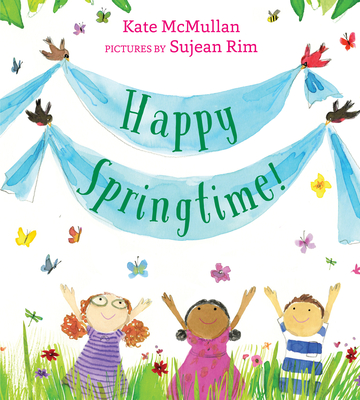
Happy Springtime! by Kate McMullan

Happy Springtime! by Kate McMullan, illustrated by Sujean Rim (9780823445516)

This picture book takes readers from the chill and ice of winter through the glories of spring and right into summer. Starting with the dark, the snow and the ice of winter, the book speaks directly to those who get their winter boots on the wrong feet, to all the dogs who wear sweaters, and to the birds eating ice-covered berries. It tells them (and us) not to lose heart, for spring is on its way. Soon there will be playgrounds to have fun in. The days will get longer and the frogs will wake up. Bugs and worms will reappear and flowers will bloom. People and animals will move outside to enjoy the warm sunshine. Rain will give everyone puddles and mud to play in. Streams will run free of ice and snow. The days get longer and longer until…summer!

McMullan’s poetic text is jubilant about the return of spring. It’s perfect for when the days of winter seem too dark and cold to continue, reminding us all of what is about to emerge. The focus in her writing is on the natural elements of spring, the lengthening days, the animals returning, the mud, rain and water. It is also about people though and how we respond, heading outdoors ourselves as the sun shines or the rain falls. The entire book focuses on the positive aspects of all of spring, as it emerges all the way through summer approaching.

Rim’s illustrations are playful and merry. They embrace the beauty of spring with bright colors, green watercolor washes of grass, gorgeous wild blooms of flowers, and the joy of mud. The illustrations are full of light, movement and busy with activities of spring.

A warm welcome to a wonderful season. Appropriate for ages 2-4.

Reviewed from copy provided by Neal Porter Books.
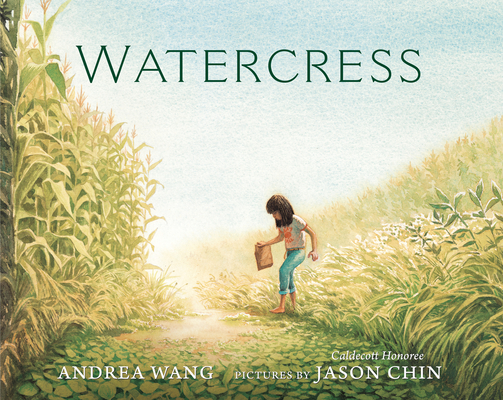
Watercress by Andrea Wang

Cover image.

Watercress by Andrea Wang, illustrated by Jason Chin (9780823446247)

Riding in their old car along a rural Ohio road, a young girl’s parents come to a stop when her mother spots something growing in the ditch. It’s watercress, so the entire family gets out and starts to harvest it into a paper bag. The girl finds it embarrassing to be in the ditch gathering free food, while her parents are remembering their time in China. The water in the ditch is cold and muddy, the watercress has snails among its roots. The girl finds herself partially hoping that the bottom of the paper bag falls through and this can just be over. That night, the family has the watercress for dinner, but the girl refuses to even try it. She wants food from the grocery store, not free food from a ditch that reminds her of furniture taken from the side of the road and hand-me-down clothes. Then her mother shares a story from China about her younger brother who died from not having enough to eat. The girl is inspired by her family’s history and ashamed of how she has been acting, so she tastes the watercress for the first time, a taste that builds new memories.

The writing in this picture book is exceptional. With delicate poetic words, Wang creates layers in her story. She weaves both the experience of shame for the young girl and the melancholy memories of China for her parents together into a story of generations in a Chinese-American family. From the previously unshared stories of her parents time in China to learning not to be ashamed of the way they live, this book will resonate for so many children.

Caldecott Honor winner, Chin pulls together images of China and Ohio in this book. By putting tall cornstalks against tall bamboo, the images are gateways to one another. The use of yellow to light the pages, works both in sunshine in Ohio and the sepia of memory in China. It is all so beautifully done, so well designed.

One of the best picture books of the year, this book reaches across generations and finds hope. Appropriate for ages 5-7.

Reviewed from e-galley provided by Holiday House.

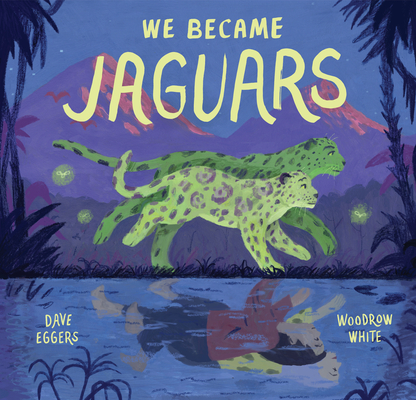
We Became Jaguars by Dave Eggers

Cover image

We Became Jaguars by Dave Eggers, illustrated by Woodrow White (9781452183930)

When a boy’s grandmother comes to visit, his parents leave him alone with her even though he doesn’t really remember her. His grandmother immediately drops to the floor and invites him to become a jaguar with her. He joins her, stretching himself thinner and becoming faster. Soon they are out in the forest, moving through it in the way that only jaguars can. The two drink from moonlit water, and his grandmother kills a rabbit and eats it. They venture to high lookouts, take occasional rests, and run fast and often. Their voices rumble like thunder together. As they head into the Himalayas, the boy remembers he has to return to school and wonders how long they have been gone. The ending refreshingly leaves questions of what was imagined and what was real.

Eggers writes in prose that is a mix of simple lines and marvelously captivating moments. Nature plays a large role in the book, inviting readers to think about venturing out into their own forests and having their own outdoor adventures. The time spent together sipping water from a lake, running fast and hard, and bouncing over water like marbles creates a vibrant relationship between the two characters as they get to know one another. It becomes less and less important what is real as their experiences together are what truly matter.

White’s illustrations are full of mystery and moonlight. He uses such deep colors in the book, allowing the jaguars to glow on the page, full of their own light. The gatefold page opens fully to allow the two people to transform in front of the reader into jaguars. The pages are deliciously colored, showing the wonders of nature and a variety of gorgeous landscapes.

Imaginative and invigorating, this playful picture book takes us to the wild side. Appropriate for ages 3-5.

Reviewed from copy provided by Chronicle Books.

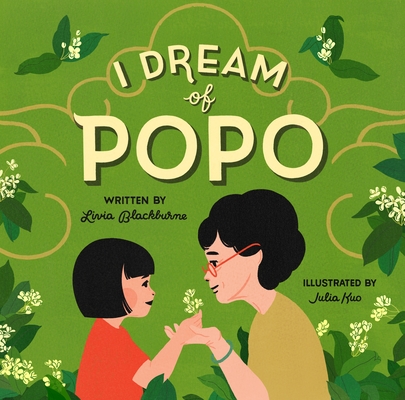
I Dream of Popo by Livia Blackburne

I Dream of Popo by Livia Blackburne, illustrated by Julia Kuo (9781250249319)

A little girl grows up seeing her beloved Popo, her grandmother, often in Taiwan. They spend time together cuddling, eating and going to the park. Then the girl’s family decide to move to San Diego, far away from Taiwan. The girl goes to school in America with children of all colors. She doesn’t speak English yet, but she is learning. She calls her grandmother regularly. When they return to Taiwan for a visit, it feels different and she can’t communicate in Chinese as well as she used to. Her Popo’s house seems smaller though it smells just the same and her dumplings taste the same too. When her grandmother gets sick, the girl wishes she lived closer, but a dream is just the right thing to being them together after all.

This #ownvoices picture book is based on the author’s childhood, moving from Taipei to Albuquerque. It shows how a long-distance connection between a grandparent and grandchild is possible, keeping memories fresh and new experiences shared with one another. The book is filled with elements of Taiwan, such as New Year’s celebrations, dumplings and other food. Smells of Taiwan are mentioned regularly, wafting through experiences and dreams.

Kuo’s art is bold and beautiful. She allows the little girl to age through the course of the story, toddling in the park then heading to school, becoming less round and more lean as the pages turn. Popo also ages, the lines on her face more pronounced and her hair changing from black to gray. It is subtle and beautifully done.

A gentle story of immigration and continued connection to those left behind. Appropriate for ages 3-5.

Reviewed from e-galley provided by Roaring Brook Press.

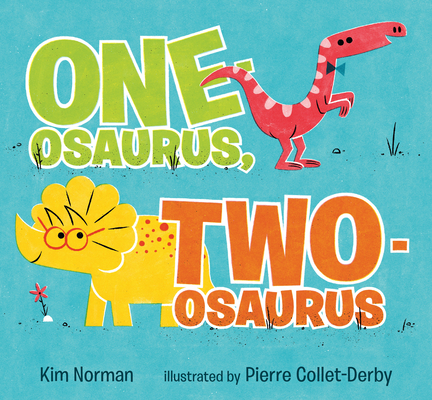
One-Osaurus, Two-Osaurus by Kim Norman

Cover image.

One-Osaurus, Two-Osaurus by Kim Norman, illustrated by Pierre Collet-Derby (9781536201796)

Some dinosaurs start their morning with a counting game. “One-osaurus, two-osaurus, three-osaurus, four.” After counting to seven, a huge ROAR interrupts the counting. The dinosaurs gather together in a herd and then make a run for it, knowing that something big is heading their way. Soon they are all hiding behind their numbers, letting us count them one more time: one through nine. Where is ten? He’s coming now, he’s “ten-osaurus rex.” But he may not be what the readers expect when he is revealed and the book takes a great twist in the end too.

Norman’s simple writing begs to be shared aloud. This counting book really works well, the numbers on the page playing into the rhyming text and building with it. The pace is wild and romping, something that makes the counting all the more fun. Thanks to its clever structure, young readers get to merrily count the dinosaurs again and again in the book without it feeling at all repetitious. The humor is a large part of the success of the book too.

That same humor is reflected in the illustrations which are big and bold, adding to the read-aloud appeal. The various dinosaurs are bright colored and pop against the changing colors of the background. Having them hide behind their big black numbers adds to the counting fun, including a page where the numbers aren’t in order and young children can find the numbers in a new way.

Smart, funny and full of dinosaurs. You can count on this one being popular. Appropriate for ages 2-4.

Reviewed from copy provided by Candlewick Press.

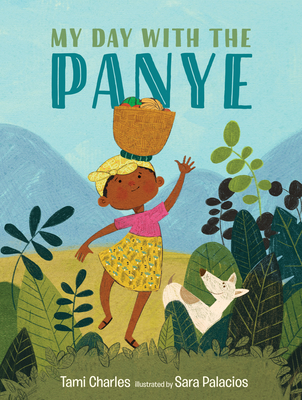
My Day with the Panye by Tami Charles

Cover image

My Day with the Panye by Tami Charles, illustrated by Sara Palacios (9780763697495)

Fallon is invited by her mother to head to the market together. Her mother wraps her hair in a mouchwa and then sets the panye on her head. Her mother lets Fallon try to carry the panye on her head, but it quickly falls off and crashes to the floor. So they set off together with the panye on her mother’s head. She encourages her daughter to take learning the skill slowly and not rush it. She explains that one must move gracefully under the weight of the panye, one must be strong. After they visit the market, the panye is full of food. Fallon knows that to carry the panye is to care for her family. Now she is ready to try once more. But the panye falls again. Her mother encourages her to build her nest and try again. This time Fallon stands tall and takes her time, walking like her mother all the way home.

Set in Haiti, this picture book celebrates the ancient act of carrying a basket on one’s head to handle a heavy load. It’s a skill taught at a young age, just as Fallon is learning it in the book. Fallon’s mother shows patience with her daughter and encourages her to take her time, filling their walk to the market with lessons on what carrying the panye means to the family and also to Fallon herself. It’s an empowering lesson, one that speaks to the strength and resilience of the Haitian people.

Palacios fills the pages with bright and deep colors that show the bustling market and beauty of the hills outside of Port-au-Prince. The grace of carrying the panye is conveyed in the images too, the women tall and upright, full of strength and balance.

A picture book that speaks to tradition and patience when you’re learning a new skill. Appropriate for ages 3-5.

Reviewed from copy provided by Candlewick Press.

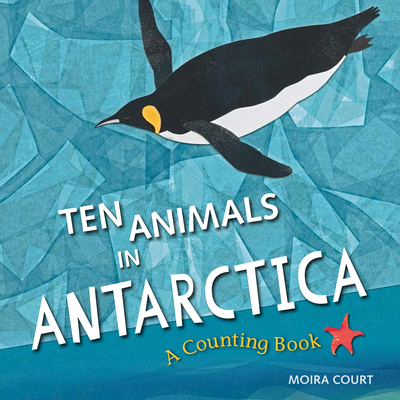
Ten Animals in Antarctica: A Counting Book by Moira Court

Cover image

Ten Animals in Antarctica: A Counting Book by Moira Court (9781623542320)

Starting first with briefly exploring the continent of Antarctica itself, this nonfiction picture book quickly moves to the ten animals featured inside. The book is a dynamic mix of animals in Antarctica along with an opportunity to count them as they appear on the double-page spreads. First comes one leopard seal floating on his own iceberg. Two emperor penguins waddle across the next page, followed by elephant seals, whales, petrels, orcas, squid, krill, and fish. The book finishes with ten crimson sea stars that dazzle, bright red against the dark background.

Court has created a picture book that very successfully combines factual information about Antarctic animals with counting them. Her language is marvelous, building rhymes directly into her descriptive sentences. She also uses words that will stretch young vocabularies such as “courtly, portly emperor penguins” and “lumbersome, cumbersome southern elephant seals.” The language is such a treat to discover in a nature-focused counting book.

Court’s illustrations are a combination of printmaking and collage. The deep colors and textures bring the cold and icy landscape to life. Court also beautifully designs each page, paying attention to both ease of counting, but also making all of the animals look lifelike too. Readers will enjoy the additional information at the end of the book on both the continent and the featured animals.

Icy and delightful, this is just right for even the youngest of readers to discover a new continent. Appropriate for ages 2-4.

Reviewed from e-galley provided by Charlesbridge.

The Wisdom of Trees: How Trees Work Together to Form a Natural Kingdom by Lita Judge

Cover image

The Wisdom of Trees: How Trees Work Together to Form a Natural Kingdom by Lita Judge (9781250237071)

Through a combination of poetry and science facts, this nonfiction picture book invites readers into the amazing things that trees can do. The book starts with a young beech tree in the Ruhe Forest in Germany, starting to show readers that trees have a language with one another and live much longer than humans do. The roots of the trees act like an instant message web, sending chemical and electrical signals to one another. Trees also have amazing ways to protect themselves from predators, or over-grazing from giraffes. They create our climate, processing carbon dioxide and offering shelter and cool in their ecosystems. They can ask for help from their neighbor trees, who will send them extra nutrients via their root systems. They offer shelter and food to animals. They can tell time via the light, knowing when seasons are changing. The list goes on and on, creating a sense of wonder about the trees that surround us all.

Judge’s poems capture the world from the perspective of the trees themselves. They show what it feels like to be someone’s home, how they continue to live even after they have fallen, how it feels to nurture baby trees, and how it feels to soar high into the sky with your branches. Judge shares facts that truly elevate children’s understanding of trees and how they communicate with one another. The information is fascinating, offering a glimpse into a hidden world. The book ends with an extensive Author’s Note sharing more information, a glossary of terms and a list of sources and websites.

As always, Judge’s illustrations are marvelous. She captures the depths of the forest, the sunbeams kissing the younger trees. She invites us underground to see a den and the roots communicating. She shows us a variety of seasons, from the mellow tones of fall to the cool greens of spring to the ice of winter and the sun of summer. She is a master of light and movement, showing us perspectives that also amaze.

A great nonfiction read that will have young scientists fascinated by their own backyards. Appropriate for ages 6-9.

Reviewed from e-galley provided by Roaring Brook Press.

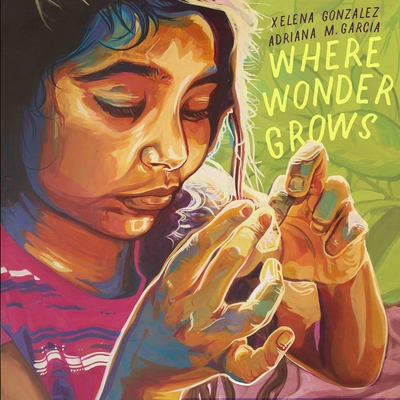
Where Wonder Grows by Xelena Gonzalez

Cover image for Where Wonder Grows

Where Wonder Grows by Xelena Gonzalez, illustrated by Adriana M. Garcia (9781947627468)

When grandmother heads to her garden, her granddaughters know to follow her. They spread blankets on the ground and get their magic rocks. Grandma taught them that the rocks are alive with wisdom from the long time they have spent on earth, so they respectfully call them grandmothers and grandfathers. The rocks are used in the sweat lodge where they help send songs and prayers into the air and to ancestors. The girls ask about the rocks that can heal. Grandma shows the colorful crystals and shares stories about them. They look at rocks worn by the water and others that fell from the sky. The rocks remind them of their place in the world, of their brief time on earth, their connection to the stars.

Gonzalez writes in beautiful short sentences, showing the connection between the generations of a Native American family, between the group of granddaughters and their grandmother. It’s a book that slows down, lingering over the various rocks, telling their stories, explaining their importance and making space for some dreams too. There is joy here, a delight in time spent together in a lovely garden and in the rocks themselves and what they mean.

Garcia’s illustrations are unique and creative. She lights each illustration as if the family and rocks glow from outside and within. The colors are deep and evocative. The book moves from the brightness of daylight to night with its purples and more subtle light. It is beautiful and filled with portraits of the family members.

An inviting look at rocks, their mystical qualities and how they connect us all. Appropriate for ages 3-5.

Reviewed from e-galley provided by Cinco Puntos Press.