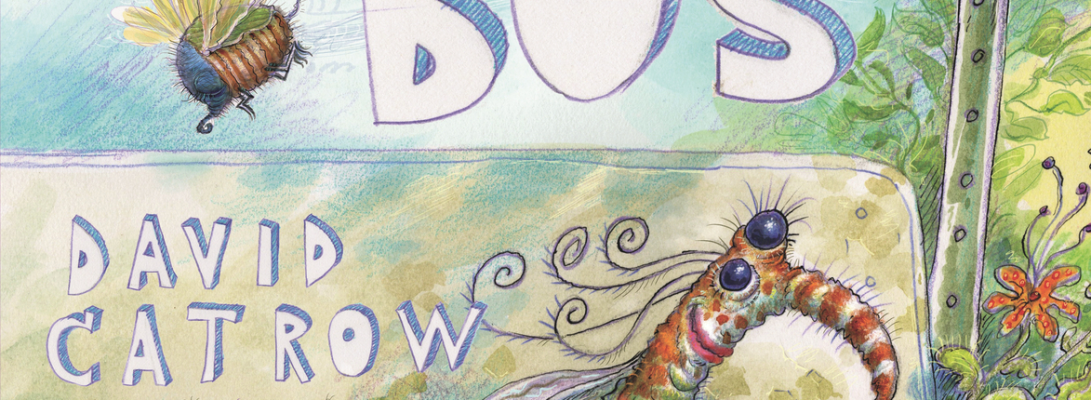
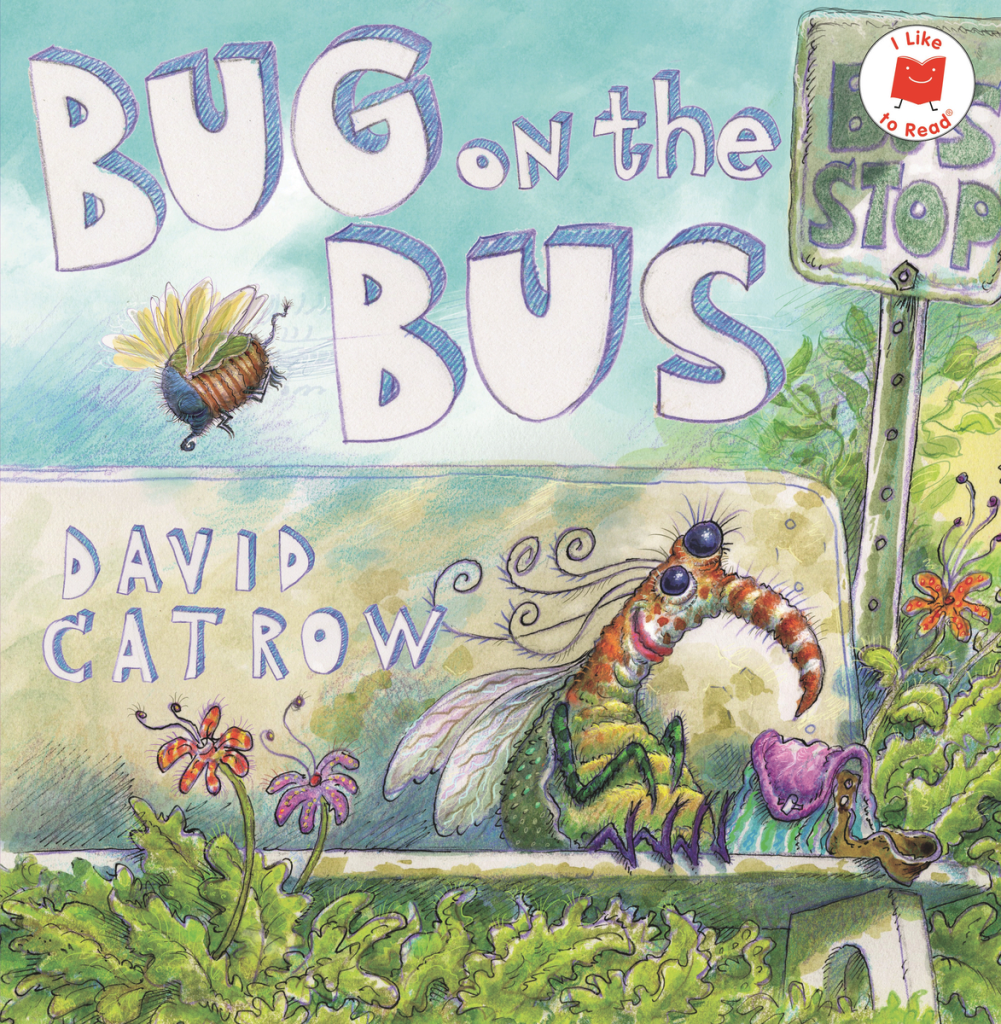
Part of the I Like to Read collection, this is a very clever beginning reader.. Bug waits patiently for the bus to come, runs to the bus and hops on. Pig runs to the bus and hops on. So does Pup, but Bat doesn’t run or hop. Fox and Hen run to the bus, as does Cat. Slug runs too, but far more slowly than the others. Finally, Skunk runs and hops on the bus. But no one wants to ride with Skunk, not even the driver, except for Bug. But what will they do with no one to drive the bus?
Catrow gives this reader plenty of action built into his simple words and phrases. He keeps the sentences in the book simple and the real story is told in the pictures. The illustrations add a wildness to the title, with their wacky characters, oversized reactions, and the wonderful hops onto the bus by the various animals.
Silly and delightfully odd, this beginning reader stands out from the rest like a skunk on a bus.
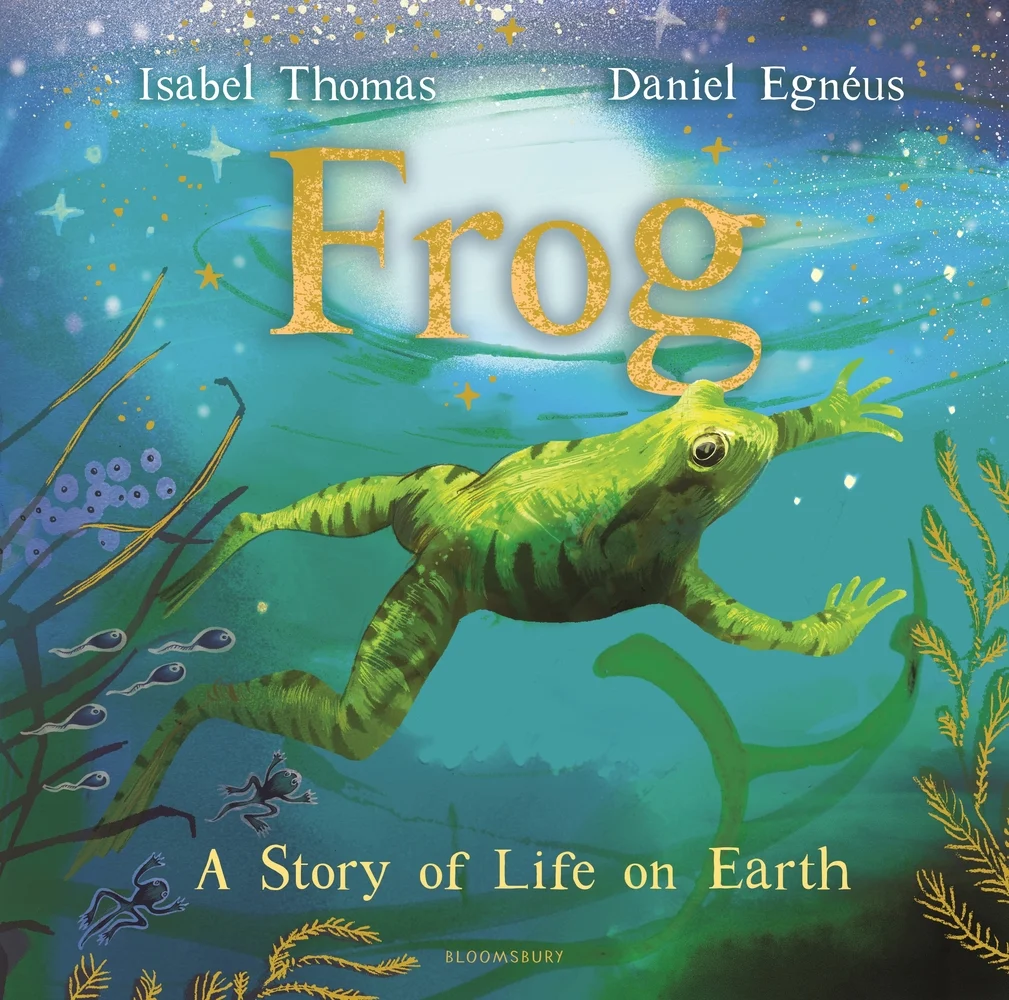
A child discovers frog eggs in a pond. Eggs will become tadpoles and eventually frogs. But where did the very first frog come from? Well, the picture book merrily takes children way back in time to the Big Bang where the first atoms were just forming. Stars formed and exploded, atoms moving across the universe. 8 billion years later, our solar system formed around the sun. Earth was perfectly positioned to create living things, but it took time. Cells formed, became creatures, lived in water and eventually on land. Amphibians rule the land for 100 million years, evolving and eventually frogs started hopping.
This is the third book by this creative pair, offering a book both about frogs and about the universe and life itself. The text is engaging and interesting as it suddenly veers from pond life to all life and then back again to frogs. It’s a journey in time and space that is definitely worth taking as the book explains the process simply for young children to understand. The illustrations also change from watery blues and greens of frogs and ponds to the dynamic colors of the universe as it is born and grows.
A book about frogs that hops in new directions. Appropriate for ages 4-7.
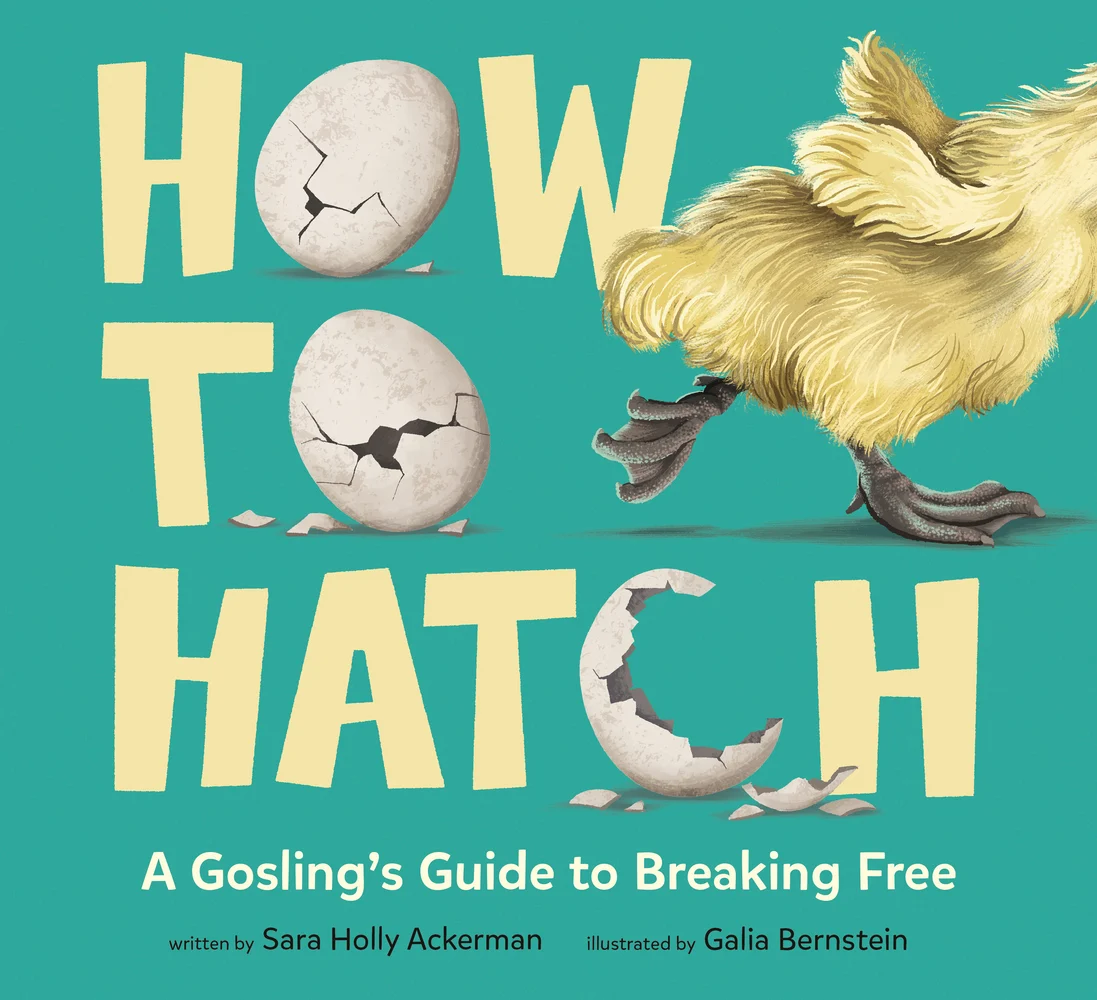
Beginning with a gosling snug in his egg, the book tells it that it is time to hatch! Step one is finding and pricking the air cell in the egg so that the gosling can breathe. Step two is tapping away with its egg tooth to break that shell. Perhaps a quick nap, since that was hard work. Now on to cutting the shell and using wings and legs to exit. Find a warm spot to dry off and then you are set to head out with your mother and siblings.
Alongside the jaunty hatching story that can be shared aloud, there are in-depth facts on each page turn so that readers can learn more. It’s a great way to share information with children who are interested and still have a fast-paced read aloud for a crowd. The facts are written in an engaging style too, full of answers to natural questions. The art in this picture book is a lovely mix of cartoon and science, making for a book that will show well to a group and also read well snuggled close.
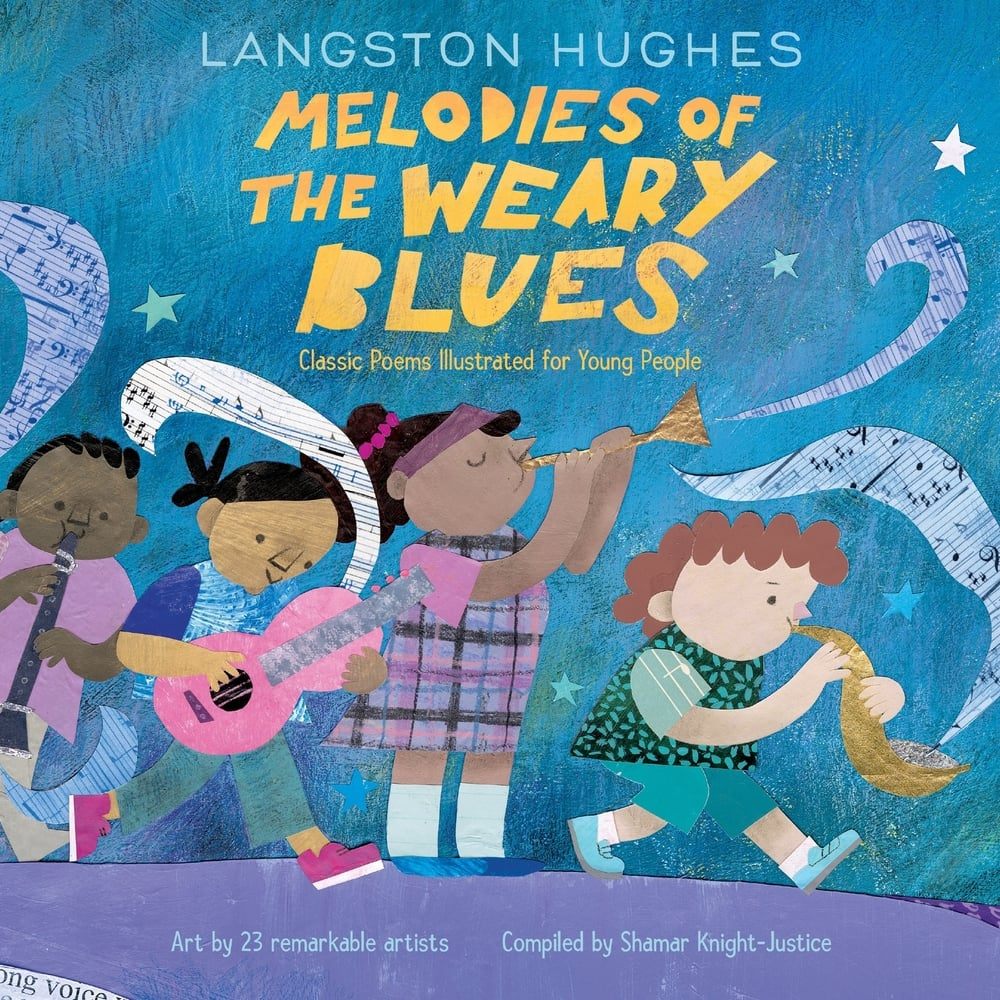
Celebrate the centennial of Langston Hughes’ first book of poetry with this new collection of selected poems paired with art from twenty gifted Black artists. This collection takes the poems in The Weary Blues and skillfully pairs them with illustrators who capture the essence of each poem in their unique ways. The result is a nonfiction poetry book with each poem separate but also part of a whole. Turning these pages is a journey through Hughes’ work and also through beautiful and distinct artistic reactions to each poem.
With poems like “The Negro Speaks of Rivers” included in the collection, children will discover Hughes anew. The book ends with a biography of Langston Hughes as well as biographical information on each of the illustrators. The sweep from one illustrator to the next has been done with care, creating a full story as the pages turn and still allowing them to stand on their own.
This belongs in every library. Appropriate for ages 8-12.
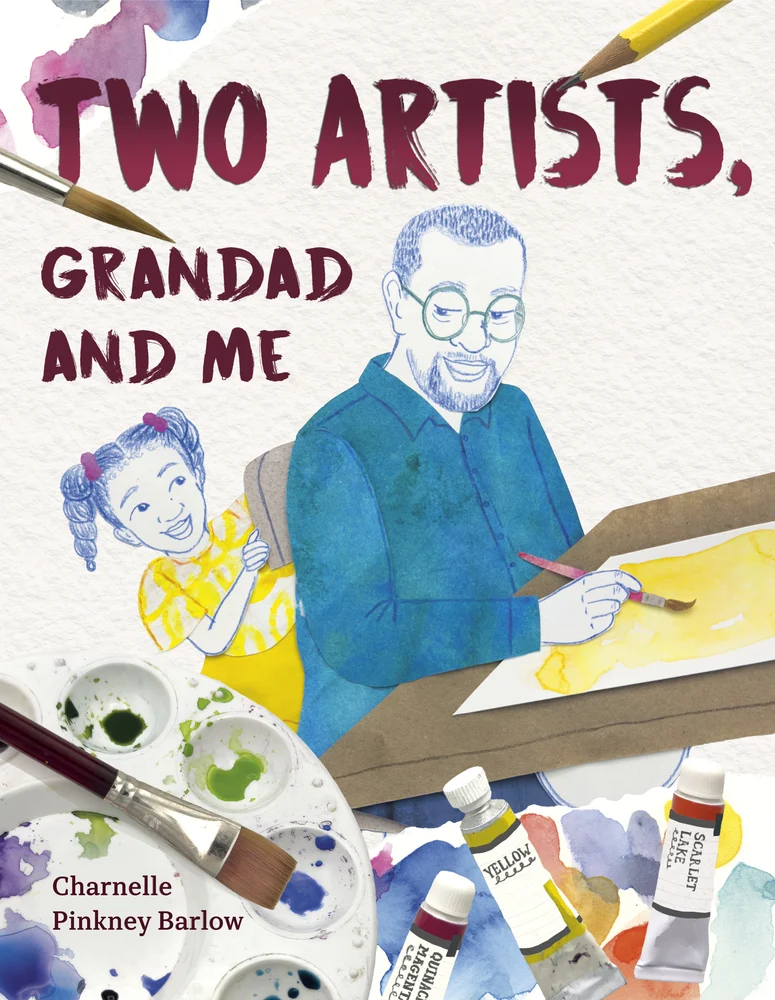
Visit Jerry Pinkney’s studio with his granddaughter in this celebration of a granddaughter’s love of art and her connection with her grandfather. There are papers around the room, stacks of stories, and bright watercolors on a tray. Grandad shows her how to make a wash, but Charnelle can’t do it quite the same way. He gives Charnelle her own sketchbook to fill. The two draw side-by-side and Grandad explains that each artist will see the world in their own way.
Celebrate the nurturing of a young artist in this picture book about one of the best-known picture book artists of our time. Tying music into the feel of the book, the quiet time spent together each making art clearly inspired her to become the artist she is today. The illustrations in her book pay homage to her grandfather and still have a feel all her own as she uses cut paper figures and objects like paint brushes and erasers to create pages with depth and texture.
A warm and lovely tribute to a genius of picture book creation. Appropriate for ages 4-7.
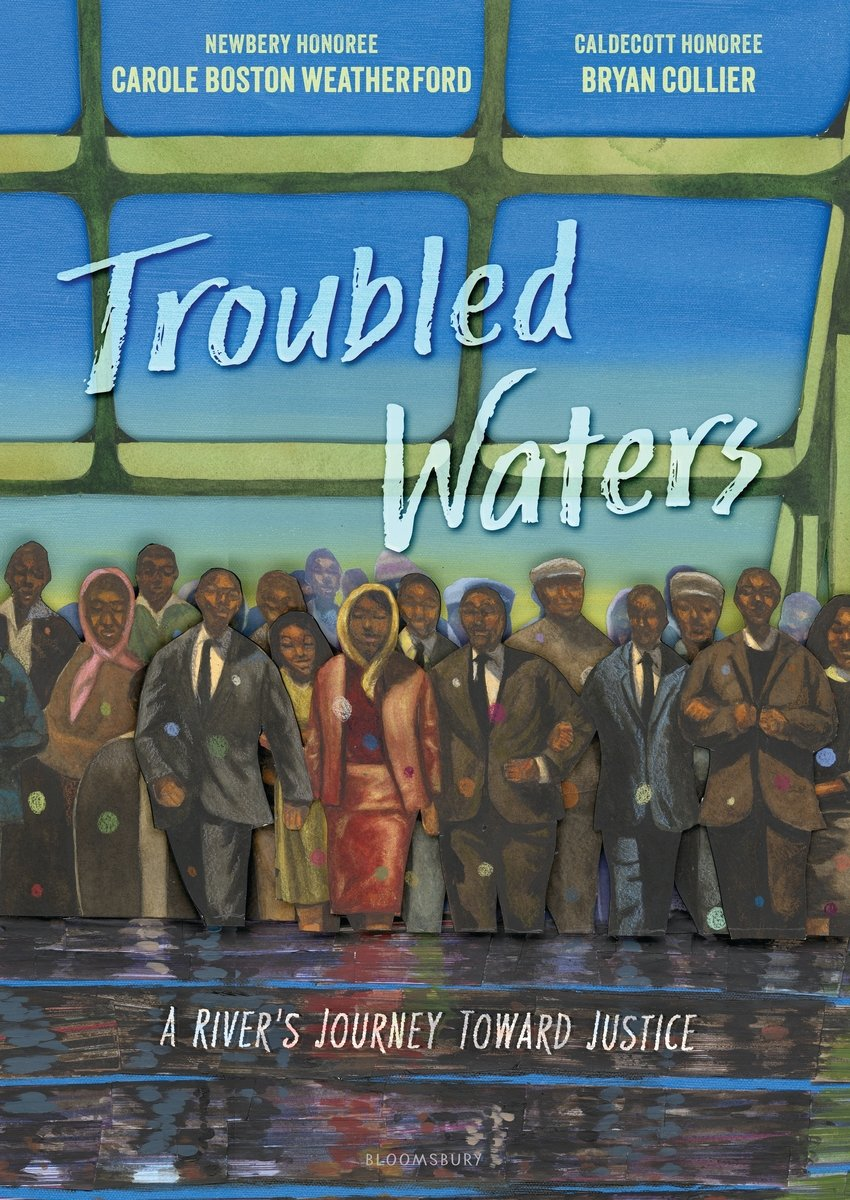
Told from the perspective of the Alabama River, this picture book shares the account of Black American history as seen by the river. From the creation of Selma to the Trail of Tears. From enslaved people to battles during the Civil War. From sharecropping to bridges across the river. All is witnessed by the river itself. But nothing was quite like 1965 when resistance flowed across the bridge at Selma and freedom flowed but not without bloodshed and brutality.There were more rivers to cross, more agreements to be made, but history and change were made that day.
The Young People’s Poet Laureate has created a picture book that looks deeply at the dark history of slavery, sharecropping, lynching and more before turning to the hope of change inherent in the protests at Selma. The writing is beautiful, unflinching and honest about the history of racism that our country was built upon. Collier’s illustrations are a rich mix of acrylic, watercolor and collage. They include a gatefold that works to pause the reader, linger at a pivotal moment rather than rushing on past.
Powerful witness to our shared history. Appropriate for ages 8-12.
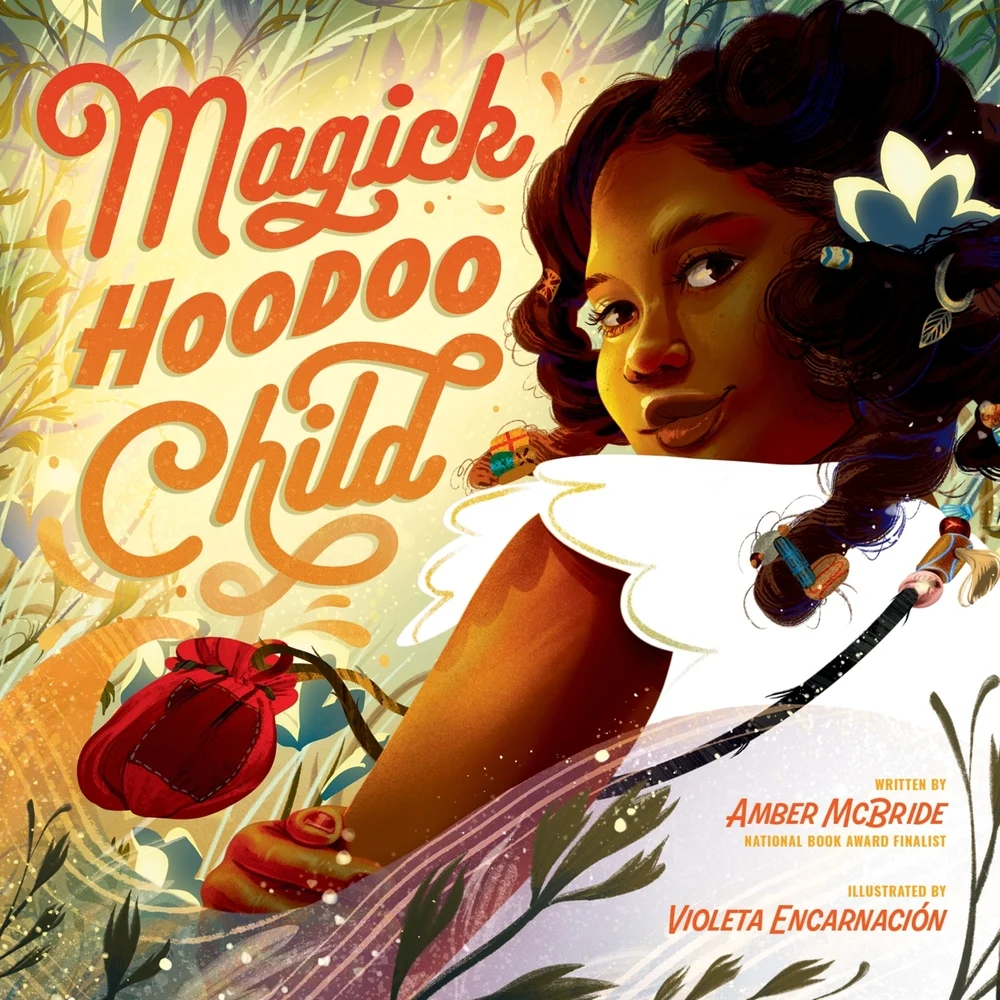
At school, she is bullied, called names. Luckily, in the summer she can journey to her grandmother’s home. She brings empty mason jars collected through the year and flip-flops though she will be barefoot all summer. When they arrive, she announces to her grandmother that they have to fix her mojo bag. Her grandmother is thrilled. As they have lunch, her grandmother tells her about magick and how hoodoo came from Africa through the enslaved people. The two work together all summer, doing rootwork together, making mojo bags stuffed with herbs, working in the garden, going for long walks. At the end of the summer, the mason jars are full and her mojo bag is replenished stronger than before.
This is award-winning McBride’s first picture book and it’s lovely. Working within the restraint required for picture books, she manages to create an entire world of hoodoo and magick that celebrates ancestral knowledge and connection with nature. Her text is inviting and powerful and at the end of the book she offers small ways that readers can connect with nature themselves. The illustrations are dynamic and beautiful, celebrating connection just as much as the text does with closeness, pages filled with plants, and familial love.
Eleanor loves wild things, all sorts of animals and plants. One night when she goes to bed, she awakens to discover that the wildness has entered her house. Amid the animals, she continues to live her regular life. She has breakfast from her favorite bowl has squirrels and rabbits fill the kitchen. She eats at the couch, which is actually a slumbering bear. She draws on the walls and floor, filling the blankness with butterflies, flowers and more. With her new friends, they play together until Eleanor sees herself as a wild thing too.
There is such a gentleness to this picture book with its fine-lined illustrations that show a small girl letting herself be as wild as she wants to be. The connection with nature is palpable as Eleanor spends time outside. When that is brought into the house it is merry and often silly, giving space to that sort of wildness in indoor life too. In what might be a dream of wildness, the book embraces nature and animals and how being with them can be inspiring too.
A dreamy look at letting loose and connecting with nature. Appropriate for ages 3-6.
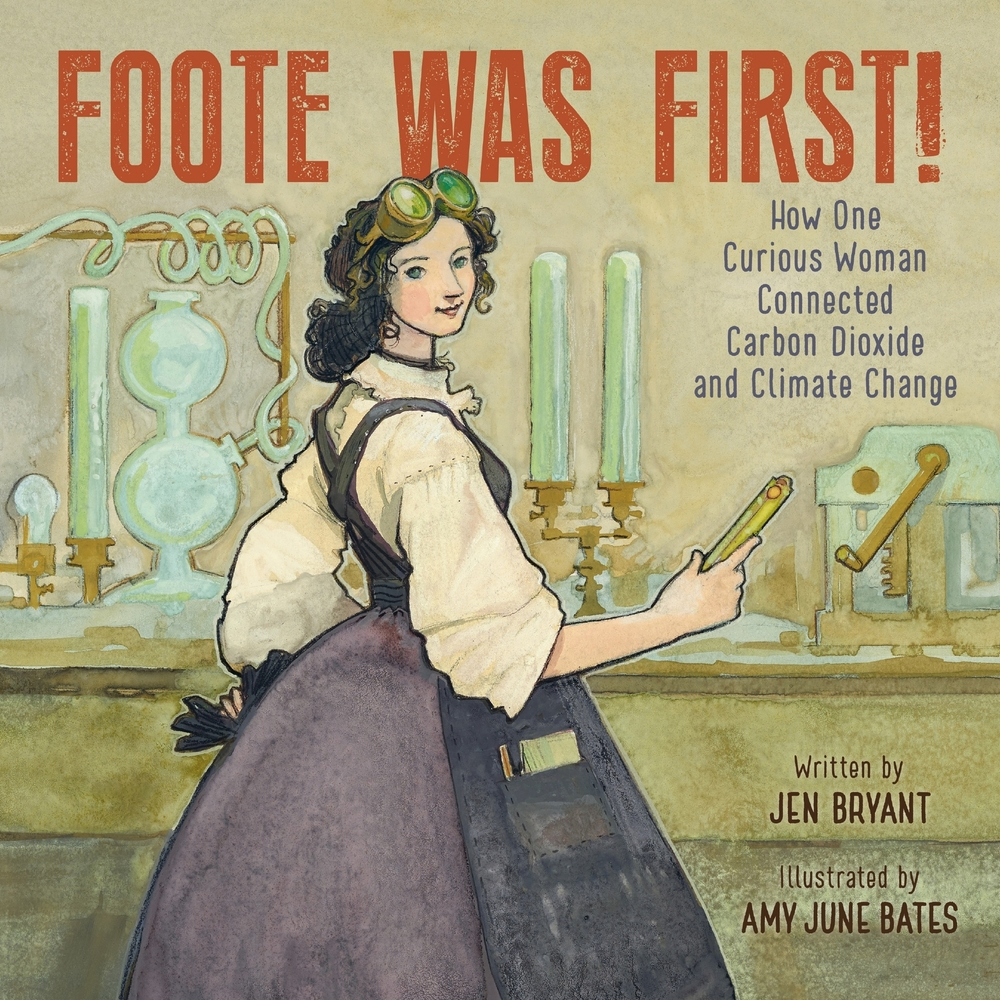
Though an Englishman is credited with discovering that carbon dioxide traps heat, it was actually an American woman, Eunice Newton Foote, who did it first in 1856. Eunice grew up on her family farm and asked lots of questions. At age 17, she was sent to a girls school where she was taught science and able to use a laboratory. She grew up, married and had children and stayed curious. Never a professional scientist, she did science at home, learning about various gasses and their capabilities. When she wasn’t allowed to present her findings since she was a woman, a friend presented them on her behalf. She was the first to tie carbon dioxide to global warming, a foundational learning for our times.
Offering just the right amount of information for young readers, this nonfiction picture book focuses on Foote’s curious mind and scientific studies. The illustrations are particularly striking with Foote in her wide hoopskirts engaged in long walks, scientific experiments and discoveries. They demonstrate how rarely we see women of this period engaged in scientific work.
Inspiring and engaging. Appropriate for ages 7-10.
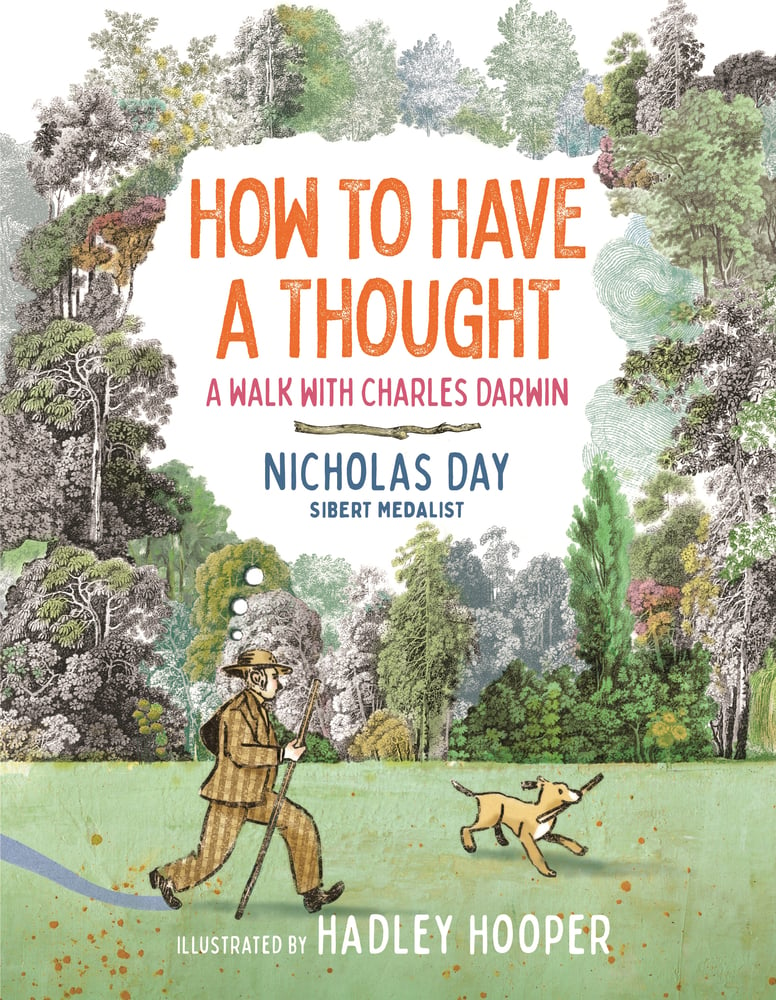
Take a walk like Charles Darwin in this nonfiction picture book that reveals both Darwin’s thinking process and also his scientific discoveries. First find a rock or two, then a walking stick and then find a loop to walk. It could be a loop around the block or a loop around the world, like the one Darwin made on his ship. That’s when he discovered the fossil of a giant sloth, the variety of beaks on finches that lived on the Galapagos Islands, and the bones and skin of a rhea, a bird he’s been seeking but had been served for a meal. Then came the thinking. The why of it all. The walking in loops. The stacking of rocks to count the loops. What will you think of when you take your own walk?
The combination of encouragement to get outside, walk and think with the historical and biographical information on Charles Darwin creates an unexpected treat of a book. The book ends with the author explaining that walks that are celebrated tend to be extraordinary, full of vistas and beauty. That is not the sort of walk we are talking about. These are thinking walks, going the same way every time. And just look at the result. The illustrations play with the dichotomy of the book, sharing historical elements with paintings and offering a light-hearted feel.
A real thinker of a book. Appropriate for ages 5-9.
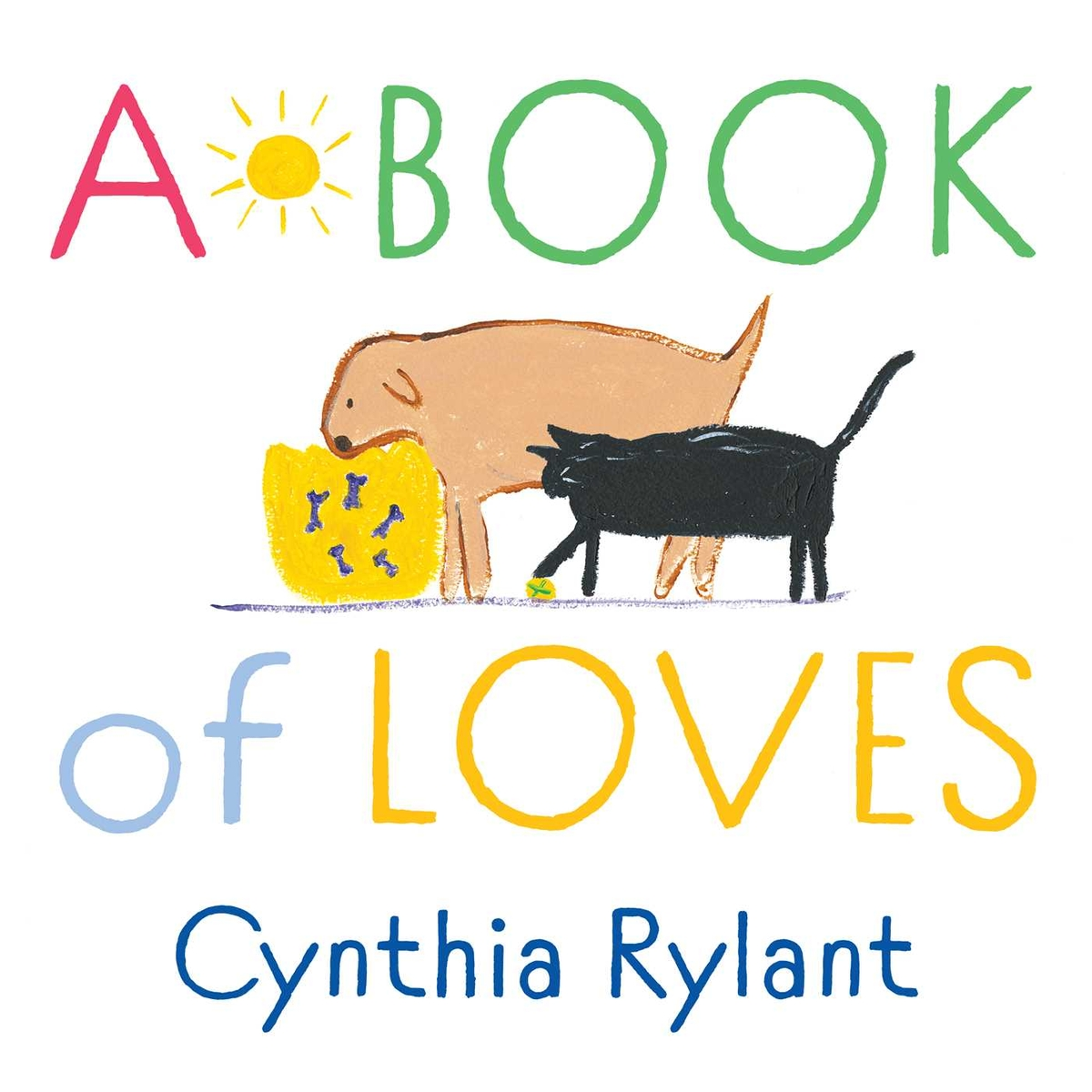
This simple little book about various things creatures and people love is pure joy. The book begins with a list of what cats love. With one word on each page featuring things like boxes, food, toys and love. What do dogs love? Sticks, puddles, treats, dirt and love. How about children? Bubbles, cake, stories and love. Everyone loves love.
Rylant’s text is very simple with just one word on most of the pages, making this just right for the youngest of listeners. Children who know cats and dogs will particularly enjoy seeing what they love and will then see themselves and their love of things like helicopters reflected on the page too. The illustrations are just as simple as the text, featuring round-headed people and frolicing pets.
Lots of love to love here. Appropriate for ages 1-4.
The start of a new board board series from the amazing Klassen, this fits beautifully with his last series: Your Forest, Your Farm, and Your Island. It is a book about your truck. Your truck is red, but it could be a bunch of different colors. Your truck can carry furniture or even a horse. For now though, it will just carry a dog. It can go so fast! But it’s up to you to make it go. Ready? Oops, perhaps tomorrow, it’s getting late now.
Klassen plays with expectations throughout this clever board book that manages in just a few pages to surprise and delight. Patience at the end is quietly taught as we all wait for the next day to rev up the speed a lot more. As always, his art is simple and immensely child-friendly.
A great pick for the littlest truck and vehicle fans. Appropriate for ages 1-3.
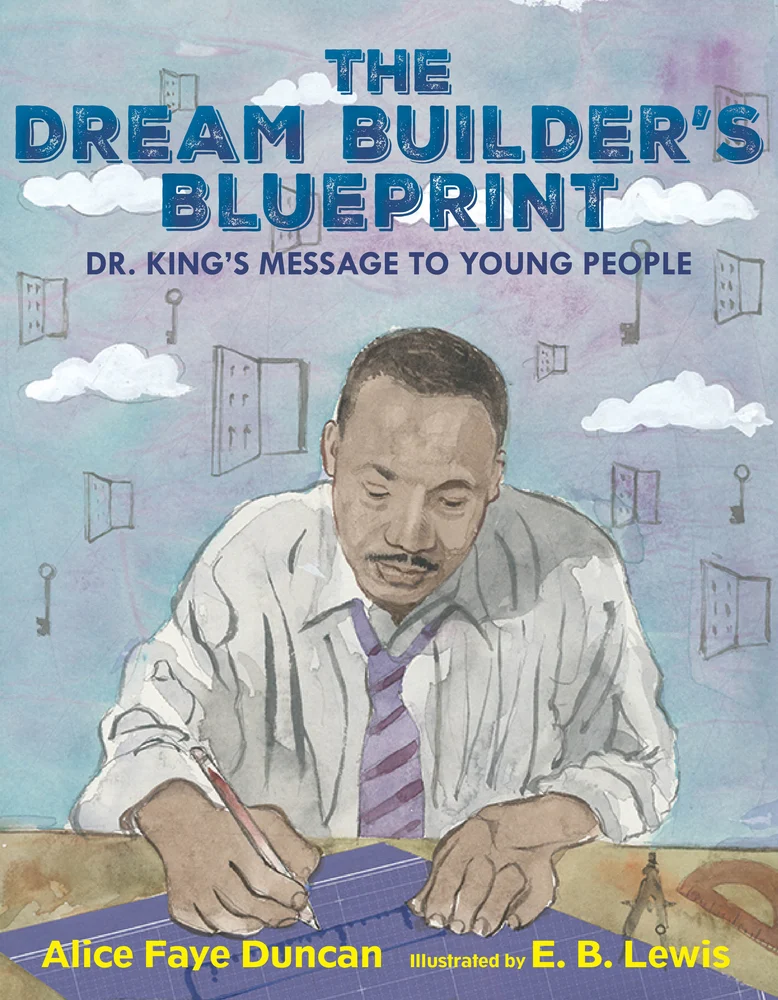
Based on Dr. King’s rare presentation to a group of middle schoolers in South Philadelphia, this book uses erasure poetry to take his speech and turn it into verse. Using short but powerful sentences, the poem focuses on what your life’s blueprint should be. It’s about feeling your worth, knowing you are Black and beautiful. It’s about achieving things with your life and doing your jobs well. It’s about being the best you can be. And the poem shows the incredible people who came before and created the light to follow. Don’t stop in the hard parts and the darkness, keep going!
Duncan removed a large percentage of Dr. King’s original speech to create her poem. Yet the power of his words carries on the page, a clarion call for change and action. Though she erased much, somehow his voice still booms on the page, thanks to her skill with words. The illustrations are wonderfully abstract, supporting the poem and allowing the words to soar.
A tribute to Dr. King and his legacy. Appropriate for ages 8-12.



 Waking Brain Cells