Nesting by Henry Cole

Nesting by Henry Cole

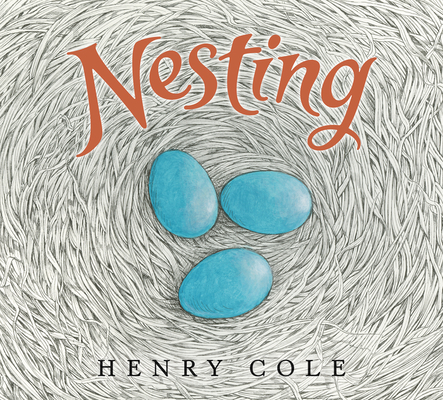
Nesting by Henry Cole (9780062885920)

Through simple text and exquisite line drawings, the tale of a family of robins is told. Beginning in early spring, two robins meet and then build a nest together in the crook of a tree limb. As the tree is in full bloom, bright blue eggs appear, the only color in the book. Soon there are four eggs which readers get to see hatch into chicks over the course of a few panels. The hungry chicks must then be fed, the parents hurrying across the page. Storms must also be weathered and predators forced away from the nest. Then it’s the chicks turn to be brave as they leave the nest. Getting larger, the robins prepare to head to their winter months together.

Cole’s text is simple but shares a lot of information along the way. He makes sure to explain things in ways that feel entirely natural as part of the overall story arc. The Author’s Note at the end has more information. The illustrations are simply lovely done in fine pen lines that look even more detailed that reality. The sense of depth that Cole evokes is exceptional as is the way he captures the robins in action so naturally. Readers will notice the apple tree as it moves from bare branches to spring bloom to full fruiting, another way to explore the seasonal changes.

Expect this one to have award buzz, it’s exceptional. Appropriate for ages 2-4.

Reviewed from library copy.
 

One Little Bag by Henry Cole

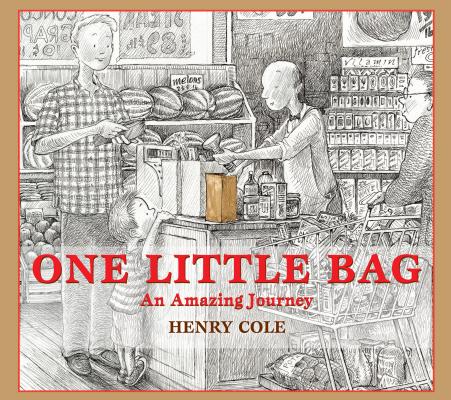
One Little Bag: An Amazing Journey by Henry Cole (9781338359978)

This wordless picture book follows the journey of one paper bag from its beginnings as a tall tree in the forest through the hands of a family. The tree is cut down, hauled away, ground up and made into paper which then is formed into a brown paper bag. Put into a box, the bag is given to a family at a grocery store. They take it home, draw a heart on the bag, and use it for school lunches. The bag is used lots of different ways after that as the boy grows up, taking it with him to college. There he meets a girl and they draw two hearts on the bag. It’s even there when he proposes to her. When they have a baby, the bag is part of the mobile over the crib, and a third heart is added. When grandpa, the bag’s first owner visits, a fourth heart is added by his grandson. The bag becomes worn and taped, but serves one last purpose that brings the entire story full circle.

Cole beautifully shows how small acts of reusing something can become tradition in a family. The book never seems like a lecture, always just showing and demonstrating how reuse is possible and its great potential as well. The paper bag in the story if remarkably resilient for so much use by generations, but I think we all have items in our families that survive despite being used by everyone, to be handed to the next generation.

Told in images only, the book is filled with fine-line drawings that shine with light. The paper bag is the only color on the page, it’s brown color becoming all the more warm and glowing and the red hearts popping with color.

A truly great wordless picture book. Appropriate for ages 2-4.

Reviewed from e-galley provided by Scholastic.

Desert Girl, Monsoon Boy by Tara Dairman

Desert Girl, Monsoon Boy by Tara Dairman

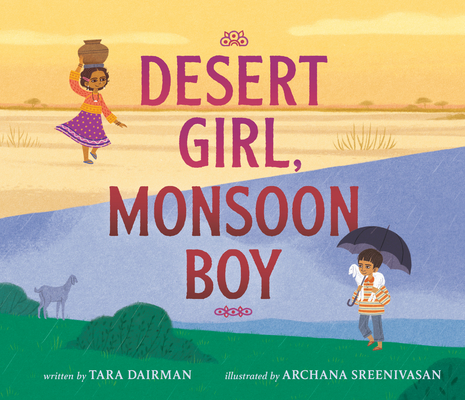
Desert Girl, Monsoon Boy by Tara Dairman, illustrated Archana Sreenivasan (9780525518068)

In India, two families must respond to the weather they are experiencing. One nomadic family, lives in the desert and must move in search of water. The other family, who live in a village, are experiencing a monsoon and the flooding it brings. Both families are multi-generational, both have children learning things, helping out and packing up. One family deals with blowing sand and sandstorms while the other has leaking roofs and puddles on the floor. Soon both start traveling in search of safety, one on camels and the other in a boat. Together, they reach the same mountain where they both find safety as well as each other.

In her author’s note, Dairman speaks about the Rabari people who inspired her families in the picture book. She captures their changing lifestyle from purely nomadic life to moving into villages. She also shows how weather can be threatening for both lifestyles. The writing is simple and just right for the smallest of children. Throughout the book, there are opposites in the two lifestyles, but there are some things that are quite similar.

The illustrations in this picture book are based on the illustrator’s personal experience in visiting a Rabari settlement. The detailed textiles fill the pages with color and pattern. Meanwhile the contrast of the warm golds of the desert and the cool blues of the monsoon work particularly well as they cross the pages. It’s a very effective way to view the two ways of life.

A glimpse of India’s nomadic people allows us all to see how weather impacts lives. Appropriate for ages 2-4.

Reviewed from e-galley provided by G. P. Putnam’s Sons.

The Shared Room by Kao Kalia Yang

The Shared Room by Kao Kalia Yang, illustrated by Xee Reiter (9781517907945)

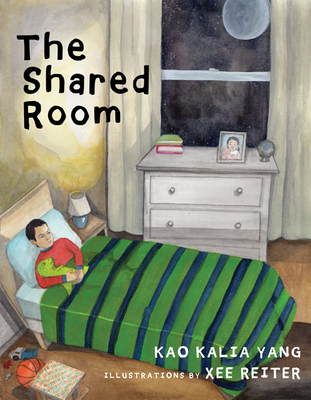
This picture book tackles what happens when a family loses a child. Set months after the death, the family is living in dim rooms with no fire lit. Shadows fill the rooms. There is a picture on the wall of their fourth child, who died by walking into water and drowning when she couldn’t swim. Her room is empty with her items still in place. Her parents visit the room every day and regularly watch a video of the little girl singing. The oldest boy was ten and shared a room with his brother. Then one day, his mother asked if he would like to move into his sister’s room. He agreed, then the emotions hit him and for the first time he is able to cry with the loss and the fact that she was never going to return. That night, he slept in his new room. A snowstorm blew in and the family lit the fire and gathered together in its warmth.

Yang’s prose is filled with poetic moments throughout this heartfelt story. Even introducing winter in St. Paul, Minnesota is done with imagery that opens this book with gray clouds and cracked ice. Yang’s depiction of a family in mourning is done with a delicacy and little drama. The sorrow soaks the pages, the shadows fill them, these moments are dramatic and terrible enough. The emotions ache in the prose, offering a Hmong family’s response to a tragedy.

Reiter’s paintings fill the pages with silence and shadow. She uses white space beautifully, positioning the family as a huddle at times and other times embracing the full page. She plays with shadows and light, using them to show the sorrow. The image of the older brother finally weeping is heart wrenching and very effective.

A quiet book of sorrow and loss. Appropriate for ages 4-6.

Reviewed from copy provided by University of Minnesota Press.

Dusk Explorers by Lindsay Leslie

Dusk Explorers by Lindsay Leslie, illustrated by Ellen Rooney (9781624148712)

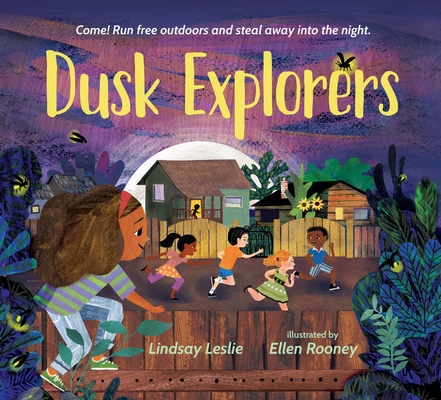
Head outside into the early summer evening in this picture book. Play in the trees and see who can climb highest. Enjoy leapfrogging, kick the can, and running while playing tag. Take the time though to feel the bark, watch the leaves, discover worms, and hunt for frogs. Find a quiet curb to share some secrets before a game of hide and seek. As night continues to fall, the fireflies emerge. Soon parents are calling for children to head home and the neighborhood gets quiet until the children emerge again into the darkness as the moon rises.

Leslie cleverly shows the joys of being outside as darkness comes by weaving together plenty of games and activities with quieter moments of discovery. The resulting laughter combines with feeling safe and able to be on your own in the dark. Many of the games and activities are unique to just this time of day like the firefly catching and kick the can while others can be enjoyed at any time of day.

The illustrations by Rooney are done in vibrant mixed media with paint, collage and digital elements. They are filled with diverse children, all playing with one another. They also capture the changing light and colors of the sky beautifully as dusk and evening emerge.

Just right for summer afternoons so that children can experience their own dusk that night. Appropriate for ages 3-5.

Reviewed from copy provided by Page Street Kids.

Goodnight, Veggies by Diana Murray and Zachariah OHora

Goodnight, Veggies by Diana Murray and Zachariah OHora

Goodnight, Veggies by Diana Murray and Zachariah OHora (9781328866837)

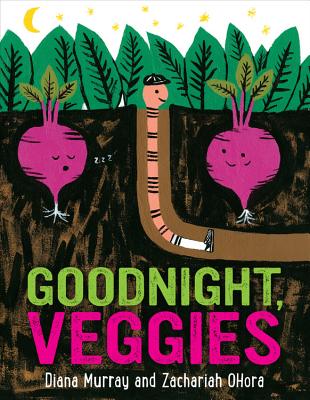
At sunset the garden needs its rest, but the vegetables are tossing and turning. Turnips are “tucked in tightly” while potatoes are closing their eyes. Tomatoes are humming lullabies and cauliflowers cuddle by droopy pea pods. The baby lettuce and baby carrots are snuggling while rhubarb reads stories to the broccoli. Soon the other vegetables are calm as the cucumbers. As the moon gets bright all of them are sleeping, tired from growing all day and all night.

Written in a musical rhyme, this picture book is ideal for reading aloud to toddlers and preschoolers. It takes a spring theme of gardening and turns it into a bedtime book that will make everyone tired, since little children are growing day and night too. Throughout the book, humor cleverly used alongside alliteration, making the book a treat for adults as well.

The art by OHora is marvelous. Readers can follow a worm through the garden as he tunnels past the tired veggies and finally falls asleep himself. The images move from showing root vegetables to garden beds from above, creating a winding path through this abundant garden.

Clever and seasonal, this spring bedtime book is one worth picking. Appropriate for ages 2-4.

Reviewed from library copy.
 

Sandcastle by Einat Tsarfati

Sandcastle by Einat Tsarfati (9781536211436)

The little girl who narrates the story loves to build sandcastles. She doesn’t just build regular ones though, she builds huge and elaborate creations. It has turrets and a moat. Inside are curving staircases and large windows. Soon the sandcastle brings kings and queens from around the world to visit. The royalty loved the castle, particularly the endless supply of ice cream. But the next morning, troubles started as the food got sand in it. The next day, the knights got sand their armor. The plants in the greenhouse started to wilt because they were not meant to grow in pure sand. Everything was being spoiled by the sand: locks wouldn’t open, baths were sandy, and the beds were itchy. Everyone was angry. So that’s when the little girl created one more thing out of sand: a sand ball to have a sandy fight. But suddenly, the waves came and washed everyone out to sea, the sandcastle and all. There was just one thing left to do: build a sandcastle.

This delight of a summer read captures the wonderful tales that children making sandcastles tell themselves as they build. Their creations may not be as grand and large as this one, certainly not big enough to enter, but they will recognize their own visions of grandeur and the marvel of creating a castle of their own. The entire book is wry and funny, from the variety of royalty who visit to the various complaints that living in a sandcastle creates. When the water finally rushes in, there is a moment of contentment in a job fully completed. And then started again.

The illustrations are done digitally and have a sharp crispness to them. The first pages are filled with others crowding the beach and are a joy to explore visually. That then makes way to the opportunity of building a sandcastle near the water and the marvelous details provided there.

A funny sun-drenched sandy delight. Appropriate for ages 3-5.

Reviewed from e-galley provided by Candlewick.

All of a Sudden and Forever by Chris Barton

All of a Sudden and Forever by Chris Barton

All of a Sudden and Forever: Help and Healing After the Oklahoma City Bombing by Chris Barton, illustrated by Nicole Xu (9781541526693)

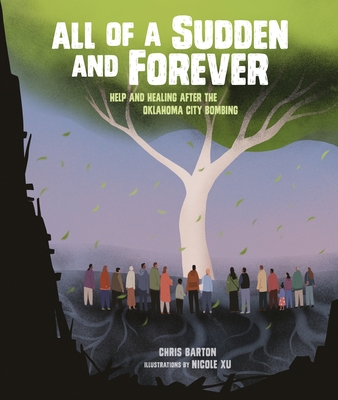
This nonfiction picture book takes the tremendous tragedy of April 19, 1995 and leads readers to hope and a way forward. It looks deeply at the loss of life, at how so many people were lost and so many more were impacted by the deaths. It looks at the many broken bones and also the broken minds that resulted from the bombing too. The book then moves to after the bombing and the one tree that remained standing nearby. That American elm tree was battered  and scorched by the blast, yet it remained upright. It survived and became a beacon of hope for those who were impacted by the bombing. In spring, someone collected its seeds which then became part of the annual memorial service for the victims. As new tragedies happen, and they did and will in the future, those seeds and seedlings from Oklahoma City start the healing process and show that survival is possible and hope can return.

Barton’s words ache on the page. They are impossible to read without a deep feeling of mourning and loss, without recognizing what happened and what will continue to happen. The weaving of the story of the elm tree into the book is masterfully done, offering a glimpse of green and a path to the future. Barton writes with such empathy here. He allows the story to be told in all of its anguish and pain, and yet makes sure that hope has its place there as well.

The art by Xu is extraordinary. She uses the roots of the tree to intertwine with and embrace those in mourning, to show how interconnected we all are to one another. Done in ink and digitally, the art is a strong mixture of ethereal colors and grounding tree roots, people and spaces.

A powerful and evocative book about tragedy that celebrates life. Appropriate for ages 8-12.

Reviewed from library copy.

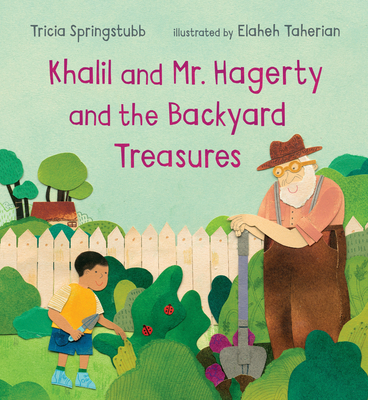
Khalil and Mr. Hagerty and the Backyard Treasures by Tricia Springstubb

Khalil and Mr. Hagerty and the Backyard Treasures by Tricia Springstubb, illustrated by Elaheh Taherian (9781536203066)

Khalil and his family moved into a new house with two floors. They lived on the top floor and Mr. Hagerty lived downstairs. Khalil’s family was loud while Mr. Hagerty was quiet. Both Khalil and Mr. Hagerty loved the backyard. Mr. Hagerty gardened there while Khalil looked for bugs and rocks. On a hot day in the summer, the two of them had a disappointing day where the carrots were small and shriveled and the ground was too hard to dig for treasure. They took a refreshment break in Mr. Hagerty’s place, sharing chocolate cake and cold milk. Later, both of them had an idea. The next day was much better when Mr. Hagerty found big carrots in his garden and Khalil found buried treasures! It called for more shared cake!

Springstubb shows how two very different people: quiet and loud, old and young, different races, can form a friendship that builds slowly and steadily over time. She keeps her story very focused, allowing many of the details to be shown in the illustrations rather than told in the text. The characters first bond over helping one another with words, which grows into something quite special. It’s that initial acceptance, the creation of a shared space of the backyard, that makes this book work so naturally.

Taherian’s illustrations are done in collage with oil and colored pencil. They have a great depth to them, the layers of the collage offering a real backyard to explore alongside the characters. The colors are vivid and glow with the summer heat and sun.

A lively look at emerging friendship and what it means to be neighbors. Appropriate for ages 3-5.

Reviewed from e-galley provided by Candlewick Press.