The winners of the 2020 CILIP Carnegie and Kate Greenaway Medals have been announced. The Carnegie Medal is given for the best writing in English for children and young people. The Greenaway Medal is awarded for the best illustration in a book for children and young people. Here are the winners:
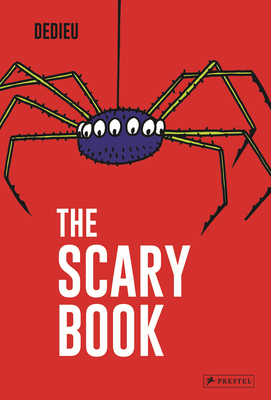
This board book offers plenty of creepy shivers when you take a normal sort of already frightening creature and then extend the flap. This one is not for the littlest children, though it is in board book format. It’s preschoolers and elementary-aged children who will love the wild and scary nature of the flaps opening. You may think that a bat is already pretty scary, but extend its jaws and find how sharp and huge its teeth really are. The ghost is pretty blank until you lift its head higher and discover a skeleton and some bloody spurts underneath. The wolf has a jaw that opens wider and wider, displaying a skeletal Little Red Riding Hood inside!
The words take a firm back seat to the art in this bold book with each double-page spread filled with a solid-colored background that really lets the sinister art stand out. The book is a blend of silliness and scariness, with the first flap the most surprising as they all open much wider than readers expect. Expect a mix of giggles and gasps as children explore this one.
Not for the faint of heart, readers must take their own hands directly into the jaws of the beasts to see the surprises. Appropriate for ages 5-7.
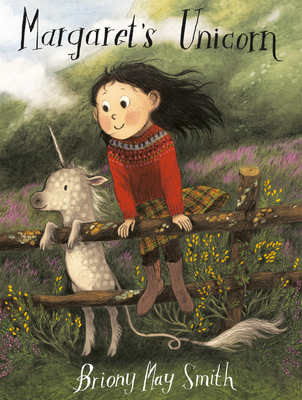
Margaret and her parents moved to a faraway place to be closer to her grandmother. When they got there, the rooms were bare and strange. Her parents sent Margaret out to explore, warning her not to go past the big stone. When Margaret reached the stone at the end of the garden, she could see the sea. And up in the clouds were unicorns that disappeared in a blink. As Margaret headed home, she heard a noise and discovered a baby unicorn tangled in the weeds. Her grandmother was shocked to see the unicorn, because she thought they had all disappeared. They had to get flowers for the unicorn to eat from the local shop and soon made him a cozy nest in Margaret’s room. That night, they gathered water touched by the moon, which made the unicorn’s horn glow. Margaret cared for the unicorn all the way until spring returned. Then Margaret returned the unicorn to its herd and its mother. Will Margaret ever see her unicorn again?
Smith has created a magical picture book about unicorns that isn’t sparkly and full of glitter. It’s a beautiful homey sort of magic, fed with flowers and moon-touched water. It’s also a book about caring for something but also being willing to return it and let it leave you. Because she knows she will lose the unicorn in spring, the entire book is filled with a wistfulness that plays well with the wonder of having your own unicorn.
The illustrations add so much to the appeal of the book. Filled with landscapes of moors and hills that butt up against the sea, the land is wild and wondrous too. There is a distinct coziness to the images, of a family that works together to create their new home and one for the baby unicorn too.
A lovely look at unicorns, families and love. Appropriate for ages 3-5.
Reviewed from e-galley provided by Schwartz & Wade.
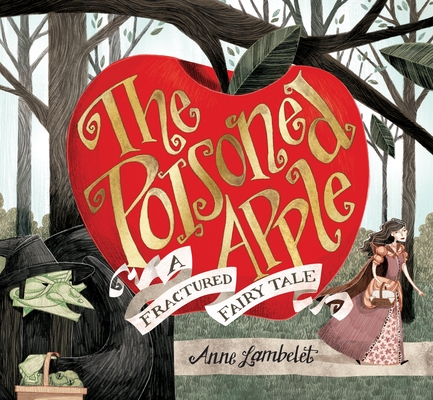
This picture book retells the story of Snow White and the poisoned apple. This version focuses very cleverly on the witch herself. It tells of the hard work she put into creating just one poisoned apple and no more. The witch gets the apple directly into Snow White’s basket, but then her plans go awry as the apple is passed to the dwarves as part of their lunch. Luckily, none of them take a bite, instead sharing the apple with some hungry forest animals, who in turn share it with a squirrel looking for food for her babies. As the squirrel climbs high into the tree, the witch follows, desperate to get the apple back and give it to Snow White. But her plans continue to fail her as the branch snaps from beneath her weight.
Lambelet has very nicely twisted and fractured this retelling of the classic Snow White story. The book will work best for children who know the classic version, as this one quickly moves away from that tale and into a riff of its own. Snow White and the dwarves make appearances, but are not the main focus of the story. The witch herself stays at the center, conniving and evil, making this just right for a witchy Halloween read.
The art is marvelous, full of fine lined details that come together to form dramatic moments that fill the page. From the creation of the poisoned apple itself to the witch’s fall from the tree, these moments are elongated by the art and the format to great effect.
This witch-focused retelling of Snow White is creepy, dark and satisfying. Appropriate for ages 5-7.
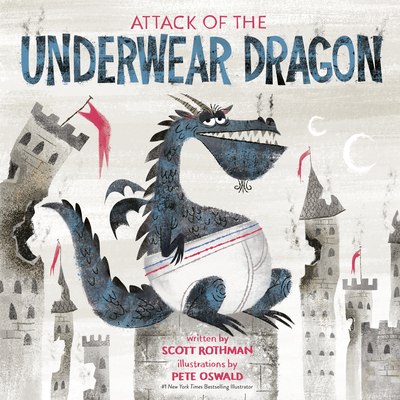
Cole has a favorite knight of King Arthur’s Round Table. So he writes Sir Percival a letter asking to be his assistant knight. Sir Percival received the letter and cried, because knights do cry and he too as a boy asked to be an apprentice. Cole had a lot to learn in his new position. There were many things to do and figure out how to help Sir Percival be a great knight: lugging stuff, getting knocked down, and cheering him along. Sir Percival was also terrified of the Underwear Dragon, unfortunately that dragon arrived and destroyed the kingdom. All of the knights lost! So Cole wrote another letter, this time to the Underwear Dragon. But dragons can’t read, so the dragon ate the letter and just kept on destroying things. The Underwear Dragon finally faced off against Cole. Cole was scared, but had also learned a lot of skills. He used them all until finally the underwear flew off, and the dragon left. Cole became a member of the Round Table, but needed a nap before he could choose his own assistant knight.
Rothman has created a very funny picture book that plays against knight stereotypes, making them marvelously open about their feelings. He has a great sense of comedic timing where the impact is increased by page turns. The book has several montage scenes of things like “why knights cry” and “what Cole needed to learn” that are funny and boisterous. The Underwear Dragon himself gets his own montage of things that he cannot read, which makes for great comedy as well.
The illustrations are just right for reading aloud, whether to a group or individuals. There are many sight gags, offering just the right amount of silliness to an already funny book.
Funny, silly and full of knights and dragons. Appropriate for ages 4-6.
Reviewed from e-galley provided by Random House Books for Young Readers.





 Waking Brain Cells