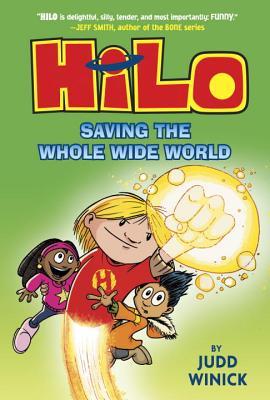
Hilo: Saving the Whole Wide World by Judd Winick

Hilo Saving the Whole Wide World by Judd Winick

Hilo: Saving the Whole Wide World by Judd Winick (InfoSoup)

This second book in the Hilo series is just as fresh and exciting as the first. In this book, Hilo and his friends DJ and Gina have to figure out how to save the earth from creatures who are appearing from other planets through strange portals. Luckily, Hilo quickly figures out how to zap the creatures back to their worlds, but soon even he can’t keep up with number of portals opening. Then there is also the question of Razorwark, the villain from the first book and whether he will be arriving through one of the portals himself bringing with him a potential answer about Hilo’s origins. I don’t want to spoil a single thing in this smart and funny series, so pick it up!

Winick sets just the right tone in this second book, managing to handily escape the sophomore slump and keep the series action-filled and funny. Though this book does serve as a bridge to the rest of the story, it also fills in many gaps for readers about Hilo and his friends. We are also introduced to a marvelous new character in Polly, a sorceress martial-arts cat. She is entirely kick-butt and ferocious, leaning into every battle that comes her way.

Winick does a great job with the art as well. His action sequences are dynamic and colorful. The portals themselves add a wonderful tension to the page, where one isn’t sure what is going to arrive next. Each character is unique and delightful to spend time with and once again I applaud Winick’s decision to have strong girls and diverse characters center stage.

A second book that continues to build on a great graphic novel series for children. Appropriate for ages 6-9.

Reviewed from library copy.
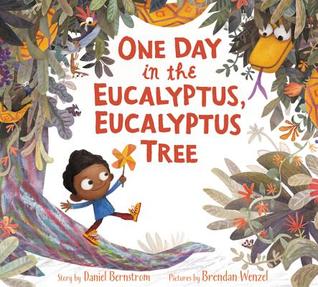
 

One Day in the Eucalyptus Eucalyptus Tree by Daniel Bernstrom

One Day in the Eucalyptus Eucalyptus Tree by Daniel Bernstrom

One Day in the Eucalyptus Eucalyptus Tree by Daniel Bernstrom (InfoSoup)

A little boy skipped along in the shade of the eucalyptus tree when down came a snake who ate him up! The boy told the snake that there was more room in his belly and encouraged him to eat something else. So the snake snuck up on a bird and gobbled it up. The boy told the snake he was still hungry and one-by-one, the snake ate more and more animals: a cat, a sloth, an ape, a bear, and a beehive. By then, his stomach was huge and distended, but the boy told him there was room for just one more very small thing. Perhaps not!

In the tradition of There Was an Old Lady Who Swallowed a Fly, this picture book has a rhythm and rhyme that makes reading it aloud pure joy. This is a child outwitting an enormous snake, staying calm and being clever, adding to the appeal for children. The pacing of the book is stellar, creating moments before each new animal is devoured as well as when the boy convinces the snake to eat more.

The illustrations are bright and colorful. The eucalyptus tree is central to the story and to the art with its colored bark and large expanse. The bright yellow snake is huge and vies with the tree for the reader’s attention in the best of ways. Cross sections of the snake’s belly show the animals and the boy inside.

Great pick for a read aloud, this picture book is energetic and cheerful. Appropriate for ages 3-5.

Reviewed from copy received from Katherine Tegen Books.

Save Me a Seat by Sarah Weeks and Gita Varadarajan

Save Me a Seat by Sarah Weeks

Save Me a Seat by Sarah Weeks and Gita Varadarajan (InfoSoup)

Joe and Ravi could not be more different. In fact, the only things they seem to have in common is they are in the same class and they could each use a new friend. Ravi has just moved to the United States from India and is discovering how very different school in a new country is. Joe’s two best friends have moved away and now he is left at the mercy of the class bully who also has Ravi in his sights. Joe has to attend special classes to deal with the way that he gets overloaded by sights and sounds. Ravi’s teacher has trouble understanding his English with his Indian accent and may be sent to special classes as well. Ravi is eager to befriend the class bully, who is also from an Indian background. How can these two very different boys figure out that there is a friend right there who needs them just as badly.

The book is divided into the perspectives of Ravi and Joe, each boy written by one of the authors. Beautifully, the two voices meld together into a cohesive whole. The two boys have distinct personalities and points of view that go far beyond their different cultures. The book speaks directly to stereotypes, particularly first impressions of people before you get to know them as a person. It illustrates this without a lecturing tone, instead demonstrating it in the ways the two protagonists interact with one another throughout the novel.

This is a very approachable book, one that invites readers to explore and see what is happening. It has a light tone, yet reaches deeper meanings and explores real issues that children today face no matter what their background or culture. Adding to the depth of the book are glimpses of the boys at home, showing how they spend their free time and the way their parents and families interact. It’s a way to further show both their differences and their similarities and works particularly well.

A perfect lunchtime read, this one is worth saving a special spot for on your shelf. Appropriate for ages 8-11.

Reviewed from ARC received from Scholastic.


Klaus Flugge Prize Shortlist

The shortlist for the first Klaus Flugge Prize has been announced. The British award is for the most exciting newcomers to children’s books. The winner will be announced in September. Here are the six shortlisted titles:

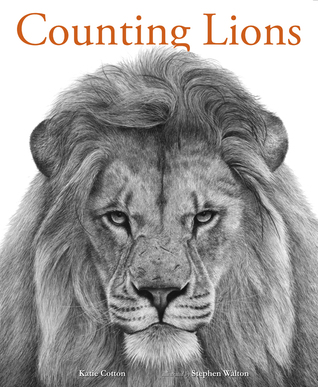
Counting Lions: Portraits from the Wild The Girl With The Parrot On Her Head

Counting Lions by Katie Cotton, illustrated by Stephen Walton

The Girl with the Parrot on Her Head by Daisy Hirst

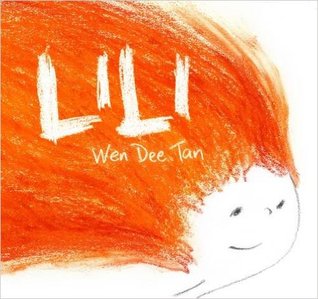
Hector and Hummingbird Lili

Hector and Hummingbird by Nicholas John Frith

Lili by Wen Dee Tan

Toby and the Ice Giants Too Many Toys!

Toby and the Ice Giants by Joe Lillington

Too Many Toys by Heidi Deedman


This Week’s Tweets, Pins & Tumbls

Here are the links I shared on my Twitter, Pinterest, and Tumblr accounts this week that I think are cool:

Books:

CHILDREN’S BOOKS

Are Frog And Toad Gay? The Author’s Daughter Suggests They May Have Been More Than Friends

Beyond the summer book list: How to cultivate a childhood reading habitat

Do myths and folklore damage children’s brains?

Five questions for Tim Federle — The Horn Book

How The ‘Goodnight Moon’ Author And Collaborator Revolutionized Kids Books

Interview with picture book author/illustrator Peter H. Reynolds

LGBTQ Lit for Children and Teens Comes of Age

Misconceptions About American Food I Had From Books

Portland author’s new book explores the mind of a middle schooler

Reading Room:

LIBRARIES

Beyond the book: a whole new chapter in the role of public libraries

Escaping poverty through the library

In Omaha, A Library With No Books Brings Technology To All

Multnomah County Library will waive over $600,000 in fines, end late charges for kids

Topeka and Shawnee County Public Library named Library of the Year, highest honor in U.S. and Canada

I need to know!!!:

READING

You May Soon Binge Books Just Like You Binge Netflix

TEEN READS

Rich in Color | 9 YA picks for LGBT Pride Month

YA Adaptation ‘Everything, Everything’ Finds Director (Exclusive)

We Need Diverse Books Video

Wow. One powerful video of why we need diverse authors who have a passion for creating diverse books for our children. Beautiful!

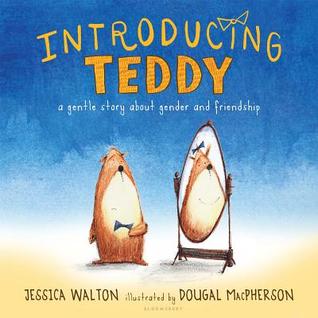
Introducing Teddy by Jessica Walton

Introducing Teddy by Jessica Walton

Introducing Teddy by Jessica Walton, illustrated by Dougal MacPherson

Starting as a Kickstarter project, this picture book features Thomas the teddy and Errol who are best friends. They do everything together, riding bikes, playing in the garden, and eating in the tree house. But one day, Thomas doesn’t feel like playing. Even a visit to the park won’t cheer him up. When Errol asks what is wrong, Teddy says that he is worried that if he tells Errol that Errol won’t want to be his friend any more. After Errol reassures him, Teddy admits that he has always felt in his heart that he is a girl teddy, not a boy teddy. When the two meet Ava, she demonstrates that girls can be anything they want, including inventing robots and wearing their hair without a bow. It’s a gentle look at gender identity.

This is Walton’s first picture book and it is inspired by her father’s transition from male to female. In the picture book, she makes sure to keep everything at a level that small children can understand. It’s a book that speaks to gender and will also work for children who may not be transgender but feel that they don’t fit into the limits that society puts them into. It’s a book that celebrates being who you are and not being afraid to tell others what is in your heart.

MacPherson’s illustrations have a whimsical quality to them, filled with a zingy energy. The use of a bow to demonstrate gender works very nicely and subtly. The introduction of a girl character who is a lovely mix of long hair and skirts and then science and freedom makes for an excellent counterpoint to the bow and bow tie.

A strong addition to picture book about gender identity, this is a gentle way to speak about the issue with children. Appropriate for ages 4-6.

Reviewed from ARC received from Bloomsbury.


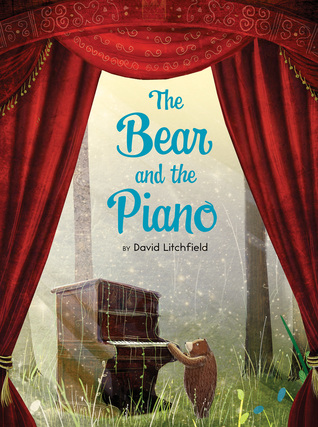
The Bear and the Piano by David Litchfield

The Bear and the Piano by David Litchfield

The Bear and the Piano by David Litchfield (InfoSoup)

One day a bear cub found something in the woods: a piano. When he touches the keys, the sounds are terrible. But year after year he comes back and presses the keys again. Eventually he learns to play beautiful sounds on the piano. Soon all of the bears in the forest are listening too. When a girl and her father hear the music, they invite the bear to come to the city with them to play. He agrees even though he knows the other bears will be sad. After playing piano to great acclaim and winning awards and fame, the bear starts to long for the forest again. But can he return to the old piano in the woods and the other bears?

Litchfield has created a terrific picture book that tells a full story arc that children and adults will appreciate. The book speaks to the transforming nature of music, the longing for something greater and more, and then the longing to return to one’s origins and roots. It is also about talent and setting someone free to pursue their dreams. The entire book has a tugging nature to it, a bear caught between two worlds and the desire for exploration and the continued tie to home. It is beautifully done.

Litchfield’s illustrations are done in mixed media. They have a translucent and light-filled feel, particularly the forest scenes where sunlight beams in and the page glows. There is a beautiful luminous quality to them, inviting readers deeply into the page and evoking the scent of trees and grass.

An exceptional picture book that is musical, nature-filled and grand. Appropriate for ages 4-6.

Reviewed from library copy.


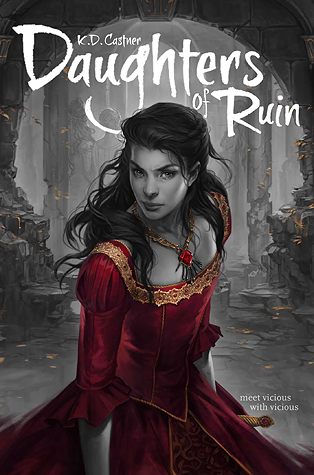
Daughters of Ruin by K.D. Castner

Daughters of Ruin by KD Castner

Daughters of Ruin by K.D. Castner (InfoSoup)

Four princesses have all lived together as sisters since they were small children. But they are far from being sisters, each heir to their own throne. After a war ravaged all of their kingdoms, the victor brought the daughters of his enemies together in peace to forge a new truce. Ten years later, the girls still live together but the peace between them is strained and fraying. There is Rhea, distrusted by the other princesses because her father is the king. Cadis is the beauty and the strongest fighter but there is some question about whether her democratic sea-faring society even lets her be royalty. Iren is the quiet and meek one, concentrating on long letters home to her mother. Finally there is Suki, the youngest of them and most volatile. When the peace of the palace is breached, the princesses have to choose alliances and take up arms.

Castner has created a very strong debut novel. She has not just one strong young woman but four, each of them different from the others. Castner gives them each a unique perspective and voice and yet also keeps them from becoming stereotypical in any way. These are all princesses of war, teens who have been raised to kill and damage, to defend their kingdoms and to win. While some of them are closer than others to being true sisters and friends, others are almost enemies. The dynamics of a four teenagers living closely together and isolated is intriguing and Castner captures the subtleties of it as well as the broader issues.

Castner focuses mostly on the girls themselves and the world comes into focus as the girls leave the palace and venture outside it. Because so much of the book is political intrigue, it makes for a book that truly is from the perspective of the main characters where what they are touched by is the thing that the reader knows most about. In this way, Castner also avoids lengthy exposition about the world made up by the kingdoms. There is just enough detail for it all to make sense and work and nothing more.

Strong female protagonists who wield weapons with panache combine with politics and plenty of twists and turns to create a debut worth exploring. Appropriate for ages 12-15.

Reviewed from copy received from Margaret K. McElderry Books.