2016 Scottish Children’s Book Award Winners

The winners of the 2016 Scottish Children’s Book Awards have been announced. The awards cover three age categories:

BOOKBUG READERS (Ages 3-7)

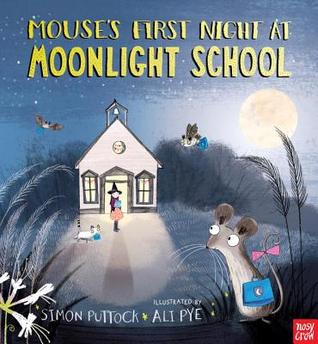
Mouse's First Night at Moonlight School (Moonlight School, #1)

Mouse’s First Night at Moonlight School by Simon Puttock

YOUNGER READERS (Ages 8-11)

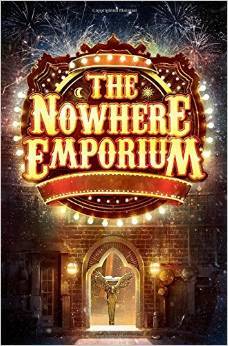
The Nowhere Emporium

The Nowhere Emporium by Ross MacKenzie

OLDER READERS (Ages 12-16)

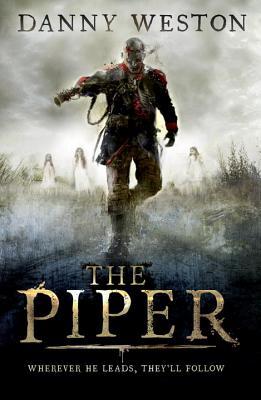
The Piper

The Piper by Danny Weston


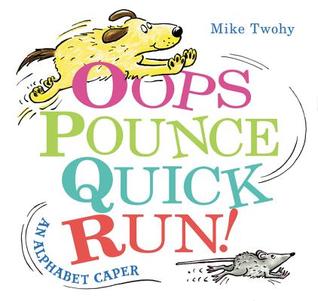
Oops, Pounce, Quick, Run! by Mike Twohy

Oops Pounce Quick Run by Mike Twohy

Oops, Pounce, Quick, Run! by Mike Twohy (InfoSoup)

This fast-paced picture book is built entirely around the alphabet with one word per page. The book starts with a mouse happily “Asleep” in his chair when in comes a “Ball.” Soon a “Dog” is poking his nose into the mouse hole and putting his “Eye” up to it to peek inside. Then the chase is on filled with jumping around the “Kitchen” and “Living room.” The mouse eventually returns the ball to the dog in a wrapped present and the two happily fall fast asleep side by side.

The appeal of this picture book is in its zany energy level that keeps the pace flying along. The chase is a merry one throughout filled with moments of slapstick comedy. It has a sort of Tom and Jerry feel to the entire book made all the more fun by the alphabetic structure of the tale. Simple and fast-paced, this book may have to be read again to slow down a bit and enjoy it.

The illustrations are just as simple as the story itself. Done in a style that will work well when shared with a group, they will project right to the back of a room. The illustrations add to the fast pace with plenty of images of running, dashing, jumping and lines that create more motion on the page.

A dynamic alphabet book that is filled with cheerful energy. Appropriate for ages 1-3.

Reviewed from library copy.

Hour of the Bees by Lindsay Eager

Hour of the Bees by Lindsay Eager

Hour of the Bees by Lindsay Eager (InfoSoup)

Carol is missing out on what all of her friends are doing this summer, because she has to head out with her family to the New Mexico desert and move her grandfather off of his farm and into a home for people with dementia. Carol has never really met her Grandpa Serge and tries to avoid him at first because he is so prickly and all he will talk about is a wild story about bees returning to the desert. As the summer goes ever so slowly by, Carol connects with Serge and discovers his ability to weave a great story. It’s a story that is about her grandparents, about a magical tree that granted everlasting life and about bees too. Carol begins to understand her grandfather’s connection to the dried out land and the small home just as the summer ends and they are forced to leave it behind but the story has not reached its end yet.

This magical realism book is enticingly radiant. It shimmers with desert heat, itches with dust and dirt, aches with the loss of loved ones, and dances with the voice of a great storyteller. The writing is lush and lovely with distinct tone differences between Grandpa Serge’s stories and the prose of the novel. Even that prose though is written with such poetry:

I want to tell her how Serge’s eyes glow, how they are cat’s eyes, wide as a newborn’s, ringed like an ancient tree trunk.

A large theme of the novel is connection to one’s heritage and roots. In this book about a magical tree, those roots have many meanings. Carol is urged to connect more with her Hispanic heritage and also to the land itself. She does over the course of the novel in a believable and organic way that really works well. This book is about those slow changes, about becoming yourself and honoring who you are and where you come from.

Beautiful and haunting, this novel deserves a wide audience and plenty of buzz. Appropriate for ages 9-12.

Reviewed from ARC received from Candlewick Press.


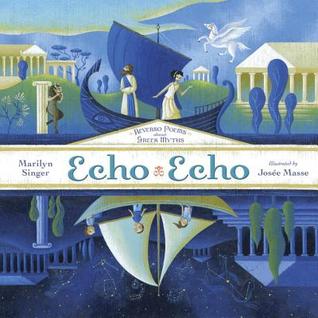
Echo Echo by Marilyn Singer

Echo Echo by Marilyn Singer

Echo Echo by Marilyn Singer, illustrated by Josée Masse  (InfoSoup)

Singer returns with another collection of her amazing reverso poems this time focusing on Greek mythology. The format which has poems which read one way read forward and another way read in reverse, looks at myths from two divergent points of view. This is particularly effective with Greek myths because they so often have two points of view embedded in them. The poems focus on myths such as Pandora’s box, King Midas, Medusa, Icarus and Narcissus. Though brief, these poems capture the essence of each myth, exposing their complexity in a few choice words and phrases.

Singer has done it again. Her amazing reverso poems must be read with care by young readers who have to pay close attention to punctuation to see the difference in meanings between the two poems. The poems are dazzling as they lay open the themes of each myth, the drama being played out in the story and the differing points of view of the main characters. This is one intelligent display of word play that is incredibly difficult to even imagine doing.

Masse’s illustrations each play upon the theme of different sides or points of view. With visual lines down the middle, the two sides both work together as a whole and show the differences between the two poems. The illustrations echo the poems closely, offering a visual feast in addition to the richness of the words.

Another winner for Singer and her reverso poetry, classrooms teaching mythology will love to have this book on hand for accessible and bite-sized looks at many myths. Appropriate for ages 6-9.

Reviewed from copy received from Dial Books.

Apples and Robins by Lucie Felix

Apples and Robins by Lucie Felix

Apples and Robins by Lucie Felix (InfoSoup)

Released March 8, 2016.

So simple and so clever, this picture book takes the wonder of shapes and page turns to a new height. Apples are made of circles and red, turn the page and the white circles on a red background transform into red apples and green leaves. A ladder appears from a stack of six rectangles and one long one. A robin flies onto the page as ovals and triangles are framed by a circle cut out. The book comes together as a birdhouse is built in the apple tree and soon robins and apples are thrown into disarray as the page turns reveal a big storm. The simple elements though return and things are set to rights once more.

There are a lot of books with cut outs on the market. Few though have this book’s flair with surprises and a sense that with each page turn there is a reveal. Even the very simple ladder somehow surprises and delights. The combination of apples and robins may not seem clear at first, but that too is revealed in a playful way as the book comes together into a cohesive whole filled with enough drama to keep those pages turning quickly.

The illustrations are simple and lovely. They use basic shapes in a compelling and creative way. As I mentioned earlier, it is the reveal that works so well here with each page turn having a sense of magic about it.

Smart and lovely, this is a brilliantly designed book. Appropriate for ages 2-4.

Reviewed from copy received from Chronicle Books.


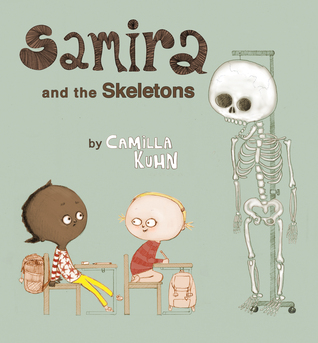
Samira and the Skeletons by Camilla Kuhn

Samira and the Skeletons by Camilla Kuhn

Samira and the Skeletons by Camilla Kuhn (InfoSoup)

Samira is having a good day, enjoying school and spending time with her best friend, Frida. But then her teacher says something perfectly horrible. She explains that inside everybody is a skeleton with a skull, ribs, spine and more. Samira is horrified and soon can’t see anyone without seeing their skeleton without skin. She starts to avoid her classmates, particularly Frida. Luckily her mother has a great plan. She offers to remove Samira’s skeleton entirely right there in the kitchen. But Samira’s skeleton doesn’t want to lay still for the operation and runs outside and off to the park where Samira’s skeleton and Frida’s skeleton run around together and soon Samira can see Frida as herself once again. Of course, there is still tomorrow’s lesson to get through…

Samira is a child with a huge imagination, one that just won’t shut off easily either when it gets an idea. The story is a refreshing one with a parent who deals with the issue in a calm and playful way, saving the day. Samira herself is complex and interesting, a girl who visualizes ideas intensely, reacts to her own imagination with zing and has no problem being entirely herself.

The illustrations are fantastic with plenty of personality and good humor. Samira is an African-American child and her best friend is Caucasian. Another very clever aspect of this story is to show that we are all the same underneath our skin. So when Samira is seeing everyone as a skeleton, suddenly there is no race in the class, just bones. It’s a subtle message that the book introduces and never belabors.

A dynamic and funny look at the intersection of science and imagination. Appropriate for ages 4-6.

Reviewed from copy received from Eerdmans Books for Young Readers.

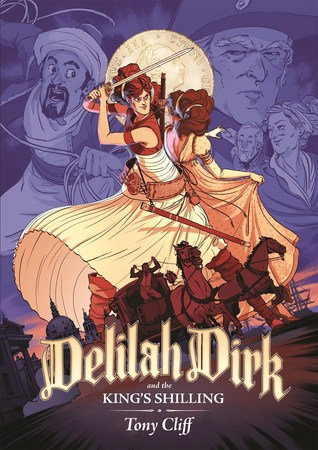
Delilah Dirk and the King’s Shilling by Tony Cliff

Delilah Dirk and the Kings Shilling by Tony Cliff

Delilah Dirk and the King’s Shilling by Tony Cliff (InfoSoup)

Released March 8, 2016.

This second book in the Delilah Dirk graphic novel series will have fans cheering once again for this Victorian sword-wielding heroine. When an English army officer threatens Delilah’s good name, her thirst for revenge takes over. But Selim sees it in a calmer way, trying to divert her attention back to their travels. He wishes to travel to England, though Delilah has no interest in going there. That is until she discovers that it may be the way to take down the office who wronged her. Soon the two travelers are in England where Delilah reveals her own background and Selim attempts to enjoy his first trip there even as he is pressed into service for Delilah’s family.

This second book is just as delightful and refreshing as the first. Delilah stays entirely herself, taking on those doing wrong, defending her personal honor, and managing to have many amazing battles along the way with her sword whirling. Selim too remains the calm epicenter of Delilah’s world as the two of them travel together. He can’t get her to listen any better in this book, though in the end he seems to have known best all along. Their dynamic with one another is a major part of these books, the two of them both appreciating one another at times and then almost breaking into fist fights others. It was a particularly good choice to put their dynamic at risk in this book, making it all the more readable.

Cliff’s art is gorgeous. He has action galore here whether it is horses galloping or near escapes. Of course his battles in particular are incredibly done, frame after frame offering detail but also keeping the pacing brisk and the story line firmly in hand. The swirling skirts of Delilah match her swords and she fights in a most decidedly feminine and brutal way. It’s a delight to see.

Another winning Delilah Dirk book that anyone who loves a great sword fight will enjoy. Appropriate for ages 12-15.

Reviewed from copy received from First Second.


This Week’s Tweets, Pins & Tumbls

Here are the links I shared on my Twitter, Pinterest, and Tumblr accounts this week that I think are cool:

Raise readers!:

CHILDREN’S BOOKS

6 Children’s Books To Read Before They Become Movies In 2016

10 Strategies to Help a Reticent Reader Love to Read by Susie Rolander

2016 Books from Caldecott Winners — 100 Scope Notes

3D printed picture books are helping visually impaired children to read | Gadgette

Australia’s First Ever Children’s Book About Same-Sex Marriage Has Been Long-Awaited

The benefits of reading to your child are priceless

Dr. Seuss books remade in yarn will make you want to be a kid again

Great children’s picture books about same-sex parenting – in pictures

The Horror Story of Publishing Children’s Books in Russia

More than 2.5m Minecraft books sold by Egmont Publishing

My book on George Washington was banned. Here’s my side of the story

Something Beautiful | Spring 2016 Titles for and About Latinos

Seven Years of College So I Can Cut Scrap Paper - Professional Library Literature : simplebooklet.com:

LIBRARIES

Chicago library housing historic collection of black literature in jeopardy

Patrons fret cuts coming to Cedar Rapids libraries | The Gazette

Re-pinned by: http://sunnydaypublishing.com:

TEEN READS

Scholastic and Ubisoft Partner for YA Novels Tied to ‘Assassin’s Creed’

Top 10 female friendships in YA

When is YA going to shape up to body diversity?

X-Files Origins: YA Novels of Teen Mulder and Scully Coming
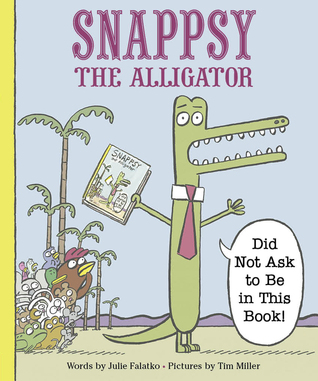
Snappsy the Alligator by Julie Falatko

Snappsy the Alligator by Julie Falatko

Snappsy the Alligator by Julie Falatko, illustrated by Tim Miller (InfoSoup)

Snappsy discovers his day taken over by a narrator in this picture book. The book begins with the narrator explaining that Snappsy was feeling “draggy” and even his skin was “baggy.” Meanwhile, Snappsy himself actually feels hungry. The narrator keeps talking about Snappsy’s every move, sometimes just describing what is happening in each image and other times adding too much drama. When Snappsy reaches the grocery store, the narrator focuses on the letter P too much. Snappsy decides to throw a party so there is something to do, and the narrator continues to cause mayhem as the story progresses.

Falatko’s writing is very funny. Her timing is wonderful, Snappsy often reacting just the way that the reader would, calling the narrator out for doing a bad job at times and other times getting snarky when the narrator has miscalled what is about to happen. The influence of the narrator’s voice on a story is shown very clearly here and is a great way to talk about the tone of writing and how that can change an entire book to read one way or another. That said, this book can also just be read for the giggles which is the perfect reason to pick up any picture book.

Miller’s illustrations have the feel of a vintage picture book, just right for this subject matter. They add to the humor from the expressions on Snappsy’s face to the homey aspects to the house that Snappsy lives in.

A smart, silly and richly funny picture book that is sure to have people laughing when it’s shared aloud. Appropriate for ages 4-6.

Reviewed from library copy.