YALSA has announced the nominees for the 2021 Teens’ Top Ten. The Top Ten is a list chosen by teens where teens nominate and choose their favorite books of the previous year. Nominations come from members of teen book groups in 15 school and public libraries across the nation. Here are this year’s nominees:
Watercress by Andrea Wang, illustrated by Jason Chin (9780823446247)
Riding in their old car along a rural Ohio road, a young girl’s parents come to a stop when her mother spots something growing in the ditch. It’s watercress, so the entire family gets out and starts to harvest it into a paper bag. The girl finds it embarrassing to be in the ditch gathering free food, while her parents are remembering their time in China. The water in the ditch is cold and muddy, the watercress has snails among its roots. The girl finds herself partially hoping that the bottom of the paper bag falls through and this can just be over. That night, the family has the watercress for dinner, but the girl refuses to even try it. She wants food from the grocery store, not free food from a ditch that reminds her of furniture taken from the side of the road and hand-me-down clothes. Then her mother shares a story from China about her younger brother who died from not having enough to eat. The girl is inspired by her family’s history and ashamed of how she has been acting, so she tastes the watercress for the first time, a taste that builds new memories.
The writing in this picture book is exceptional. With delicate poetic words, Wang creates layers in her story. She weaves both the experience of shame for the young girl and the melancholy memories of China for her parents together into a story of generations in a Chinese-American family. From the previously unshared stories of her parents time in China to learning not to be ashamed of the way they live, this book will resonate for so many children.
Caldecott Honor winner, Chin pulls together images of China and Ohio in this book. By putting tall cornstalks against tall bamboo, the images are gateways to one another. The use of yellow to light the pages, works both in sunshine in Ohio and the sepia of memory in China. It is all so beautifully done, so well designed.
One of the best picture books of the year, this book reaches across generations and finds hope. Appropriate for ages 5-7.
The finalists for the 2021 Hugo Awards have been announced. Amid many categories celebrating the best in science fiction for adults, there is also an award for the best YA book. Here are the finalists in that category:
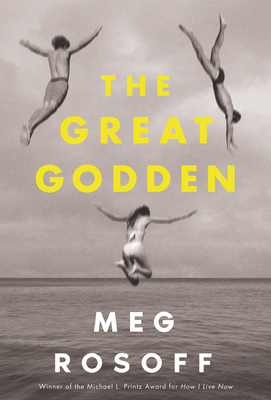
On their annual beach vacation, a teen and her family experience an unusual summer. It’s a summer of time spent sailing and swimming. A summer full of competitive tennis games, shared meals, and naps. It was also a summer of new love, hot crushes, and strange boys. It was the summer when the Godden brothers arrived. Kit was the golden brother, impossibly handsome and entirely intoxicating when he turned his attention on you. Hugo was the darkness to his brother’s shine, the surliness to his charm. As the narrator watches, her sister and Kit become involved, flirting at first and then becoming more and more. What should be just a summer fling has an underpinning of unease and manipulation, just in time for Kit to turn his attention to the narrator who by now should know better. But even then, he has more chaos to create.
Printz Medal winner, Rosoff has created a slim volume that is impossible to put down. It has the languid and flowing feel of Kit himself, drawing readers in with promises of summer fun and then turning into something quite unusual, dark and menacing. The book is a great coming-of-age story where readers get to see a young woman realize what is happening around her and yet not quite be able to stop it from engulfing her as well. The narrator is never named, but all is seen and felt through her own experiences, making it an intensely personal read.
The writing is exceptional. Rosoff quietly and carefully seeds doubts with the words she chooses to use in describing the characters, the things that the narrator sees, and the questions that she has deep down. Rosoff situates us all with a rather unreliable narrator, who sees her siblings and family in a specific way, then along with the reader has new realizations about them and what that means.
Sun drenched, threatening and vibrantly feminist this is a triumph of a book. Appropriate for ages 14-18.
We Became Jaguars by Dave Eggers, illustrated by Woodrow White (9781452183930)
When a boy’s grandmother comes to visit, his parents leave him alone with her even though he doesn’t really remember her. His grandmother immediately drops to the floor and invites him to become a jaguar with her. He joins her, stretching himself thinner and becoming faster. Soon they are out in the forest, moving through it in the way that only jaguars can. The two drink from moonlit water, and his grandmother kills a rabbit and eats it. They venture to high lookouts, take occasional rests, and run fast and often. Their voices rumble like thunder together. As they head into the Himalayas, the boy remembers he has to return to school and wonders how long they have been gone. The ending refreshingly leaves questions of what was imagined and what was real.
Eggers writes in prose that is a mix of simple lines and marvelously captivating moments. Nature plays a large role in the book, inviting readers to think about venturing out into their own forests and having their own outdoor adventures. The time spent together sipping water from a lake, running fast and hard, and bouncing over water like marbles creates a vibrant relationship between the two characters as they get to know one another. It becomes less and less important what is real as their experiences together are what truly matter.
White’s illustrations are full of mystery and moonlight. He uses such deep colors in the book, allowing the jaguars to glow on the page, full of their own light. The gatefold page opens fully to allow the two people to transform in front of the reader into jaguars. The pages are deliciously colored, showing the wonders of nature and a variety of gorgeous landscapes.
Imaginative and invigorating, this playful picture book takes us to the wild side. Appropriate for ages 3-5.
I Dream of Popo by Livia Blackburne, illustrated by Julia Kuo (9781250249319)
A little girl grows up seeing her beloved Popo, her grandmother, often in Taiwan. They spend time together cuddling, eating and going to the park. Then the girl’s family decide to move to San Diego, far away from Taiwan. The girl goes to school in America with children of all colors. She doesn’t speak English yet, but she is learning. She calls her grandmother regularly. When they return to Taiwan for a visit, it feels different and she can’t communicate in Chinese as well as she used to. Her Popo’s house seems smaller though it smells just the same and her dumplings taste the same too. When her grandmother gets sick, the girl wishes she lived closer, but a dream is just the right thing to being them together after all.
This #ownvoices picture book is based on the author’s childhood, moving from Taipei to Albuquerque. It shows how a long-distance connection between a grandparent and grandchild is possible, keeping memories fresh and new experiences shared with one another. The book is filled with elements of Taiwan, such as New Year’s celebrations, dumplings and other food. Smells of Taiwan are mentioned regularly, wafting through experiences and dreams.
Kuo’s art is bold and beautiful. She allows the little girl to age through the course of the story, toddling in the park then heading to school, becoming less round and more lean as the pages turn. Popo also ages, the lines on her face more pronounced and her hair changing from black to gray. It is subtle and beautifully done.
A gentle story of immigration and continued connection to those left behind. Appropriate for ages 3-5.
Reviewed from e-galley provided by Roaring Brook Press.
This sequel to the Newbery Award winning Merci Suárez Changes Gears continues the story of Merci, her large multigenerational family, and the difficulties of being a seventh grader. This year, Merci has been assigned to manage the small school store along with Wilson, a boy who is amazing at math. As the two reinvent what their school store can be, adding movie merchandise, they end up also being drawn into selling tickets for the Heart Ball, run by Edna, who has managed to become even bossier than usual. Merci has decided not to go to the dance, but is asked to take photographs and agrees as long as she doesn’t even have to enter the gym. When an accident happens, Merci makes a bad decision and covers up the damage, setting off a series of lies that will involve school and family. With no one to talk to, since her grandfather’s dementia is worsening, Merci has to figure out who to trust to help her.
Fans returning to reconnect with Merci will once again find Medina’s rich depiction of Merci’s extended family, her grandfather’s worsening mental abilities, and the gorgeous warmth and love that keeps them all connected. Medina put Merci in quite a horrible situation in this second novel, where she feels alone and unable to be honest. Medina writes it with such empathy and skill that it is almost painful to read, though that makes the resolution all the more marvelous to experience.
As always, Medina’s writing is skillful and detailed. She truly creates a middle school experience with burgeoning romantic feelings and the changes happening between long-time best friends. Medina doesn’t let this all be negative, instead focusing on the confusion but also on the deeper understanding that can result from going through strange middle school circumstances.
Another marvelous Merci novel. Appropriate for ages 9-12.