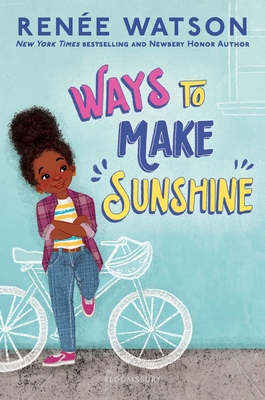
Ways to Make Sunshine by Renee Watson

Ways to Make Sunshine by Renee Watson

Ways to Make Sunshine by Renee Watson (9781547600564)

Even though her father got a new job, Ryan and her family have had to move into a smaller and older house because money is still a problem. Ryan though is able to see the positive in most things, though maybe not her brother some days. She loves to cook, coming up with unique combinations to make good food even better. One thing she struggles with is public speaking, like on Easter where no matter how much she practices her part, she can’t manage to say it into the microphone in front of the congregation. Maybe this is the year? So when Ryan’s class is working on a talent show, Ryan has to figure out how to turn her passions into performance. She is also navigating changing friendships and mean girls who seem intent on pushing her to the side. Ryan may not want the spotlight, but she does bring sunshine wherever she goes.

Watson, winner of a Newbery Honor and Coretta Scott King Author Award, has created a book for young readers that offers a modern look at being an African-American girl in Portland. The city is tied into the story very successfully, drawing people to beloved places to taste and explore along with Ryan. While the title is full of optimism, the book looks at important issues for elementary-aged children such as race, acceptance, self-esteem, and friendships.

Ryan isn’t a Pollyanna character, rather she is a girl who has resilience and optimism. She is distinctly her own person and Black girls will see themselves as she navigates the many changes in her life. She is smart, creative and positive.

A rival to Ramona, get this one in the hands of young readers. Appropriate for ages 7-10.

Reviewed from ARC provided by Bloomsbury.
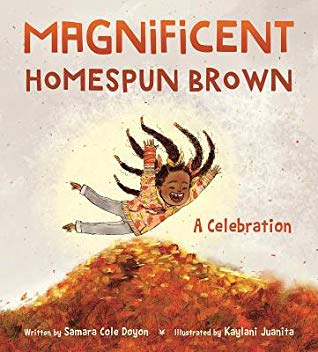
Magnificent Homespun Brown by Samara Cole Doyon

Magnificent Homespun Brown by Samara Cole Doyon

Magnificent Homespun Brown by Samara Cole Doyon, illustrated by Kaylani Juanita (9780884487975)

Celebrate the magic of the color brown in this book filled with poetic words and enticing illustrations. Deep secret brown is the color of the river currents and also the little girl’s eyes. It is the color of her eyelashes which are the same brown as the shadows of the hemlock trees in the woods where they hike. Amber brown is the color of honey and the color of her hair. Radiant brown is the color of the sand at the beach and the color of her skin. Brown is the color of caramel and cocoa, the color of warm family moments on icy cold days and the color of fall leaves and laughter. 

Doyon’s poetry is approachable and accessible for young readers who will see themselves not only reflected on the pages but celebrated for all of their colors. Doyon’s poem is not simple, she insists on looking deeply at the colors and moments that connect us all, the laughter and the love in our families, and the beauty of African-American skin. She has created a picture book that delights in turning what society sees as a negative into a joyous positive party.

The illustrations are pure delight, as you can see from the cover. They take warm autumnal colors, which of course include brown, and create a book that glows in the reader’s hands. Skin color is celebrated, as is diversity in the African-American community. There is pure joy in the illustrations that matches the positivity of the text.

A positive look at African-American families, skin colors and experiences. Appropriate for ages 5-7.

Reviewed from library copy.

The Secret Garden of George Washington Carver by Gene Barretta

The Secret Garden of George Washington Carver by Gene Barretta

The Secret Garden of George Washington Carver by Gene Barretta, illustrated by Frank Morrison (9780062430151)

George Washington Carver grew up to be a famous botanist and inventor. In 1921, he spoke before Congress, talking about how the humble peanut could be used to make so many different products. This famous man’s connection with plants and the earth came from an early age in the form of his own secret garden. Born into slavery in 1864, he was kidnapped as an infant along with his mother. His mother was never found, but George was brought back to slavery. George and his brother grew up on the farm, even after slavery was abolished. Every day, George headed to the woods and the garden he was growing there. He learned all about plants without being mocked or teased, soon helping people in the area with their sick plants. He grew up, got an education, and became an Agriculture professor at Tuskegee Institute He also traveled the United States working directly with farmers to answer their questions and improve their farms. 

Barretta’s picture book biography of this famous African-American scientist and genius is fascinating and filled with moments of wonder. The frightening kidnapping in his infancy, his start as a slave and then working on a farm for his previous owners, and his incandescent mind finding a way forward to learn and grow all add up to a remarkable life. The text is engagingly written for a compelling read. 

Morrison’s art is phenomenal. The browns of the days of manual labor on the farm contrast with the bright greens, growing shoots, and tall trees of George’s secret garden. The two parts of his life could not appear more different. 

A fascinating look at a remarkable man. Appropriate for ages 6-9.

Reviewed from library copy.

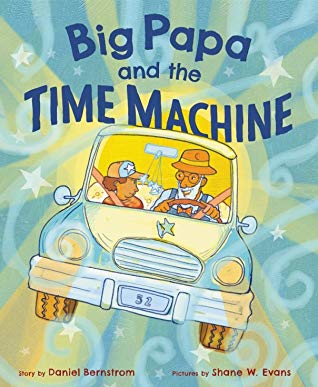
Big Papa and the Time Machine by Daniel Bernstrom

Big Papa and the Time Machine by Daniel Bernstrom

Big Papa and the Time Machine by Daniel Bernstrom, illustrated by Shane W. Evans (9780062463319)

When a child doesn’t want to go to school because he’s scared and nervous, he talks with his grandfather. His grandfather understands exactly how his grandchild is feeling and takes him on a ride in his car which is also a time machine. It takes them both to see when he left his mother back in 1952 and had to be brave himself. They stop in 1955 to see him working up high on buildings, needing to get beyond being so scared. In 1957, Big Papa had to get over his fears to ask a lovely girl to dance, a girl who would eventually marry him. They then head to 1986 when the child was left with Big Papa. He wasn’t sure if he could take care of a baby all on his own. All about bravery in spite of being scared and nervous, this book shows that it is those moments that define a life.

Bernstrom takes readers on a real ride through history through the eyes of this African-American family. Generations appear and their clear love for one another is evident. Even with a baby being left behind for a grandparent to raise is shown as a chance to save a life and find a new way forward. Children in smaller non-nuclear families will recognize the connection between a sole adult and their child in these pages. It’s particularly lovely to see an African-American man in this role.

Evans makes the pages shine with light as he uses bright yellows and mystical swirls and stars to show the passing of time. Every page is saturated in color, glowing with the connection of the two characters. The child is never declared to be a specific gender in either the text or illustrations, making the book all the more inclusive.

A bright and vibrant look at why to be brave. Appropriate for ages 4-6.

Reviewed from library copy.

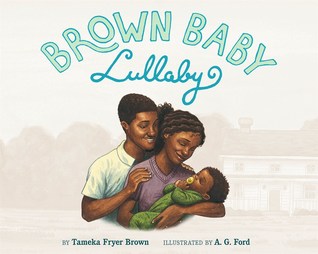
Brown Baby Lullaby by Tameka Fryer Brown

Brown Baby Lullaby by Tameka Fryer Brown

Brown Baby Lullaby by Tameka Fryer Brown, illustrated by AG Ford (9780374307523)

A family of father, mother and baby play across the pages of this picture book. As the sun begins to set, they head home from a day outside. Baby heads across the floor, crawling and almost standing. As dinner is being made, he throws things out of his playpen. Then he gets to bang pots and pans for awhile before dinner. He gets fussy and hungry just in time to make a tremendous mess eating. Then it’s bath time before getting ready for bed. The family dances together until it’s time for stories and sleep. 

This book is just perfect for little ones, allowing brown babies to see themselves on the page and babies of other colors to celebrate them. The family is warm and lovely, just right for a toddler bedtime read. The cozy factor is huge here, rather like a hug made into a book. The sprinkling of Spanish phrases throughout the story adds so much. Ford’s illustrations glow with warmth on the page, filling them with toddler activities in a busy family. 

A beautiful glimpse of an evening in the life of a family. Appropriate for ages 1-3.

Reviewed from copy provided by Farrar Straus & Giroux.

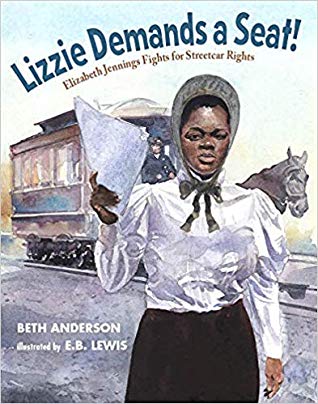
Lizzie Demands a Seat: Elizabeth Jennings Fights for Streetcar Rights by Beth Anderson

Lizzie Demands a Seat Elizabeth Jennings Fights for Streetcar Rights by Beth Anderson

Lizzie Demands a Seat: Elizabeth Jennings Fights for Streetcar Rights by Beth Anderson, illustrated by E. B. Lewis (9781629799391)

In 1854, Lizzie Jennings boarded a streetcar in New York City. In that time, there was segregation on public transportation which was a custom not a law. Certain cars were marked for “colored people” and others were for white people who could allow people of color to ride, or not. So Lizzie didn’t know if she would be allowed to ride the car she boarded. No passengers disputed her right to ride, but the conductor did. He forced her off the car and when she argued and boarded again, the police were called. Lizzie was educated as a teacher and her family had fought for their civil rights, so she decided to fight back in court and sued the streetcar company. She even had a white passenger who offered to be a witness to the way she was treated that day. In the end, Jennings won a landmark case for civil rights in public transportation. It didn’t fix every streetcar in New York right away, but led to other people fighting for their rights to ride too. 

Anderson takes one of the first legal victories against segregation and creates a dynamic look at a critical moment in our national history. This little-known event, particularly compared to Rosa Parks, helps set the stage for the civil rights movement that followed. Lizzie also breaks stereotypes of African Americans on her time period with her level of education and wealth. 

The illustrations are done in watercolor with amazing backgrounds that illuminate the scenes with their inspiring colors. Lizzie and her battle are surrounded by swirls of peach, lavenders, pinks and blues with her at the center, calm and composed. 

A stirring picture book that captures early civil rights efforts. Appropriate for ages 6-9.

Reviewed from library copy.

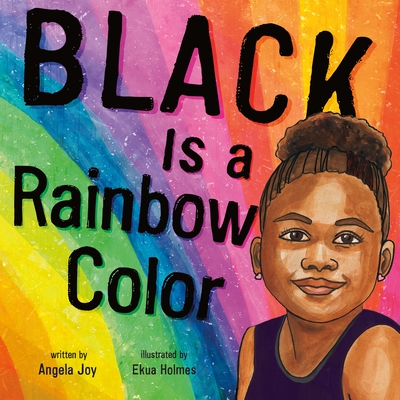
Black Is a Rainbow Color by Angela Joy

Black Is a Rainbow Color by Angela Joy

Black Is a Rainbow Color by Angela Joy, illustrated by Ekua Holmes (9781626726314)

Inspired by a comment from her daughter, Joy celebrates being Black in this picture book that definitively places the color black in the rainbow of the world. In poetic verse, she looks at a myriad of lovely things in life that are black like her friend’s braids, bicycle tires, Thurman’s robes, ink on a page. The images come from children’s own lives but also are inspiring, speaking to figures in African-American history and culture. The color black and being Black mean so many different positive and powerful things, that black itself is a rainbow to celebrate.

Joy’s writing is powerful, singing on the page like a hymn. She writes simply but with great imagery and drawing in references to powerful African-Americans along the way. She also takes lines of songs and weaves them into her poem. At the end of the book, she writes of the inspiration for her book, the songs included in her poem, and the use of various ethnonyms to refer to the Black community over time. A bibliography of titles is also appended.

The art by Holmes is exceptional. Much of the art in the book pays homage to stained glass windows with thick black lines and strong colors. Other pages use a lighter line, more details and allow colors to swirl and dance. The entire work is one of graphic power and color.

An important book for all library collections. Appropriate for ages 4-6.

Reviewed from copy provided by Roaring Brook Press.

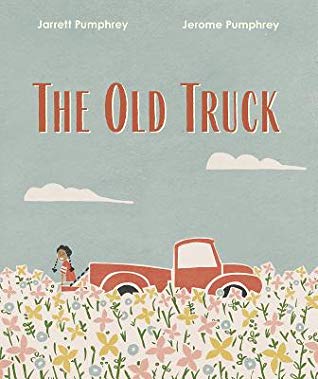
The Old Truck by Jarrett and Jerome Pumphrey

The Old Truck by Jarrett and Jerome Pumphrey

The Old Truck by Jarrett and Jerome Pumphrey (9781324005193)

This picture book celebrates the hard work on a farm, whether you are a human or a truck. The old truck worked hard on the farm hauling things. But it grew tired and unable to be fixed. So it rested near the barn, dreaming of being a boat, a blimp or even a space rover. It got older and older sitting there, weeds growing up around it. Until a new farmer, who had grown up on the farm, decided to try again to fix it. It took a lot of determination and trying, just like farming, but the old truck eventually came to life again, woke up and started working. 

Told in the simplest of phrases, this picture book is really about the illustrations. Done with over 250 handcrafted stamps, the illustrations have a wonderful retro look with modern colors. They show an African-American family on a small family farm, working hard. The little girl goes from being born all the way through to owning the farm herself and having a child of her own. The time process is slow and steady, marked by the growing of the weeds as well. 

Delightfully modern and retro, this picture book is very special. Appropriate for ages 2-4.

Reviewed from library copy.

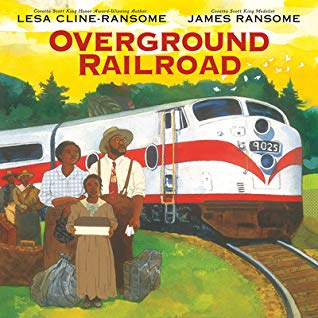
Overground Railroad by Lesa Cline-Ransome

Overground Railroad by Lesa Cline-Ransome

Overground Railroad by Lesa Cline-Ransome, illustrated by James Ransome (9780823438730)

Ruth Ellen and her family left the South to head north to New York. Some African-Americans made the trip on foot, some drove but Ruth Ellen and her family took the train. They got the last seats in the colored car, and settled in for the long journey. They left secretly, not telling her father’s boss or their landlord that they were leaving. More and more people filled the colored train car as they traveled northward, many of them left standing because all the seats were taken. Ruth read to her mother from the book her teacher had given her about Frederick Douglass. As they got to Maryland, the separation of white and colored was removed, and Ruth and her family moved to get seats in less crowded parts of the train. Some white people didn’t want them sitting near them, but others were friendly. Their trip continued all the way to New York City where they would make their new future. 

Told in the voice of Ruth Ellen, this picture book is a very personal look at the deep changes in the South after slavery that created the opportunity for the Great Migration to the north. On these pages is a clear optimism about their future, their new opportunities coming to fruition. The book is focused specifically on the travel north, beautifully weaving in elements from Frederick Douglass’ experience as he journeyed north fleeing slavery. 

The illustrations are done in paper, graphie, paste pencils and watercolors. Ransome has created illustrations that are richly colored, show the poverty of the south, but also capture the rush of the train towards the north and opportunity.

This historical picture book shows a moment of deep change in America. Appropriate for ages 6-9.

Reviewed from ARC provided by Holiday House.