2 Nifty Nonfiction Picture Books about Animals

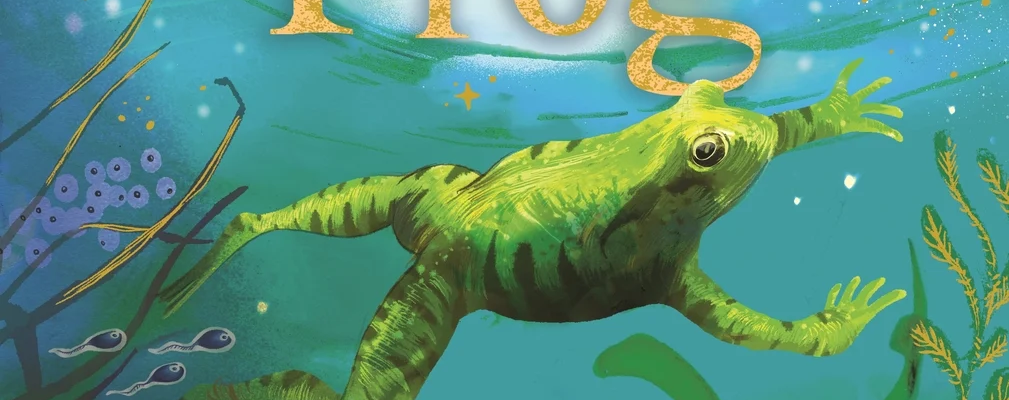
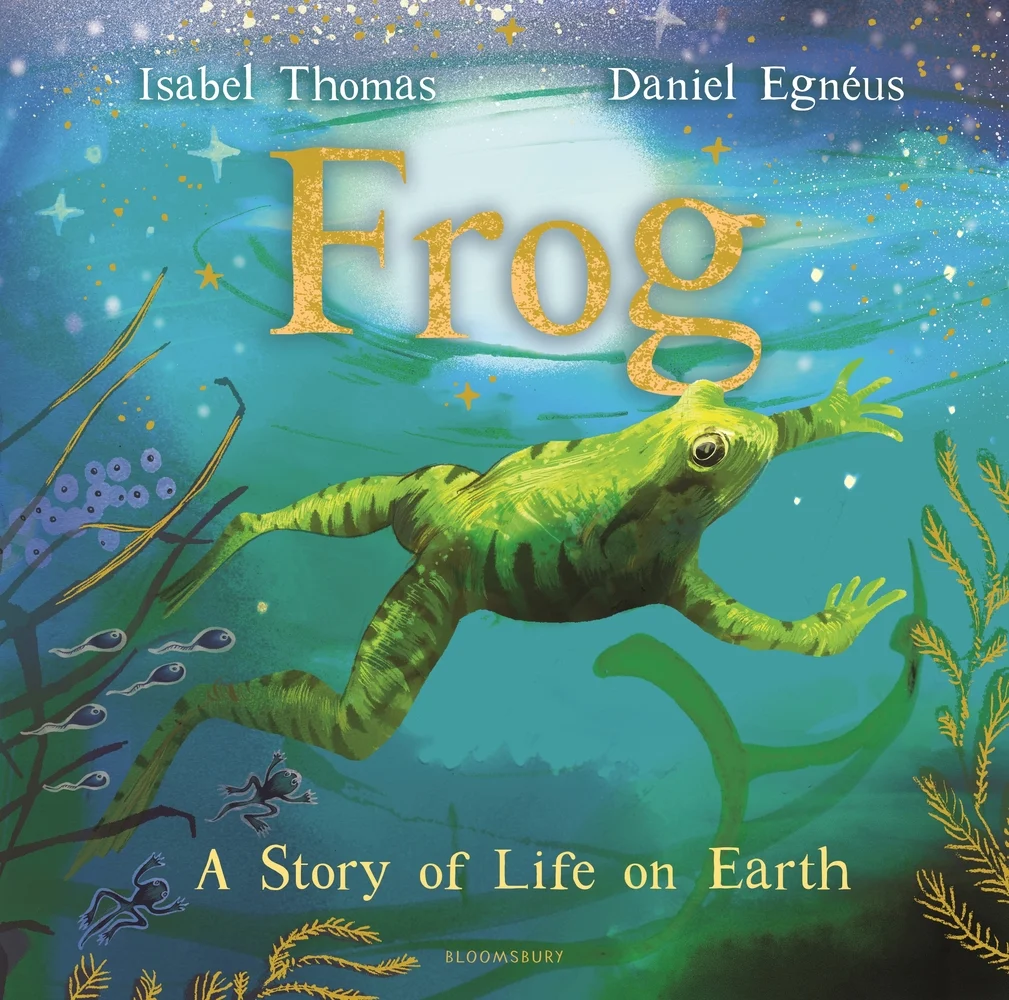
Frog: A Story of Life on Earth by Isabel Thomas, illustrated by Daniel Egnéus

  • Publisher: Bloomsbury Children’s Books
  • Publication Date: January 13, 2026
  • Reviewed from Edelweiss e-galley
  • ISBN: 9781547618200

A child discovers frog eggs in a pond. Eggs will become tadpoles and eventually frogs. But where did the very first frog come from? Well, the picture book merrily takes children way back in time to the Big Bang where the first atoms were just forming. Stars formed and exploded, atoms moving across the universe. 8 billion years later, our solar system formed around the sun. Earth was perfectly positioned to create living things, but it took time. Cells formed, became creatures, lived in water and eventually on land. Amphibians rule the land for 100 million years, evolving and eventually frogs started hopping.

This is the third book by this creative pair, offering a book both about frogs and about the universe and life itself. The text is engaging and interesting as it suddenly veers from pond life to all life and then back again to frogs. It’s a journey in time and space that is definitely worth taking as the book explains the process simply for young children to understand. The illustrations also change from watery blues and greens of frogs and ponds to the dynamic colors of the universe as it is born and grows. 

A book about frogs that hops in new directions. Appropriate for ages 4-7.
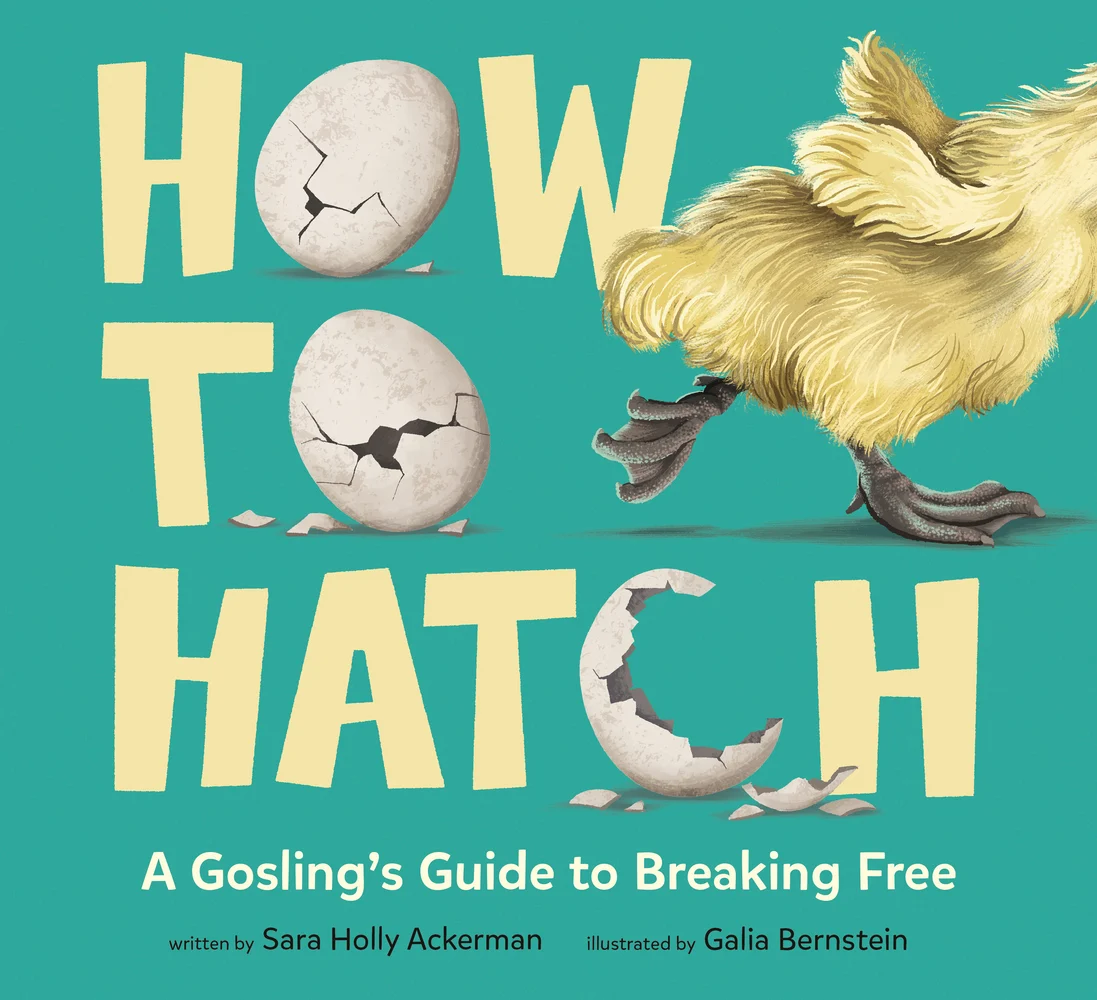
How to Hatch: A Gosling’s Guide to Breaking Free by Sara Holly Ackerman, illustrated by Galia Bernstein

  • Publisher: Knopf Books for Young Readers
  • Publication Date: January 13, 2026
  • Reviewed from Edelweiss e-galley
  • ISBN: 9780593811061

Beginning with a gosling snug in his egg, the book tells it that it is time to hatch! Step one is finding and pricking the air cell in the egg so that the gosling can breathe. Step two is tapping away with its egg tooth to break that shell. Perhaps a quick nap, since that was hard work. Now on to cutting the shell and using wings and legs to exit. Find a warm spot to dry off and then you are set to head out with your mother and siblings. 

Alongside the jaunty hatching story that can be shared aloud, there are in-depth facts on each page turn so that readers can learn more. It’s a great way to share information with children who are interested and still have a fast-paced read aloud for a crowd. The facts are written in an engaging style too, full of answers to natural questions. The art in this picture book is a lovely mix of cartoon and science, making for a book that will show well to a group and also read well snuggled close.

A cracking good book. Appropriate for ages 4-7.
Bear Wants to Sing by Cary Fagan

Cover image for Bear Wants to Sing.

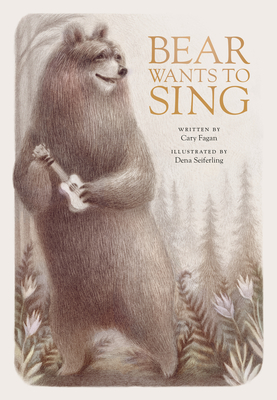
Bear Wants to Sing by Cary Fagan, illustrated by Dena Seiferling (9780735268036)

This is a follow up to King Mouse from the same creative team. Out on a walk, Bear discovers a ukulele in the grass. Bear plucked a string and thought of a song. Mouse was there on a stump, all ready to listen. Then a crow arrived an found a tambourine in the grass. She immediately sang her song for Bear and Mouse. Snake arrived next and discovered a drum, which she used to sing her own song before Bear could start his. Tortoise was next with a horn and a song. Then Fox appeared and thought they should start a band and she could be their manager. Finally, it was time for Bear to sing his song. When the others didn’t praise it, he headed away. But one friend isn’t ready to let him leave entirely.

There is a beautiful delicacy to the story and the illustrations that work deliciously together as a whole. Fagan uses repetition in the story with the series of interruptions before Bear can sing his song. There is a wonderful tension that readers and the bear feel as he is preempted again and again. It’s also a treat to have a moment of such humor in the center of this thoughtful book which then returns to its previous tone but retains a wry grin.

The illustrations are done in graphite and colored digitally. The digital color is so pale that it is a whisper of color at the edges of the scenes with pale green leaves, a brown bear, and some flowers with a glimmer of pink. They are subtle and lovely, offering space for song and performance.

Thoughtful and lovely, this book explores friendship, sharing the limelight, and being true to yourself.

Reviewed from e-galley provided by Tundra Books.

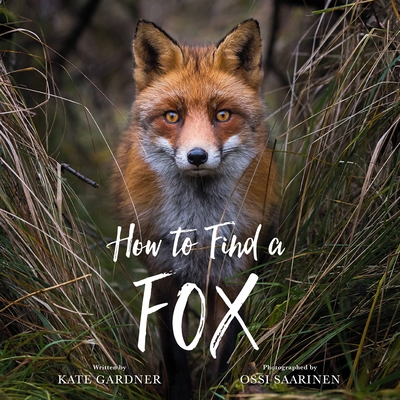
How to Find a Fox by Kate Gardner

Cover image for How to Find a Fox.

How to Find a Fox by Kate Gardner, photographs by Ossi Saarinen (9780762471355)

This nonfiction picture book explores the world of the fox in beautiful photographs. The text is a mixture of a very simple storyline of finding a fox combined with detailed facts about foxes and their adaptability in a changing world. The book looks at when it is best to find a fox, such as time of day or season. It goes on to describe what a fox looks like and what to look for when finding their tracks. You can also listen for yips or other noises. But most importantly, you must try to be very quiet and hope that a fox might just find you!

The text of the book is well-written and full of interesting foxy facts. Children will want not only the simple story but to hear about the details of the fox’s life and how to find one themselves. The premise of the book alone is an invitation that is almost impossible to turn away from.

From the cover and through the entire book, the photographs are the focus. They marvelously capture the fox with clarity and a real feeling for their character. There are images where the fox is lit by the sun where you can almost sink your fingers into their fur. Other pages have the fox looking right at the reader with undeniable intelligence. Simply beautiful.

One of the most enticing and gorgeous animal books of the year. Appropriate for ages 3-6.

Reviewed from e-galley provided by Running Press Kids.

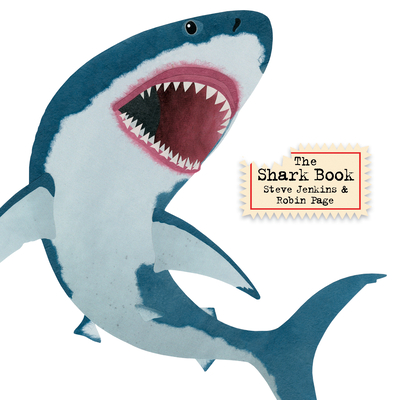
The Shark Book by Steve Jenkins and Robin Page

Cover image for The Shark Book.

The Shark Book by Steve Jenkins and Robin Page (9781328569493)

This gorgeous nonfiction picture book explores the diverse world of sharks that includes over 500 different species. The book defines what a shark is, exploring the various physical attributes that make sharks special including their rows of teeth, dorsal and other fins, and their countershading. The wide range of sizes that sharks come in is also featured. Size of shark is shown in comparison with a lone adult human swimmer, often dwarfed by the sharks around them. The book explores how sharks are born, what they eat, and then some of the more interesting species including hammerhead, great white, and whale sharks. Record holding sharks are shown and then shark attacks are discussed as well, while also stating the jeopardy that sharks are in themselves. This is a balanced, fascinating book that is sure to be popular.

From the Caldecott-Honor winning team, this nonfiction picture book features facts that have been chosen to draw readers into the subject. Readers may know something about one type of shark, but the huge diversity of sharks will likely surprise young readers who will find new sharks on every page. The writing is straight-forward and simple allowing the facts themselves to fascinate and awe.

As always, Jenkins’ illustrations are marvelous cut paper. He has a way of creating paper that creates watery ripples, dapples of light, or small waves across the sharks. The skilled use of humans as a way to show size is done at just the right moments in the book and not excessively.

Snap this one up! Appropriate for ages 4-7.

Reviewed from e-galley provided by Clarion Books.

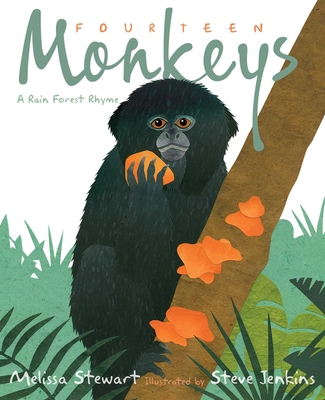
Fourteen Monkeys: A Rain Forest Rhyme by Melissa Stewart

Cover image for Fourteen Monkeys.

Fourteen Monkeys: A Rain Forest Rhyme by Melissa Stewart, illustrated by Steve Jenkins (9781534460393)

This picture book explores the fourteen species of monkey that all live together in Manu National Park in Peru. They all live in the rainforest together and survive successfully near one another thanks to their different diets, different heights for their habitats, and different body sizes. The day begins with the red howler monkeys who climb to the very tops of the trees to bellow. The spider monkeys live high up as well, searching for their favorite fruits. Down near the ground, sakis race and jump. Each monkey is shown with Jenkins’ detailed illustrations, their space in the rainforest documented, and their activities and diet explored. It’s a look at an entire community of monkeys all living happily as neighbors.

Stewart’s writing is clear and concise. She has a knack for sharing fascinating details about each monkey, such as how long the howlers rest each day (18 hours) and that capuchins will eat anything they can catch. The book offers layers of text, including basic text that could be shared aloud while the more detailed information is also there for those who want to explore it. Even more information is available at the end of the book along with additional resources.

As always, Jenkins’ illustrations done with paper art are phenomenal. He can make paper look furry, smooth, veined and fruity. He’s a master at the craft, creating animals that are realistic and artistic.

This book doesn’t monkey around, providing great information in a gorgeous format. Appropriate for ages 5-8.

Reviewed from copy provided by Beach Lane Books.

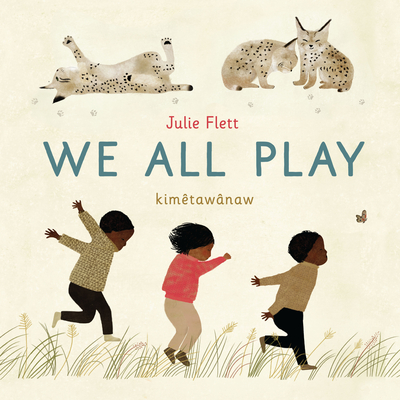
We All Play by Julie Flett

We All Play by Julie Flett (9781771646079)

Children and animals both love to play. This picture book incorporates Cree words into the narrative. Animals play in the grass, hopping, sniffing, sneaking. They peek and peep. Children play too, leaping through the grass or laying down in it. Animals swim and so do children. Animals slide and rumble and wiggle, just like children sledding in the snow. Animals settle down, roosting and yawning, finally falling asleep. Children do too.

Told in very simple language, woven with Cree words, this picture book shows the connection the natural world and its value to children in particular. The Cree words repeat with the children themselves saying them, something that would be great to do in a story time when this book is shared. The illustrations show a diverse group of children playing outside, acting just like the animals. A glossary of Cree words is offered at the end of the book along with a list of the animals who appear on the pages.

A frolic of a picture book that speaks to the importance of outdoor play. Appropriate for ages 2-4.

Reviewed from e-galley provided by Greystone Kids.

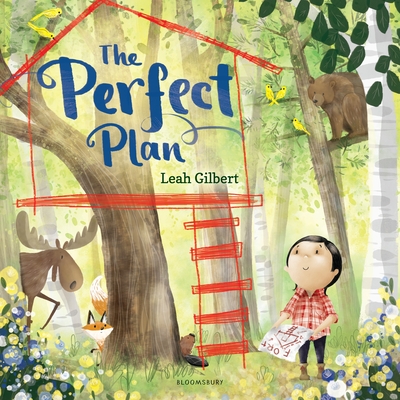
The Perfect Plan by Leah Gilbert

The Perfect Plan by Leah Gilbert (9781547605262)

Maya dreams of having the “most incredible and wonderful” fort in the woods. So she researches, designs, plans and gathers supplies. Then she found the perfect spot in the woods for it. But when she started trying to build the fort, it didn’t turn out the way she had planned. But Maya didn’t give up. She went to the beavers at the river and asked them for help. They soon had plenty of branches, but they were too heavy to move. Maya spotted a moose in the trees and asked the moose to help them lift the branches high into the trees. But none of them could climb well enough. So Maya asked the bears for help. Soon they had a frame, but it wouldn’t stay in place. Maya and her team called to the birds for help and they twisted and wound vines around the frame to hold it. The fort was almost perfect, but then a storm blew in and Maya had to go home. Would the fort be ruined after all their hard work?

This story shows how working together and having each creature use their own unique talents can create something very special. At first, the book has Maya working in a solitary way with her own plans. That quickly changes when she needs help and asks for it. As the book proceeds, the words Maya uses to describe the fort they are building change too, to better reflect what that creature brings to the overall project. It’s a dynamic use of language, showing how Maya’s perspective changes with the help of others.

Gilbert’s art really reveals the magic of the forest on the page. Her illustrations are luminous with streaks and rays of sunlight coming through the trees. The greens are fresh and welcoming while the rainstorm is a threatening purple in the sky. The use of colors is very effective throughout the book.

A STEM look at building a fort with friends. Appropriate for ages 3-5.

Reviewed from copy provided by Bloomsbury.

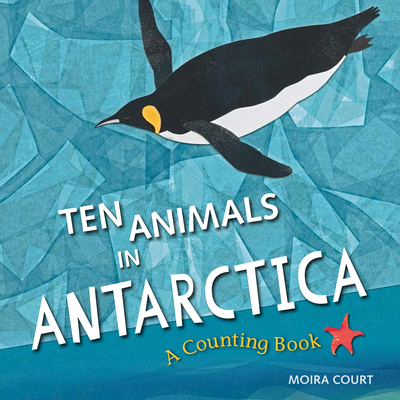
Ten Animals in Antarctica: A Counting Book by Moira Court

Cover image

Ten Animals in Antarctica: A Counting Book by Moira Court (9781623542320)

Starting first with briefly exploring the continent of Antarctica itself, this nonfiction picture book quickly moves to the ten animals featured inside. The book is a dynamic mix of animals in Antarctica along with an opportunity to count them as they appear on the double-page spreads. First comes one leopard seal floating on his own iceberg. Two emperor penguins waddle across the next page, followed by elephant seals, whales, petrels, orcas, squid, krill, and fish. The book finishes with ten crimson sea stars that dazzle, bright red against the dark background.

Court has created a picture book that very successfully combines factual information about Antarctic animals with counting them. Her language is marvelous, building rhymes directly into her descriptive sentences. She also uses words that will stretch young vocabularies such as “courtly, portly emperor penguins” and “lumbersome, cumbersome southern elephant seals.” The language is such a treat to discover in a nature-focused counting book.

Court’s illustrations are a combination of printmaking and collage. The deep colors and textures bring the cold and icy landscape to life. Court also beautifully designs each page, paying attention to both ease of counting, but also making all of the animals look lifelike too. Readers will enjoy the additional information at the end of the book on both the continent and the featured animals.

Icy and delightful, this is just right for even the youngest of readers to discover a new continent. Appropriate for ages 2-4.

Reviewed from e-galley provided by Charlesbridge.

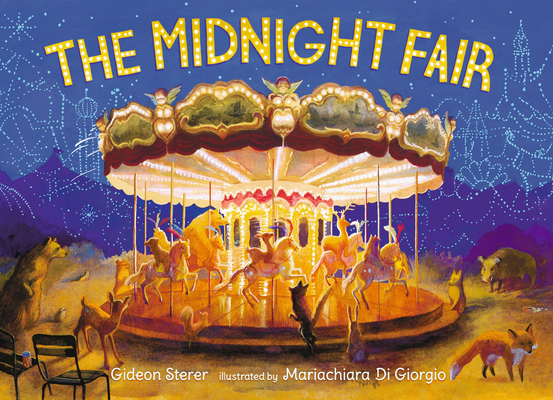
The Midnight Fair by Gideon Sterer

Cover image

The Midnight Fair by Gideon Sterer, illustrated by Mariachiara Di Giorgio (9781536211153)

This wordless picture book tells the story of a county fair set up at the edge of a woods. From the woods, animals peek out at the lights and sounds of the fair as it is built and then filled with activity and people. At night, when the people leave, it’s time for the animals to have some fun. The raccoons sneak in a break in the fence and throw on the electricity. Soon the games, rides and food are open for business with payment in acorns, rocks and leaves. The animals ride the rides, staff the booths, share snacks and have a great time until dawn breaks. They tidy up and head back to the woods, but the surprised man who opens the fair finds plenty of evidence that something happened that night.

This book is so lovely. It takes the shared experience of a county fair for humans and turns it into something strange and wondrous. There are so many moments caught in the images here: a porcupine covered in sweets, a fawn managing to ride a carousel horse, a rabbit whizzing by on the swing ride, and a bear cub buying ice cream with acorns. One after another, the images are immediately iconic and touching without being saccharine. The golden light of the fair lights turns everything magical, just as it does when you go to a fair in person.

This visit to the fair is one that everyone should take, even if you don’t care for the rides. Appropriate for ages 2-4.

Reviewed from e-galley provided by Candlewick.