3 New Picture Books about Nature

All the Animals Where I Live by Philip C. Stead

All the Animals Where I Live by Philip C. Stead (9781626726567)

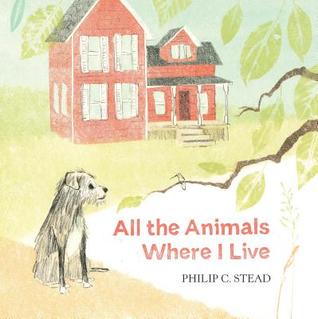
Stead has created another picture book that invites you into his everyday world. Filled with stories of a bear chased off my an elderly woman and a teddy bear that Stead has had his entire life, stories of maple-syrup scented blankets, a dog named Wednesday, loud cranes, a falling turtle, and much more.

There is a beautiful simplicity to the book, one that slows the reader down to look out their own windows and think about the animals that live near them. The illustrations are simple too, washed with colors that suit the season and time of day, they move from yellows to blues to the oranges of autumn and to the ethereal greens of winter. A quiet and marvelous picture book. Appropriate for ages 4-6. (Reviewed from copy provided by Roaring Brook Press.)
The Sockeye Mother by Hetxw_ms Gyetxw

The Sockeye Mother by Hetxw’ms Gyetxw (Brett David Huson), illustrated by Natasha Donovan (9781553791395)

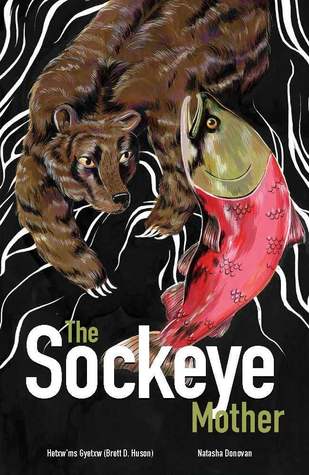
This picture book combines biology with a storytelling feel to create a very special tale. It is the story of sockeye salmon. From their time as a small fry just losing their yolk sac through to adult sockeye returning to their birthplace to spawn before they die. The picture book is also about the Gitxsan people of the Pacific Northwest and their connection to the river and the salmon. The book looks at the various stages of the live of the salmon and offers scientific information about them, the bears, environmental impact of humans, and much more.

The book is deep and lovely, the tone unique and lush. Seasons are captured in words but also in the senses. The scent of pine and cedar, the replacing of old snow with new snow, the run of water in the river, all fill this book with elements of the Pacific Northwest. The illustrations are large and mostly focused on the river and the salmon. Even the smoke from a fire flows across the dark sky like the river flows on other pages. A picture book written and illustrated to honor the Xsan river and the animals and humans who depend on it. Appropriate for ages 4-7. (Reviewed from library copy.)
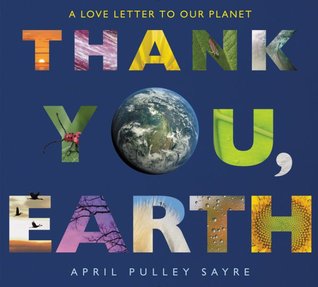
Thank You, Earth by April Pulley Sayre

Thank You, Earth by April Pulley Sayre (9780062697349)

Sayre provides a love letter to the Earth in this picture book. With a reverential tone and gentle rhymes, the book swoops the reader up on a photographic journey around Earth with all of its wonders. Thank yous go out for mountains, water, air and trees. Then the book moves to smaller things like patterns, sounds, seasons and plants. The book once again widens to look at the beauty of the sky and the amazement of lifetimes.

Embracing and filled with just the right tone of enthusiasm, this picture book is celebratory and filled with big thoughts that children will find mesmerizing. The photographic illustrations are varied and filled with color, mists, water, stone and more. A diverse look at life on earth and our privilege to be here. Appropriate for ages 3-5. (Reviewed from library copy.)
3 New and Wild Picture Books

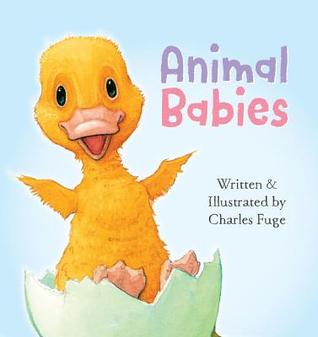
Animal Babies by Charles Fuge

Animal Babies by Charles Fuge (9781633225480)

Told in rollicking rhyme, this picture book is filled with charm. Each of the illustrations has bright-eyed baby animals who are captivating as the pages turn. There are ducklings all in a line following a baby chimpanzee. A baby elephant holds onto the little horn of a baby rhino. The story moves through different habitats, visiting arctic and desert climates. Through it all, the rhyming keeps the story focused and tight and the illustrations add real appeal. The young animals are  often shown with parents caring for them, like the joey in his mother’s pouch and sloths and bats hanging upside down with their respective parent. The book ends with a heap of snoozing animals, so this would also make a great bedtime story. Appropriate for ages 2-4. (Reviewed from e-galley provided by MoonDance Press and Edelweiss.)

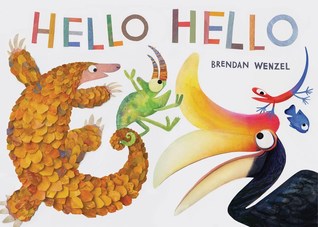
Hello Hello by Brendan Wenzel

Hello Hello by Brendan Wenzel (9781452150147)

The author of the Caldecott Honor Book, They All Saw a Cat, returns with a new book about animals.The book moves from black-and-white animals to colorful ones, each animal at the end of one page skillfully leading into the next, visually tying the categories together. The book is a visual treat; the animals are large and graphic. The text reads like poetry, easing from one concept to the next, the animals demonstrating that concept. Towards the end of the book, the experience is more fluid and friendly, the animals similar in certain aspects though the text stops pointing it out. This is a great book to invite discussion and more exploration of how the animals are similar and different.

The text is simple and the art has goggle-eyed animals that are approachable and that celebrate the animals they depict. The book ends by explaining that many of the animals shown are endangered and then offers a list of the animals so that children can explore more about them. Inviting, fresh and friendly, this picture book is exceptional thanks to its art. Appropriate for ages 2-5. (Reviewed from copy provided by Chronicle Books.)

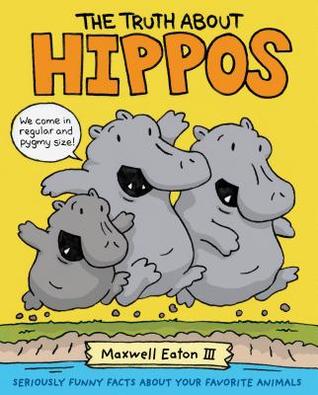
The Truth about Hippos by Maxwell Eaton III

The Truth about Hippos by Maxwell Eaton III (9781626726673)

Eaton turns his signature humor on hippopotamuses this time. He shares information on the two kinds of hippos: common and pygmy. Little signs along the way add more facts and much of the humor is in the commentary made in speech bubbles by the various characters. Eaton adds a little drama with a lost baby pygmy hippo looking for his mother. The illustrations are bold and bright, inviting readers in to explore the world of hippos and stay thanks to the humor and light tone of the book. Filled with information that is easily understood by children, such as using a book as the example of how wide a hippo’s mouth opens compared to a human’s. The book is intelligent and wittily crafted, making it just the right book for young children to learn about an animal. Appropriate for ages 5-8. (Reviewed from copy provided by Roaring Brook Press.)

3 New Animal Picture Books to Love

If I Had a Horse by Gianna Marino

If I Had a Horse by Gianna Marino (9781626729087)

This poetic picture book dreams of having a horse. The entire book is dreamy and soft, a more spiritual and sense-filled look at horses than the reality of barns and saddles. In the images, the little girl meets a horse in a field and offers him the largest apple she can find. There are moments of shyness and quiet as the two meet. They admire one another’s qualities of strength and gentleness. The little girl does ride the horse but not so easily until they become better friends. Then they head out together to meet other horses. The illustrations are done entirely in silhouettes filled with rich watercolor washes. The hair of the little girl mirrors that of the horse’s mane and also the blades of grass in the field around them. A beautiful dream of a picture book. Appropriate for ages 3-5. (Reviewed from copy provided by Roaring Brook Press.)

Many The Diversity of Life on Earth by Nicola Davies

Many: The Diversity of Life on Earth by Nicola Davies, illustrated by Emily Sutton (9780763694838)

This picture book invites readers to think about the wide amount of diversity in the animals and plants that live on our planet. The book offers a small scientific facts on some pages, giving a closer look at things like mushrooms, microbes, elephants, and habitats. The book moves on to fill pages with images of different types of animals, one fascinating two-page spread has animals that were discovered in the last 50 years. It also explores food cycles for several different species. The book ends with information on how humans are negatively impacting species in the world and encourages children to be aware of how they can make a difference. Filled with interesting facts and vibrant illustrations, this picture book is an invitation to explore nature even further. Appropriate for ages 4-7. (Reviewed from library copy.)

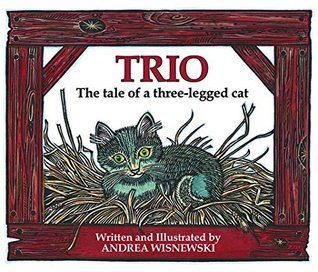
Trio The Tale of a Three-Legged Cat by Andrea Wisnewski

Trio: The Tale of a Three-Legged Cat by Andrea Wisnewski (9781567926088)

Trio was a cat born with only three legs. Even though he was missing a hind leg, he still managed to fully explore the chicken coop that he lived in with his siblings and a flock of chickens. Trio liked to explore the world like a chicken would with dust baths and eating bugs. But he could not lay an egg like they did. When Trio finally got all the way up to the nesting boxes, he found that it was warm and cozy there. One day, Trio found an egg in the nest, one that cracked and moved. It eventually hatched into a very special chick. Told in the simplest of sentences, this picture book is filled with a warmth and strong sense of style. The story is based on a real cat who has three legs, though he may not have hatched a chick of his own yet. The illustrations are done in gorgeous paper cuts, that evoke the feeling of woodblock printing. With their organic feel, they add to the friendly warmth of the book. A lovely and accepting look at being differently abled. Appropriate for ages 2-4. (Reviewed from library copy.)

3 Picture Books Filled with Wild Animals

Where, Oh Where, Is Baby Bear By Ashley Wolff

Where, Oh Where, Is Baby Bear? By Ashley Wolff (9781481499163)

This picture book continues Wolff’s series on Baby Bear and his explorations of his habitat. Here, Baby Bear and his mother head out to look for food. But every time his mother looks for him, Baby Bear has disappeared. Again and again she has to call out “Where, oh where, is Baby Bear” and then her little bear responds. Readers will enjoy spotting where Baby Bear is heading and then where he is hiding as the pages turn. The repetition is handled nicely, giving the book a lovely rhythm when being read aloud. The illustrations are crisp and filled with details of their forest home. A great read aloud pick. Appropriate for ages 1-4. (Review copy provided by Beach Lane Books.)

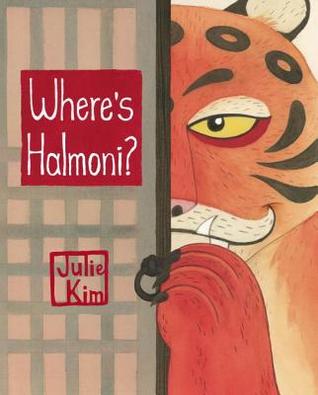
Where_s Halmoni By Julie Kim

Where’s Halmoni? By Julie Kim (9781632170774)

This picture book is done in a full-color graphic-novel style that will be appealing to children even beyond picture book age. It is the story of Korean-American siblings who head to their grandmother’s home to find her missing. They discover a magical passage in her home that leads to a world filled with creatures from Korean folklore. There is Tokki (the rabbit), Dokkebi (the goblins), and Horanghee (the tiger). As the children figure out how to get past each of the creatures using snacks and games, they come close to learning their grandmother’s secret. Sharp-eyed children will realize what happens to the fox at the end of this Korean adventure. The appeal of folklore combined with a modern graphic-novel style makes this book a winner. Appropriate for ages 5-9. (Reviewed from library copy.)
The Wolf, the Duck & the Mouse by Mac Barnett

The Wolf, the Duck & the Mouse by Mac Barnett, illustrated by Jon Klassen

When a mouse is gobbled up by a wolf, he discovers there is life after being eaten. Inside the wolf’s stomach, a duck is already living. The duck has a bed, a table, tablecloth, chairs and much more. The duck likes being inside the wolf, because he no longer has to worry about being eaten, since it’s already happened. Soon the mouse has decided to stay and the two have a dance party to celebrate. Unfortunately, this makes the wolf’s stomach hurt. He is spotted by a hunter and soon all three animals are in danger as the hunter takes aim. What can be done to save them all? It will take all three to save the day. Barnett has the perfect rather dark humor to work with Klassen’s illustrations. The story has a mix of fun and fate that will have readers guessing right up until the end. Appropriate for ages 4-6. (Reviewed from library copy.)

Explore Nature with These 3 Picture Books

How to Be an Elephant by Katherine Roy

How to Be an Elephant: Growing Up in the African Wild by Katherine Roy (9781626721784)

This picture book celebrates elephants in a way that invites readers deeply into the life of a newborn elephant calf and all that that baby has to learn. The book opens with the birth and then the family of female elephants that will raise the infant together. The elephant’s body is explored from the way it walks and balances to the way its ears help handle the heat to the dexterity of the trunk. Sounds and food are also explored along with the habitat the elephants live in. Throughout, the book offers scientific information in a conversational way. The book is almost like a readable version of nature documentaries where facts celebrate and delight. The art of the picture book is rich and warm showing the elephants in their habitat. It also shows scientific information about structure and sound that is presented graphically and with just enough detail for young readers. An exceptional science and nature nonfiction picture book, this is one stellar pick for library collections. Appropriate for ages 6-9. (Review copy provided by Roaring Book Press.)

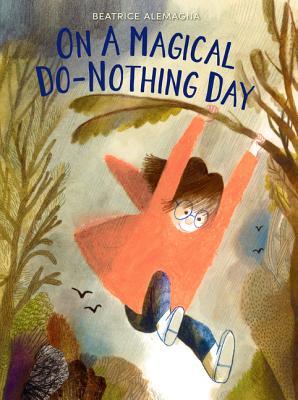
On a Magical Do-Nothing Day by Beatrice Alemagna

On a Magical Do-Nothing Day by Beatrice Alemagna (9780062657602)

A child and their mother head back to a small cabin on a rainy day. The child just wants to play their video game, but their mother insists on them heading outside. It is bleak and raining out but as they head into the woods, the rocks in the pond beckon them forward. Leaping from rock to rock, the video game falls into the water and is lost. The child is devastated by the loss but is soon distracted by some of the wildlife around from glowing snails walking in rows to mushrooms. The beauty of the rich earth below and the sun coming through the clouds above. There is rolling down hills, quiet time in the woods, and getting soaked through. Once back home, the day is transformed entirely into something new.

This picture book is an interesting look at the tug between technology and spending time outside. I enjoyed the child realizing that the world is fascinating and a place to explore that is far better than the small world of the game that they have already played. The warm little cabin and the isolation also add to the appeal of the book and the pleasure of a newfound way to spend time outdoors. Throughout the book there is a sense of quiet and wonder. That is emphasized by the images that fill the pages with trees, water, dirt and plants. It is rather like being immersed in a rainy day yourself. A great book to read and then set off on outdoor adventures together on a rainy day. Appropriate for ages 4-6. (Reviewed from library copy.)

The Pond by Nicola Davies

The Pond by Nicola Davies, illustrated by Cathy Fisher (9781912050703)

Told in the voice of a boy who has lost his father, this book shows the connection of people to nature and through that connection to one another. The boy’s father had always wanted a pond in the backyard, but when he died all he left behind was a muddy hole. Ducks tried to land in the mucky hole and the boy tried to fill it with water, but it created an even larger mess. Then one day, his mother lined the hole and surrounded it with rocks. Soon there was an ecosystem forming with tadpoles, insects, algae and newts. When the water lily finally bloomed, it was time for the family to move to a new house, but the memory of the pond would stay with them forever and they would create a new one in their new place. Written with deep emotion both about grief in a family and also about connection to nature, this picture book shows rebirth in a very organic way. The illustrations are rich and lovely, celebrating the transformation from a hole to a pond with life. A touching and hope-filled book. Appropriate for ages 5-7. (Reviewed from library copy.)

3 Picture Books Celebrating Nature

ABCs from Space by Adam Voiland

ABCs from Space: A Discovered Alphabet by Adam Voiland

Written by a science writer for the NASA Earth Observatory website, this alphabet book uniquely looks at satellite images of Earth to find letters. The author’s note at the beginning explains the difficulty in finding certain letters like R and B, because of the need for diagonal, straight and curved lines to be near one another. The book is visually stunning, turning from a brilliant green to subtle browns to oranges and reds. The end of the book identifies where the various letters were found and carries the reader even deeper into the images. A great way to mix science and letters together. Appropriate for ages 3-5. (Review copy provided by Simon and Schuster.)

Animal Camouflage by Sarah Dennis and Sam Hutchinson

Animal Camouflage by Sarah Dennis and Sam Hutchinson (9781909767720)

As you can see from the cover, this picture book is illustrated in amazing cut-paper illustrations. The book offers information on animals throughout the world and is grouped by regions. After the information, readers get to try to find the animals in an intricate search and find page. Then they learn about more animals and search for them. This is a brilliant way to immerse children deeply in habitats and looking closely at the animals and plants of that area. A gorgeous search and find with a focus on animals and habitats. Appropriate for ages 4-7. (Review copy provided by Princeton Architectural Press.)

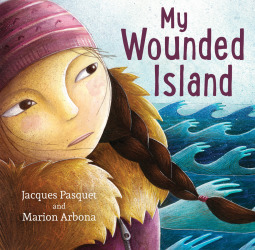
My Wounded Island by Jacques Pasquet

My Wounded Island by Jacques Pasquet  and Marion Arbona (9781459815650)

This is the story of Imarvaluk, a young girl who lives on a tiny island near the Arctic Circle. She is part of a strong community that continues to live the way their ancestors had. Still, things are changing. The weather is impacting their small island, shrinking the pack ice and flooding the island. Scientists try to help by studying the impact and new barriers are put up, but there is no stopping the monster of climate change as it ravages the Arctic. The little girl imagines it as a huge sea monster, coming to gobble them up. For now, their homes are being moved to the center of the island but eventually, they will have to decide if they will leave and lose their community.

Told with analogies that will help children understand the impact of climate change, this picture book makes a large concept much more concrete and real. The illustrations with the monster of climate change bring to life the feeling of powerlessness and how small humans are on the planet. This book can be used for units on climate change or the Arctic and Native Peoples. Appropriate for ages 6-8. (Reviewed from library copy.)
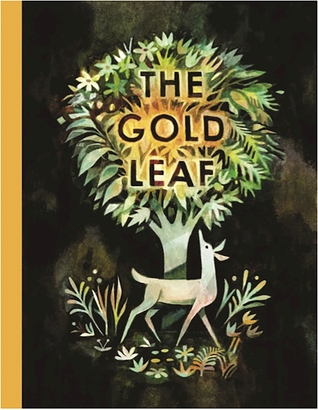
The Gold Leaf by Kirsten Hall

The Gold Leaf by Kirsten Hall

The Gold Leaf by Kirsten Hall, illustrated by Matthew Forsythe (9781592702145, Amazon)

Spring has returned to the forest, filling the woods with all colors of green. In the midst of the new growth, something special sparkled. It was a gold leaf, unique and different. All of the animals wanted to have it. A bird got it first, planning to use it to line its nest. Soon though, other animals grab it and take it for themselves until finally it lays in tatters on the ground and then is swept away by the wind. The animals are so dismayed at what they have done. The seasons change and fall and winter arrive and go. It is spring once again, green and lush. Will the gold leaf return?

Hall dazzles with her prose, offering so many colors of green in a single sentence that it is almost like being in a woods and noting each color. She uses very dynamic pacing in this picture book from the frenzy over the gold leaf itself as it is torn apart to the sadness afterwards and the slow turn of the seasons. That slow consideration continues as the animals wait to see if the gold leaf will ever return to them.

The illustrations take Hall’s considerable list of green colors and convey them to the page. The images are lush and filled with rich colors that have dapples of sunlight, deep shadows and animals that glow against the background. The use of goldleaf for leaf itself is very effectively done, particularly as it is ripped apart and each little piece continues to brighten the page.

A book about wonder, patience and sharing, this picture book is particularly golden. Appropriate for ages 3-6.

Reviewed from copy received from Enchanted Lion.


Deep in the Woods by Christopher Corr

Deep in the Woods by Christopher Corr

Deep in the Woods by Christopher Corr (9781847807267, Amazon)

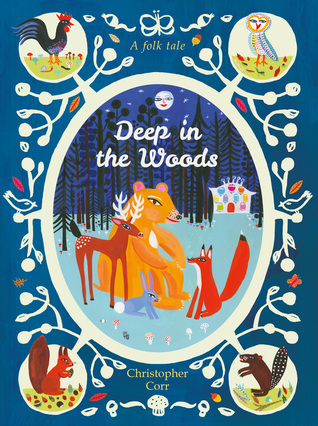
This picture book is a retelling of a classic Russian folktale. In the woods, there stands a little wooden house with nine windows and a red front door. When a little mouse discovers that it would make a perfect home, he is soon joined by several other animals until all of the windows and rooms are filled with happy animals living together. When a bear discovers the house though, he is far too large to even get in the red door. He keeps trying to enter the house and climbs onto the roof which collapses the house and smashes it. What can be done to fix everything?

Corr keeps the text nice and simple throughout the story, creating almost a cumulative tale as one animal after the other joins in the group living in the house. For each animal, there are repeated phrases used and they approach, ask to live there and are accepted one after the other. This repetition is nicely done, not overworked and will make the story work well for very small children. The bear’s approach cleverly breaks the pattern established and signals how different he is from the others immediately. The writing is smart and effective.

The cover of the book does not fully show the brightness of the illustrations inside. They are neon bright and almost light the page with their neon pinks, oranges and reds. The red door of the house is wildly bright as are the animals themselves. The illustrations have stylized elements like the sun in the sky and the different trees in the woods. Toadstools and mushrooms carpet the ground that can be yellow, green, purple or blue.

Wild colors add a modern touch to this traditional tale. Appropriate for ages 3-5.

Reviewed from library copy.

Wake Up! by Helen Frost

Wake Up by Helen Frost

Wake Up! by Helen Frost, photographs by Rick Lieder (9780763681494, Amazon)

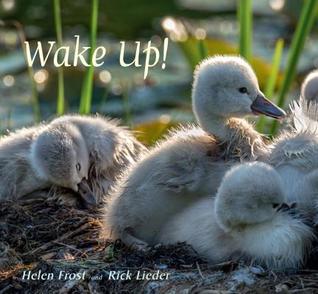
This is the fourth collaboration of poet Helen Frost and photographer Rick Lieder. Once again, there is a focus on nature and its wonder. In this book, spring is the subject with new eggs, newly hatched animals, and babies galore. Frost’s poetry is simple and skillful, filled with rhymes and rhythm that carry the book forward inviting investigation. Lieder’s photography is wonderful, capturing that same love of the wild.

Frost’s poetry is particularly deft. She invites readers to explore the outside world, look up into the sky and the trees. She looks below the water and at seeds on the breeze. The photography follows these invitations, capturing eggs, tadpoles and baby deer in their natural habitat. The book ends with more in-depth information on the animals featured in the images.

Another delightful success by this pair, this picture book deserves a place in every library to help celebrate spring. Appropriate for ages 2-4.

Reviewed from library copy.