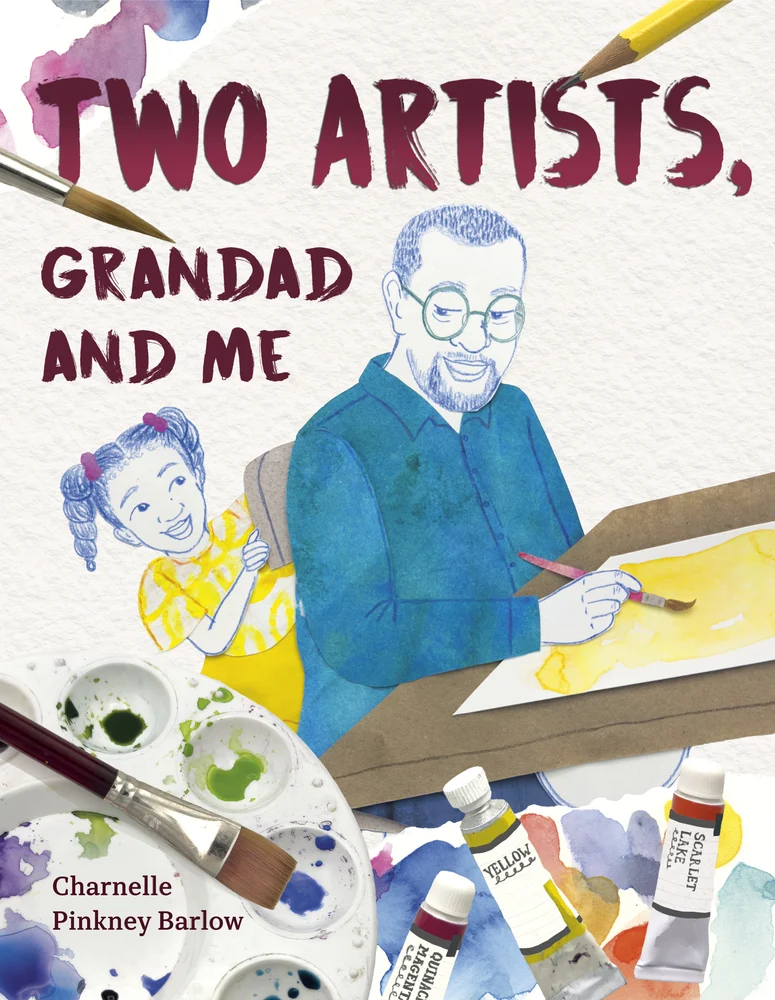
Visit Jerry Pinkney’s studio with his granddaughter in this celebration of a granddaughter’s love of art and her connection with her grandfather. There are papers around the room, stacks of stories, and bright watercolors on a tray. Grandad shows her how to make a wash, but Charnelle can’t do it quite the same way. He gives Charnelle her own sketchbook to fill. The two draw side-by-side and Grandad explains that each artist will see the world in their own way.
Celebrate the nurturing of a young artist in this picture book about one of the best-known picture book artists of our time. Tying music into the feel of the book, the quiet time spent together each making art clearly inspired her to become the artist she is today. The illustrations in her book pay homage to her grandfather and still have a feel all her own as she uses cut paper figures and objects like paint brushes and erasers to create pages with depth and texture.
A warm and lovely tribute to a genius of picture book creation. Appropriate for ages 4-7.
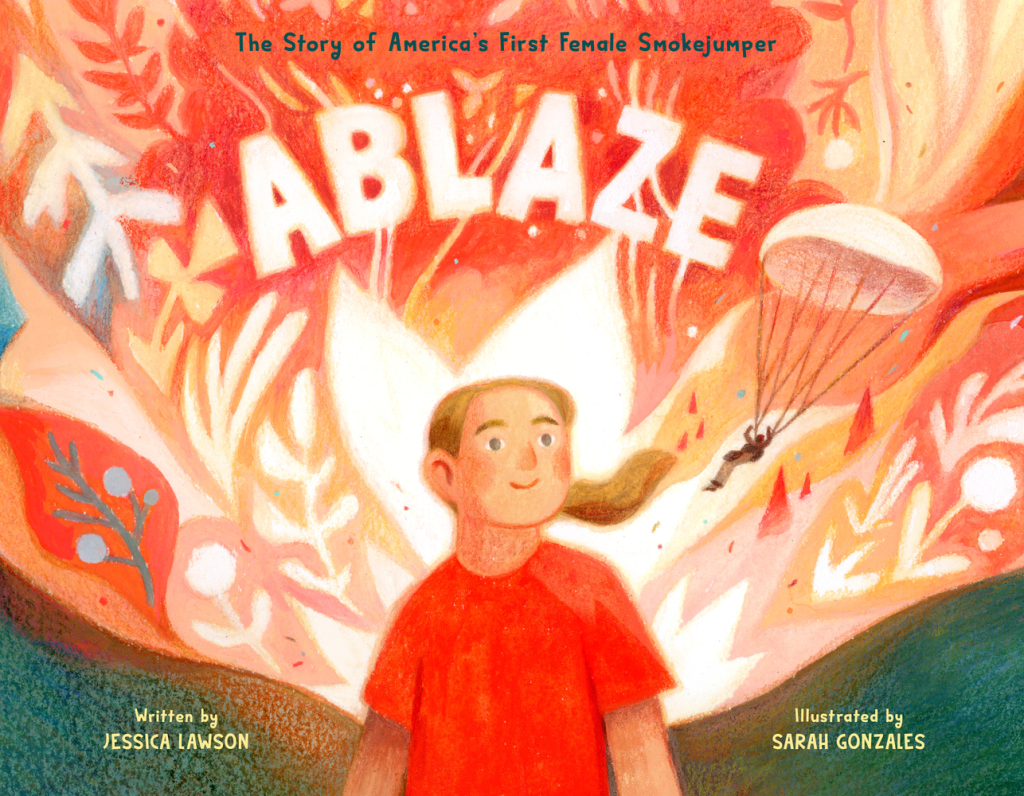
Deanne loved spending time in nature with her family as a young child. It was a love that continued throughout her life. When wildfires started spreading in California, Deanne applied for a job with the U.S. Forest Service. She was hired by them to fight fires. She had found exactly what she loved. It was a physical job with long hours and risks. But Deanne wanted to do more: she wanted to become a smokejumper. So, at age 26, she started taking the required physical tests. She passed them, but was found to be too small for their requirements. Deanne fought the decision, filing a formal complaint. Months later, she was allowed to take the tests and soon passed them to become the first female smokejumper in the nation.
Deanne is the epitome of resilience and determination. The book focuses on her willingness to take risks but also on her level-headed approach to gaining new skills as she pushes the envelope of society’s biases toward women. The writing here is approachable and evocative. It shares how Deanne was feeling as she hit each obstacle and overcame them. The illustrations are full of flame colors, smoke and fire. It brings the dangers and the drama directly to the reader.
Bravery, resilience and character are all on display in this great picture book biography. Appropriate for ages 4-8.
Reviewed from e-galley provided by Penguin Young Readers.
The Black Mambas are an anti-poaching unit that works in South Africa on the Olifants West Nature Reserve. The unit was started when animals in the reserve began to disappear, particularly rhinos and pangolins. The unit is the first all-women anti-poaching unit in the world and despite doubts from family members became very successful. The book explores how the unit was created, what sorts of training they go through, and what they do on a daily basis to protect the wildlife in the reserve. One particularly dramatic series of images shows the women tracking poachers and successfully stopping them. Told via photographs, the book celebrates the impact these women have had on their community and the success of the reserve.
A stirring tale of women successfully stepping out of traditional roles. Appropriate for ages 5-10.
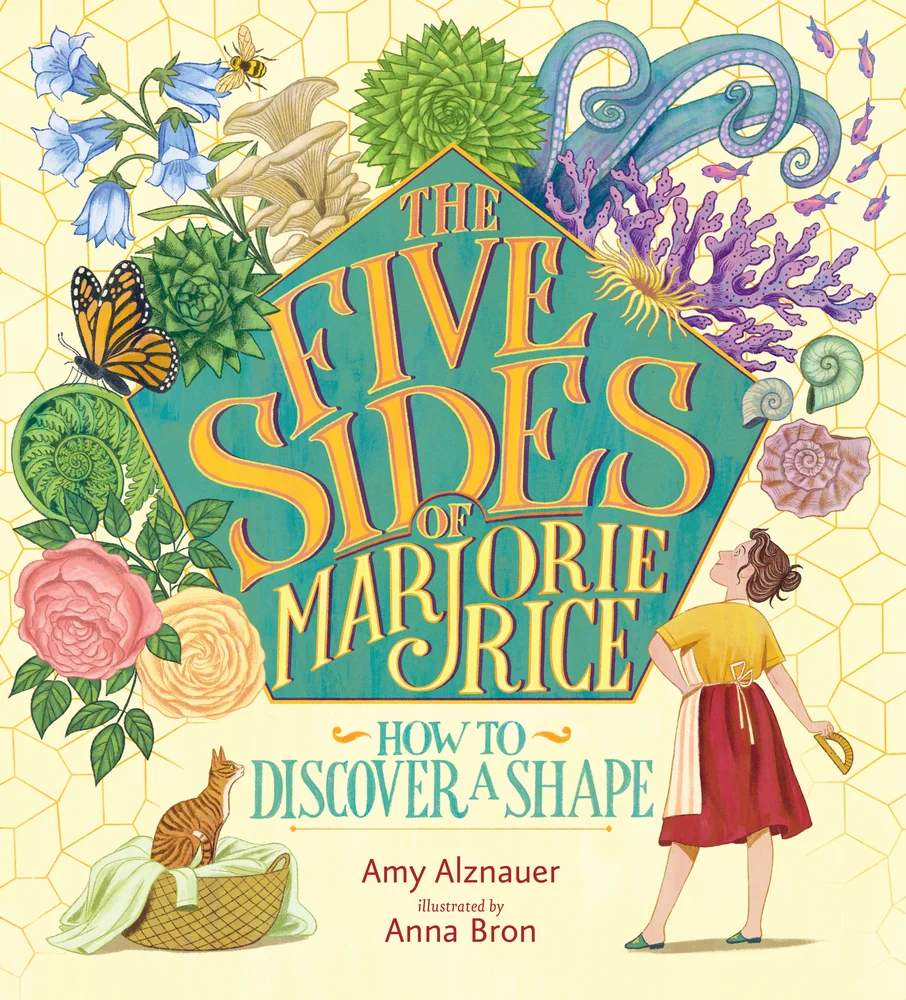
Marjorie Rice grew up loving shapes, enchanted by the golden rectangle. She studied art and geometry, but her parents wanted her to be a secretary. Meanwhile, others were discovering five-sided shapes that could fit together, creating a seamless pattern. They each declared they had found them all. Majorie was raising children, doing art, helping with math, and discovered the question of five-sided shapes in her son’s Scientific American magazine. Marjorie started to work on the problem, despite it being declared as solved. Her first discovery was declared the tenth tiling pentagon, but she wasn’t done yet!
This picture book tells the story of an amateur mathematician who discovered tiling shapes that others couldn’t. These were questions from the beginning of math and design, solved by a mother of five working out of her home. It is an inspiring story of resilience, tenacity and patience. The illustrations in the book invite readers to look at five-sided shapes themselves, seeing them elongate and shrink and they fit together.
It’s a book that makes mathematics something tangible and beautiful. Appropriate for ages 5-9.
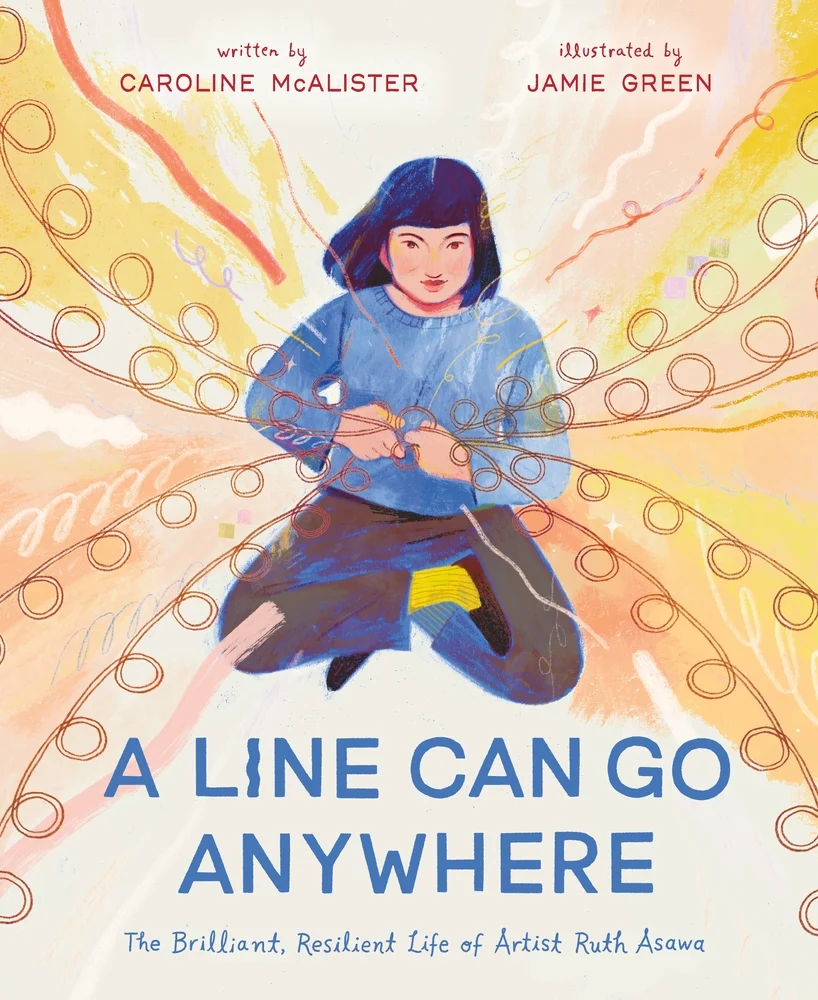
Ruth Asawa was raised on her family’s vegetable farm in California. She attended Japanese school on Saturdays and won an award in her regular school for a poster she made of the Statue of Liberty. Her life was divided in half, but soon that was to become even more clear. When Pearl Harbor was attacked, her father was taken away. Two months later the rest of the family entered imprisonment. Ruth started to draw her life in the camps. At age 20 after the end of the war, she started to create the wire sculptures that she would become known for. Eventually she was asked to create the memorial for those imprisoned in the Japanese internment camps.
Told in poetic language that uses the image of lines repeatedly, this nonfiction picture book pays a deep and respectful homage to this Japanese-American artist. Asawa rises again and again, despite the racism that impacted her childhood and teen years. The use of art to create conversation and connection is clear in this book. The illustrations are done in charcoal, watercolor and digital media. They capture the lines, the wire, the connectivity and the inhuman conditions of the camps.
A book that celebrates survival and the way art can carry a spirit through its darkest days. Appropriate for ages 5-9.
Reviewed from e-galley provided by Roaring Brook Press.
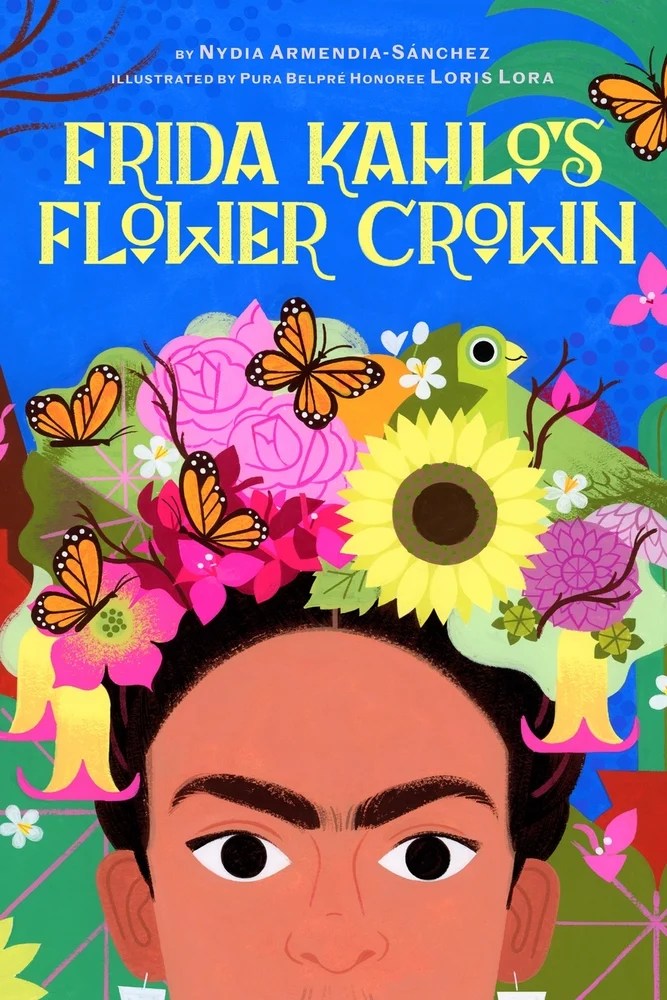
Taking a child-friendly look at the amazing Frida Kahlo’s childhood, this book ties her growing up to the nature and flowers that surrounded her. From the orange tree near her home to recovering from polio by spending time outdoors, Frida was connected to growing things. After a near-fatal accident, art becomes a way for Frida to spend her days in bed, painting to reconnect to the soil beneath her. As an adult, she created a lush native garden and began to wear her signature flower crown.
Told in simple phrases, this picture book biography can be shared successfully as a read aloud. The illustrations by Pura Belpre Honoree Lora burst from the pages with flowers and colors.
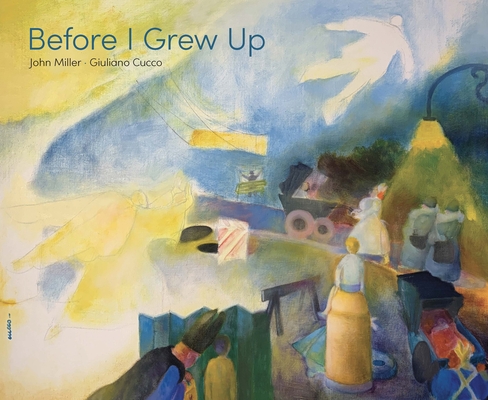
Before I Grew Up by John Miller, illustrated by Giuliano Cucco (9781592703616)
This surreal picture book takes the paintings of the late Giuliano Cucco and uses them to tell the story of his childhood. Cucco’s journey to becoming an artist is shown in his creativity as a child. From games he played with his mother to imagining paper boats he made floating away. His father was a scientist who studied light and preferred to spend time alone. Cucco spent time in his mother’s garden, dreaming and imagining as he lay surrounded by flowers. Sent to the city to live with his aunt and uncle, the book becomes more surreal and wild with a moon rising out of a box, swinging priests, and doves saved from the dinner plate. Returning to the country, he reconnected with the land and water of his childhood, creating paintings of ocean, violins, and the landscape.
This tribute of a picture book is one that celebrates the creativity of childhood and how allowing unfettered time and space allow that creativity to carry into adulthood. Miller uses his words as a minimal framework to offer a glimpse of the artist’s life and also to share his work. It is those paintings that truly tell the story, sharing emotions through the art. From darker moments to those filled with inspiration and light. The art is whimsical at times, literal at others.
A lovely surreal look at an artist, creativity and childhood. Appropriate for ages 4-6.
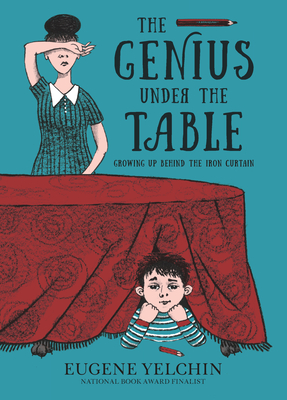
Yevgeny only seems to disappoint his parents who are rather desperate for him to find a natural gift that will let him escape Soviet Russia. They already know he’s not much of an athlete, unlike his older brother who is going to be a famous ice skater. When his mother takes him to see Mikhail Baryshnikov dance, Yevgeny tries to become a ballet dancer, practicing the movements in their tiny shared apartment. But what he truly loves to do is draw. Since he sleeps under the huge table, he steals his father’s pencil and draws on the bottom of the table where no one can see. Could those small doodles be the talent that his family has been waiting for? And what about the KGB agent who lives down the hall? And what happened to the grandfather whose pictures have been removed from the family album and no one speaks about? There are so many questions to be answered, but Yevgeny must be willing to start insisting on answers.
In this hilarious and touching book for middle grade readers, Yelchin shares a memoir of his own childhood in Russia during the Cold War. Yevgeny is a wonderful naïve protagonist, who doesn’t understand the immense political and social pressures hovering over his family and the entire Russian people. His misunderstandings of this and his growing desire for answers add tension to the story as readers will understand far more than he does.
As Yevgeny covers the bottom of the table with drawings, readers are shown Yelchin’s illustrations of his family and others in his life. They are humorous and filled with a wry charm that shows Yevgeny’s point of view.
Filled with an honesty about life in Cold War Russia, family expectations, and one gifted child. Appropriate for ages 9-12.
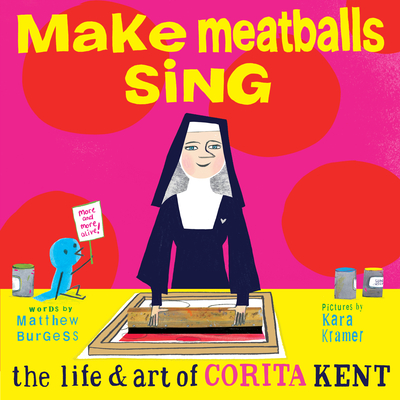
Corita Kent was a remarkable pop-artist who was also a nun, a teacher and an activist. From a small child, Corita showed kindness and empathy for others and also a love of art and creativity. Her father wanted her to do something original, and Corita certainly did. She surprised her family by becoming a nun, discovering a love of teaching and training new teachers. She joined the art faculty at Immaculate Heart College, where she discovered a love of silkscreen printing. Soon her art was winning competitions. Corita continued to teach classes and make her own art, which spoke to social justice and against poverty and war. She transformed a rather formal celebration into one of bright colors and activity. Not everyone approved of what Corita was doing, and she surprised the people around her once again, asking to be released from her religious vows. She found places for her largest work, painted on a gigantic tank, and her smallest, a rainbow postage stamp.
While Kent may not be a household name, many of us have seen her work on the iconic postage stamp. This picture book embraces her unusual life, celebrating the decisions she made, the art she created and her voice for social change. The book cleverly pulls out elements of how Kent taught and created her art, offering unique perspectives gained by seeing the world in a fresh way. The writing here is engaging and offers a tone of delight as Kent continues to surprise and amaze.
The bright and vibrant art in the book shares elements of Kent’s own work. Her play with lettering and words appear throughout the illustrations of the book, filling tree trunks, coloring margins, and as posters on the walls. The entire book is a delight of collage, typography and riotous color.
A positive and affirming look at an artist who should be better known. Appropriate for ages 6-9.
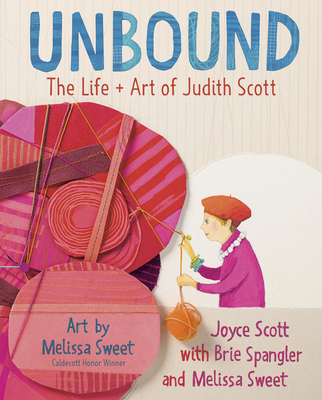
Told by Joyce Scott, the twin sister of Judith, this picture book explores the closeness of the sisters as small children until they are separated for years. The two sisters shared everything with one another, playing together all the time. Then Joyce is sent to kindergarten and Judith is left behind. Judith has Down syndrome and has never spoken. Then her parents send Judith to a special school where she will live and learn to talk. They don’t visit for a long time and when they do, the school isn’t like other schools. There is no playground, no desks, no books. As they grow older, Joyce gets married and has children. She continues to think of Judith as being at her side all the time. Eventually, she is able to bring Judith out of the institution and to live with her. Joyce finds Judith an art program to be part of. Judith attends but won’t participate at all. Months go by until her teachers give her some natural materials and fabric. Suddenly, Judith is creating unique pieces of sculpture and is celebrated as an artist.
Full of sorrow and loss, this picture book examines the destructive nature of the systematic institutionalization of people with special needs to both the person institutionalized and their loved ones. Having Joyce herself narrate the book is powerful. The beautiful connection the sisters have in their young childhood forms a foundation of connection that allows her to rescue her sister decades later. Even as the book moves to when Judith finds her artistic voice, there is a melancholy to the years lost and the muting of her voice for so long.
Sweet’s illustrations are incredible and moving. She incorporates collage and also builds sculptures to pay homage to Scott’s work. Built with string, textiles, wire and wood, there is a celebratory nature to them of an art newly found. In other moments, Sweet captures wistfulness, longing and connection with light, shadow and color.
An extraordinary look at an artist who was almost lost. Appropriate for ages 6-9.
Reviewed from e-galley provided by Alfred A. Knopf.
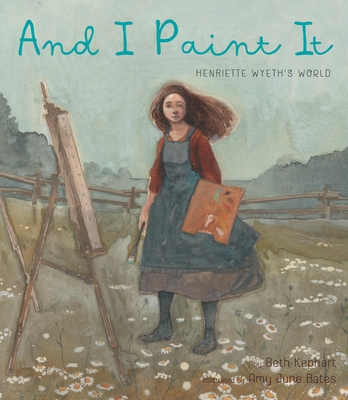
This picture book biography looks at the country life of N.C. Wyeth and his family through the eyes of his artist daughter, Henriette. Henriette joins her father as he heads out into the countryside to paint. The two quietly go out, avoiding her talkative sister who is in the henhouse and her brother who is in his workshop building things. Her father greets the flowers along the way, finally stopping to paint the landscape before them. The two sense the world around them, draw the details they see, and smell the earth and plants, painting the sky. They paint together until it is time to head home, and even then Henriette stays behind to paint even more.
The author first discovered Henriette through N.C. Wyeth’s letters and then went on to learn more about her. The statements that the book has Wyeth say to his daughter are taken from his writing about art. The language in the book is poetic and rich, showing all of us how to look more deeply at the world around us and celebrate the small things we see and the large landscape and sky as well.
Bates was also taught art by her own father and notes in her Illustrator’s note that this book pays homage to the Wyeth’s and also to her own experience as she grew up. The illustrations are an engaging mix of watercolor landscapes and then also smaller drawings and paintings that Henriette would have made as they wandered from things she dreamt up and details she noticed.
A lovely look at the Wyeth family, the talented Henriette and how the artistic eye is taught. Appropriate for ages 6-9.
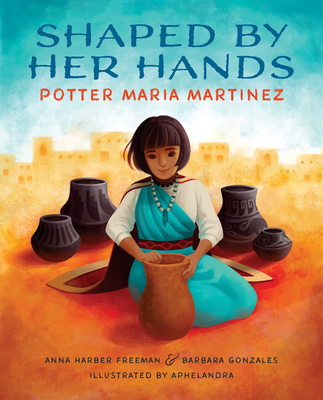
Maria played in the fields while her parents worked, making clay bowls. When all of them cracked in the sun, she sought help from her Aunt Nicolasa who showed her the ancient Tewa way of making pots using clay mixed with volcanic ash and thanking Mother Earth for sharing clay with them. Maria practiced making pots for months before she was ready to have one fired with her aunt’s. Some pots don’t survive firing, so Maria was pleased when hers came out perfectly from the blaze. Maria grew up, married and had children, never stopping working with clay and pots. In 1908 an archaeologist asked if she could create a pot based on an ancient shard of pottery. Though Maria had never seen such a polished and black pot, she decided to try. After many attempts, her pot came out shiny and black. Maria was able to sell her pottery for the first time and soon they were selling as many as they could create, employing her entire family.
This picture book biography tells the story of an important Native American artist who served as a vital ambassador for the Tewa people and the ancient ways of making pottery. The book is written by one of Maria’s great grandchildren and an art teacher author. Their deep knowledge of Maria and art are evident on the pages with the details shared and the homage to Maria’s dedication for learning and teaching.
The illustrations glow with the sun of New Mexico, combined with deep blue skies and green plants. The illustrations are a stirring combination of the characters and beautiful landscapes full of sunset pinks, purples and oranges.
A lovely tribute to an important Native woman artist. Appropriate for ages 5-9.
Reviewed from e-galley provided by Albert Whitman & Company.

 Waking Brain Cells