Review: The War That Saved My Life by Kimberly Brubaker Bradley

war that saved my life

The War that Saved My Life by Kimberly Brubaker Bradley

Ada has never been outside of her family’s one-room apartment.  Her mother won’t let her be seen by others, though Ada does sit at the window and wave at people.  Ada has one foot that is twisted and doesn’t work right, so she crawls around the apartment.  But when Ada realizes that she has to get stronger, she teaches herself to walk on her twisted foot, even though it is agony, making sure that her mother doesn’t find out.  World War II comes and children are being sent to safety outside of London.  Though her mother refuses to let Ada go, Ada escapes along with her little brother Jamie and gets on a train of evacuees.  From there they head into the country and are reluctantly taken in by a grieving woman.  Immediately Ada is given crutches which let her get around more easily and she stubbornly sets out to teach herself to ride her host’s ignored pony.  But there are many changes to come, ones that both test the strength of Ada and others that more strongly tie her to the woman who gave them shelter and care.

There are books that you read that tumble into, ones that are impossible to put down, but you don’t want to read them quickly because you are so entranced with the world they are showing you.  This was one of those books for me; I adored this novel.  All of the characters are human, they all make mistakes, lose their tempers, figure things out, move on and continue to care (in their own ways) for one another.  They are all brave in their own ways too, escaping from a life of imprisonment and hate, learning to live after loss, and creating their own family.  These are inspiring people, but the book also shows that community matters, that being accepted for who you are is vital, and that there are people out there to love us.

Bradley’s writing is exceptional.  It reads easily and beautifully.  She captures Ada perfectly, from her overwhelming fear of being beaten or put in a dark place to her determination and stubbornness; from her teaching herself to walk to the freedom of riding a horse.  Ada is remarkable.  She is a prickly child who does not let anyone into her world easily, but at the same time with the story told in her voice the readers understand her and witness how much she wants to connect and yet cannot.  That first person narration is a critical reason that this book works so well.

Brilliant characters shine on the page as this book looks at war, abuse, and love in a complex and heroic way.  Appropriate for ages 10-13.

Reviewed from ARC received from Dial.
2015 Schneider Family Book Award

“For books that embody an artistic expression of the disability experience:”

WINNER FOR AGES 0-10

17320985

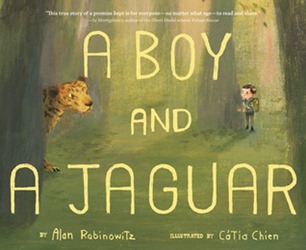
A Boy and a Jaguar by Alan Rabinowitz, illustrated by Catia Chien


WINNER FOR MIDDLE SCHOOL

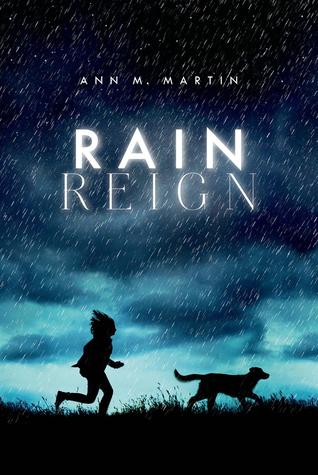
Rain Reign

Rain Reign by Ann M. Martin


WINNER FOR TEEN

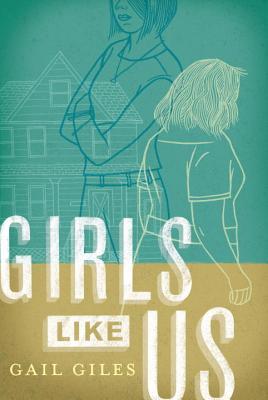
Girls Like Us

Girls Like Us by Gail Giles

Review: Emmanuel’s Dream by Laurie Ann Thompson

emmanuels dream

Emmanuel’s Dream: The True Story of Emmanuel Ofosu Yeboah by Laurie Ann Thompson, illustrated by Sean Qualls

Emmanuel was born in Ghana, West Africa, with a deformed leg.  His father left the family but his mother continued to encourage Emmanuel to make something of himself.  Emmanuel taught himself to crawl and hop, so he was able to hop the two miles to school and then hop all the way back home at the end of the day.  At school kids would not play with him at first, so he saved up his money to buy a new soccer ball that he shared with the others as long as they let him play too.  Soon he was playing soccer using crutches to get around.  It was at school that Emmanuel also taught himself to ride a bike.  Then his mother fell ill and Emmanuel had to leave school to support his family.  He headed for the big city of Accra where he looked for a job.  It took time, but he started working as a shoe shiner and for a restaurant that also gave him a place to stay.   He sent money home and two years later returned home because his mother’s health was failing.  After her death, he decided to follow his dream to bike around Ghana.  He worked to get help with his dream, becoming a spokesperson in his country for people with disabilities.  He completed his journey of 400 miles in just ten days, an amazing journey that proved that one person’s dreams could deeply change a culture.

Thompson’s writing is in stanzas and moves between feeling like poetry and prose.   This fluidity makes the book very readable, it also lets her make her points with a grace and brevity that is purely poetic.  Thompson’s text shines with her appreciation for Emmanuel and his achievements in life.  Where his culture told him that he was cursed and unworthy, he has become a hero.  It is also a sort of tangible heroism that children will completely understand.  They will know what his achievement is and how difficult it would be to accomplish.

Qualls’ illustrations are incredible.  Filled with beautiful people, strong color, patterns and light, the illustrations let the backgrounds fade to white and black and the people come forward and shine.  Bright colors ripple across skin, fill cheeks, and color the air around people.  There is a sense of life within these illustrations, one that can’t be contained.

A truly inspiring story that shows the creation of a national hero from his infancy through his achievements.  Appropriate for ages 7-9.

Reviewed from digital galley received from Random House and Edelweiss.

Review: Pack of Dorks by Beth Vrabel

pack of dorks

Pack of Dorks by Beth Vrabel

Lucy just knows that this is the biggest recess of her life, because at recess she will kiss Tom and cement herself as a popular fourth grader along with her best friend Becky.  But after the kiss happens, all she has is a ring that turns her finger green and a sinking feeling about what just happened.  Soon after the kiss, Lucy’s baby sister is born.  Her parents are shocked to have a baby with Downs Syndrome and are caught up in coping with the surprise.  That leaves Lucy alone to cope with the sudden turn of events at school where over the course of a few days she goes from being cool and popular to being one of the lamest kids in the class.  Becky calls Lucy at night to tell her all of the mean things that the other kids are saying about her, claiming that she is still Lucy’s friend but can’t be her friend at school anymore.  In the meantime, Lucy starts to make friends with some of the other kids in her class.  She does a project on wolves with Sam, a very quiet boy who is bullied by the same kids.  Out of that project and her growing group of outcast friends, Lucy decides that the only solution for them is to become their own pack.

Vrabel captures elementary school perfectly with its confusing social pressures that keep people conforming to the norm.  She manages to keep everything at just the right level, never becoming melodramatic about the situation.  At the same time, it is clear how devastating the bullying is to Lucy.  While she has a supportive family, they are distracted by the new baby and rightly so.  Her new little sister helps be a guide for Lucy forward, and is a very smart addition to the story, allowing Lucy her growth and also serving as an example of someone who will also need their own pack to support her.

Lucy is a character who becomes more likeable as the book progresses.  At first with her quests for popularity and kisses, Lucy is shallow but after she becomes shunned by the popular crowd she immediately reveals how smart and strong she actually is.  Vrabel’s brilliant combination of wolf packs and middle school bullies adds strength to the entire novel.

A smart book on bullies, differences and disabilities, this novel is one that will make a great read aloud for elementary classes.  Appropriate for ages 8-11.

Reviewed from library copy.

Review: The Mitten String by Jennifer Rosner

mitten string

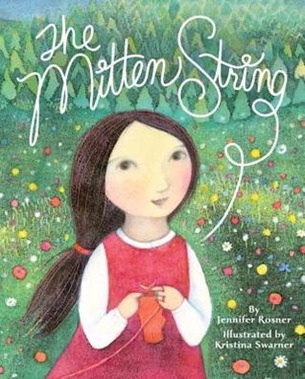
The Mitten String by Jennifer Rosner, illustrated by Kristina Swarner

Released October 28, 2014.

Ruthie’s family was known for their wool and the mittens they created from it.  They sheared their own sheep, prepared their own wool, spun their own yarn.  At night, Ruthie and her mother knitted together, with Ruthie in particular making mittens.  On market days, they traveled to town to sell their fabric and knitting.  One day, they found a woman on the road with her baby where their wagon had broken down.  The woman wrote on a slate to communicate, because she was deaf.  She used sign language with her little son.  Ruthie’s family offered her a place to stay for the night and Ruthie noticed a deep blue piece of yarn around the woman’s wrist.  That night, she saw how the women used the yarn to tie herself gently to her baby so that she would know if he needed anything in the night.  Ruthie had a great idea and quickly went to work creating a mitten on a string with one sized for an adult and the other for a baby.  In return for her kindness, the woman gave Ruthie her string of yarn of the deepest blue and then also showed Ruthie what plant to use to create the blue dye. 

As Rosner says in her author’s note, this book is inspired by her great-great-aunt Bayla who was deaf and used the trick of tying a string to her baby’s wrist from her own.  She also offers a knitting glossary at the end along with some knitting-related sign language signs.  I appreciate that while this book is about a woman who is deaf, she is also a very capable person.  The family may offer her help, but it is more about her circumstances than about her deafness.  It is a pleasure to have a book about a disability address it in such a positive way.

Swarner’s art has the softness of yarn.  Done in the same rich, deep colors that Ruthie knits her mittens out of, the entire world is soft and warm.  There are small touches throughout that add details of homeliness and kindness.  From the different sizes of mittens around the home to the flowers all over the grass. 

This is a picture book about kindness and caring for one another with a brilliant blue thread of love woven throughout.  Appropriate for ages 4-6.

Reviewed from e-galley received from Random House Books for Young Readers and Edelweiss.

Review: Colors of the Wind by J. L. Powers

Layout 1

Colors of the Wind: The Story of Blind Artist and Champion Runner George Mendoza by J.L. Powers, illustrated by George Mendoza and Hayley Morgan-Sanders

George loved to move, so he decided to be a basketball player.  Then one day the world outside looked red to him and he started to see other colorful squiggles in the air and suffer from constant headaches.  The doctor told him that he was going blind, but George didn’t lose all of his sight, instead he continued to see bright colors and flashing lights.  He had to stop playing basketball because he could no longer see the basket.  Eventually, George took up running, mostly because it made him so tired that he could forget being blind.  He could run very fast, so fast that he went to the Olympics, twice.  But George continued to see a world of colors that no one else could see.  It wasn’t until a friend was killed that he started to ask himself why he was there, and George started to talk about being blind to groups and also to paint the world that he sees.

A truly inspirational story, Mendoza is an example of someone being incredible resilient in the face of a life-changing disability.  The fact that he began to run after losing his sight is amazing and also inspiring.  But it is his visions and his art that shine on the page, a world painted in colors that only he can see.  The process of George becoming an artist is shown in all of its slow progression which also gives the sense that there is time to find your path, time to be the person you are meant to be.

Seeing his paintings on the page is immensely powerful.  They are bold and bright, done in thick lines.  They have a voice to them that shouts on the page and they tell the story of what George sees more clearly than any words can. 

Highly recommended, this picture book biography is a powerful tale of resilience and overcoming barriers.  Appropriate for ages 7-10.

Reviewed from pdf received from J.L. Powers.

Review: El Deafo by Cece Bell

el deafo

El Deafo by Cece Bell

Author/illustrator Cece Bell has created a graphic novel memoir of her loss of hearing as a child.  At age four, Cece contracts meningitis and the disease takes away her ability to hear.  At first Cece attends school with other children who have hearing loss and wear hearing aids, but then she is sent to first grade with a new super-powered hearing aid, the Phonic Ear.  Her new teacher has to wear a microphone, one that she sometimes forgets to take off (even when she uses the bathroom) which leads to some rather interesting sounds!  But along with these superpowers come some ethical questions and some technical problems.  As Cece copes with her hearing loss, she is also living the normal life of a child, attending school, making new friends, all with a big hearing aid on her chest.

Bell writes with a great honesty here, revealing helpful hints about what deaf people need to help them read lips and understand people better, things that other people can help with.  There is plenty of humor throughout the novel, making it very appealing.  Also adding to the appeal is Bell’s transformation from human to bunny in the illustrations, sending herself as an imaginary superhero flying upwards with her long ears.

While this is a book about a disability, it is much more a book about Bell and how her creativity helped her through times that required a real strength of character.  Her sense of humor also helped immensely, and it is her positive take about her hearing loss that makes this such an incredible read.

A top graphic novel for children and libraries, this is a must-read and a must-have.  Appropriate for ages 7-10.

Reviewed from ARC received from Amulet Books.

Review: Curiosity by Gary Blackwood

curiosity

Curiosity by Gary Blackwood

The author of The Shakespeare Stealer returns with another historical novel for children.  In 1835 Philadelphia, twelve-year-old Rufus has lived a sheltered life, kept inside by the curve of his spine and his small stature.  Then his father is thrown into debtor’s prison and his life changes dramatically.  Taken into a home for orphans, Rufus is rescued by his skill at chess and taken to live with Maelzel, a sinister man who owns a collection of automatons as well as The Turk, a chess-playing machine.  Rufus is forced to hide inside the cabinet below The Turk and play chess against ticket-paying customers.  He is promised a small salary with which he hopes to help his father get out of prison.  But Rufus’ life is not just playing chess.  He must remain hidden at all times to avoid the secret of The Turk being discovered.  He can’t ever go out, making this a twisted version of his earlier sheltered life.  Now he struggles to get enough to eat, to not be beaten and to find a way to not meet the dark same end as a previous Turk controller. 

Blackstone’s historical fiction is rich and detailed.  He offers just the right amount of information so that young readers will understand the difference in society and the way of life, but not so much to slow down the story.  And what a story this is!  The Turk hoax is revealed in all of its twisted, waxy glory through the eyes of a disabled young boy whose entire world has been turned upside down.  Yet Rufus is always looking on the bright side, scheming himself to try to survive as best he can and yet also having a child-like wonder at things too. 

Blackstone brings early 19th century America to life on the page.  He populates his story with real people like Edgar Allan Poe and P. T. Barnum, adding to the already strong sense of reality in his tale.  At the end of the book, the author does speak about the liberties he took with these historical figures, including making the sinister Maelzel much more evil than he seemed to be in real life. 

Strong writing, a compelling story and a shining hero all make this work of historical fiction a dark delight.  Appropriate for ages 9-12.

Reviewed from copy received from Dial.

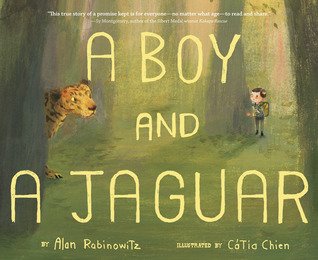
Review: A Boy and a Jaguar by Alan Rabinowitz

boy and a jaguar

A Boy and a Jaguar by Alan Rabinowitz, illustrated by CaTia Chien

This is a stellar autobiographical picture book written by and about a wildlife conservationist.  Alan was a boy who could not speak clearly.  He battled stuttering all of the time except when he talked with animals.  When he visited the great cat house at the Bronx Zoo, he could whisper fluently into the ears of the cats.  He also spent a lot of time with his pets at home, speaking to them and telling them that if he ever found his own voice, he would serve as their voice since they had none and would keep them from harm.  Alan became the first person to study jaguars.  In Belize he felt at home in the jungle.  He worked to protect the jaguars and eventually had to speak for them in front of the President of Belize, hoping to save their habitat from destruction.  But can he speak clearly in the short 15 minutes he’s been given?

This book is made all the more compelling by the fact that it is true.  It gives readers a glimpse into the world of a child struggling with a disability, one that mars every verbal interaction he has.  And thanks to his ability with animals, readers quickly see beyond the stutter to the boy himself and to the gifts that he has to offer.  Even better, once Alan becomes an adult, readers get to see a man who is taking advantage of his uniqueness to make a difference in the world and for the animals he cares for so much.

Chien’s art is rich and varied.  She moves from backgrounds of wine red to brilliant yellow to the deep greens of the Belize jungles.  She shows an isolated boy, alone that contrasts beautifully with the man working happily alone in the jungle – so similar and yet so very different.

An extraordinary autobiography, this book shows readers not to judge anyone by how they speak but rather by what they do.  Appropriate for ages 4-7.

Reviewed from library copy.