My New Mom and Me by Renata Galindo

My New Mom and Me by Renata Galindo

My New Mom and Me by Renata Galindo (InfoSoup)

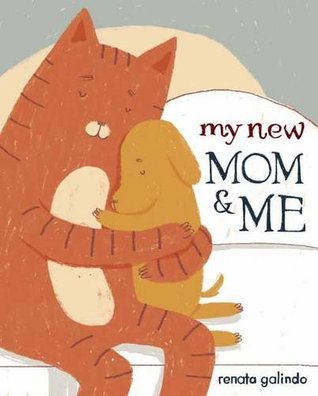
When a puppy comes to live with his new cat mother, he is scared. But his mother reassures him. He tries to give himself stripes so he looks more like her, but she says there is no need to change at all. She likes that they are different and the puppy does too. His new mom takes care of him and plays with him. Not all days are perfect, but his mother tells him that they can do better next time and that it is OK. This is a portrait of a newly formed family finding their way together.

Galindo captures the emotions of a newly adopted child in this picture book. She tells the story with a frank simplicity that really works, not trying to explain away the emotions but allowing them to show in their messiness as a reassurance that such emotions will not undo a new adoption. Galindo also shows the connection building and love that an adoptive family feels. Her decision to use a single parent is one that is not always seen in picture books about adoption.

The art is very effective. Large on the page, it is done in a limited palette of oranges, yellows and grays. The differences between cat mother and dog child are beautifully clear and the part where the puppy paints stripes on himself is a visual reminder of the desire to be a solid family unit. Just the use of a dog and cat as the characters was a brilliant choice. It is clear to children that they are very different and could even have points of view that are opposites.

A simple and strong new picture book about adoption from the child’s point of view. Appropriate for ages 2-4.

Reviewed from library copy.


Excellent Ed by Stacy McAnulty

Excellent Ed by Stacy McAnulty

Excellent Ed by Stacy McAnulty, illustrated by Julia Sarcone-Roach (InfoSoup)

Everyone in Ed’s family is excellent except for Ed. He doesn’t understand why he isn’t allowed to eat at the table, ride in the van, sit on the couch or use the inside bathroom like the rest of the family. So he decides that he’s just not good enough and sets out to find something that he is the best in. But each time he finds something, one of the others in the family shows how much better they are than he is at exactly that thing. Finally, Ed shows why he is the perfect pet in a perfect family, though he still wonders about the inside bathroom.

This book uses humor and a dog’s perspective to take a look at being the underachiever in a family. The family is oblivious to Ed’s self-esteem crisis, continuing to excel and to applaud one another along the way. The book is cleverly crafted with Ed figuring out what he is good at and then another family member putting a twist on it and showing a new interpretation of the skill. Additionally, the list of things that Ed isn’t allowed to do serves as the basis for what he is actually very good at. It’s a lovely concept that brings the entire book full circle.

The illustrations are jaunty and delightful. In a book about a dog and not about race at all, it is great to see a family of color as the central figures. There is a lot of energy throughout the book and it is made all the more energetic by the illustrations which pack plenty of action on each page, moving the book along at a lively pace.

Dynamic, funny and very satisfying, this picture book is dog-gone good. Appropriate for ages 4-6.

Reviewed from digital galley received from Penguin Random House and Edelweiss.

Ideas Are All Around by Philip C. Stead

Ideas Are All Around by Philip C Stead

Ideas Are All Around by Philip C. Stead (InfoSoup)

Stead captures a day in search of a story to write. He takes a walk with his dog named Wednesday since it’s a sunny day. They greet Frank, a turtle who lives near the bridge. They wave to Barbara a neighbor who owns the home where the author used to live and where he dropped blue paint in the shape of a horse. Ducks float by. Trains rush past. They walk through town and listen to the birds and watch the blue sky. Wednesday chases a squirrel back to Barbara’s house where they have coffee together. And soon a story has been found.

This is a treasure of a picture book. It offers a glimpse into the writing process, into the importance of getting outside and taking a walk. It shows how little things turn into stories and become big ideas. It also shows the author as a product of his personal landscape, whether that is filled with a story based firmly in reality like this one or one that is more fantastical or whimsical.

Stead’s illustrations are a rich mix of media. There are photographs of Wednesday combined with collage, painting and printed words. Some of the paintings have gorgeous textures that remind me of stencils or the roughness of stamping. The entire book sings with invention and inspiration.

A perfect leaping off point for young writers, this book shows that not only can any idea become a story but ideas can become great picture books too. Appropriate for ages 6-9.

Reviewed from library copy.


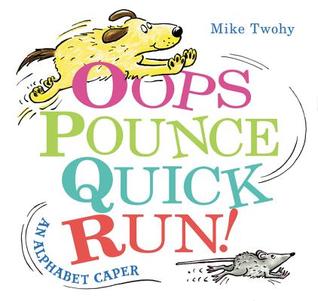
Oops, Pounce, Quick, Run! by Mike Twohy

Oops Pounce Quick Run by Mike Twohy

Oops, Pounce, Quick, Run! by Mike Twohy (InfoSoup)

This fast-paced picture book is built entirely around the alphabet with one word per page. The book starts with a mouse happily “Asleep” in his chair when in comes a “Ball.” Soon a “Dog” is poking his nose into the mouse hole and putting his “Eye” up to it to peek inside. Then the chase is on filled with jumping around the “Kitchen” and “Living room.” The mouse eventually returns the ball to the dog in a wrapped present and the two happily fall fast asleep side by side.

The appeal of this picture book is in its zany energy level that keeps the pace flying along. The chase is a merry one throughout filled with moments of slapstick comedy. It has a sort of Tom and Jerry feel to the entire book made all the more fun by the alphabetic structure of the tale. Simple and fast-paced, this book may have to be read again to slow down a bit and enjoy it.

The illustrations are just as simple as the story itself. Done in a style that will work well when shared with a group, they will project right to the back of a room. The illustrations add to the fast pace with plenty of images of running, dashing, jumping and lines that create more motion on the page.

A dynamic alphabet book that is filled with cheerful energy. Appropriate for ages 1-3.

Reviewed from library copy.

The House that Zack Built by Alison Murray

The House that Zack Built by Alison Murray

The House that Zack Built by Alison Murray (InfoSoup)

Zack built a house out of blocks outside under a tree. A fly buzzed by, the cat stalked the fly, then got more interested in the cream up high on a shelf. The dog was asleep when down fell the cream, knocked over by the cat who was still looking to catch that fly. The lambs in the field are calm and quiet, then the dog runs through still covered in cream and the sheep dash out of the field. Then Zack looks around, amazed at the mess of the farm. He jumped into action and set it all right. Then they all sat quietly and looked at the incredible house that Zack had built.

This British import is a cumulative tale that doesn’t solely stick to the traditional structure of building and building onto the length of the sentence with each new addition. Instead here it is the story itself that is the focus and the cumulative structure is used when it works and then merrily abandoned to make the storyline work better and to also make the book much more enjoyable to read. The result is a cumulative tale that will not leave you breathless or with a spinning head when shared aloud.

Murray’s art is simple and friendly. The illustrations will work well for a crowd since they are not filled with small details. Children will enjoy the cat in particular as it causes almost all of the problems that emerge.

There is a real satisfaction in this story of watching chaos happen and then having it set to rights. Appropriate for ages 2-4.

Reviewed from library copy.

Review: The Dog That Nino Didn’t Have by Edward van de Vendel

The Dog That Nino Didn't Have by Edward Van de Vendel

The Dog That Nino Didn’t Have by Edward van de Vendel, illustrated by Anton Van Hertbruggen (InfoSoup)

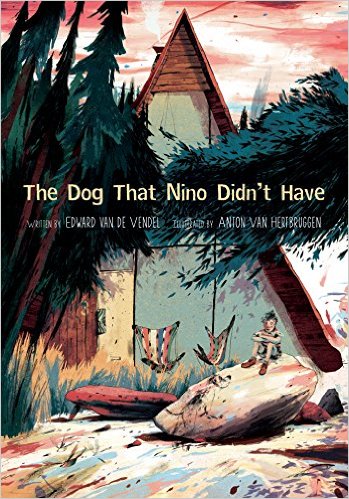
Nino has a dog, but it’s a dog he never had. It’s invisible to everyone else, but Nino can see it clearly. It’s a dog that climbs trees like a squirrel, loves deep water, and likes salty tears. But one day, that dog disappeared and a new dog took his place. It was a dog that everyone could see, one that had it’s own personality that is completely different from Nino’s other dog. Soon though, Nino is enjoying the new dog. But that doesn’t stop him from thinking up lots more animals that he’s also never had.

Just opening this book, you know you are in for a strange and beautiful treat. Originally published in Belgium, the book carries that elusive European flavor about it. The concept of an invisible friend or pet is not a new one, but as it is done here it takes on extra weight and meaning. Here, the pretend dog is a companion for a lonely boy, a comfort when he needs one, and someone who understands that he misses his father desperately. His real dog can’t quite do all of that at first, but he steadily does take over those duties just in a different way. This is a book about change, resilience and the imagination.

The art here is part of weaving that odd world. It is done in 70s angles and styles with the A-frame houses and long, low station wagons as vehicles. Even the colors hearken back to that time. The book is filled with night skies and bright hot days. Some pages are busy with details while others are open and wide white. Beautiful, strange and wondrous.

This is a strikingly unique book that will speak to anyone who is missing a parent and needs a dog of their own to help. Appropriate for ages 4-6.

Reviewed from library copy.


Review: The Story of Diva and Flea by Mo Willems

The Story of Diva and Flea by Mo Willems

The Story of Diva and Flea by Mo Willems, illustrated by Tony DiTerlizzi (InfoSoup)

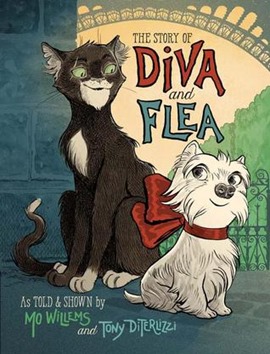
Diva is a little white dog who lives in a grand apartment building in Paris. She is so small that she is smaller than a foot, which makes her run whenever she hears footsteps of strangers coming. She loves to spend time in the apartment courtyard, though even there she is often startled or scared. Flea is an alleycat who spends his time moving from place to the place in Paris. He has had a lot of adventures throughout the city and has many tales to share. This unlikely pair meet when Flea unintentionally upsets Diva by hanging around her courtyard. Diva teaches Flea about things like going inside for breakfast while Flea teachers Diva about exploring out in the public streets and learning to meet people rather than running away.

Willems was living in Paris when he discovered this story right at his own apartment building, a little dog who was friends with a stray cat. He has taken that initial inspiration and created two outstanding characters in Diva and Flea. The combination of being pampered and frightened is quite clever and a much more creative choice than being pampered and spoiled rotten. Flea too is not stereotypical. He has a very metropolitan flair rather than being uncouth and rude. Their friendship develops right on the page, each of them learning from the other and seeing one another in a new way with each encounter.

The art by DiTerlizzi is gorgeous. He captures the compact vigor of Diva and her panic attacks. Then there is the rangy motion of Flea, where you can almost see him move on the page with his shifting muscles under his fur. Paris too is captured along with them as they look at the Eiffel Tower. I was grinning ear-to-ear to see Willems himself pop onto the page as the person that Diva first attempts not to run away from. Clever indeed.

Another winner from Willems, this book offers his fans a new chapter book with some grand new characters. Appropriate for ages 4-6.

Reviewed from library copy.

Review: Goodnight, Good Dog by Mary Lyn Ray

Goodnight Good Dog by Mary Lyn Ray

Goodnight, Good Dog by Mary Lyn Ray, illustrated by Rebecca Malone (InfoSoup)

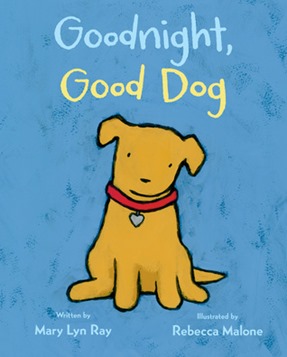
The little dog knows when people are heading to bed. The light clicks off, quiet night noises start, and the moon comes up. But even though he has a wonderful warm bed, the little dog is not sleepy. He remembers his day filled with playing outside in the sun, running on the grass, and eating. He’s still not sleepy though, so he explores the house with the sleeping people. He climbs into his round bed, still not sleepy. Well, perhaps a little. And before he realizes it, he has slept all night and it is day again with plenty of time to play and eat once more.

This book is magnificent. It is simple yes but also offers a lot of depth. The writing is very special, using symbolism in a way that is appropriate for very small children. Ray beautifully ties together the quiet round of the moon with the warm round of the puppy’s bed with the hot round of the sun during the day. Yet this is not a concept book, it is a book about the magic of night and the lure of bedtime even if you are not sleepy. It is a book that explores words and emotions, that is dreamy and quiet and lovely.

The illustrations by Malone are done in acrylic. They are big and bold, the objects clearly outlined in black and just asking to be pointed to by small fingers and talked about. The little dog is enchanting, his head tipped to the side thinking or listening. He is childlike in his unwillingness to sleep and in his daydream of the day. The book is warm, quiet and cozy.

A delight of a dog story, this bedtime book has a quiet charm that is very special. Appropriate for ages 2-4.

Reviewed from library copy.
Review: Job Wanted by Teresa Bateman

Job Wanted by Teresa Bateman

Job Wanted by Teresa Bateman, illustrated by Chris Sheban

When an old farm dog walks up to a farm looking for work, the farmer refuses. He sees dogs as a waste of food since they don’t give anything back like chickens or cows do. The dog then offers to be a cow instead of a dog. He gets all of the cows into the barn and lined up ready for milking before the farmer gets there, but the farmer isn’t interested in this dog-cow. The next thing the dog tries is to be a horse. He couldn’t fit in the harness for the plow, but he could run ahead of the horse with treats to get the horse to plow faster. Still, the farmer was not interested in hiring the dog. The dog next tries to be a chicken and tidies up the chicken coop before settling down in a nest of hay himself. It’s there that he finally proves the value of a dog on a farm to the reluctant farmer.

Bateman nicely incorporates a rhythm and repetition into her story. The pattern of the conversation between the dog and the farmer carries through the entire book, creating a framework that functions very nicely. On each job, the dog manages to be useful in his own way, something that is a nice surprise in the book rather than him trying to give milk or eggs himself. One immediately roots for the success of this hard-working dog.

Sheban’s illustrations are done in watercolor, graphite, and colored pencil. The result is a picture book that glows with sunlight. There is a wonderful softness to the illustrations, gauzy light that plays across the farm and the characters.

A shining picture book about resilience and being yourself. Appropriate for ages 3-5.

Reviewed from copy received from Holiday House.