Good Golden Sun by Brendan Wenzel – Book Review

Good Golden Sun by Brendan Wenzel (9780316512633)

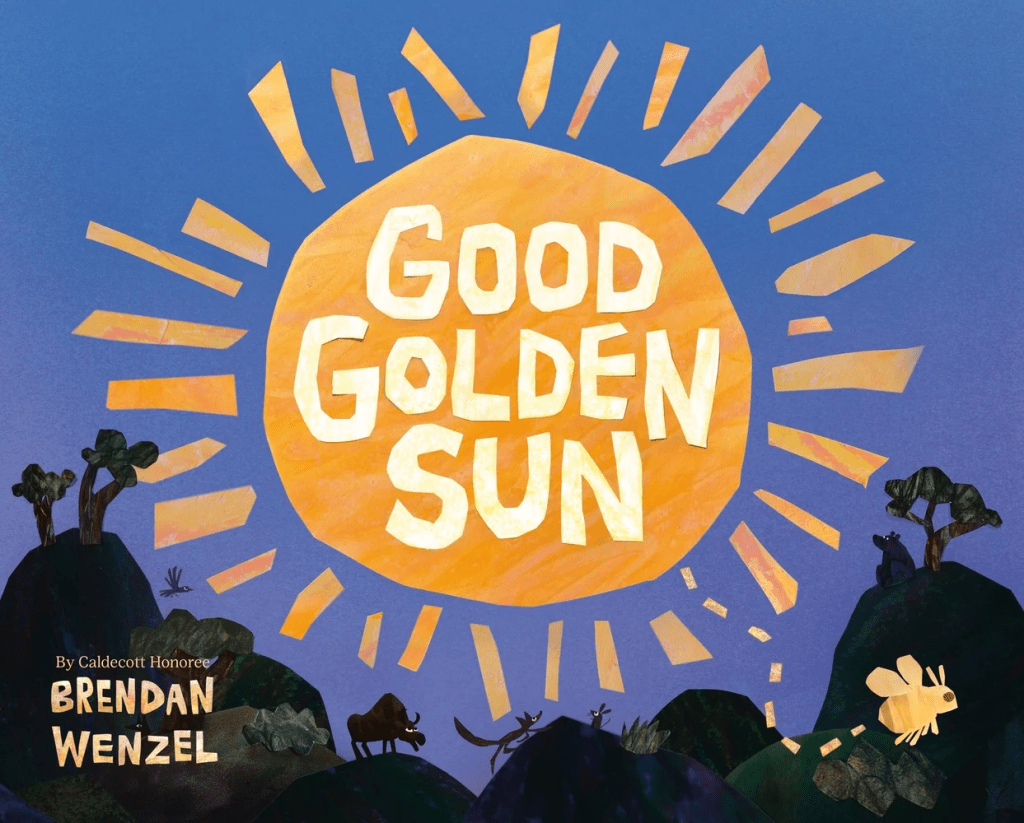
The sun comes up on a dark world. One flower is waiting to absorb the sunlight, opening as the sun rises. A bee visits the flower, carrying the light of the sun from the flower to its hive. A bear eats the glowing honey from the hive and is in turn feasted on by mosquitos that are then eaten by a bird and the cycle of sharing solar energy goes on. Eventually wolves poop on the ground and the plants absorb the energy. A cow eats the grass, a human milks the cow and night falls as a cat enjoys the milk.

Poetic lines invite young readers to explore the way energy moves through a food cycle and how we are all interconnected with one another. The illustrations are particularly compelling with the glow of energy moving across the various creatures and the page.

A beautiful shining read. Appropriate for ages 3-5.

Reviewed from e-galley provided by Little, Brown Books for Young Readers.
13 Ways to Eat a Fly by Sue Heavenrich

Cover image

13 Ways to Eat a Fly by Sue Heavenrich, illustrated by David Clark (9781580898904)

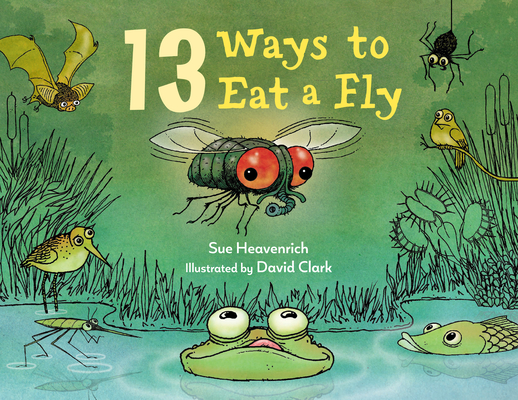
In this hilarious reverse counting book, various creatures consume the thirteen flies. The various flies are given their specific species names as they are eaten. Facts are also shared about each of the predators. The book is inviting and offers a humorous take on the science of eating flies. There are frogs that eat them, spiders, other insects, fish, birds, bats, and even one human (who eats the last fly by mistake!) And remember, even as these 13 flies are eaten, more are emerging all the time.

Heavenrich takes clear glee in sharing strange and fascinating ways that flies can be eaten. She shares facts that will have children turning the pages to discover the next amazing piece of information. Even those who think they know all about insects, frogs and animals will be intrigued by some of the data. After all, who wouldn’t want to learn about a fungus that turns a fly into a zombie!

The art in this nonfiction picture book adds to the joy of the text. Clark creates dramatic moments with his humorous illustrations, depicting the last moments of each fly’s life just before they are eaten. The googly-eyed flies are full of gangly legs, beating wings and despair.

The ultimate in gross and cool nonfiction. Appropriate for ages 5-8.

Reviewed from e-galley provided by Charlesbridge.

Review: Zig and Wikki in the Cow by Nadja Spiegelman

zig and wikki in the cow

Zig and Wikki in the Cow by Nadja Spiegelman and Trade Loeffler

This is the second Zig and Wikki book, featuring two little aliens who find their way to Earth.  In this book, the two friends lose their spaceship when they return Zig’s pet fly its native habitat.  On the way, the two discover that flies eat poop, that dung beetles use it as well, and that cows have multiple stomachs.  It’s all a matter of learning things up close and personal, right down to being swallowed by a cow.  This humorous mashup of scientific fact, alien appeal, and comic format makes for an engaging read for young readers.

It is really the blend that works so well here.  The writing is light and funny, combined with scientific facts that are highlighted with photographs.  Readers learn about food cycles, ecology and habitats without even realizing it.  Add in the humorous poop factor and the graphic novel format, and this is one appealing package.

A graphic novel series that is a lot of fun and also informational, this second book is a winner, winner, cow dinner.  Appropriate for ages 7-9.

Reviewed from copy received from Candlewick Press.

Review: Secrets of the Garden by Kathleen Zoehfeld

secrets of the garden

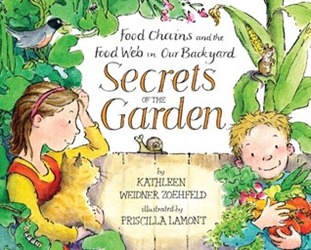
Secrets of the Garden: Food Chains and the Food Web in Our Backyard by Kathleen Weidner Zoehfeld, illustrated by Priscilla Lamont

Alice loves it when spring arrives and they can start planting the garden.  Her dad gets the soil ready for planting and then she and her brother start putting the seeds in.  It seems like a long time before the seeds finally sprout.  Then other seedlings are transplanted from pots and potatoes are sown.  Lettuce and radishes are ready to eat first, and Alice spots a rabbit munching on them too.  She also thinks a mouse might be eating the fallen corn.  Hawks hunt in the garden and there are plenty of insects too.  Autumn nears and harvest begins, and the food cycle of the garden is complete for another year.  Throughout the book, the chickens offer commentary about the cycle itself with information about herbivores and carnivores, compost, worms and much more. 

This is an outstanding example an information book for children.  The chickens give the book a lighter tone, even though they are the ones offering the hard science.  The story celebrates gardening, the food cycle, and having a place connects one with nature.  Zoehfeld’s writing is breezy and cheerful, setting just the right tone of exploration, wonder and science.

Lamont’s illustrations add to the delight.  They have a similar feel to Michael Rosen’s with the friendly characters.  The colors tend towards the subtler side, inviting close inspection and learning.

This is a choice book for units on the food cycle or for children looking for information that they will enjoy learning.  Appropriate for ages 5-8.

Reviewed from copy received from Alfred A. Knopf.