3 New Nonfiction Picture Books Full of Discoveries

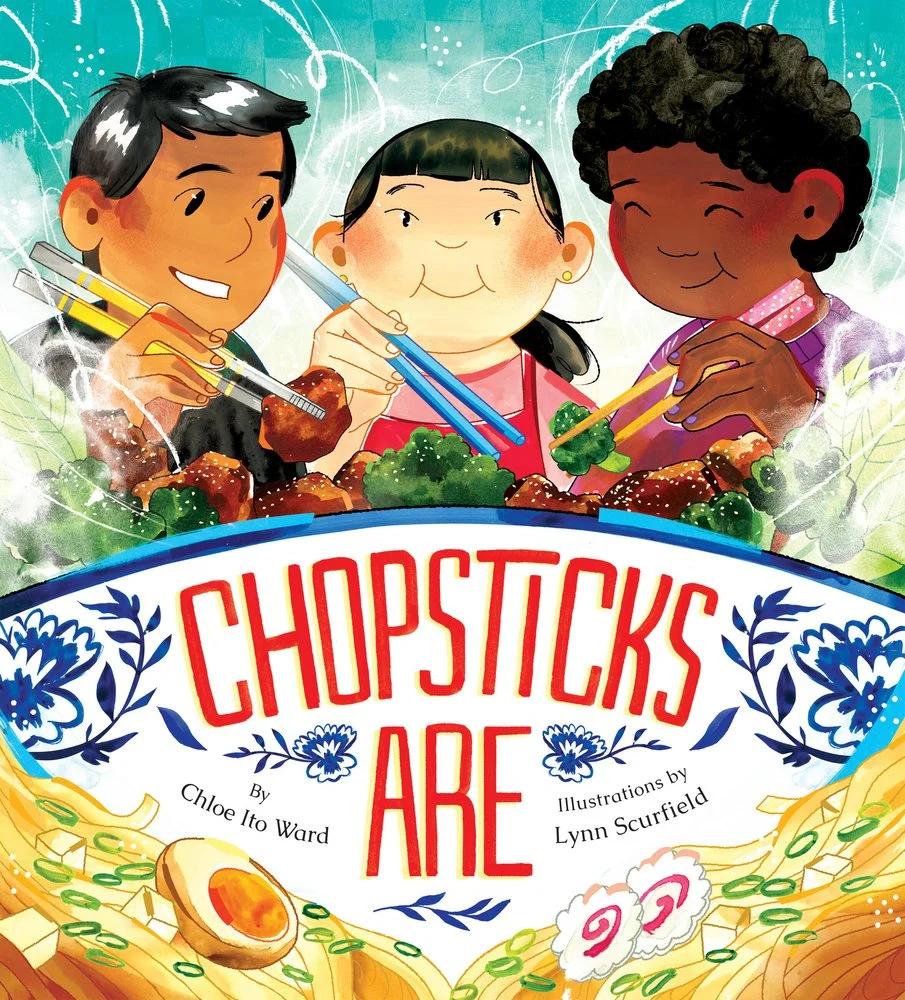
Cover image for Chopsticks Are by Chloe Ito Ward, illustrated by Lynn Scurfield, featuring three children using chopsticks to share a bowl of food.

Chopsticks Are by Chloe Ito Ward, illustrated by Lynn Scurfield

  • Publisher: Chronicle Books
  • Publication Date: March 31, 2026
  • Reviewed from Edelweiss e-galley
  • ISBN: 9781797227368

This nonfiction picture book celebrates the humble chopstick. Immediately some readers will be shocked to see chopsticks used for cooking as well as for eating. The book explores the various shapes of chopsticks from around the world and how they are used with different cuisines. Traditions around chopsticks are also shared around celebrations, offerings and luck. 

The book ends with an Author’s Note and more detailed information about how chopsticks were invented and additional rules around their use. The text is inviting, feeling like you are being invited to share a meal and learn along the way. The illustrations are bright and friendly, filled with colors, food and people. 

A yummy and inviting look at chopsticks. Appropriate for ages 3-6.
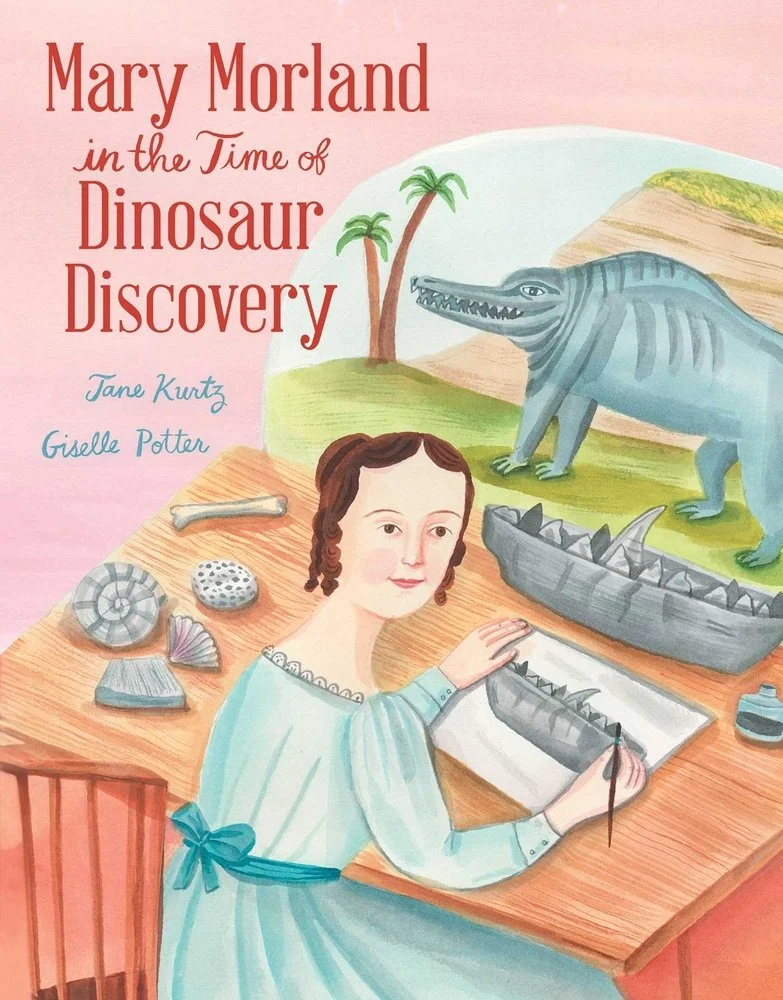
Cover image for Mary Morland in the Time of Dinosaur Discovery by Jane Kurtz, illustrated by Giselle Porter, featuring Mary Morland in a blue dress seated at a desk drawing fossils.

Mary Morland in the Time of Dinosaur Discovery by Jane Kurtz, illustrated by Giselle Porter

  • Publisher: Beach Lane Books
  • Publication Date: February 24, 2026
  • Reviewed from Edelweiss e-galley
  • ISBN: 9781665955546

When Mary Morland was a little girl, she was expected to be prim and proper. But she preferred to be outside. After her mother died, she was sent to stay with friends who had no children. The man of the family was a professor who encouraged her study of nature. As a teen, she exchanged letters with a famous French scientist who studied fossils. Rather than search for a husband, she found hers because she was reading the same thick book by that scientist. The two loved fossils and spent their lives together researching and traveling. She raised children to also be curious and learn, ignoring how clean her house was. She was a scientist her entire life, dedicating her studies to fossils and newly discovered dinosaurs. 

Written as a series of questions and answers, this picture book biography is engaging from the very beginning. The format allows readers to quickly understand how unique Morland was during her life and how she didn’t pay attention to what society might want a lady to and followed her own path. The watercolor illustrations show the fossils and shells that Mary studied as well as her throughout her life out in nature and learning. 

A grand biography of an unconventional life well lived. Appropriate for ages 6-10.
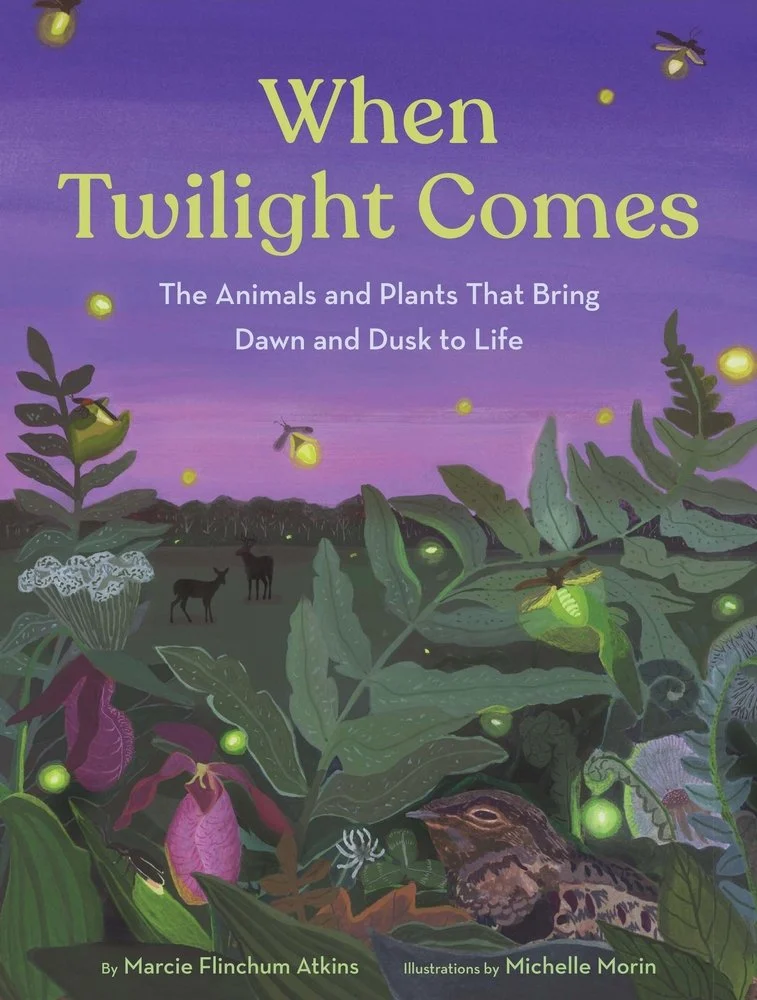
Cover image for When Twilight Comes: The Animals and Plants That Bring Dawn and Dusk to Life by Marcie Flinchum Atkins, illustrated by Michelle Morin, featuring fireflies against a purple sky with deer in a field, lady slippers, a bird and foliage.

When Twilight Comes: The Animals and Plants That Bring Dawn and Dusk to Life by Marcie Flinchum Atkins, illustrated by Michelle Morin

  • Publisher: Chronicle Books
  • Publication Date: March 31, 2026
  • Reviewed from Edelweiss e-galley
  • ISBN:9781797216799

Exploring the twilight parts of the day starts with dawn when darkness is going away. Squash bees visit the garden before other bees are up and moving. The skunk and her kits head home. Hummingbirds visit morning glory flowers as they open. Tired animals head to their dens to sleep the day away. Dusk arrives and bird calls like the whippoorwill’s fill the forest. Deer scavenge for berries, bats leave their roosts and hunt insects. Fireflies flash, evening primroses open and moths come to visit them. Rabbits eat in the garden, watching for foxes. 

The book ends with more information on twilight as well as the creatures that come out during the time. A bibliography completes the end pages. The poetic presentation of information captures the beauty and unique qualities of these transitory times between night and day. Readers are sure to learn about plants and animals they didn’t realize were active during these times of day. The illustrations show the quality of light as it changes from yellows of day to pinks to blues and then to the purples before night falls. 

A lovely look at twilight sure to have children wanting to explore this time of day and night themselves. Appropriate for ages 4-8.
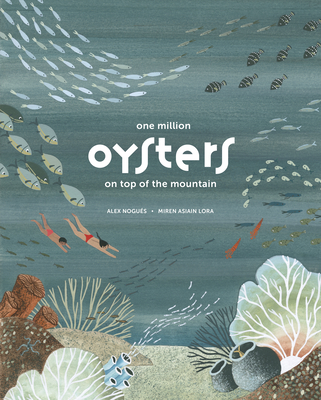
One Million Oysters on Top of the Mountain by Alex Nogues

Cover image for One Million Oysters on Top of the Mountain.

One Million Oysters on Top of the Mountain by Alex Nogues, illustrated by Miren Asiain Lora, translated by Lawrence Schimel (9780802855695)

Written by a Spanish geologist, this nonfiction picture book explores how a million fossilized oysters can possibly be found on a mountaintop. The book begins with exploring several landscape scenes, pointing out how simple it is to ignore the rocks that make up our world. The book moves from a child discovering an oyster shell on a hilltop and also explores various scientific discoveries in geology as the reason for the oysters is explained. Concepts such as strata in the earth, the immense length of geological time, and the movements of tectonic plates are explored and explained. Readers will leave with a great understanding of our changing world, much of which may have been underwater long before.

In this Spanish import, the writing by Nogues is what makes this book work so well. His tone is one of wonder and discovery. He writes from the perspective of discovering a new question, forming a hypothesis and then fully explaining the scientific terms and findings. The book offers a great look at geology and earth science for young children, never speaking down to them, instead explaining and lifting their understanding of the world upwards.

The illustrations are filled with earth tones and green punctuated by the whites of bones, fossils and oyster shells. Many of the illustrations help to give context to scientific concepts in a playful way. The scenes include children discovering fossils, exploring redwood trees, and much more.

A fascinating look at the transformations our earth has undergone. Appropriate for ages 6-9.

Reviewed from copy provided by Eerdmans Publishing Company.

Review: Fossil by Bill Thomson

fossil

Fossil by Bill Thomson

Thomson, author of Chalk, returns with a book that once again mixes fantasy with photorealistic art.  In this picture book, a boy is walking along the water with his dog.  He finds an interesting rock but then trips and the rock goes flying and breaks open revealing a fossil inside.  As he picks it up and discovers the fossilized fern inside the rock, ferns start to grow around him.  His dog digs up another rock and when the boy breaks that one open, a huge dragonfly comes to life.  The dragonfly lands on another rock and readers will see the claws on the fossil before the shadow appears.  With his dog in danger, the boy has to think fast about how to save him. 

Done in a wordless format, Thomson’s art is the real draw here.  His photorealism makes for images that are worth lingering over.  He also uses unique perspectives throughout the book, such as the image on the cover.  The books has the universal appeal of a sandy shore littered with large stones and drenching sunlight.  That same sunlight somehow becomes threatening once the dinosaur appears, almost spotlighting the danger and creating deep menacing shadows.

Vivid and beautiful, this book offers a dynamic take on fossils and prehistoric life.  Appropriate for ages 3-6.

Reviewed from library copy.