3 New Gorgeous Gardening Picture Books

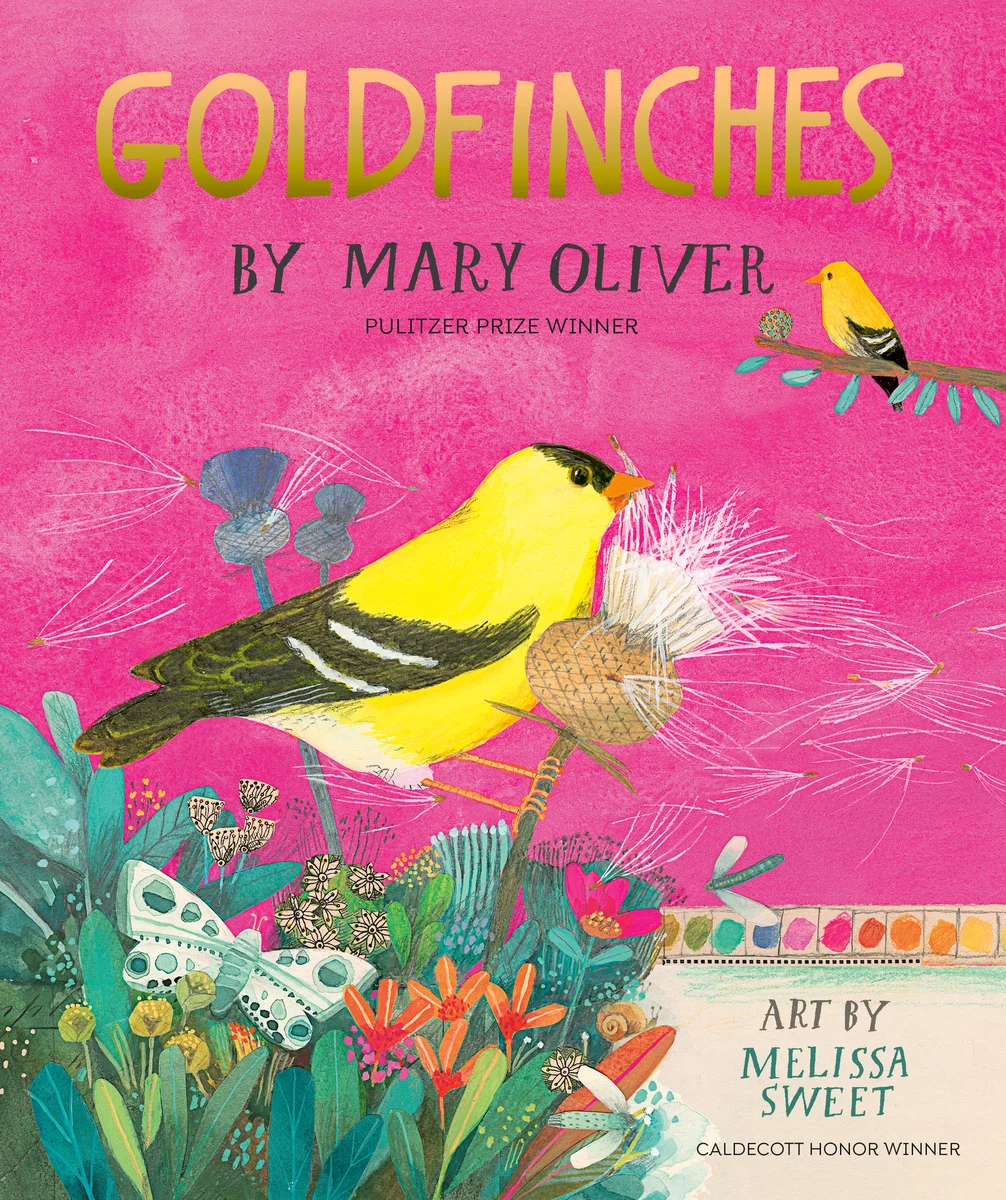
Cover image for Goldfinches by Mary Oliver, illustrated by Melissa Sweet. Features two goldfinches against a pink sky sitting on thistles.

Goldfinches by Mary Oliver, illustrated by Melissa Sweet

  • Publisher: Viking Books for Young Readers
  • Publication Date: March 3, 2026
  • Reviewed from pdf received from publisher
  • ISBN: 9780593692417

Mary Oliver’s poem “Goldfinches” is transformed into a child-friendly picture book that invites readers out into fields filled with thistles and birds. The poem speaks to the beauty of nature from the beauty of the “coin of reddish fire” in the thistles to the way the goldfinches build their “silver baskets” of nests. Through the poem and Sweet’s art, readers will experience the way that thistles and birds work together to form a cycle of life. The art also shows people spending time in nature, quietly making notes and sketches, observing it all. 

Sweet has so beautifully captured Oliver’s poem, bringing into a new format that pays homage to her words while inviting a new generation of readers to discover her. Oliver’s work is stunning with its vivid renderings of nature, speaking to the way nature impacts us if we are just willing to slow down and notice. Sweet’s art is a glorious dance of color palettes, taped small notes, and marvelous sweeps of field and sky. 

The entire book is a gust of fresh air across the mind. Appropriate for ages 4-9.
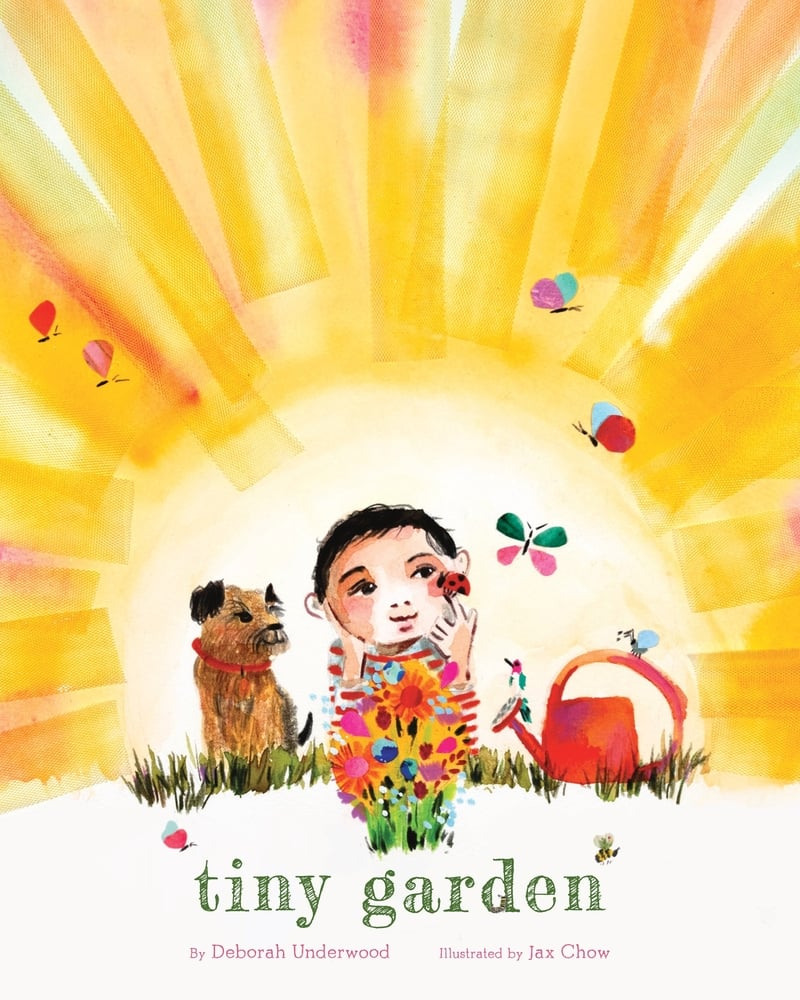
Cover image for Tiny Garden by Deborah Underwood, illustrated by Jax Chow. Features a boy sitting in front of a rising sun with a dog and a watering can.

Tiny Garden by Deborah Underwood, illustrated by Jax Chow

  • Publisher: Abrams Books for Young Readers
  • Publication Date: March 3, 2026
  • Reviewed from Edelweiss e-galley
  • ISBN: 9781419774911

Andrew loved plants, but big gardens and trees were overwhelming. So he planted his own small garden in his front yard. Soon he had a colorful tiny plot. Others didn’t understand what he was doing. But the very small animals in the area soon found the very small garden. First was a tiny moth who rested there, then a tiny earthworm snuggled in. A hummingbird visited for nectar sips. The tiny garden was a tiny gathering place. 

The text of this picture book celebrates Andrew’s connection with plants and nature while also pointing out the patience it takes to plant, water and eventually see the results of your work. From the first glimpse of the tiny garden in illustrations, children will immediately understand that this is an Andrew-sized garden and it’s just the right size. The animals who visit are cleverly depicted and there is a sense of calm joy throughout the book. 

A lovely little look at nature and gardens. Appropriate for ages 3-5.
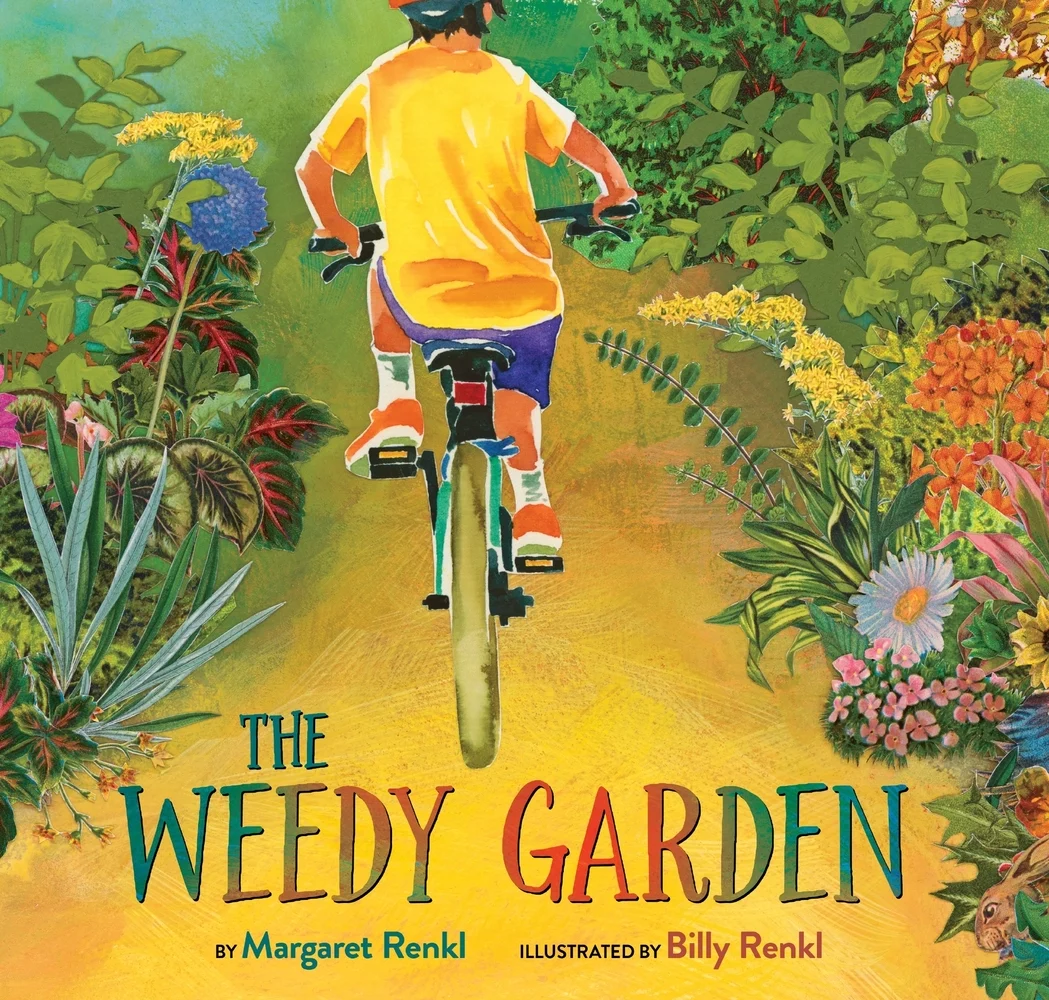
Cover image for The Weedy Garden by Margaret Renkl, illustrated by Billy Renkl. Featuring a child in a yellow shirt riding a bicycle down a path with gardens on each side.

The Weedy Garden by Margaret Renkl, illustrated by Billy Renkl

  • Publisher: Greenwillow Books
  • Publication Date: February 24, 2026
  • Reviewed from Edelweiss e-galley
  • ISBN: 9780063432819

Venture into this wonderful riotous and weedy garden with a variety of animals who live there. The bumblebees carry pollen from flower to flower. The squirrel searches for a lost nut in the leaves. The monarchs find the butterfly weed for their eggs. The toad waits for bugs to fly close enough to eat. The rabbits snuggle together in their nest. Then there is a child, sitting in clover listening and watching too.

The text of this picture book is designed to be shared aloud. Just a single line of prose under each double-spread of illustrations. For more information on the creatures that live in the garden and planting gardens that welcome wildlife, readers can turn to the back of the book. The illustrations capture the wildness of the garden with all of its native plants and creatures. Done in collage, they are bright colored and captivating. 

A visit to a rich garden with lots of animal residents. Appropriate for ages 3-6.
Daisy Rewilds by Margaret McNamara – Book Review

Daisy Rewilds by Margaret McNamara, illustrated by Kerascoët (9780593125670)

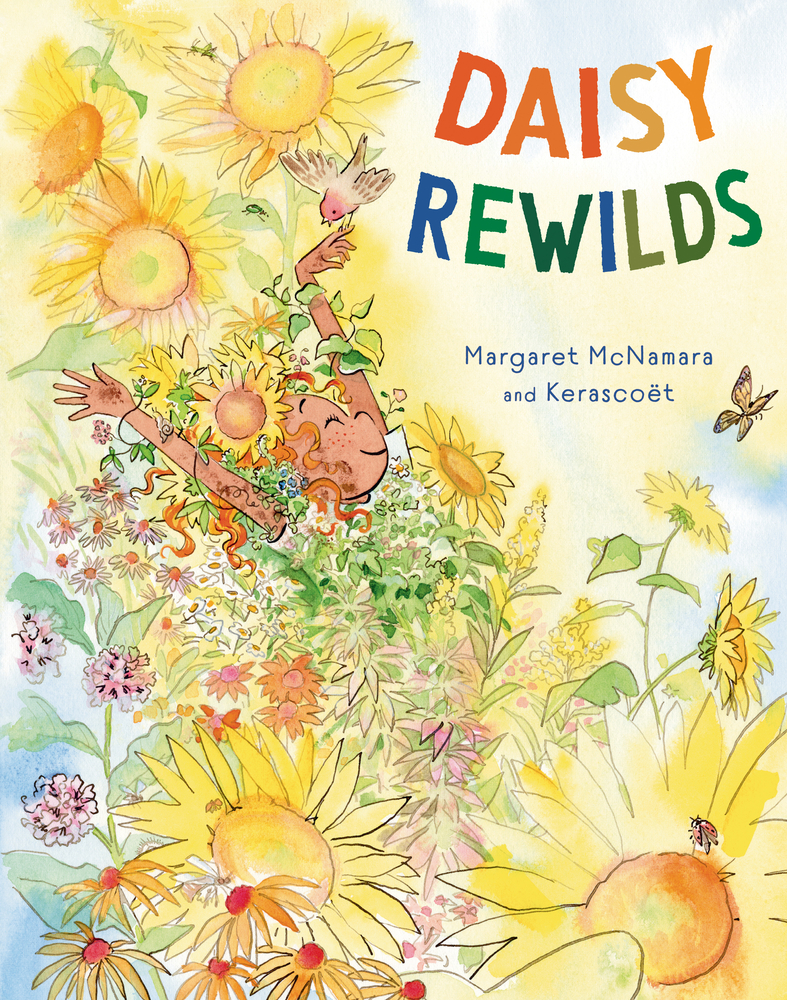
Daisy has always been a conservationist, composting her baby food and sleeping on a bed of leaves as a toddler. Now she is doing a very important experiment by skipping her baths for five weeks. Soon she is growing all sorts of plants on her body. Happily, she has an Auntie Betsy who is a gardener and knows just what to teach Daisy, when to water her, when to flip her upside down. Soon a glorious collection of native plants starts to rewild on Daisy’s body. She lives out on the lawn even in hot August. When September comes, the neighborhood takes notice of Daisy’s amazing plants and wonder how they can do something like it. This is all part of Daisy’s plan.

McNamara writes a story about conservation that is filled with joy and possibility. Rather than having a didactic tone, it shows how one child can make an impact on their neighborhood, even if they don’t do it quite like the rather magical Daisy. The illustrations add to the playful tone and the wonder of the rewilding process happening on a human body.

Plant this one on display or even better use it in a story time to watch it grow. Appropriate for ages 3-5.

Reviewed from e-galley provided by Random House Studio.

It Fell from the Sky by The Fan Brothers

Cover image for It Fell from the Sky.

It Fell from the Sky by The Fan Brothers (9781534457621)

It fell from the sky on a Thursday. The insects gathered around to take a closer look at it. They debated how it had arrived and then all agreed that it was the most amazing thing they had ever seen. Some of the tasted it, others tried to move it, and then Luna Moth tried to hatch it all night in case it was a chrysalis. The next morning, the spider insisted that it had fallen right into his web. He proposed creating a Grand Exhibit to show off the Wonder from the Sky properly. The Grand Exhibit opened and Spider charged one leaf per insect to see it. He raised the price and soon was wealthier than anyone else. But Spider was left alone with his leaves and Wonder. Then a giant reached down and took back the Wonder, demolishing the Exhibit too. But Spider knew what to do. He was busy and patient and soon more Wonders arrived from the sky.

The Fan Brothers have once again created a gorgeous picture book. Here the questions raised are about greed and wealth. The craftiness of Spider is delightful, toned just right to have children immediately wondering at his motives but still likeable enough to cheer on at the end of the book as his patience is rewarded. The community of insects is detailed and interesting, each with their own personality and perspective. Perfect for sharing aloud, the story arc is strong and readers will enjoy watching greed play out, though the ending keeps the book from becoming didactic at all.

As always, the Fan Brothers’ illustrations are noteworthy. Here, they do much of the book in soft pencil grays. It allows the wonder of the marble to take over the page, even while keeping the beauty of the natural miniature world full of its own magic.

Full of its own Wonder. Appropriate for ages 3-5.

Reviewed from copy provided by Simon & Schuster.

Dear Treefrog by Joyce Sidman

Cover image for Dear Treefrog.

Dear Treefrog by Joyce Sidman, illustrated by Diana Sudyka (9780358064763)

When a girl moves to a new home, she hides in the garden and discovers a treefrog there. When she watches how still the frog is, she slows down too. Looking closely at the frog, she notices his sticky toes and long feet. Iin order to find the frog, she has to take deep breaths and look closely. The frog helps her feel less lonely. He hides when a group of kids visits, something that the girl is thankful for since they were loud and trampled the garden. When a storm blows through, the frog not only survives it but is refreshed by the water. Heading to school, the girl curls up like a frog on her yoga mat. That’s when she meets a classmate who is quiet too, someone she can trust to show the treefrog, another friend.

Told in a series of poems, this picture book is a stellar mix of verse, exploring nature, and treefrog information. The verse is from the little girl’s perspective and readers get to know her quiet well as she is worried at first about the move, finds solace in the treefrog in her garden, and eventually is brave enough to make a new friend who is thoughtful too and wants to spend time outside watching. The treefrog facts are offered in the corner of the page, supported by each poem and celebrating the unique elements of this creature.

The illustrations by Sudyka are lush and full of green. They show a wild garden by the house with plants taller than the girl herself. The frog is there for readers to know on the first pages. The garden frames the girl and frog with plants and greenery, offering them an almost tropical paradise in which to form their friendship.

Fantastic froggy friendship and facts. Appropriate for ages 4-8.

Reviewed from e-galley provided by Houghton Mifflin Harcourt.

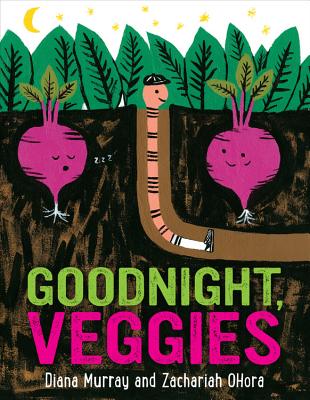
Goodnight, Veggies by Diana Murray and Zachariah OHora

Goodnight, Veggies by Diana Murray and Zachariah OHora

Goodnight, Veggies by Diana Murray and Zachariah OHora (9781328866837)

At sunset the garden needs its rest, but the vegetables are tossing and turning. Turnips are “tucked in tightly” while potatoes are closing their eyes. Tomatoes are humming lullabies and cauliflowers cuddle by droopy pea pods. The baby lettuce and baby carrots are snuggling while rhubarb reads stories to the broccoli. Soon the other vegetables are calm as the cucumbers. As the moon gets bright all of them are sleeping, tired from growing all day and all night.

Written in a musical rhyme, this picture book is ideal for reading aloud to toddlers and preschoolers. It takes a spring theme of gardening and turns it into a bedtime book that will make everyone tired, since little children are growing day and night too. Throughout the book, humor cleverly used alongside alliteration, making the book a treat for adults as well.

The art by OHora is marvelous. Readers can follow a worm through the garden as he tunnels past the tired veggies and finally falls asleep himself. The images move from showing root vegetables to garden beds from above, creating a winding path through this abundant garden.

Clever and seasonal, this spring bedtime book is one worth picking. Appropriate for ages 2-4.

Reviewed from library copy.


In My Garden by Charlotte Zolotow

In My Garden by Charlotte Zolotow

In My Garden by Charlotte Zolotow, illustrated by Philip Stead (9780823443208)

Explore the seasons in a personal and close up way with master storyteller Zolotow. Originally published in 1960, the story has been updated with new illustrations from award-winner Stead. Each season starts with one thing that the narrator loves best about their garden during that time. But then they also include a bunch of other lovely things about their garden that season. In spring, the favorite is birds building nests. In summer it is roses. In fall it is chrysanthemums. In winter it is snow. But there is so much else to love too, mostly centered around a lovely pear tree in the garden too.

Zolotow’s writing is lovely, exploring the seasons in a round-about way through gardening and time spent outside. The book meanders with a sense of curiosity about what might also be lovely about the garden in each season. The exploratory nature of the text invites conversations with children about their own loves in each season.

Stead’s illustrations are dreamy and lovely. The colors are bright but also flow together creating a world to experience, remember and adore. His process creates an organic feel with fine lines that offer details but are also filled with blurs of color and cloud shapes.

A lovely new edition of a beauty of a book. Appropriate for ages 4-6.

Reviewed from e-galley provided by Neal Porter Books.

The Secret Garden of George Washington Carver by Gene Barretta

The Secret Garden of George Washington Carver by Gene Barretta

The Secret Garden of George Washington Carver by Gene Barretta, illustrated by Frank Morrison (9780062430151)

George Washington Carver grew up to be a famous botanist and inventor. In 1921, he spoke before Congress, talking about how the humble peanut could be used to make so many different products. This famous man’s connection with plants and the earth came from an early age in the form of his own secret garden. Born into slavery in 1864, he was kidnapped as an infant along with his mother. His mother was never found, but George was brought back to slavery. George and his brother grew up on the farm, even after slavery was abolished. Every day, George headed to the woods and the garden he was growing there. He learned all about plants without being mocked or teased, soon helping people in the area with their sick plants. He grew up, got an education, and became an Agriculture professor at Tuskegee Institute He also traveled the United States working directly with farmers to answer their questions and improve their farms. 

Barretta’s picture book biography of this famous African-American scientist and genius is fascinating and filled with moments of wonder. The frightening kidnapping in his infancy, his start as a slave and then working on a farm for his previous owners, and his incandescent mind finding a way forward to learn and grow all add up to a remarkable life. The text is engagingly written for a compelling read. 

Morrison’s art is phenomenal. The browns of the days of manual labor on the farm contrast with the bright greens, growing shoots, and tall trees of George’s secret garden. The two parts of his life could not appear more different. 

A fascinating look at a remarkable man. Appropriate for ages 6-9.

Reviewed from library copy.

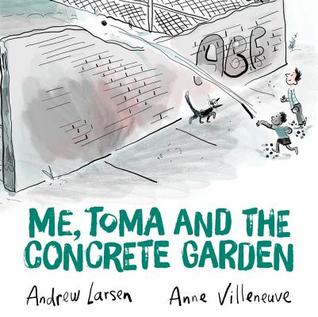
Review: Me, Toma and the Concrete Garden by Andrew Larsen

Me, Toma and the Concrete Garden by Andrew Larsen

Me, Toma and the Concrete Garden by Andrew Larsen, illustrated by Anne Villeneuve (9781771389174)

Vincent is staying with his aunt Mimi for the summer. She lives in an urban neighborhood with lots of concrete. Vincent is set for a dull summer where one of the most interesting things is the box of dirt balls that Mimi has from a previous boyfriend. But then Vincent meets Toma, a boy from the neighborhood. The two of them spend time together playing and take the dirt balls and toss them into the empty lot across the road. Soon not only is their friendship blossoming but the empty lot is being transformed by the dirt balls they tossed, dirt balls full of seeds. As the community joins together to care for the new garden, Vincent has to head home, but he will return next year to a neighborhood transformed by nature.

Larsen manages to show an urban neighborhood that is disconnected but still active before the garden appears. There are ice cream trucks, nosy neighbors, and balconies that connect people. Yet it is still a concrete space that needs something. It needs a garden! Told in a gentle tone and at a pace that allows space for the book to grow, this picture book is about transformation and community.

Villeneuve’s illustrations are done in quiet grays, pinks and blues that are almost hazy on the page. They transform along with the garden into vibrant colors of green that anchor the community visually and firmly.

A lovely picture book about the power of nature to create community. Appropriate for ages 3-5.

Reviewed from library copy.

Review: The Little Green Girl by Lisa Anchin

The Little Green Girl by Lisa Anchin

The Little Green Girl by Lisa Anchin (9780735230736)

Mr. Aster likes his normal routine. He cares for his garden, keeping it neat and clean. Then a new seed blows in on the wind. He plants the seed in his greenhouse and takes good care of the plant that emerges. Eventually, he moves the plant out into the garden. The plant looks like a little girl, and at first she is content to be at the center of the garden, always watching Mr. Aster as he works. But then the birds arrive and tell her stories of the wide world. Little Green Girl tries to move herself using vines and lifting her roots, but each day Mr. Aster tucks her back into her bed in the garden and repairs any damage she has done. Finally, Little Green Girl has an idea and makes sure that Mr. Aster allows her to travel. It may just be what Mr. Aster needs too.

Anchin has written a lovely, magical book that takes the idea of a plant and gives her plenty of personality. The book looks at both the pleasures of home and also the delights of experiencing something new. It also speaks to the power of a new friend and spreading your branches to include new experiences.

The artwork is completely charming. In particular, Little Green Girl, is a masterpiece of greenery. She is firmly rooted to the ground but manages to have plenty of emotional expression through body language despite that. Her readiness to travel could not be more clear when she manages to re-pot herself into a traveling form, sunglasses and all.

A book that will expand your horizons and get you thinking of taking a trip. Appropriate for ages 3-5.

Reviewed from library copy.