A young Métis-Ojibwe girl, Rose, travels with her family to the biannual buffalo hunt where they are joined by hundreds of other families. The hunt has become more difficult as white people and trains take over the prairies. Rose longs to join her father, who is one of the hunt’s captains. After days of no buffalo being spotted, Rose decides to help scout. She tracks the buffalo, thinking of herself as a wolf and sensing them nearby. While Rose found the buffalo, she has to also face her father, who told her not to leave camp.
A story that speaks to the real life on the prairie, the impact of white settlers and railroads, and the beliefs of the Métis people, this picture book is filled with an impactful mix of small details and a grand adventure. Written by Lindstrom who is Métis-Ojibwe and illustrated by McKnight who is a member of the Shoshone-Bannock tribes, the authenticity of the story is particularly noteworthy. The watercolor illustrations have a luminous quality that captures the light on the prairie and the beauty of the landscapes, creatures and people.
Just finished Everything Is Poison by Joy McCullough. Just the 17th century Italian YA novel that modern readers need right now. Full of strong women taking care of their community plus the beauty of found family and an apothecary. http://www.penguinrandomhouse.com/books/746825…
A truly great YA read that is engrossing, filled with fascinating details about apothecary work, and a call for women to fight, survive, and thrive on their own terms. The text is an engaging mix of prose and poetry, offering small glimpses of other people of that time who are living very different yet hauntingly similar lives. Highly recommended.
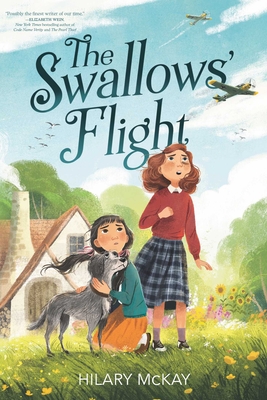
From the dawn of World War II through the course of the war, four young people grow up. There is Ruby, born with speckled birthmarks on her face, who is bullied for them and spends much of her time alone or in her family’s British news shop. There is Kate, who has a constant cough and anxiety and who is looked after by her older siblings until they have to leave the house. In Germany, Erik and Hans grow up as best friends living in the same building. They tend to swallow chicks together, dream of working in a zoo and pastry shop, and spend time at the airfield. As the war progresses and the Nazis take over, they become part of the Luftwaffe. The girls are also impacted by the war, rescuing a dog who has been released by his owner, moving to safer areas due to the bombing, and helping neighbors understand what is happening in Europe. Both the English and German characters have loving uncles who appear in their lives, fix things and set things up and then disappear again. As these characters survive the war, their lives impact upon one another in tragic and unexpected ways.
I am a great fan of McKay’s work. Her writing takes on serious issues yet she manages to truly show the deep humanity of all of her characters through small memorable moments that impact their lives. It may be a wild and drunken Christmas that ends with a crash, it may be saving a diminutive elderly woman with fierceness and physical strength, it may be rescuing a very smelly dog from the streets, or it could be visiting with women who have staunch victory gardens and a tendency toward hoarding. Each one of these is so well written and described that the scenes are vivid and the moments uniquely special.
The characters themselves are also beautifully written, each with their own tone and style. It is particularly noteworthy to have two German characters from World War II who retain their humor and humanity through the entire story. They are written with a deep empathy for the situation of the German people during the Nazi regime and an eye towards also showing that families did what they could to save neighbors. The English girls are a delightful mix of bravery, steadiness and wild adventures that keep the book lighter than it could have been.
Another gorgeous read from McKay, this time illuminating both sides of World War II. Appropriate for ages 9-12.
Reviewed from copy provided by Margaret K. McElderry Books.
The Paul Bunyan myth gets transformed by a young Chinese-American girl growing up in the logging camps in this graphic novel. Mei shares her stories about Auntie Po just as freely as she shares her stellar pies. She is the daughter of the camp cook and helps out her father in the kitchen. The manager of the camp loves her pies and is friends with her father, but that only goes so far. The Chinese men logging are fed separately. When her father is fired, Mei is left behind at the camp with her best friend. Mei uses her stories of Po Pan Yin, Auntie Po, to give all of the children in the camp a heroine they can believe in. Mei must find a way through the politics of race and privilege to find a future for herself and her father in America.
Khor offers a mix of tall tale and riveting real life in this graphic novel. She weaves in LGBT elements as Mei has feelings for Bee, her best friend. The use of sharing tales to provide comfort combines seamlessly with also offering food. Mei is a girl with a future that seems out of reach much of the time, but comes into focus by the end of the book. The book looks directly at racism in the years after the Chinese Exclusion Act and offers a mixture of characters that are racist and allies for Mei to encounter and deal with.
The art focuses on the characters themselves, sometimes offering glimpses of the Sierra Nevada scenery too. Chapters begin with different logging tools being featured and described. The art is full of bold colors, the huge Auntie Po, and the busyness of a logging camp and its kitchen.
A fascinating look at logging from a Chinese-American point of view combined with some really tall tales. Appropriate for ages 9-12.
When Ophie’s father is killed in a racist attack on their home in Georgia, Ophie discovers that she can see and communicate with ghosts. Her father’s ghost encourages her to flee with her mother. They make their way to Pittsburgh to stay with relatives. Ophie’s mother finds them both jobs with a wealthy family in their old manor that happens to be filled with ghosts and secrets. In post World War I America, work is hard to find and they can’t afford for Ophie to continue to attend school. As Ophie learns the tasks to be a maid for the elderly woman who owns the house, she realizes how dull her future looks, caught in endless domestic work. Ophie must also learn the tricks of dealing with all of the ghosts who surround her both at work and outside. Some are far more demanding than others. One spirit in the house though is friendly to Ophie, teaching her the small elements of being a maid that will make Ophie’s life easier. But even that spirit has secrets, ones that may not stay hidden once she has a voice.
The author of Dread Nation has turned to middle-grade novels with historical fiction that wrestles with racism and prejudice while offering an enticing mystery to unravel. The fantasy elements of the ghosts around Ophie add to the mystery and effectively isolate Ophie from those around her as she figures out how to handle both ghosts and her wealthy employers. Ireland doesn’t shy away from the blatant racism of the time, but also effectively demonstrates how those same racist forces are in our modern world.
Ophie is such a great protagonist. She is dynamic and smart, hurting from the loss of her father and trying to help her mother find a way forward for them both. As she has to stop going to school, she finds ways to keep learning, including romance magazines that she finds around the big manor. Ireland cleverly ties all of the elements of the book together with her reveal at the end, keeping Ophie and her powers fully central.
A marvelous mystery full of fantasy elements and Black history. Appropriate for ages 9-12.
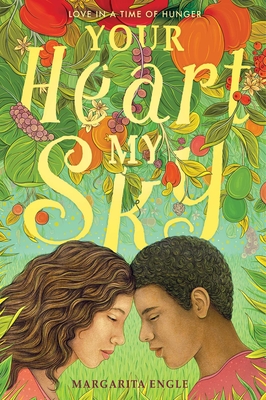
Liana and Amado are trying to survive Cuba’s el período especial en tiempos de paz—the special period in times of peace, in the 1990s. The time period when the Cuban government’s strict rules after the collapse of the Soviet Union threw the population into famine. Liana avoids the summer labor she has been assigned to, even though she opens her family to retribution. She spends her days instead with a dog she met, a special singing dog who helps bring her together with Amado. Amado is the brother of a prisoner, which already puts his family under additional scrutiny. He wants to follow in his brother’s pacifist footsteps as the mandatory military service looms in his future. As Liana and Amado come together, they must find a way to help one another survive starvation while seeing if they can have any future together at all.
Engle is the master of the verse novel, weaving her incredible poetry into tales of Cuba. This time, her focus on a period of starvation in Cuba is particularly exceptional. She creates a beautiful romance between two people (and a special dog) in the midst of such political upheaval and danger. The romance is captivating but it is the state of Cuba itself that creates the energy and horror in the story. From people dying of starvation to political imprisonment to casting yourself on the water to try to reach America. There are no easy decisions here, all ways lead to death or prison.
As always, Engle’s books are captivating. Her writing is marvelous, building the romance from tentative first meetings to real love and connection in an organic and honest way. The characters themselves are beautifully drawn. Similar in their situation, they find themselves reacting in very different ways that drive them apart. Their plans for the future seem disparate but could just be the way they can survive and be together after all.
Tense and horrifying, this poetic look at starvation in Cuba is riveting. Appropriate for ages 13-17.
Reviewed from copy provided by Atheneum Books for Young Readers.
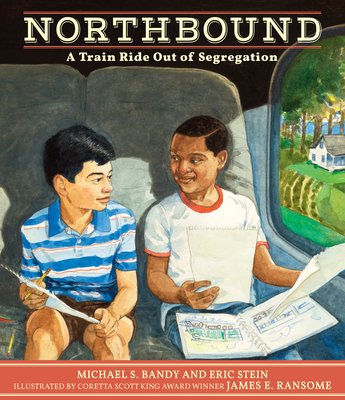
Northbound by Michael S. Bandy and Eric Stein, illustrated by James E. Ransome (9780763696504)
Michael has always stopped work to watch the trains go by the farm he lives on with his grandparents in Alabama. Then one day he gets his dream and takes a train trip north with his grandmother to Ohio to visit cousins. Though Michael has caught sight of a boy his age on the train, he isn’t allowed to go into the car where the boy is riding, because it’s closed to Black people. As the train leaves Atlanta, the “Whites Only” sign on the door is taken down and now Michael is allowed to enter the car. The two boys quickly start to play together and explore the train. They discover they have all sorts of things in common. But when the train reaches Chattanooga, Tennessee, Michael has to return to his own car and the sign goes up again. Luckily, his new friend knows it is fair and shares a final drawing of all people riding in the same train car together.
In a book that starts with the wonder of trains and the joy of a train ride, this picture book shows the impact of arbitrary race laws throughout the United States in the early 1960s. While consistent racism in Alabama is an everyday occurrence for Michael, it is the on-again, off-again rules that will catch readers’ attention as well as that of the train passengers. It clearly demonstrates the differences in the way racism impacts lives in different parts of our country, speaking clearly to today’s issues as well as that of our past.
The art by Ransome is a grand mix of train travel with tunnels, bridges and cities together with a diverse group of passengers and staff on the train. There is a sense of frustration and limits in the illustrations with the closed doors and signs that is replaced with a joyous freedom as the two boys explore the train together.
A critical look at our shared civil rights history and a call for us to do better. Appropriate for ages 6-9.
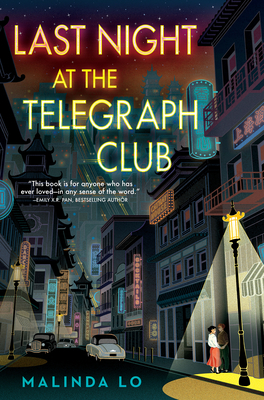
Growing up in 1950s San Francisco isn’t simple for a Chinese-American girl who loves to dream of working on math that will send people into space. Even her best friend isn’t interested in the same things as Lily is. As Lily becomes more aware of her sexuality, she soon realizes that she is queer. She’s particularly intrigued by a male impersonator in San Francisco. As her love of math draws her closer to a white classmate at school, she realizes they may have even more in common. Soon the two teens are heading out to a club together to watch that same male impersonator that Lily was dreaming about. But remember, it is the 1950s and Chinese girls are not allowed to be gay, so Lily is risking a lot. It’s the time of McCarthyism too, so Lily’s family is threatened by the fear of Communism when her father’s papers are taken away. Lily must find a way to navigate the many dangers of being Chinese, queer and young.
Lo’s writing is so incredible. She creates a historical novel that makes the historical elements so crucial to the story that they flow effortlessly along. She avoids long sections of exposition about history by building it into the story in a natural and thoughtful way. That allows readers to feel Lily’s story all the more deeply while realizing the risks the Lily is taking with her family and friends. Lo also beautifully incorporates San Francisco into the book, allowing readers to walk Chinatown and visit other iconic parts and features of the city.
As well as telling Lily’s story, Lo shares the stories of Lily’s aunt and mother. They took different paths to the present time, making critical decisions about their careers and marriages. These experiences while straight and more historical speak to Lily’s own budding romance and finding of people who support her as she discovers who she is. They remove the simple look at who her mother could be been assumed to be and make her a more complex character.
Layered and remarkable, this book speaks to new, queer love and shows that intersectionality has been around forever. Appropriate for ages 15-18.
Amber & Clay by Laura Amy Schlitz, illustrated by Julia Iredale (9781536201222)
The Newbery-Medal winner brings us into the world of ancient Greece with her new novel. Rhaskos is a slave working in a Greek household where he spends his days picking up horse manure. He doesn’t mind the hard work, but he’d much rather be drawing the horses around him. He works in secret, steadily building his craft, inspired by a painting his master owns. Melisto is a girl hated by her mother, abused by her, but someone who has grown up used to wealth and luxury. She is precious, particularly for the connections she will make when she marries. She is selected to serve the goddess Artemis for a year, living wild and free for the first time in her life. By the time our two protagonists meet, one of them has died, though their destinies are entwined with one another.
Schlitz has created a masterpiece of a novel where she blends verse and prose, moving freely between the two. It is a complex novel with elements of Greek society explained, wars imminent and friendships being forged. Schlitz adds the voices of the god Hermes to the mix, also including the philosophical musings of Socrates who appears as himself in the novel. The book is marvelous, each of the elements working to support the whole and weaving together into a tantalizing tale that is surprising and fascinating.
Schlitz’s writing is exceptional. She explores ancient Greece along its dusty paths and roadways, showing readers how it felt to be these characters in these times. She speaks as Hermes and Socrates in voices that are unique to them and feel perfectly suited. The question of the value of a life runs throughout the book along with looking closely at suffering and pain. These deep questions and philosophies are ideally suited to the world Schlitz has created. They are enhanced by the illustrations that show various Greek artifacts and explain what they were used for.
Deep, dramatic and classical, this book is the best of historical fiction for children.




 Waking Brain Cells