4 Diverse New Picture Books That Invite You Home

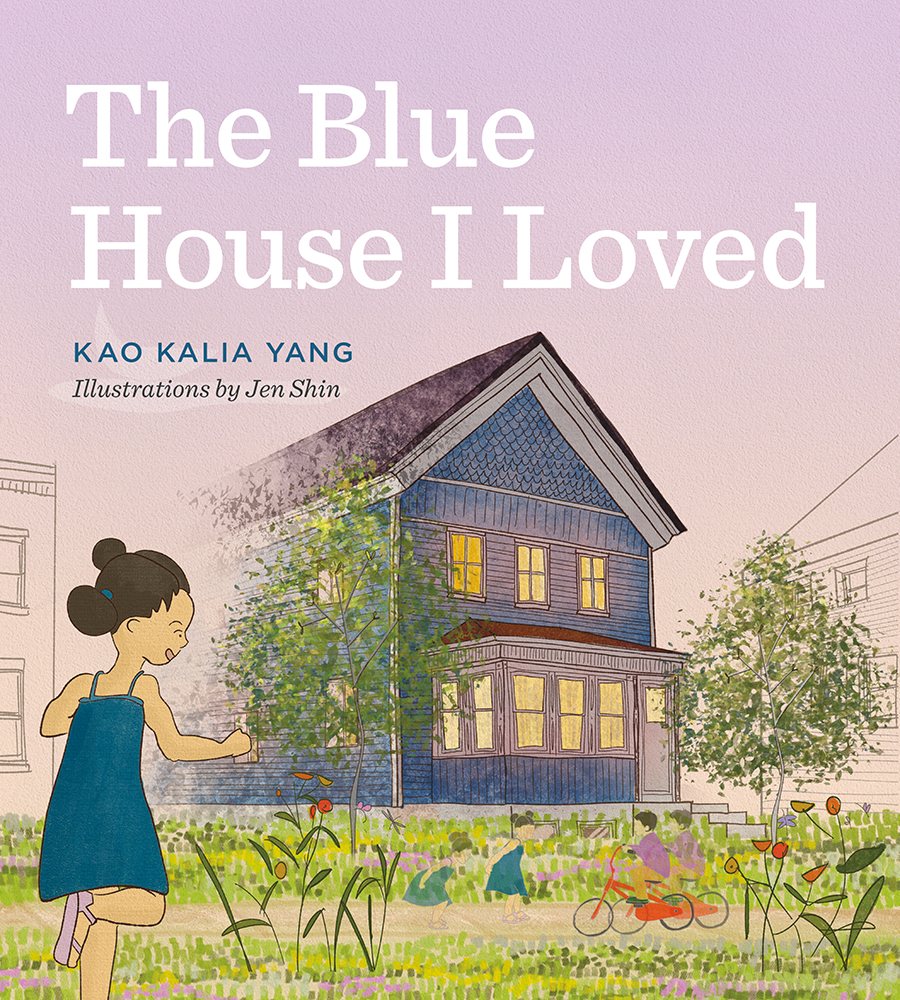
Book cover for The Blue House I Loved by Kao Kalia Yang, illustrated by Jen Shin. A young Hmong girl in a blue dress and sandals walks in front of a blue house with lit windows. Other children play in the background.

The Blue House I Loved by Kao Kalia Yang, illustrated by Jen Shin

  • Publisher: University of Minnesota Press
  • Publication Date: February 10, 2026
  • Reviewed from ARC provided by publisher
  • ISBN: 9781517907976

In St. Paul, Minnesota, there was a blue house that was loved. The two-story house was a duplex where the first floor was rented to Hmong refugees. The house was rented by the narrator’s aunt and uncle and was not big enough for their family. Two cousins had to sleep on the unheated porch where their wet hair froze in the winter. The bedrooms were filled with others, sleeping three and four to a room. The narrator’s favorite place was the back porch where her aunt breastfed the baby and the cousins played and fought. It was the place they learned about their new country while also keeping Hmong traditions close. It was a special house filled with memories.

As always, Yang’s writing is a gorgeous combination of frankness and found beauty. Her ability to paint a vivid picture of the house using small details bring the entire book to life. It’s those small moments that make a life, a house and a family and the book shows that so touchingly. Yang also speaks to the importance of a home for a refugee family newly in America and what it meant to have the space however crowded and cramped. Shin’s art is a lovely mix of architecture and people, showing both the house and the family with clarity and joy.

A journey into refugee memory. Appropriate for ages 4-8.
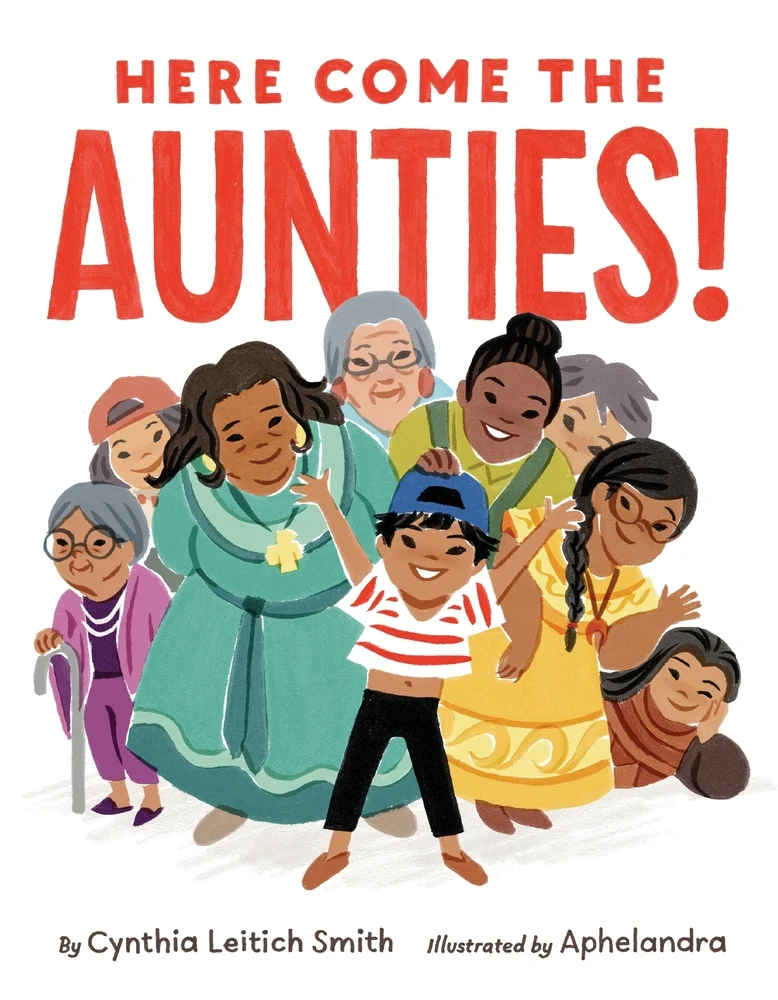
The book cover for Here Come the Aunties! By Cynthia Leitich Smith, illustrated by Aphelandra. A young Muscogee child stands with his hands up and a big smile in front of a group of diverse women of all ages who are smiling over his shoulder.

Here Come the Aunties! By Cynthia Leitich Smith, illustrated by Aphelandra

  • Publisher: Heartdrum
  • Publication Date: February 10, 2026
  • Reviewed from Edelweiss e-galley
  • ISBN: 9780063374690

River is Muscogee and lives on a reservation in Oklahoma. He has many aunties who appear throughout the year. Using repeating language to introduce each auntie, the book celebrates the skills and efforts of each of them. Auntie Abby helps with planting the garden. Auntie Meg takes River fishing for catfish. Auntie Dana brings pumpkins in the fall. Auntie Patrice teaches beading. Other aunties share Muscogee history and traditions or teach in school. As River welcomes his new little sister, he knows first that the aunties are coming!

Smith captures the beauty of community in this picture book about living on a reservation where not only Native people live but others of different backgrounds, all of whom can be aunties. In her Author Note, she explains that aunties can be relatives but don’t have to be. Aphelandra’s illustrations are done in ink, gouache and PhotoShop. They are a delightful mix of deep rich paint, cleverly drawn faces and incredible warmth. 

A joyous look at Muscogee community. Appropriate for ages 3-6.
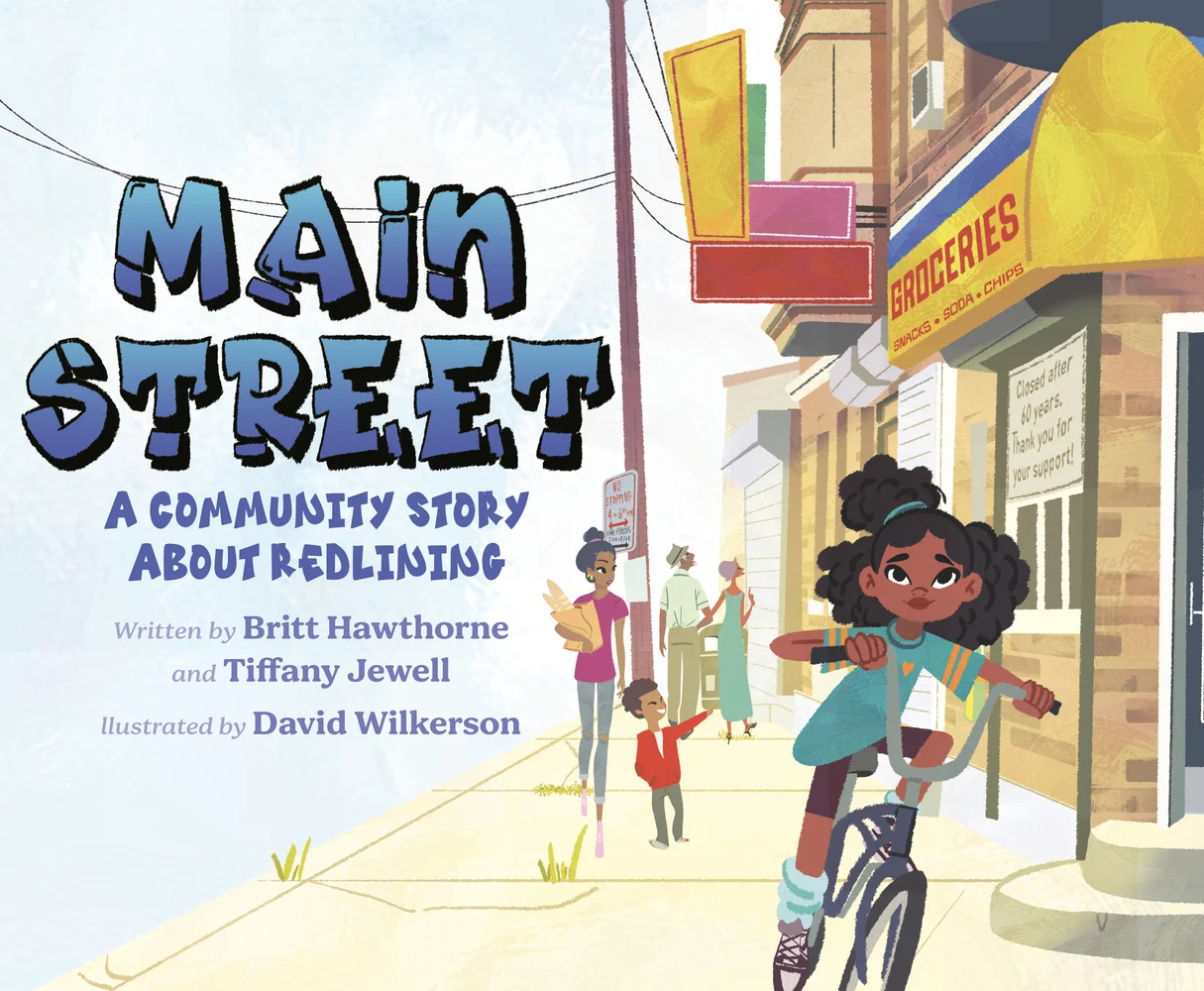
Book cover for Main Street: A Community Story about Redlining by Britt Hawthorne and Tiffany Jewell, illustrated by David Wilkerson. A young Black girl rides her bicycle down a city street with people in the background walking.

Main Street: A Community Story about Redlining by Britt Hawthorne and Tiffany Jewell, illustrated by David Wilkerson

  • Publisher: Kokila
  • Publication Date: January 27, 2026
  • Reviewed from Edelweiss e-galley
  • ISBN: 9798217002672

Olivia tries to invite her friends to her neighborhood block party, but one girl explains that her mother doesn’t think Main Street is safe. Olivia tells her mother about what happened and then watches as the neighborhood they are driving through changes from large homes to the tighter urban Main Street neighborhood. When she explains to a neighbor that she doesn’t want to live there any more, Ms. Effie tells her that the first time she heard that Main Street wasn’t a good neighborhood was when the bank refused their mortgage. The Black neighborhood banded together, people got second jobs, and everyone learned how to save. Ms. Effie shared a map of the city with red lines around the “rough” neighborhoods and blue and green in the wealthier white neighborhoods. Through the conversation Olivia learned that it’s important not to believe what people say and to celebrate her community.

I haven’t seen any other picture book take on the subject of redlining, a process that devalues Black neighborhoods and impacts overall investment in them. Here the subject is explained in a way that young children will understand, both in fear of the dangers of those neighborhoods and in a celebration of the community that continues. The facts about redlining are shared openly and clearly. The illustrations help emphasize what lack of investment does and also how vibrant a community can be despite those systemic abuses. 

A look at a complex socio-economic process in a way children can comprehend. Appropriate for ages 5-8.
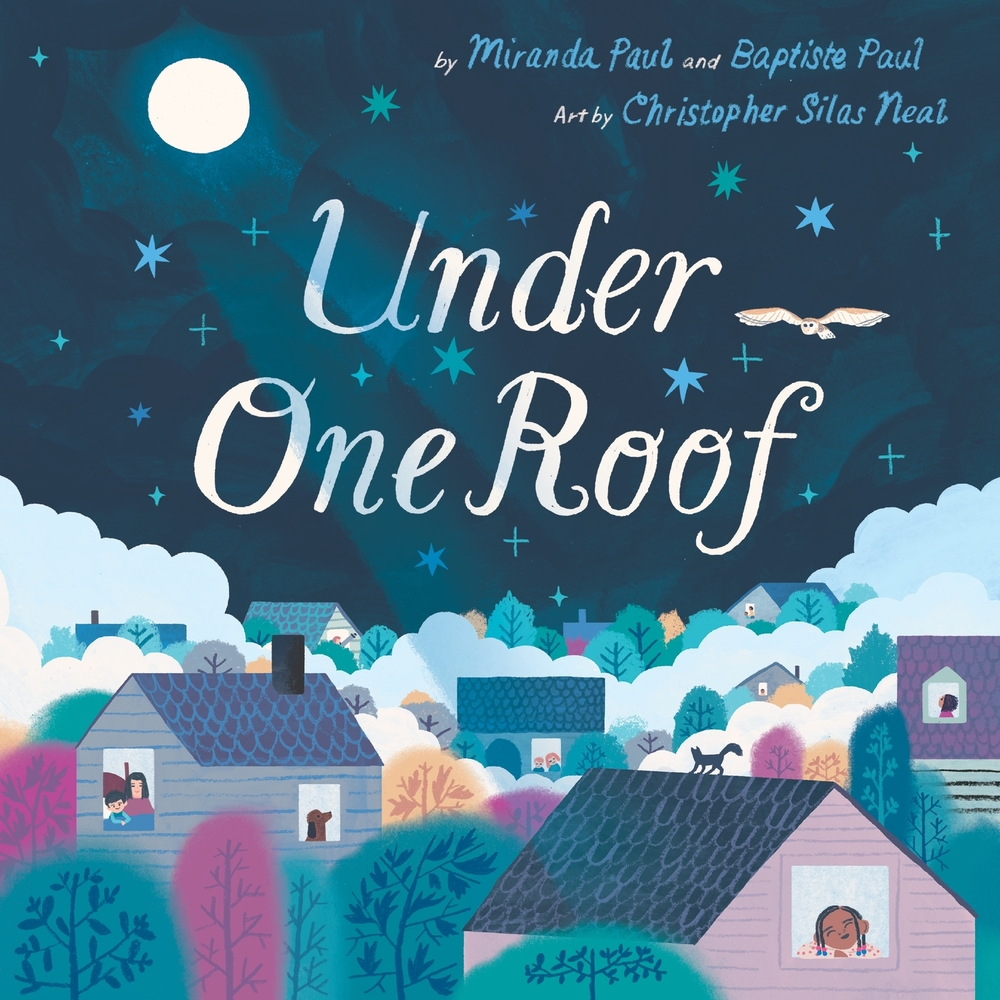
A book cover for Under One Roof by Miranda Paul and Baptiste Paul, illustrated by Christopher Silas Neal. Shows a group of houses with people at the windows surrounded by clouds under a starry night sky with a moon and an owl flying.

Under One Roof by Miranda Paul and Baptiste Paul, illustrated by Christopher Silas Neal

  • Publisher: Clarion Books
  • Publication Date: February 3, 2026
  • Reviewed from Edelweiss e-galley
  • ISBN: 9780358576594

Told in rhyming couplets, this picture book celebrates all sorts of families and how they get ready for bedtime. Everyone falls asleep under the same roof of night sky, stars and moon. Some families are all together, others are snuggling in pillow forts at grandma’s, some live far apart or have family members who have died. Some stay connected via phones, others via letters. Some had to leave their homes because of storms, others camp outdoors. Some greet new babies, others sleep in their cars. Through it all, the sky remains the roof they are all beneath.

The writing is very inviting with the rhymes serving as a way to tie all the diverse families together into one story. The use of the image of the sky as a comforting roof above all is also very nicely kept as a focus throughout the story. The result is a book filled with warmth and inclusivity. The illustrations echo that same feel as they show diverse families, large and small, nuclear and otherwise experiencing a variety of homes and beds. In their author’s and illustrator’s notes, the creators share their own life experiences moving and changing where they sleep.

The perfect bedtime read for those who travel and those who stay. Appropriate for ages 2-5.
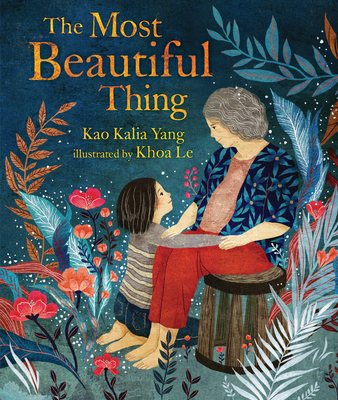
The Most Beautiful Thing by Kao Kalia Yang

Cover image of The Most Beautiful Thing

The Most Beautiful Thing by Kao Kalia Yang, illustrated by Khoa Le (9781541561915)

Based on the author’s childhood growing up in a Hmong refugee family, this picture book looks at the impact of poverty on childhood and the incredible importance of a loving family. Kalia grew up with her grandmother who had been born across the ocean and once threatened by a tiger there. Now her grandmother is old with only a single tooth left. The luckiest of the grandchildren got to help take care of her. It was Kalia’s job to trim her fingernails and toenails. Her grandmother’s feet were rough and her toenails thick. They were cracked with dirt in the cracks from long ago. The family didn’t have a lot of money so regular ice had to stand in for ice cream, peppermint candies shared together took the place of a new dress. Kalia grew tired of not having enough money for treats, eventually asking for braces to fix her crooked teeth. But the family could not afford them. Her grandmother pointed out her own single tooth, and suddenly Kalia realized what beauty is, and it was not perfection.

Yang vividly tells the story of her childhood, inviting readers into her childhood home to see the care and love there. The dedication goes both ways, with her grandmother offering wisdom and love and the grandchildren sharing in taking care of her needs too. The book steadily builds to the take away, a moment that reminds me of the Russian folktale about the little girl describing her mother as the most beautiful person in the world when by societal standards she was clearly not. Throughout the book, poverty is handled in a matter-of-fact way with love as the healing force.

Le’s illustrations depict a household full of children, plants and toys. The wobbly family table and brightly covered couch add to the feel of a family in need but making do together. The Hmong tales told by the grandmother are lush and bright, carrying readers into a mystical world of jungles and creatures.

A thoughtful and rich picture book featuring a Hmong-American family. Appropriate for ages 3-5.

Reviewed from e-galley provided by Carolrhoda Books.

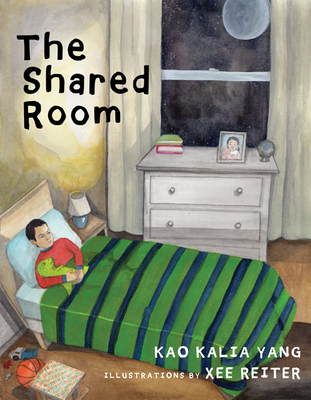
The Shared Room by Kao Kalia Yang

The Shared Room by Kao Kalia Yang, illustrated by Xee Reiter (9781517907945)

This picture book tackles what happens when a family loses a child. Set months after the death, the family is living in dim rooms with no fire lit. Shadows fill the rooms. There is a picture on the wall of their fourth child, who died by walking into water and drowning when she couldn’t swim. Her room is empty with her items still in place. Her parents visit the room every day and regularly watch a video of the little girl singing. The oldest boy was ten and shared a room with his brother. Then one day, his mother asked if he would like to move into his sister’s room. He agreed, then the emotions hit him and for the first time he is able to cry with the loss and the fact that she was never going to return. That night, he slept in his new room. A snowstorm blew in and the family lit the fire and gathered together in its warmth.

Yang’s prose is filled with poetic moments throughout this heartfelt story. Even introducing winter in St. Paul, Minnesota is done with imagery that opens this book with gray clouds and cracked ice. Yang’s depiction of a family in mourning is done with a delicacy and little drama. The sorrow soaks the pages, the shadows fill them, these moments are dramatic and terrible enough. The emotions ache in the prose, offering a Hmong family’s response to a tragedy.

Reiter’s paintings fill the pages with silence and shadow. She uses white space beautifully, positioning the family as a huddle at times and other times embracing the full page. She plays with shadows and light, using them to show the sorrow. The image of the older brother finally weeping is heart wrenching and very effective.

A quiet book of sorrow and loss. Appropriate for ages 4-6.

Reviewed from copy provided by University of Minnesota Press.

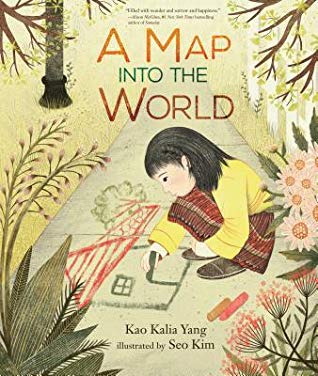
Review: A Map into the World by Kao Kalia Yang

A Map into the World by Kao Kalia Yang

A Map into the World by Kao Kalia Yang, illustrated by Seo Kim (9781541538368)

Released on October 1, 2019.

A Hmong girl moves into a new home in this picture book that celebrates community. The house had a swing and a garden full of melons and beans. Inside, the family hung the story cloth about how the Hmong came to America. Ruth and Bob, were two elderly neighbors who had a special bench they sat on. They waved to the girl and her family, and they were even older than the girl’s grandmother, Tais Tais. After her mother had her two little baby brothers, the little girl wanted to escape the crying sometimes, so she headed outside. In fall, the trees lost their leaves and the neighbor worked outside to rake them up. In the winter, no one sat outside anymore and no one waved. Then one day, the girl found out that Ruth had died. As spring arrived, they began work in the garden and saw Bob outside alone. That’s when the girl has an idea about how to show Bob that she cares.

There is a beautiful delicacy to this entire book from the fine-lined illustrations to the skillful balancing of seasons changing, new babies and someone passing. Yang invites readers into a Hmong family, showing elements such as story cloths and multiple generations of families living together. The friendly way of welcoming people to a neighborhood but also not intruding is shown here as well as how seasons in the Midwest connect everyone together in a shared experience of beauty and weather.

Kim’s illustrations embrace the natural world, showing the changing seasons with color and using grass and trees to depict a neighborhood and a home. When the little girl at the end of the book draws images on the sidewalk, there is a direct connection to the story cloth, showing a map of life that is universal but also specific to a Hmong tradition.

Deeply humane and community oriented. Appropriate for ages 4-6.

Reviewed from e-galley provided by Carolrhoda Books.