2 New Bookish Nonfiction Picture Books

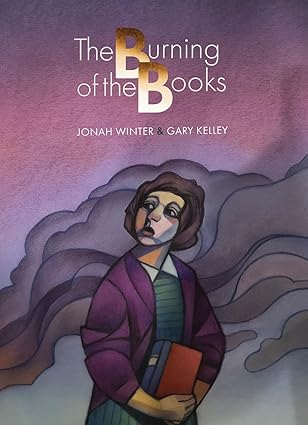
Cover image for The Burning of the Books by Jonah Winter, illustrated by Gary Kelley, featuring a girl holding a book in her arms with a worried look on her face in front of billows of smoke.

The Burning of the Books by Jonah Winter, illustrated by Gary Kelley

  • Publisher: Creative Editions
  • Publication Date: March 10, 2026
  • Reviewed from Edelweiss e-galley
  • ISBN: 9781568464114

This nonfiction picture book begins with the printing of the first book, the Bible. It then turns to Germany, a place where many of these books were printed and a literate nation. When Hitler came to power in 1933, things changed and certain books were labeled as “un-German.” College students and librarians helped remove books that were labeled that way, tens of thousands of books. In Berlin, the books were taken to a public square, dumped near a pile of wood, and set alight. This happened in cities across Germany. Afterwards, authors were blacklisted and many fled to freer countries, like America. Now we all must be aware that freedom must be protected even in free countries.

Winter manages to take a very complex situation and create a book that children can understand without making it lose its power or darkness. His writing is crisp, direct and filled with empathy for those targeted and the books destroyed. Kelley’s illustrations are like stained glass on the page, angular and fierce. Yet they also have a lovely softness to them, a feeling of hope lingering nearby. 

A look at one of the darkest periods in human history that is timely and important. Appropriate for ages 8-12.
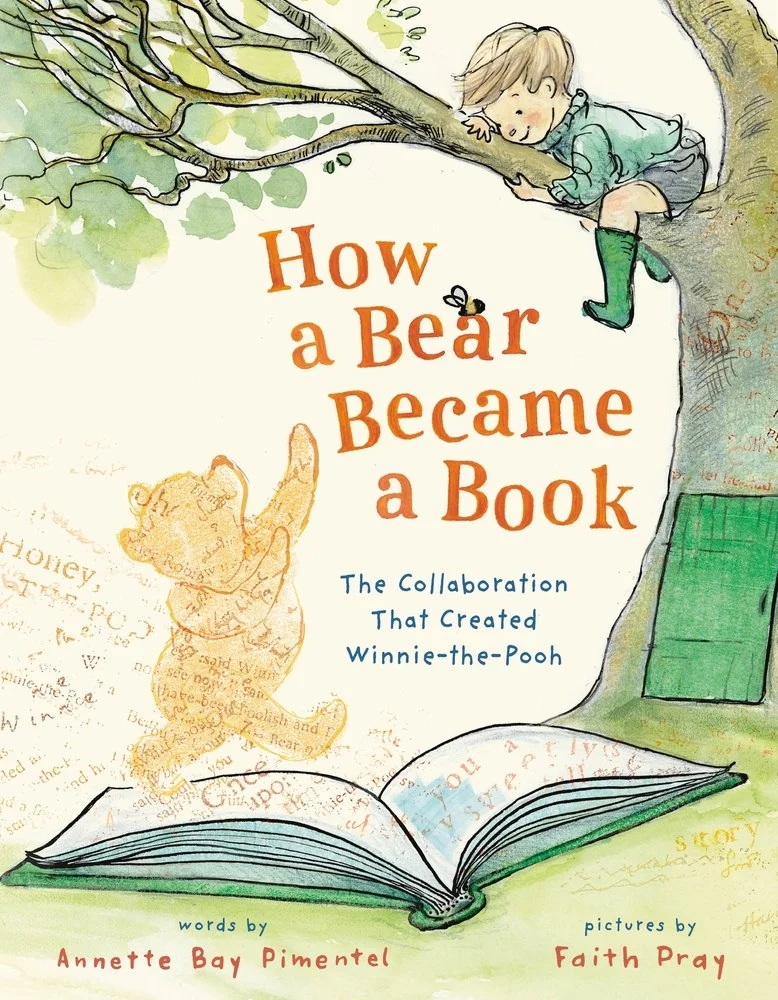
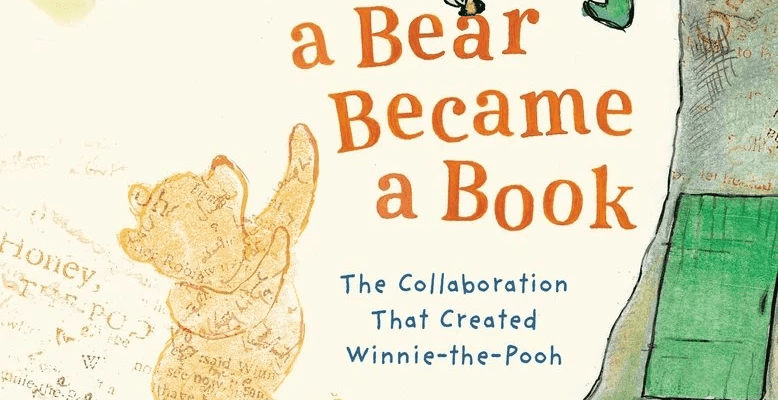
Cover image for How a Bear Became a Book: The Collaboration That Created Winnie-the Pooh by Annette Bay Pimentel, illustrated by Faith Pray, featuring a boy in a tree above Winnie the Pooh stepping on a book.

How a Bear Became a Book: The Collaboration That Created Winnie-the Pooh by Annette Bay Pimentel, illustrated by Faith Pray

  • Publisher: Henry Holt & Co.
  • Publication Date: March 31, 2026
  • Reviewed from Edelweiss e-galley
  • ISBN: 9781250358448

Sweetly partially narrated by Pooh himself, this nonfiction picture book explores what it takes to make an idea into a book. The idea started with A.A. Milne and he wrote down words about a bear. The words needed pictures to bring them fully alive. An editor read the words and thought of the right illustrator for them, Ernest Shepard. But Milne was not a fan of his, so they tried different illustrators first, finally returning to Shepard. The two worked together to create a book where the illustrations danced with the words on the page, bouncing, stacked tall. The books were very popular thanks to the combination of story and illustration. 

The tale of how Milne and Shepard created their books is a real treat. Both author and illustrator here capture the spirit of the original on the page, whether it is the play of words across the page or turns of phrase that are fun to find. The use of Pooh to help tell the story adds to the fun. The illustrations take the idea of the bear and then steadily solidify him as the book comes together. They manage to pay homage to the original without copying them directly.

A warm and marvelous visit to an old friend and how he became a book. Appropriate for ages 5-8.
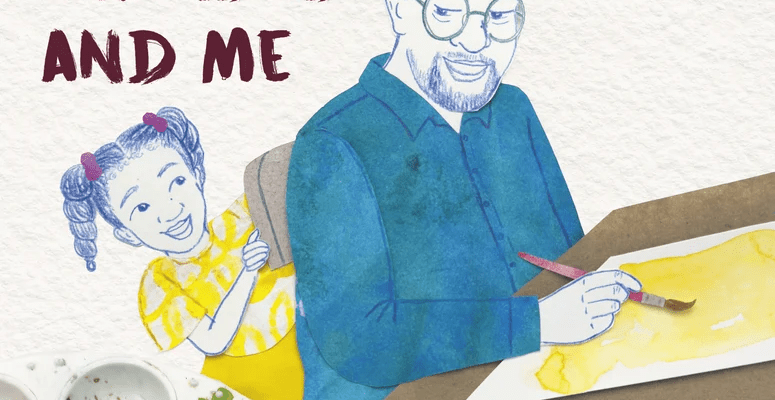
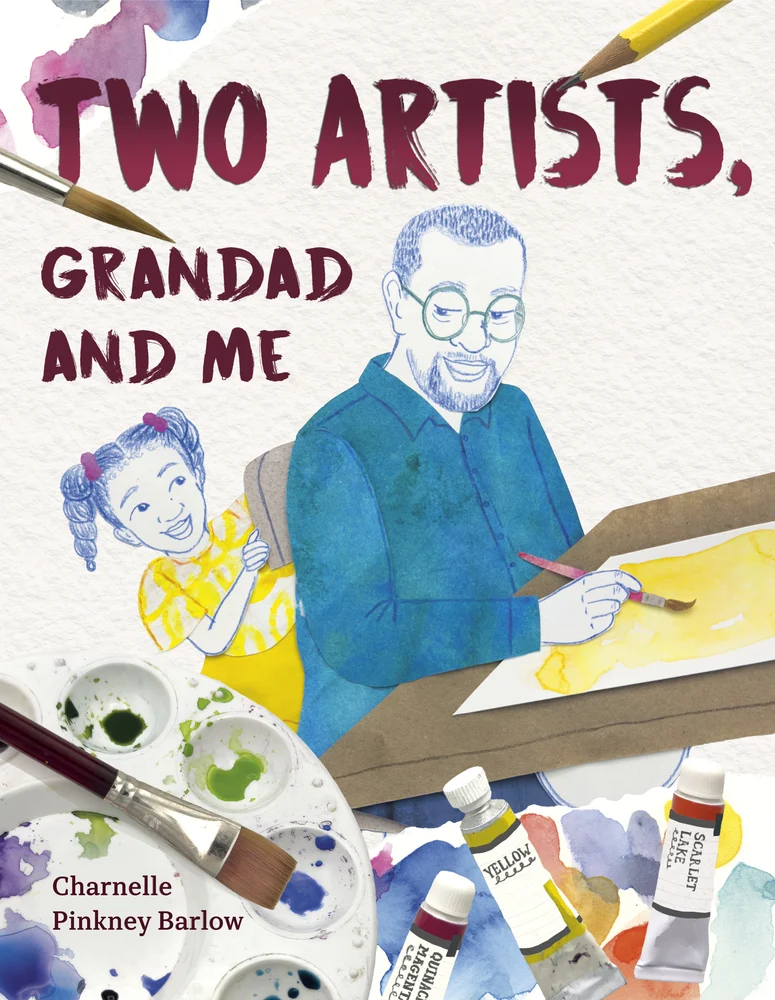
Two Artists, Grandad and Me by Charnelle Pinkney Barlow – Book Recommendation

Two Artists, Grandad and Me by Charnelle Pinkney Barlow

  • Publisher: Doubleday Books for Young Readers
  • Publication Date: January 20, 2026
  • Reviewed from Edelweiss e-galley
  • ISBN: 9780593571224

Visit Jerry Pinkney’s studio with his granddaughter in this celebration of a granddaughter’s love of art and her connection with her grandfather. There are papers around the room, stacks of stories, and bright watercolors on a tray. Grandad shows her how to make a wash, but Charnelle can’t do it quite the same way. He gives Charnelle her own sketchbook to fill. The two draw side-by-side and Grandad explains that each artist will see the world in their own way. 

Celebrate the nurturing of a young artist in this picture book about one of the best-known picture book artists of our time. Tying music into the feel of the book, the quiet time spent together each making art clearly inspired her to become the artist she is today. The illustrations in her book pay homage to her grandfather and still have a feel all her own as she uses cut paper figures and objects like paint brushes and erasers to create pages with depth and texture. 

A warm and lovely tribute to a genius of picture book creation. Appropriate for ages 4-7.

2019 New York Times/New York Public Library Best Illustrated Children’s Books

The New York Times and New York Public Library have announced their picks for the best illustrated books of the year. The winners are selected solely based on artistic merit. The New York Times also has a slide show of the winning artist’s at work. Here are the books on the list:

Another The Boring Book: (Childrens Book about Boredom, Funny Kids Picture Book, Early Elementary School Story Book)

Another by Christian Robinson

The Boring Book by Shinsuke Yoshitake

Child of Glass 41110713. sx318

Child of Glass by Beatrice Alemagna

The Farmer by Ximo Abadia

I Miss My Grandpa Just Because

I Miss My Grandpa by Jin Xiaojing

Just Because by Mac Barnett, illustrated by Isabelle Arsenault

The Lost Cousins A Million Dots

The Lost Cousins by B.B. Cronin

A Million Dots by Sven Volker

43546609. sx318 Small in the City

Monkey on the Run by Leo Timmers

Small in the City by Sydney Smith


Review: What’s Your Favorite Bug? by Eric Carle

What's Your Favorite Bug by Eric Carle

What’s Your Favorite Bug? by Eric Carle and Friends (9781250151759)

Following the first two picture books in this series, this one focuses entirely on insects. As with the other boos, Eric Carle is joined by other illustrators who draw an image of their favorite insect, tell a little about it and explain why they love it. One of the major treats of this series is never knowing what the page turn will bring, since each double-page spread is done by a different illustrator.

This collection has racial diversity in the illustrators included and also has a nice mix of male and female artists. As with all of the books in the series, there is a wonderful diversity in the art styles as well. The design of the book and the order of the pages works particularly well. There are dark and bright pages that lead readers on a journey of light and shadow that is particularly effective when combined with the crawly nature of bugs.

Another winner in this series that will have you searching out new illustrators to see their full books. Appropriate for ages 4-6.

Reviewed from copy provided by Henry Holt.


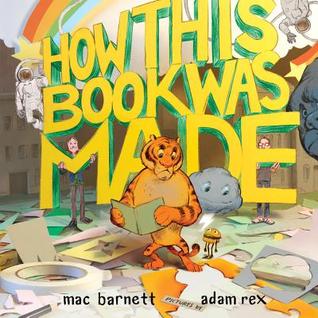
How This Book Was Made by Mac Barnett

how-this-book-was-made-by-mac-barnett

How This Book Was Made by Mac Barnett, illustrated by Adam Rex (InfoSoup)

How is a book made? Well this book was made in the regular way with an author making many drafts, and editor offering firm advice, an illustrator taking a long time to create the art, and it being printed halfway around the world. But it is also an amazing story and one that will surprise when the tiger keeps reappearing, the pirates raid the slow boat full of books, and the news that there is one last important piece to the book really being A BOOK. You will just have to read this book to see what that is.

Any book by Barnett and Rex is going to be wonderfully surprising and funny. This book is no exception. Barnett immediately makes sure that this book is not taken too seriously by starting it with him arm wrestling a tiger. The tiger then returns at important moments in the book, sometimes to be scared off and other times with a posse. The editor’s role is also depicted in the book with a lot of tongue-in-cheek but also honesty too. Throughout there is real information on how books get made with plenty of imagination added as well. Just like any book.

Rex’s illustrations are done with pencil on paper combined with photography. Some of the illustrations have cotton clouds and others are 3-d objects or 2-d objects photographed. This gives a great sense of space and distance, shadows lengthening across the page. Throughout the art is as clever as the words, which is a compliment to both.

A funny and imaginative look at the making of this book, both unique to this book and universal to the process. Appropriate for ages 4-6.

Reviewed from library copy.

Review: What’s Your Favorite Animal?

whats your favorite animal

What’s Your Favorite Animal?

Eric Carle and many other well-known illustrators offer their personal favorite animals complete with a short piece about what animal they love and why.  Turning the pages is rather like visiting a gallery of some of the top picture book illustrators working today.  Turn the page and see Lane Smith’s choice of elephant, then Jon Klassen’s ode to his love for ducks, and Susan Jeffer’s beautiful look at horses.  This work is fantastically lovely and personal to the illustrators.  It is a pleasure to turn each page and take a journey through this book.

Readers may discover new authors and illustrators and seek out their work.  But best of all, this is a wonderful look at well-known illustrators on a personal level.  Appropriate for ages 4-6.

Reviewed from copy received from Henry Holt and Co.

Review: Chloe and the Lion by Mac Barnett

chloe and the lion

Chloe and the Lion by Mac Barnett, illustrated by Adam Rex

You know this book is going to be unique when you get introduced to the author and illustrator before the book begins.  Then you meet Chloe, a little girl, who is the main character in the book.  The story begins and Chloe is collecting loose change that she would use to ride the merry-go-round in the park as many times as she could.  When she headed home, dizzy from the ride, she got lost in the forest.  Then a huge lion jumped out at her!  Except Adam Rex, the illustrator, did not draw a lion.  He thought a dragon would be a much better choice.  Mac Barnett, the author, doesn’t like that idea at all and insists that this is HIS book because he is the author.  The fight goes on from there, until Mac feeds Adam to the lion that a new stand-in illustrator drew for him.  Unfortunately, he doesn’t really like the art of the new illustrator and also finds that he can’t draw well enough himself to fill in for Adam.  What is an author to do?!

I love books that break that fourth wall and take a look at the inner workings of the author/illustrator or involve the audience in an interesting way.  The book’s art and writing are so closely integrated together that it is almost impossible to review them separately.  The tone here is clean and clear until the fight scene where it becomes comically fraught with emotion.  There are running gags, funny comments and lots of humor throughout the story that make it all the more fun to read.

The illustrations are inventive and add real dimension to the book.  There are several elements at play.  There are the figures done in clay that represent the author and illustrator.  There are the flat drawings of Chloe and the lion.  Then there is a stage where the book story takes place.  It’s a wonderful mix of theater, reading, and art.

The silliness doesn’t stop at the end of the book, make sure to check out the author blurb at the back, along with the very short illustrator blurb.  This book will thrill children with its silliness, dynamic illustrations, and its clever look behind the curtain of making a picture book.  Appropriate for ages 5-7.

Reviewed from library copy.