Barbed Wire Between Us by Mia Wenjen, illustrated by Violeta Encarnación
- Publisher: Red Comet Press
- Publication Date: March 31, 2026
- Reviewed from Edelweiss e-galley
- ISBN: 9781636551920
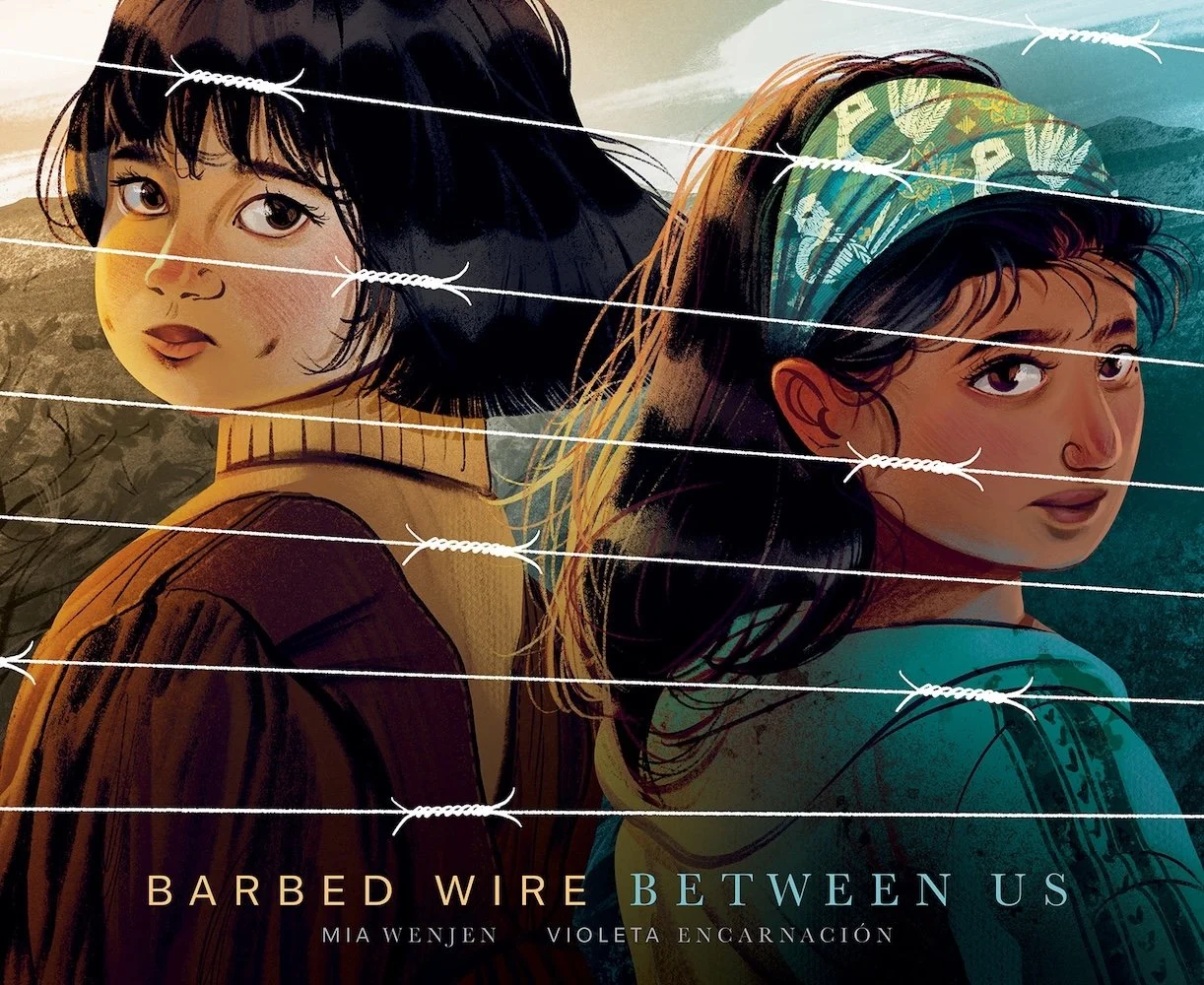
This powerful reverso poem tells the story first of Japanese internment in the United States and then when it reverses, tells the story of refugees coming to the United States. First, we follow a young Japanese-American girl whose family is taken to the internment camps in Oklahoma. Living with meager food, behind barbed wire and separated from her family members. The kindness of neighbors and strangers helped, as did creating origami. The book then flips to the story of a young refugee, also helped by neighbors, strangers and origami to find a way through to freedom.
For a poem like this to truly work, the reverso piece needs to be undetectable in the first half of the story. Wenjen manages just that, offering a delightful surprise through her simple yet powerful poem when the story flips to another girl at another time. The change from internment to entering the country is particularly powerful, tying the two times and experiences together innately. The illustrations add to the connections too with origami cranes, barbed wire spreading across the pages, and the humanness of all shining strong.
Brilliantly crafted and powerful. Appropriate for ages 5-8.
Others: A Story for All of Us by Kobi Yamada, illustrated by Charles Santoso
- Publisher: Ten Speed
- Publication Date: March 31, 2026
- Reviewed from pdf provided by publisher
- ISBN: 9780593839676
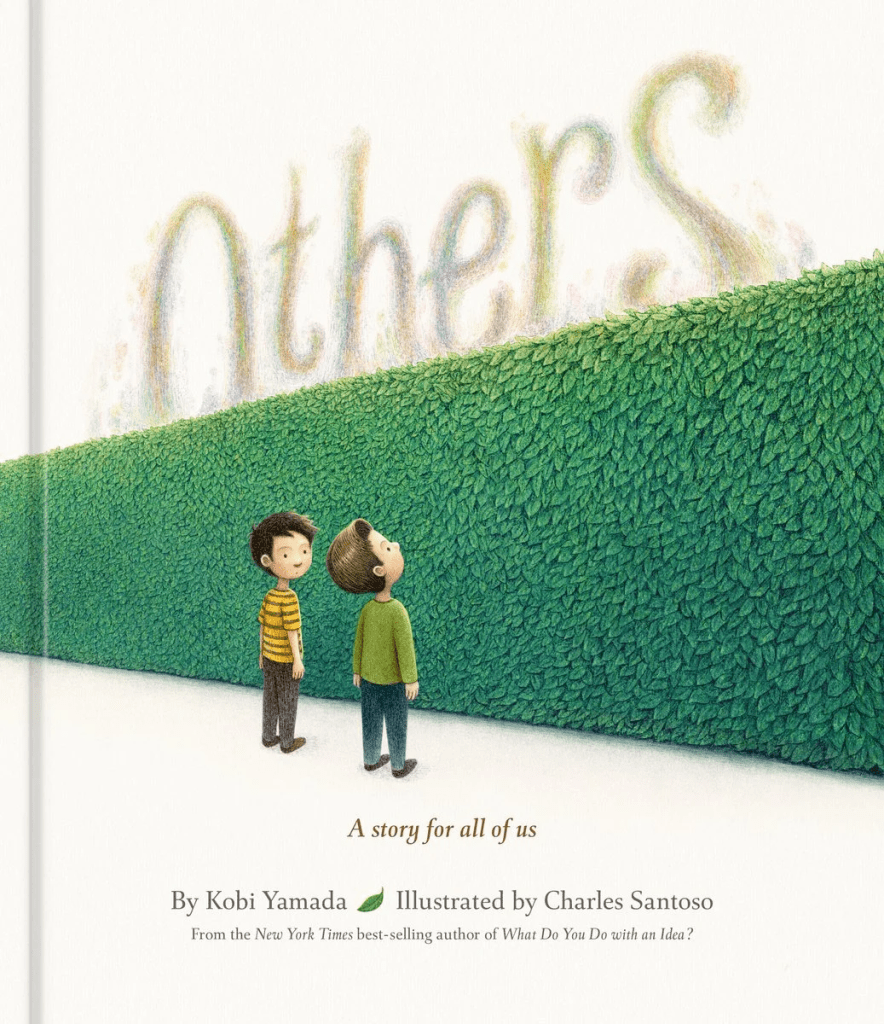
Two boys start talking about the people who are different from them and what in the world they are thinking about. The others talk differently than them and look different. One boy asks if they have scales or tails? No. Sticky tentacles? No. Motors and wheels? No. They have hearts and brains that think and feel, just like the boys do. They feel sad like the boys sometimes do. They can get scared and lonely. They can also love their family too and celebrate together. Then who are the “they” after all?
Told using a hedge as the barrier between the two boys and the people they imagine being so different from themselves, this picture book vibrantly and simply shows how thinking of “others” as real people with the same feelings and connections as they have themselves transforms bias into understanding. The concept is shared in a way that does not lecture and where the reader witnesses the changes in perspective as their empathy grows organically.
Clever, empathetic and done with just the right touch of humor. Appropriate for ages 5-8.
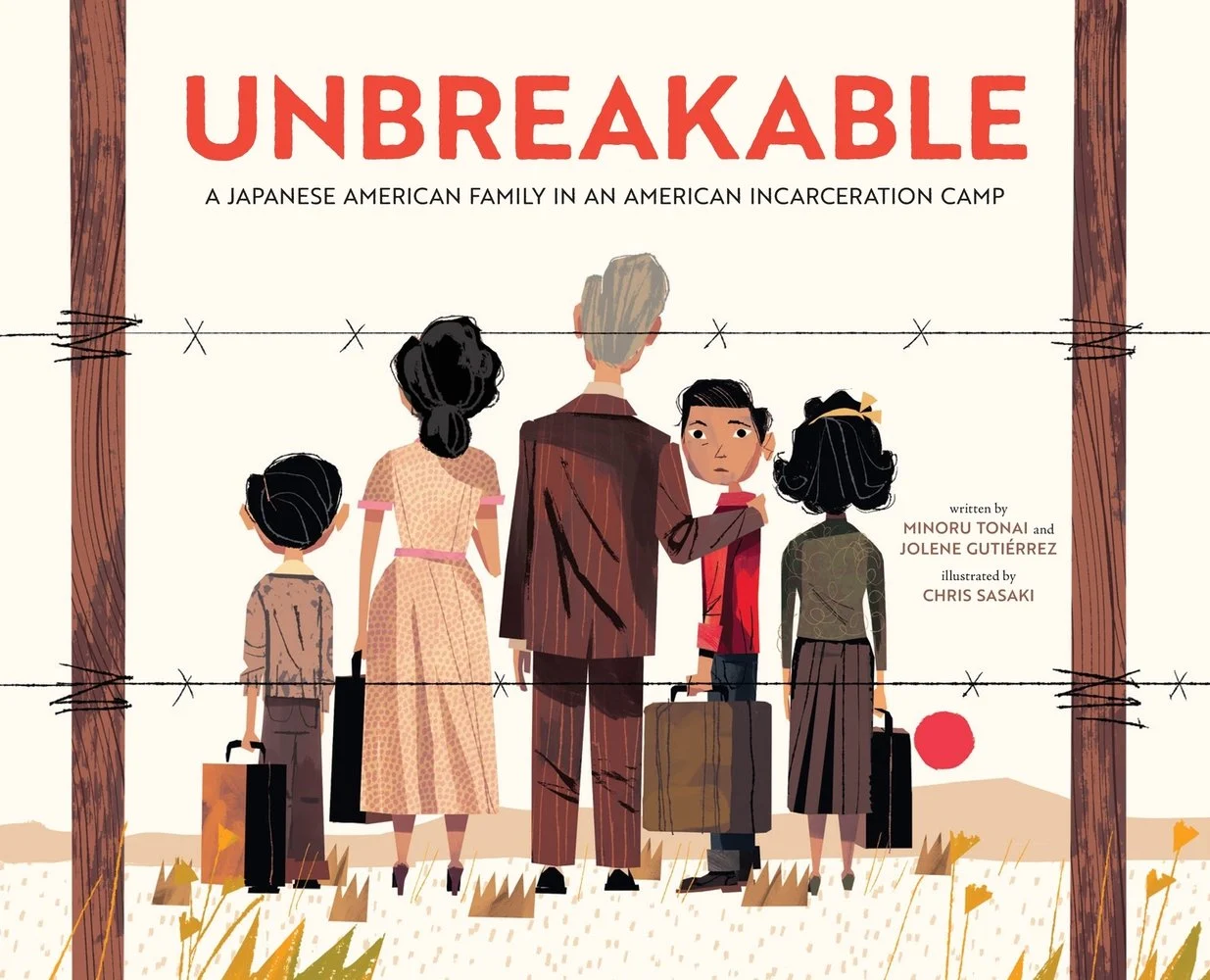
Unbreakable: A Japanese American Family in an American Incarceration Camp by Minoru Tonai and Jolene Gutiérrez, illustrated by Chris Sasaki
- Publisher: Abrams Books for Young Readers
- Publication Date: April 7, 2026
- Reviewed from pdf provided by publisher
- ISBN: 9781419772894
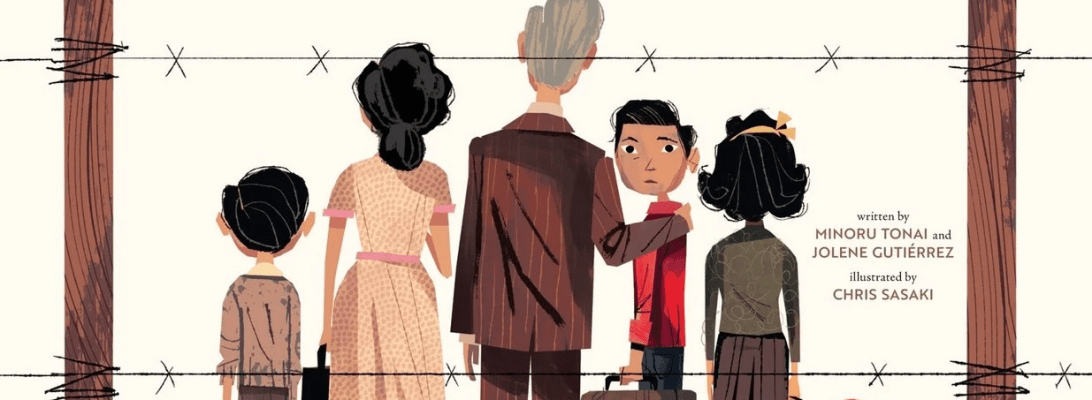
This nonfiction picture book shares the true story of Minoru Tonai during World War II. Growing up in San Pedro, California in the 1940’s, Min loved to gather rocks to show his father. One day, when Min came home his father was being asked questions by FBI agents about being a spy for Japan. The agents left, but returned after the bombing of Pearl Harbor, taking his father away. The family lives without him for a while, until they too are told they must go. They are taken first to a converted racetrack and kept in horsestalls. Then the family is moved to Colorado to the Granada Relocation Center. Years later, as they are still in the camp, Min’s father is returned to them. His hair has gone entirely white, but his suitcase is filled with rocks to share with Min.
This nonfiction picture book aches with empathy for Japanese Americans placed in camps. It tells the story with a straight-forward tone, allowing the injustice to speak for itself. There is a fierce dignity and honorability to the story that sears. The use of rocks as a sign of permanence and strength carries through the story very effectively. The illustrations are sharp edged and full of humanity. Regularly, the character of Min and others in his family are looking straight at the reader, sharing their pain and fear. It’s incredibly effective.
An accessible and important book for our times. Appropriate for ages 6-10.